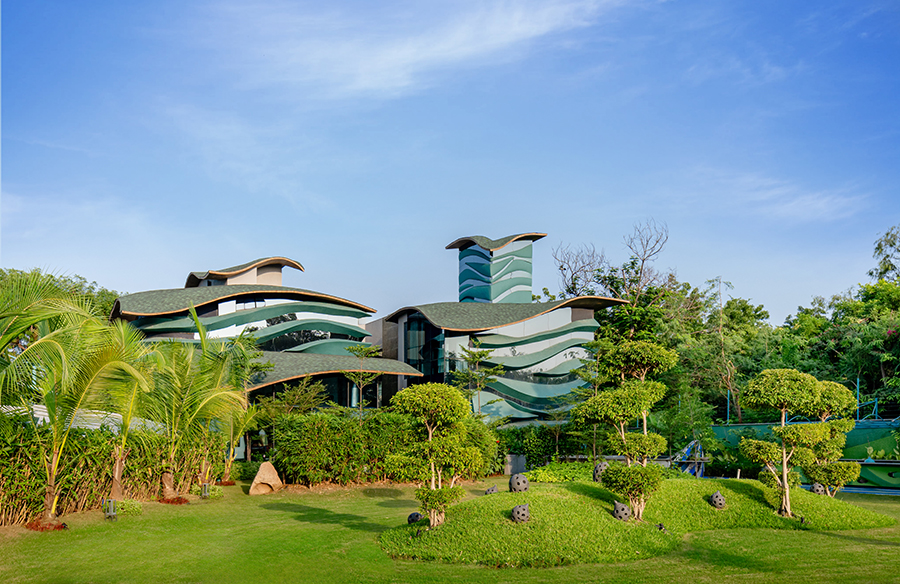
The Liquescent house, situated on the outskirts of Ahmedabad, represents an architectural style inspired by organic forms, establishing a conversation between the built environment and the natural surroundings, alongside a thoughtful incorporation of natural elements.
Project Name: The Liquescent House
Studio Name: Shaili Shah Banker Architects
Location: Ahmedabad , India
Built Up Area: 6300 sq ft / 585 sq m
Year: 2024
Architect: Shaili Shah Banker Architects
Lead Architect / Principal Designer: Shaili Shah Banker
Design Team: Riddhi Chavda, Karishma Shah
Project Management: Mit Projects
Ferro Cement Contractor: Mahendra Soni
Structural Engineer: Innovative Designs
Landscape Design: Shaili Shah Banker Architects
Photography: Vinay Panjwani
The architect’s preference for this design approach is infused with a natural fluidity, influenced by a childhood spent working with clay. This early exposure to a material that responds so naturally to the hand has profoundly shaped a design philosophy that prioritizes organic, flowing forms over straight lines and sharp angles. Sculpted much like clay, this house embodies a belief that architecture should reflect the harmonious relationships found in nature, where elements are not separate but exist in unity and continuity.
Concept
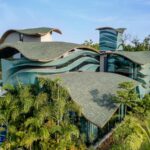
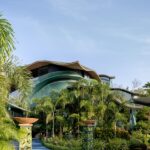
The form of the house, a sinuous and geometrically complex structure, is inspired by the concept of a fluid language—an expression of organic forms—which is reflected in the building’s roof, walls, and spatial organization. The layout is the built form in the shape of the letter C, as a consequence an open courtyard forms in the centre that connects the indoor and outdoor spaces. The courtyard acts as a unifying element, offering visual relief, facilitating natural ventilation, and flooding the residence with vibrant light. The roof is a standout feature, crafted in ferrocement to achieve delicate, paper-thin edges that lend the structure a sense of lightness and grace. These edges outline the building, balancing the solid structure with an almost transparent delicacy. Through the curving and shaping of each section, the roof mimics the seamless flow of natural forms, creating a fluid geometry that allows the house to merge with its surroundings while giving the spaces below a distinct volumetric character.
Materiality and Innovation
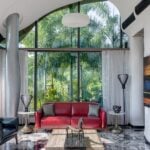
Ferrocement, chosen for its flexibility and capacity to form intricate curves, defines the roofing structure of the residence. This material helps realize the architectural vision of thin, flowing surfaces. The use of ferrocement also enabled the creation of super-slim edge profiles, amplifying the visual impression of floating, lightweight forms. Structural components like beams and supports were carefully planned using wireframe models, which aided in transforming the hand-sculpted curves into a practical structural framework. The walls complement the roof’s curves, with each surface shaped to follow the natural flow of the roofline. Painted in a deep turquoise, these walls create a bold contrast against the reflective glazing that mirrors the surrounding lush green landscape. The seamless, curvilinear connection between the roof and walls blurs the distinction between the structural elements, reflecting the harmony seen in natural systems where all parts exist as one unified whole. The interior design continues the continuity of the exterior form.
Interior Design: A Continuation of the Exterior
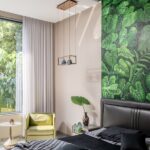
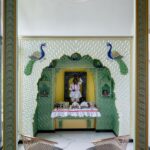
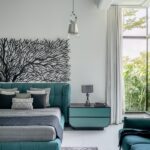
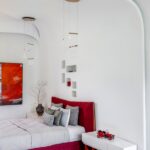
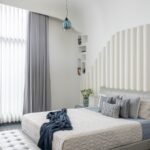
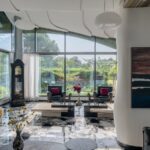
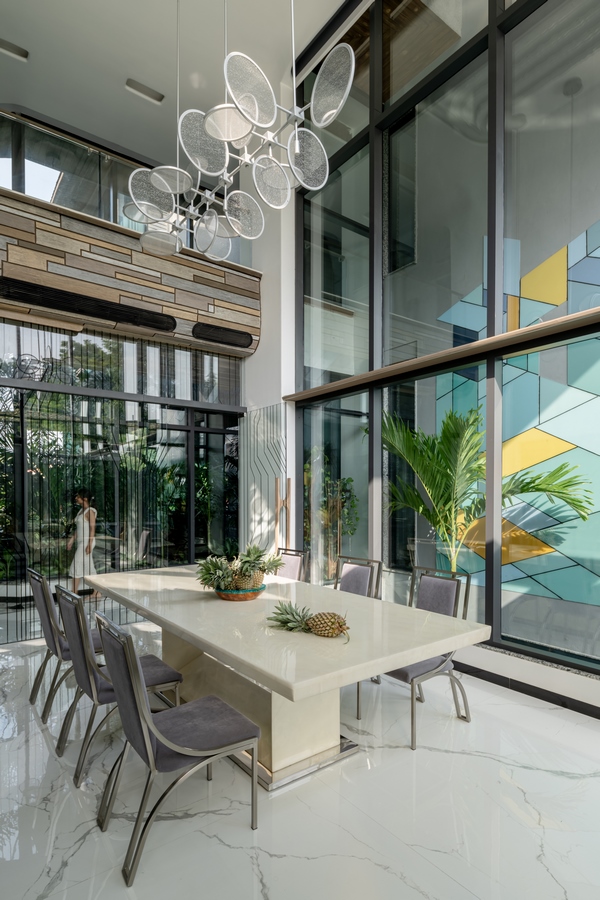
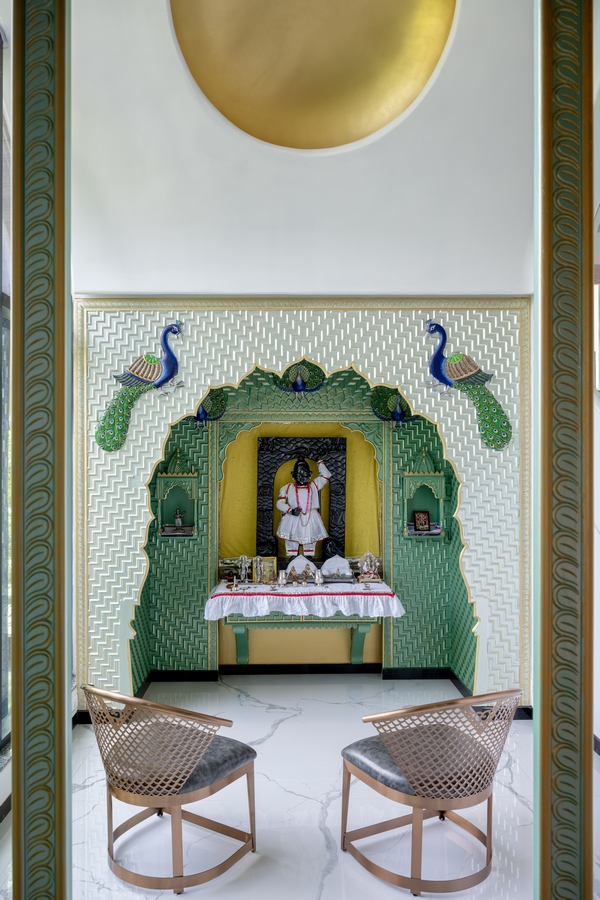
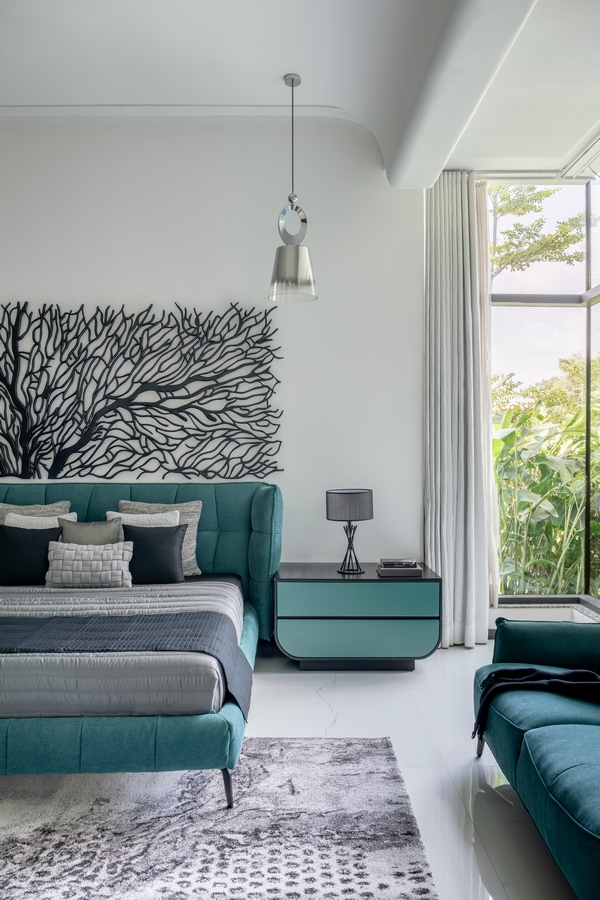
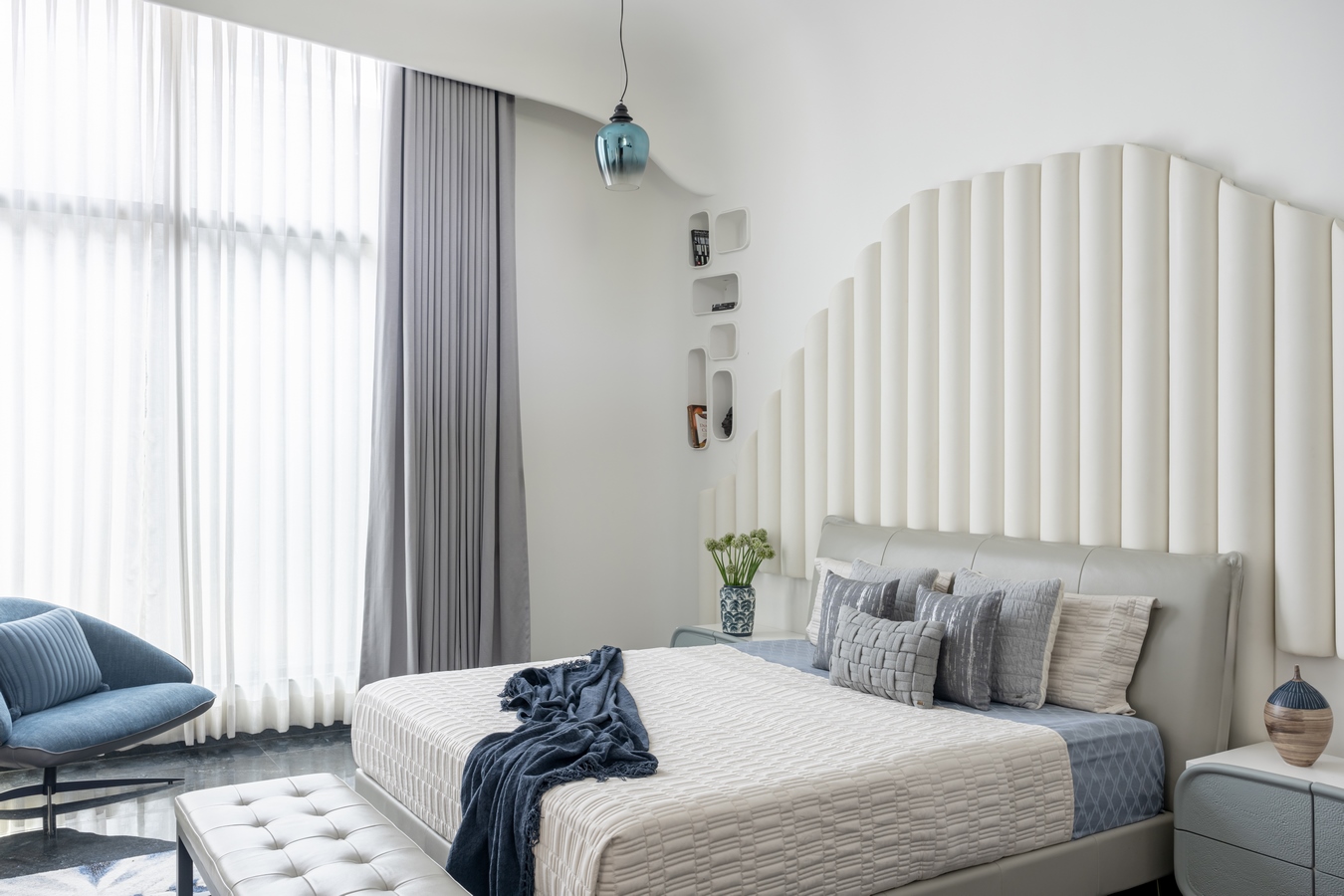
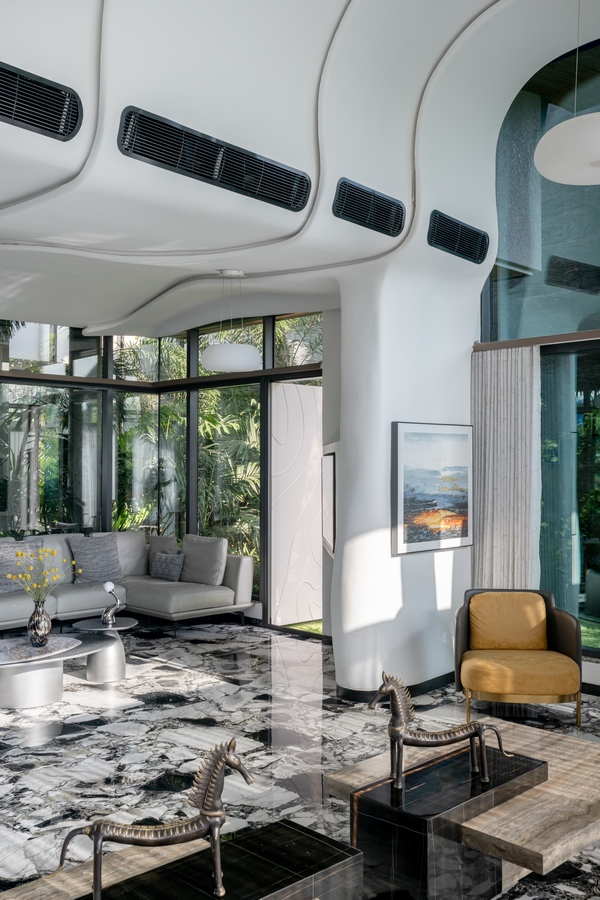
The interior spaces, predominantly white, emphasize purity and simplicity, allowing the fluid geometry to become the focal point. The deliberate choice of white creates a neutral backdrop that highlights the architectural forms and accentuates the organic shapes that define the space. The absence of vivid interior colors draws attention to the building’s curves, edges, and volumes, while the selective use of bold colors adds depth and focus to specific features. The spatial layout is designed to accommodate the needs of a joint family, with master bedrooms for each generation, guest rooms, and a shared study area overlooking the pooja space. The roof modulations are carefully designed to ensure harmony. Functional elements like a waterbody next to the pooja area integrate cultural values seamlessly into the design. Additionally, natural light filtering through a strategically placed skylight above casts a tranquil glow on the idol, enhancing the spiritual atmosphere and bathing the space in a peaceful ambiance, in alignment with Vastu principles.
Integration of Nature and Space
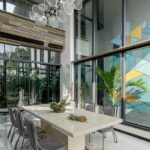
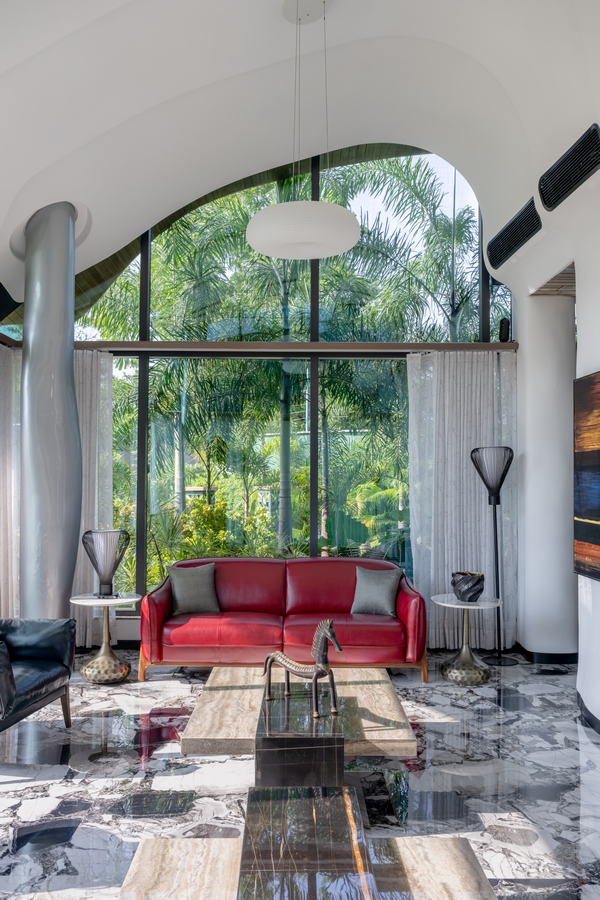
The connection between the architecture and nature is fundamental to its design. The use of glass and transparency enhances the interaction between the interior and exterior, creating a welcoming, semi-open environment where natural light permeates the interiors throughout the day. The landscaped pathways, courtyard, and water bodies establish a progression through spaces that are both reflective and revitalizing. The house layout integrates the garden seamlessly within the built structure, allowing greenery to flow between the buildings.
A water body extends into the interior, placed between the staircase and the dining room, forming an organic division between these areas. This carefully considered addition of the garden and water feature enables natural light to fill the central spaces throughout the day, promoting a strong indoor-outdoor connection and extending the experience of the natural landscape into the heart of the home.
Conclusion: Fluidity as Form and Function
The Liquescent House stands as a testament to the transformative potential of fluid geometry in architecture. Drawing inspiration from natural forms and the sculptural qualities of clay, the house demonstrates how built structures can mimic organic processes to create harmonious, unified spaces. The residence does not impose rigid boundaries but rather flows with its surroundings, utilizing transparency, materiality, and structural innovation to achieve a seamless integration of form and function. This project redefines residential architecture by questioning conventional limits, offering instead a spatial experience that is both grounding and uplifting. Through the integration of natural light, open spaces, and curvilinear forms, the residence respects its context while maintaining both functionality and aesthetic appeal. The Liquescent House is an architectural exploration of continuity, where every curve, surface, and element converges into a unified, fluid narrative.