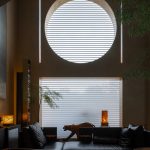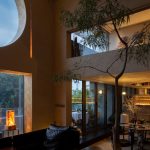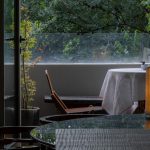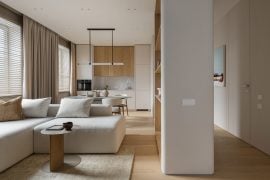
Among all the challenges of living in Beijing, commuting has troubled me the most. So when choosing a home, I drew a circle around the areas where we most frequently spend our time, and eventually selected a place right at the center. Because it is close to a commercial district, the primary design challenge became how to create a peaceful retreat amidst the urban bustle.
Project Name: Cui Shu’s Private Residence
Studio Name: CUN DESIGN
Location: Beijing, China
Completion Date: June 2025
Floor Area: 300 sqm
Photographer: Zou Jibo
Everyone is striving to construct their own lifestyle. This has become a shared focus for both the new generation of residents and the designers who serve them.
The creation of this home spans my journey from age 30 to 40. As our children entered primary school, my wife and I also became clearer and more precise about our way of living. I call this our “residential state,” and the design methodology that responds to it, I call State-ism—a concept I intend to continue exploring.
For our family’s unique state, the design framework is defined by Elegance, Playfulness, and Meaning. This is a three-story stacked villa, 300 square meters, located in the heart of the city. Verticality thus became one of the raw materials of design. The question was: how do we achieve those three principles within this spatial form?
Elegance
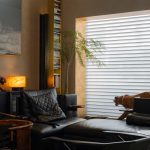
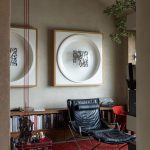
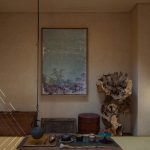
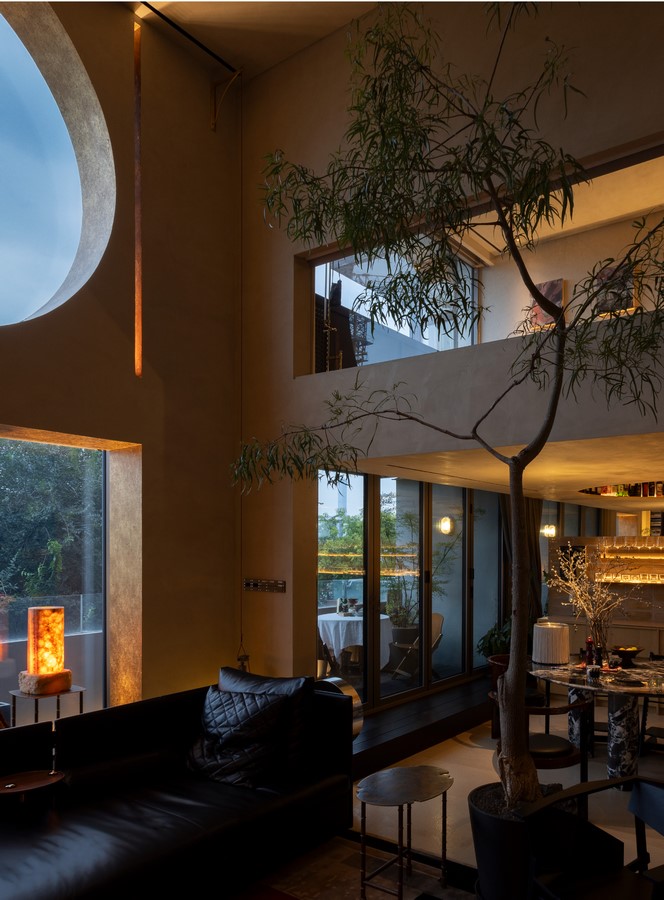
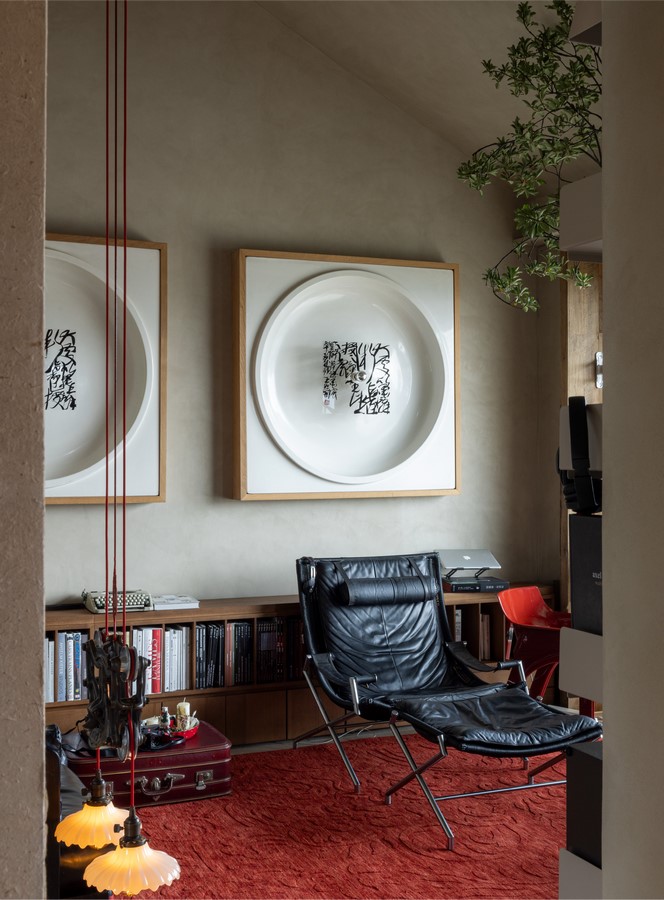
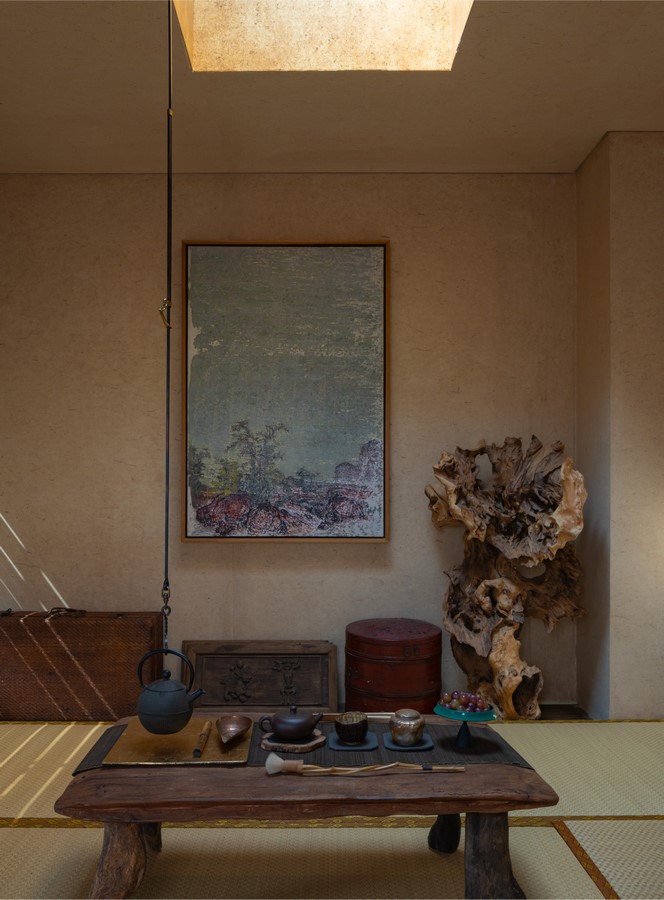
Rather than a style, it is an ambience. I drew from contemporary Chinese aesthetics—believing that in this rapidly changing era, every fleeting moment of life is worth capturing. Using geometric forms as the structural “body,” and extracting the colors and textures of Chinese ink painting—rice paper, ink wash, seal red—we deconstructed and recomposed them. Through a montage-like approach, the Chinese spirit emerges.
Playfulness
As a designer, I see playfulness as the soul of a space—the key to breaking the stillness of architecture and introducing the dimension of time. It is not superficial decoration; it is a spatial mechanism that invites interaction and records growth.
In this vertical dwelling, we choreographed the “script” of playfulness through circulation and scenes:
A narrative vertical promenade
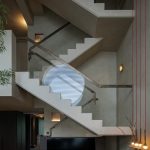
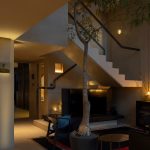
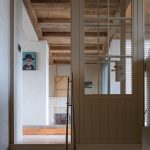
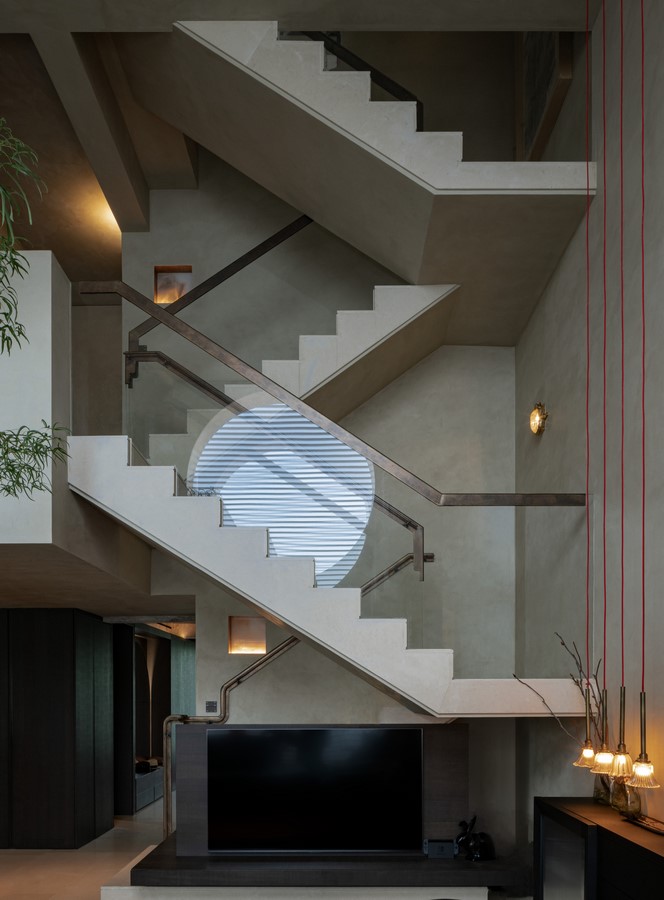
The staircase acts as the spine and artery of the home. Beyond circulation, it becomes a vessel for light and a guide for sight. By adjusting the width of the treads and the pause points at landings, we deliberately slowed the pace of moving between floors. Antique-bronze proportions lead from entryway into living spaces, while a recessed display niche catches light and allows the wall to breathe and flow. As one walks, the body moves while the mind transitions—from social vibrancy on the first floor, to family intimacy on the second, and personal contemplation on the third. It is a ritual of return—from “the noisy world” to “the quiet inner heart.”
Flexibility in functions
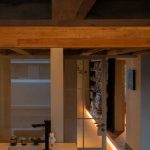
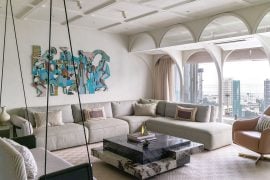
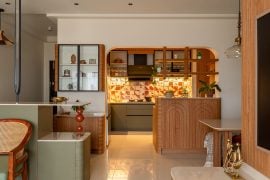
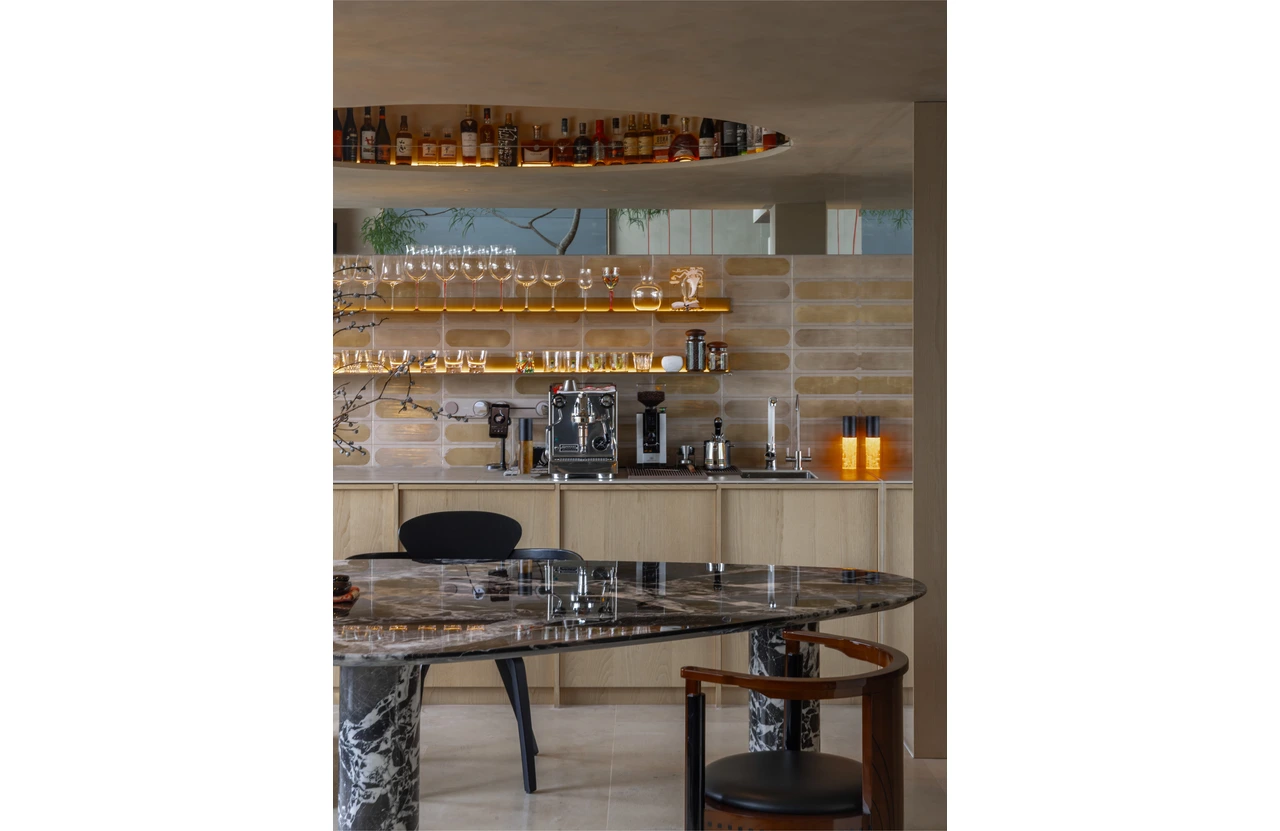
The core of the living area is a large kitchen island full of daily life, not a fixed sofa facing a TV. These “blurred zones” incubate spontaneity—design supplies the stage, but the family improvises the story every day.
Playful materiality
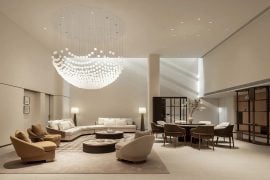
By juxtaposing different tactile materials, we allow them to converse. Natural Italian beige stone grounds the space, while hand-troweled artistic wall finishes absorb and soften the light. Barefoot steps each morning turn playfulness into a bodily experience—immersive, subtle, present.
Meaning
This is what emerges when Elegance forms the foundation and Playfulness breathes life into it—a naturally diffused spirit of place.
Anchors of emotional circulation
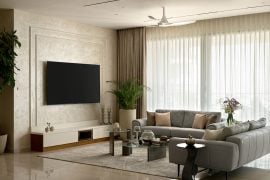
We intentionally downplay the role of the TV-centered living room. Instead, the kitchen island becomes the emotional core of the home. Circulation converges here, information flows here—the aroma of coffee, laughter over dinner, the soft sound of children writing homework. It is a power station for relationships. Every design decision strengthens this gravitational pull.
A dialogue between mind and landscape
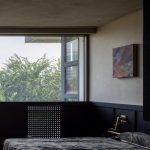
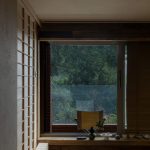
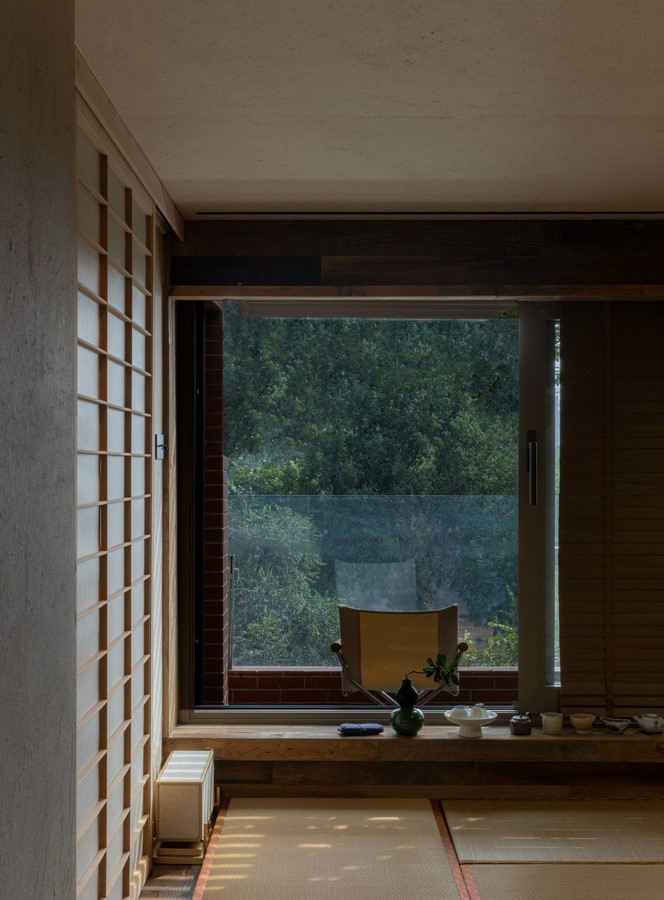
In the primary suite, design is reduced to essentials, because the most beautiful scenery is the skyline outside. Ultra-thin window frames maximize the framed-view effect—turning the window into a living painting. Here, “tranquil at the center of the city” becomes tangible. Through that still frame, we watch a vibrant world—and in contrast, discover our own calm and abundance within.
A vessel for personal imprints
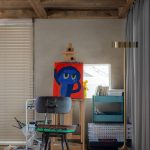
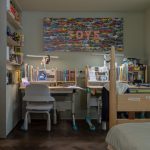
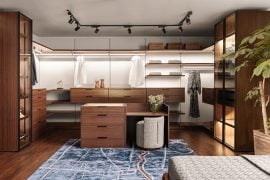
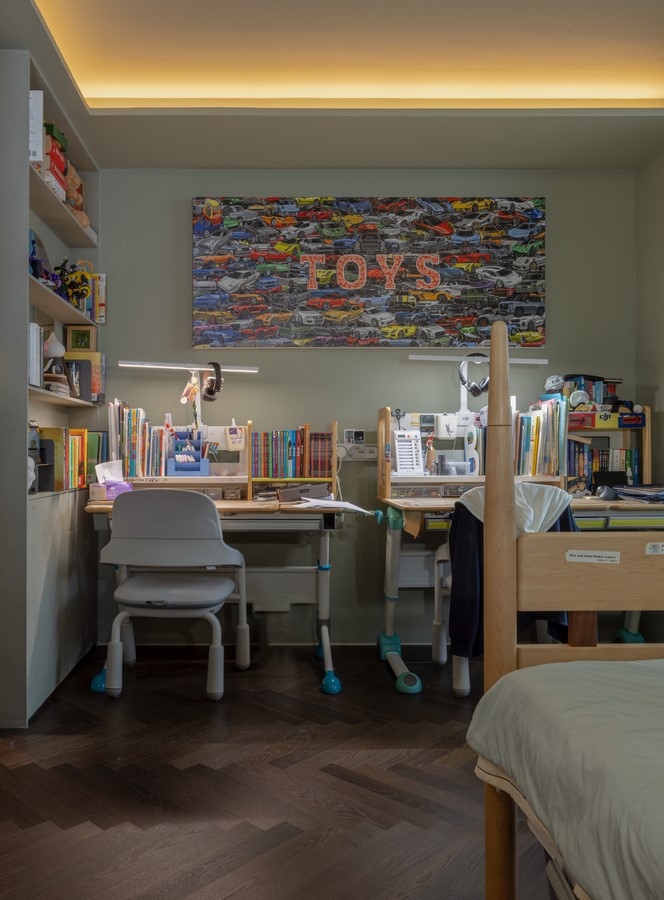
A home rich in meaning must preserve blankness—room to carry one’s past and future. Various storage elements hold my wife’s beloved cookware; walls are reserved for our children’s artwork; the study shelves display my personal passions. These objects are seals of memory—they make the home non-replicable because it records the depth and warmth of life.
Conclusion: State-ism as a Design Method
To me, State-ism is a practical design methodology. It goes beyond stylistic expression to anticipate the evolving “states” of residents’ lives across different stages.
We built a home that precisely serves the present while gracefully embracing the future. Elegance provides a timeless aesthetic foundation; Playfulness introduces dynamic energy; as time unfolds, residents naturally shape the Meaning.
This home is not a finished object, but an organism that breathes and grows alongside us. It perfectly responds to the initial design challenge: in the very center of the city, we have gained a serene and vibrant spiritual highland.