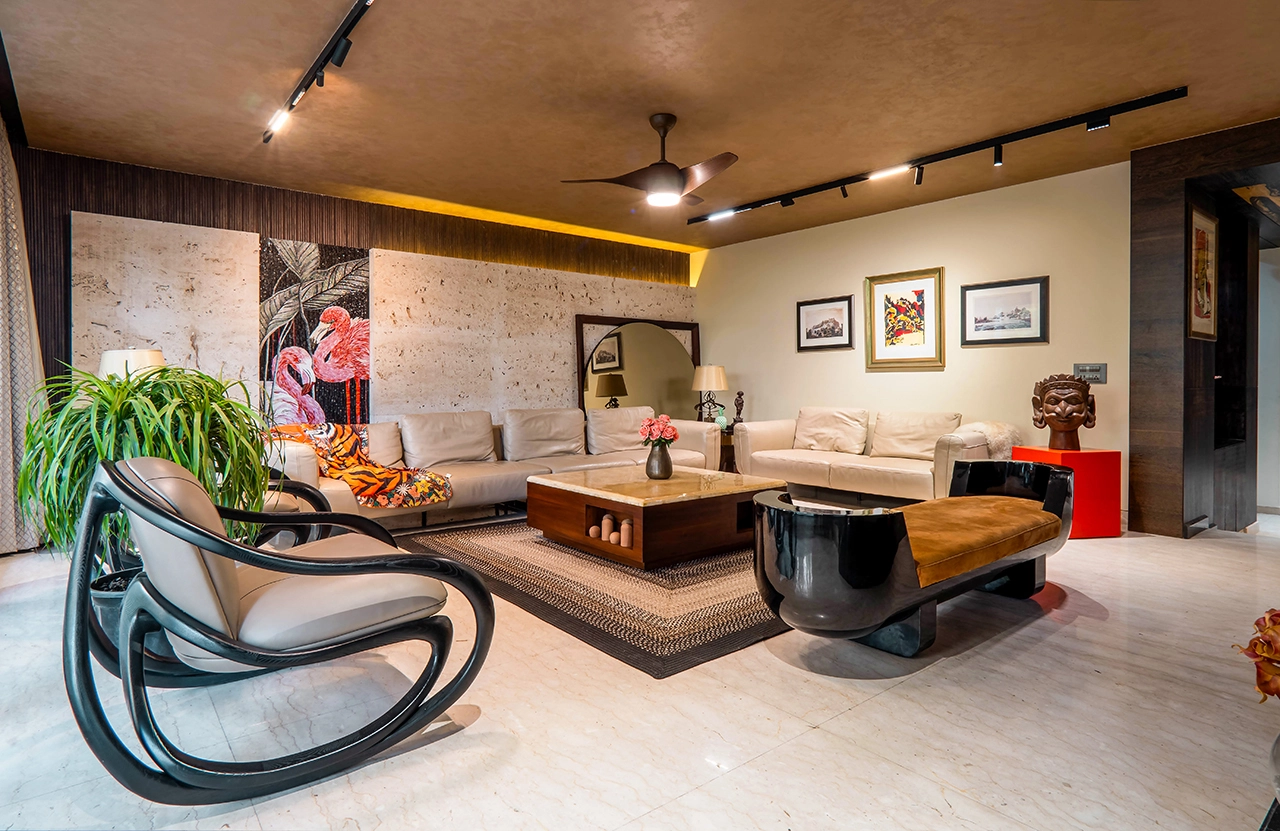
Designing a residence of 14,000 sq. ft. demands not just scale but vision—a vision that balances opulence with restraint, natural elements with curated craftsmanship, and grandeur with intimacy. For Sanjeevni, Noida, principal designer Ar. Sunny Gupta, of Fantini Designs, set out to achieve precisely that: an immersive living environment that feels as timeless as it is bespoke.
Project Name: Sanjeevni
Studio Name: Ar. Sunny Gupta
Location: Noida
Size: 14,000 sq. ft.
Principal Designer: Ar. Sunny Gupta
Design Team: Fantini Designs
Photography: Ruvi (Ruvi_Arch_Photography)
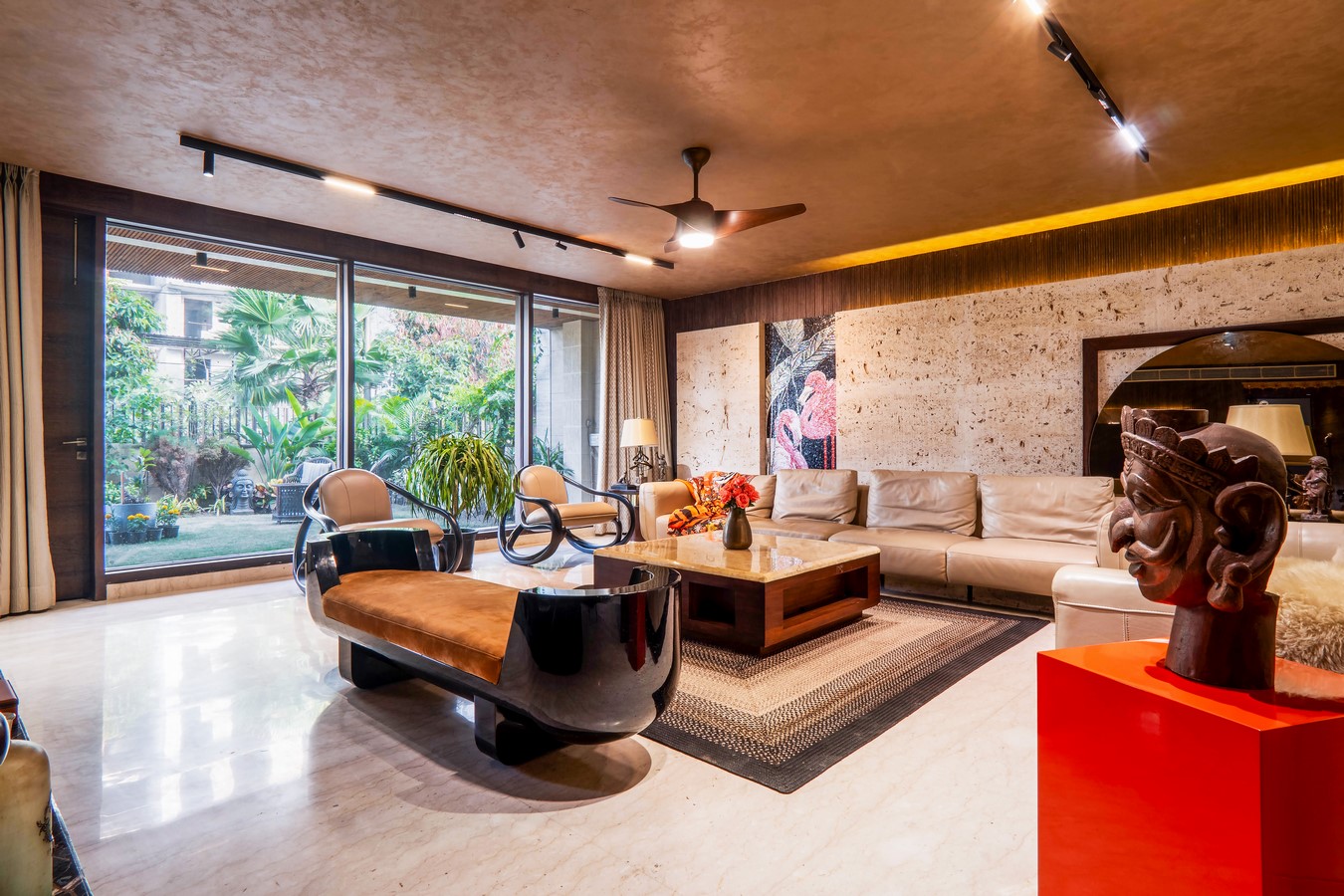
The drawing room sets the tone for the project, balancing international furniture brands with custom craftsmanship. Giorgetti chairs share the space with bespoke Fantini furniture and a beige leather sofa, while a walnut table topped with honey onyx adds warmth and subtle sheen.
The media unit wall becomes a crafted spectacle, featuring book-matched Italian stone and solid red oak CNC louvres. Yet, the most striking gesture lies behind the main seating area. Here, a rare travertine quarried below water level has been installed—a stone with unusual pipe-like formations, as though sculpted by marine life. “This wasn’t just a material choice,” says Gupta. “It was about creating a backdrop that feels alive, almost breathing.” Complemented with Sicis mosaics, the stone background transforms into an art piece, intensified by the views of the landscaped garden beyond.
Adding to the room’s personality is a Sri Lankan face sculpture on an orange base, a bold piece that commands visual attention and punctuates the palette of natural textures.
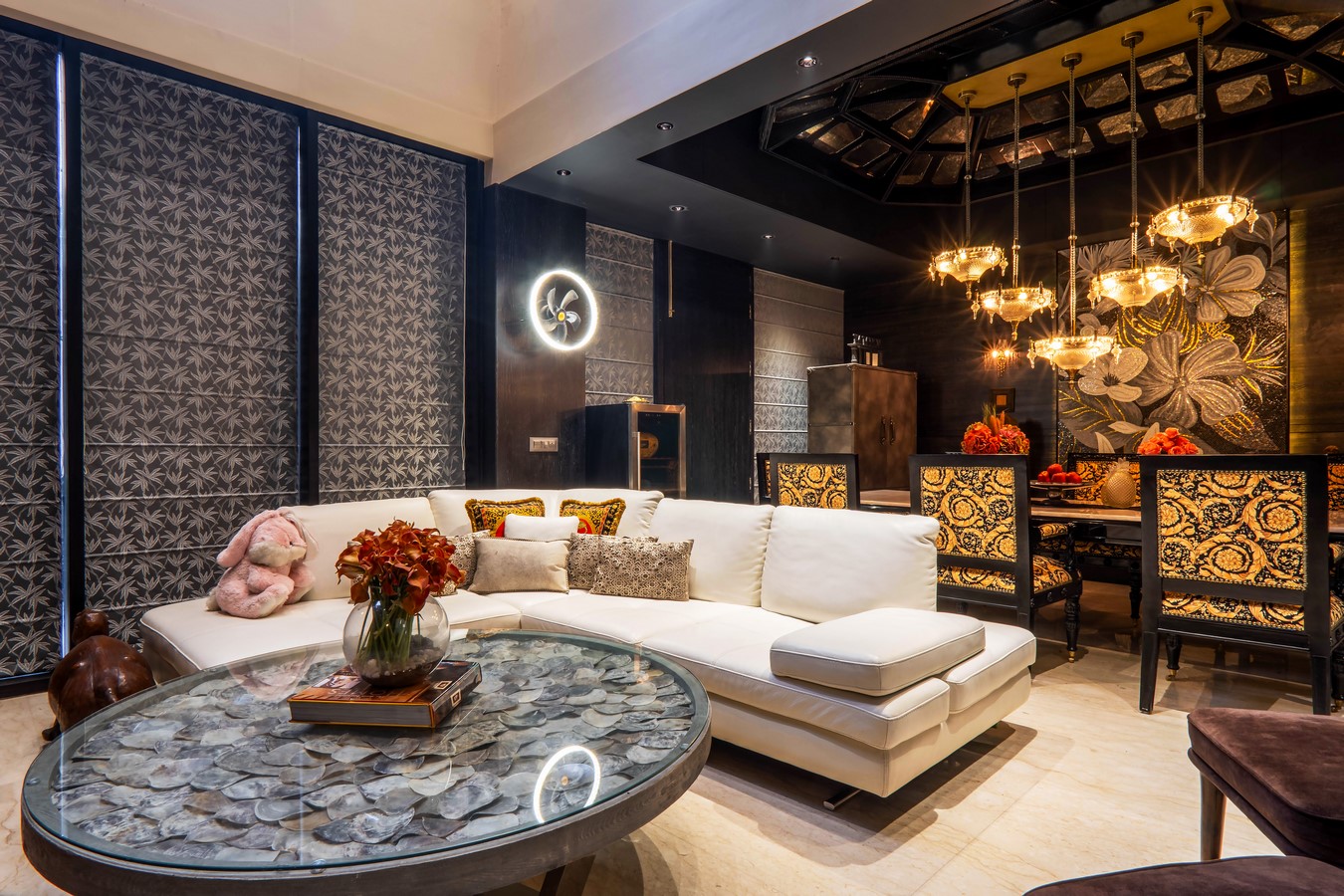
The living and dining areas are defined by volume and verticality. A soaring double-height wall in black Marquina stone becomes the canvas for a tiger carved in stone. But Gupta avoided the temptation of treating the tiger motif purely as fierce symbolism. Instead, he transformed it into a narrative inspired by Pac-Man, a childhood video game where characters endlessly move across the screen. “It was about softening aggression with memory,” explains Gupta. “The wall holds power, but also play.”
Above the dining space, a client-sourced ceiling installation dominates the scene. Weighing nearly 300 kilograms, the piece combines antique-style mirror panels with brass detailing across an arch form, anchored by a glass chandelier at its center. Installed with precision engineering, the ceiling is both a statement of client aspiration and designer execution.
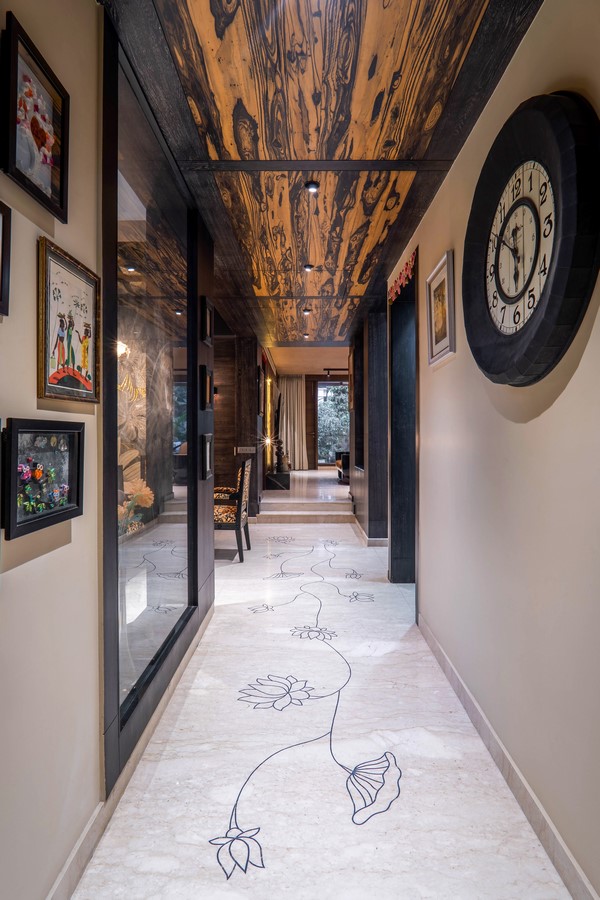
The gallery transitions the mood, marked by blue lapis inlay work set into Sicilian stone flooring. The detail is jewel-like, creating a luxurious rhythm as one walks through. A wooden ceiling and antique veneer by Century temper the richness, ensuring the gallery retains intimacy rather than overwhelming grandeur.
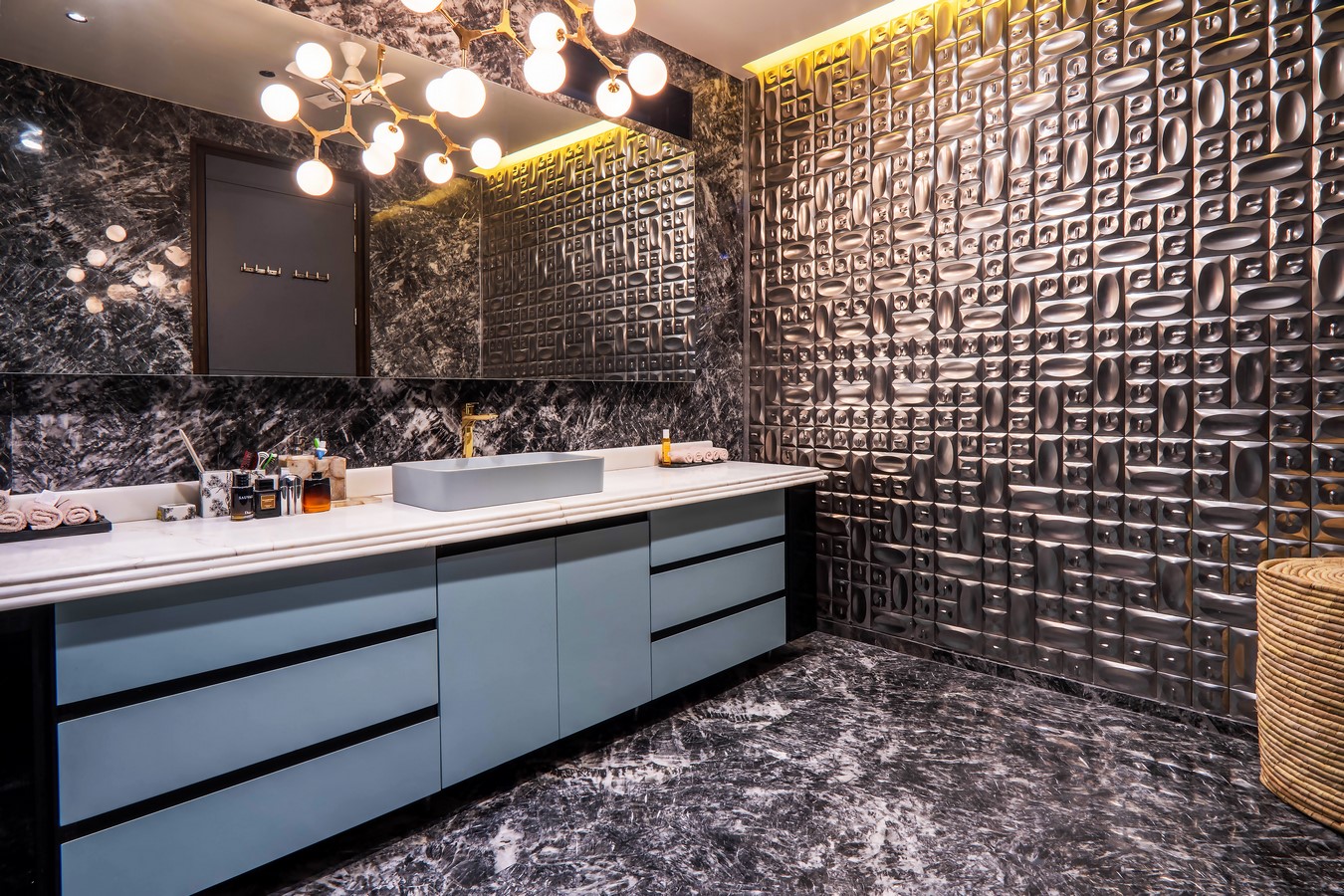
The master washroom underscores the project’s preoccupation with scale and materiality. Entirely clad in grey onyx stone, the washroom is expansive and open, anchored by a giant mirror above the vanity. Overhead, a chandelier refracts light against the stone, amplifying drama. A single wall clad in chrome-finished aluminum tiles shifts the aesthetic, introducing a reflective, contemporary note that plays against the timelessness of onyx.
What ties Sanjeevni together is not just the use of premium finishes or rare stones, but an architectural narrative that keeps light, natural materials, and human memory at the core. The design choices—whether it’s the below-water travertine, the playful Pac-Man tiger, or the client’s cherished ceiling—speak of collaboration between architect and client, where aspiration meets design clarity.
Sanjeevni reads not only as a luxury residence but as a story of design intent: how architecture can turn scale into intimacy and material into memory.