The cube house is situated in the town of malur, kolar district, Karnataka. The design of the cube house was intended to embrace the play of geometry, offering comfort and functionality in all spaces. The cube house was intended to have two cubes in order to segregate the day to day activities.
Project Name: The Cube House
Studio Name: KMN Architects
Area : 6,800 sq.ft
Year : 2023
Lead Architect: Kiran Mohan
Landscape Architect: Chethan Garlapur
Photographs: Studio Frameify

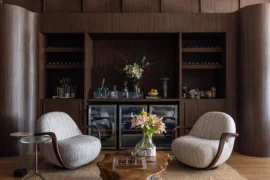
The glass cube is a social cube consisting of a sunken living room, informal living, a central core for vertical transportation and a dining room integrated into the kitchen, allowing the family to spend time together comfortably with the bedrooms uninterrupted thus becoming a symbolic molecule that represents the relationships and interactions. The glass cube is connected to another cube which houses private spaces through corridors / connecting bridges at varying levels, forming interstitial spaces which allow interaction between different levels in the house. All the functions have been carefully considered and logically arranged to maximize the ways of living of all the members of the family.

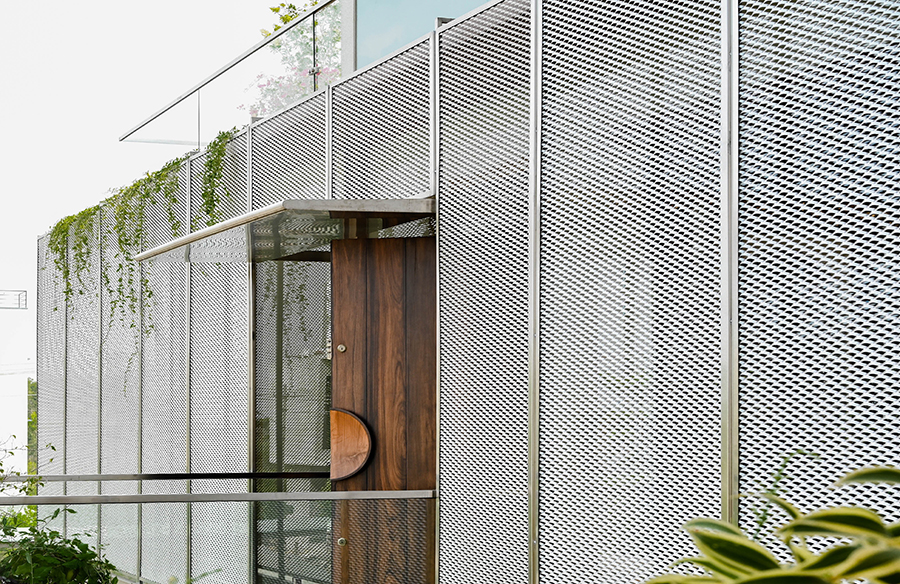
When you first arrive, you are welcomed by the landscape amidst the entrance canopy with vertical gardening which shades the stepped walkway on a waterbody, with lush green landscape pockets on either side of the walkway. It’s a retreat as one enters the house, while appreciating the landscape around. It’s also one of the perfect spots to have a cup of tea in the evening amidst the landscape and listen to the sounds of nature, also a space where kids would enjoy spending their evenings.

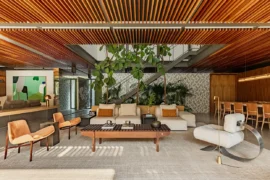
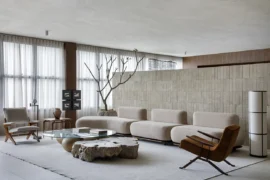
The beauty of this exorbitant cube house is the formal living room which is sunken and the double height ceiling adds on to the volume of the space, making the space look massive. The cube is surrounded by landscape which makes one feel very connected to nature. One can feel the vastness and the essence of the space when seated on the cast in situ furniture amidst the glass facade, looking into the landscape which constantly draws one’s attention. Another unique feature of the glass cube is the way it is naturally ventilated through split ventilation / horizontal slits that keep the house cool.

It also has a protective layer i,e the expanded metal screen which was introduced at the higher levels in order to provide privacy and to cut down the harsh rays of sunlight, which also acts as an accentuate to the facade.in terms of its aesthetics. The large openings allow an enormous amount of light into the house,the cube house is naturally lit all through the day.

The pooja room, the sacred place of an Indian household is a triple height space with a skylight on top with corridors and bridges on either side of the pooja room. The sun’s rays fall directly into the pooja room keeping the sacred place lit all through the day. The pooja room is infused with nature and adds on to the charm of the space.

Moving up to the first floor, the master bedroom, kids bedroom are connected by a light bridge that connects the two cubes. All the bedrooms are visually connected to the landscape that surrounds the cube/ have pockets of landscape within. Additionally, it features wide windows with split ventilation that lets in all of the morning sun, which gives you a vibrant feel to the space.