Sustainable design has been a fundamental inclination of mine since my days in architecture college. This passion has led me to study and witness many examples of sustainable buildings in villages and mountains.
Project Name – POT house-Matka house
Studio Name- Tina Kedia
Lead architect – Tina Kedia
Area- 1000 sq. ft.
Project Location- Ulhasnagar,Mumbai
Project Completion- 2023
Photographer – Nipun Prabhakar

Recently, I had the opportunity to design the interiors of my new apartment in Mumbai using sustainable techniques. During this process, I realized the myriad challenges it posed, from a lack of awareness to a scarcity of such examples in urban settings. The population in metropolitan cities like Mumbai generally inhabit apartment-style houses, which often perceive sustainable design as an anti-urban concept. My vision was to experiment and create a sustainable, eco-friendly apartment that responds to the urban and contemporary lifestyle. This blend of sustainability in urban apartments necessitates attention. Catering to this apartment lifestyle, this project is designed to demonstrate a fresh yet indigenous way of living for the urban population.

Matka House: A Sustainably Designed Abode in the Suburbs of Mumbai
Matka House is a sustainably designed home built for my family. Sustainable interiors are an unconventional option in the market, making it a difficult choice for the family. By trusting my conviction, our eco-home began to take shape, featuring the fusion of traditional materials with contemporary design. This project celebrates the spirit of art and artisans by utilizing handcrafted skills and adopting hand-painted murals to decorate the spaces.
Material selection was the most critical task, as the selected natural materials needed to suit the urban context and lifestyle. The key material used in all the spaces is terracotta. Terracotta tiles, one of the oldest forms of flooring, are effective at maintaining indoor temperature. My concept behind designing the spaces was to provide the user with a holistic experience of visual appeal, physical comfort, and psychological calm. In this eco-home, terracotta tiles are used for the flooring, giving it the desired rustic and earthy vibe and responding to Mumbai’s scorching summer heat. The warm tone of terracotta precisely complements the pastel green leather-finish kota in the wet areas.

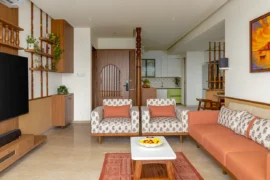
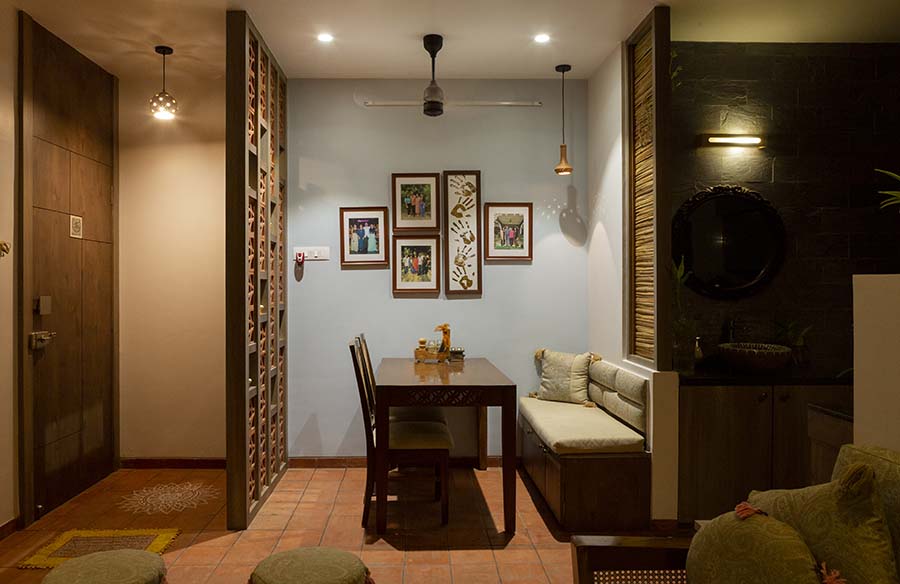
Hand-carved stone washbasins, crafted by local stone masons, are used in all bathrooms, highlighting the detailed raw stone texture. Conventional materials are substituted with natural materials to reduce carbon footprint wherever possible. The house entrance opens into a floor-to-ceiling terracotta Jali wall, leading to the living area and partially displaying the dining area in the rear. The living area features a well-balanced composition of space using reclaimed teakwood furniture with an elementary design, built skillfully by local carpenters. Natural light spills into the dining area with a bamboo weave partition on one side and terracotta Jali on the other, creating a pleasant corner for dining. The passage merges with the kitchen by bringing down an existing wall, designing an extended seating area to sit and relax. The access overlooks a green corner with a hand-carved and hand-painted stone basin surrounded by natural greens over the bamboo screen.
The art murals reflect the client’s heritage, Rajasthani roots, and present-day yogic lifestyle, all painted by me, adding a personal touch to the dwelling. The walls and floors humbly document Rajasthani folk art—Mandana (a dying art form), perfectly blending with the red terracotta background, as people traditionally painted them on red mud walls with lime. These murals symbolize the family’s culture. The bedroom walls reflect murals of yoga asanas and meditation, creating the desired serene ambiance for the spaces. I aimed to create a sense of belonging for the family beyond mere ownership of a house; thus, paintings and cross-stitch work by my mother and sister, done in their younger years, are used as artworks.

To mitigate the glare of Mumbai’s tropical sun, locally handcrafted bamboo blinds are used for the openings as a secondary shading device, adding to the rustic palette of the house. Naturally dyed and traditionally block-printed upholstery and curtains of materials like silk, linen, and cotton are handpicked for each space, serving as a screen between the inside and the outside. The client enjoys hosting guests, and the baithak seats in all the rooms add to the extra space. The terracotta wall painted with Mandana murals on the terrace backdrop creates a magical effect, bathing in golden sunlight surrounded by a hand-painted wooden swing and greenery.

The formerly doubtful clients now adore this natural habitat, which keeps them connected with nature and peace. Matka House, named by my mother after experiencing the coolness and tranquility in her new home, stands as a testament to the possibilities of sustainable urban living.