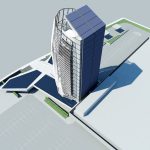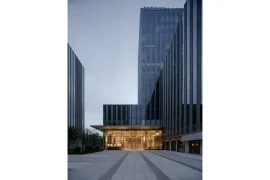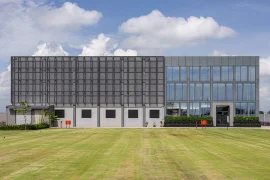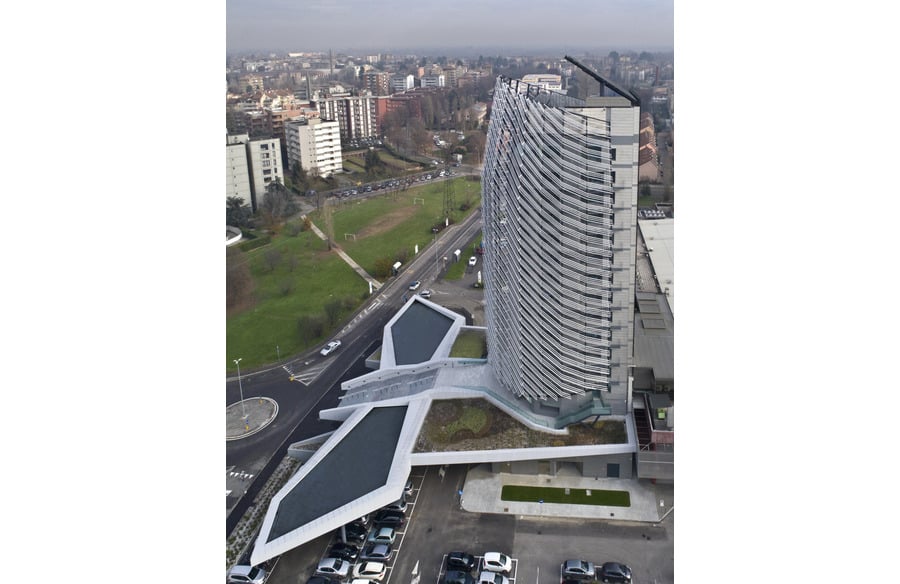
The Lodi Tower is a 14-story office building for Zucchetti, housing 400 people and significantly enhancing the city’s image. The project was awarded the 2016 European Property Award for its innovation and eco-sustainability features.
Project Name: Zucchetti Tower, Lodi
Studio Name: Marco Visconti Architects
Location: Italy
Status: Built

SITE LOCATION
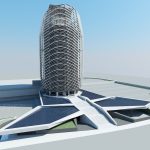
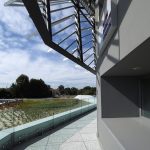
The Tower is located outside the Adda River Natural Park, positioned at the boundary between the Lodi landscape and the city. The building’s image and the new platform help define the area, while the platform softens the view of the public parking lot. The tower’s volume and its shell symbolize sustainability.

PROJECT FEATURES
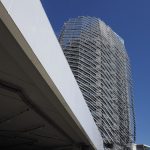
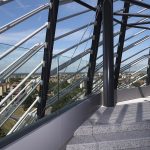
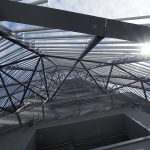
The design aims to envelop the tower with a protective drape. A soft, sinuous net structure was conceived, created from a family of curved tubes that form a dynamic and natural shape, extending beyond the facade. The sun shading design is based on solar path analysis, with the tower appearing as a crystal protected by a new net, whose mesh adapts to solar exposure on various facades. The natural shell, with its vibrating lines, represents the essence of intellectual work, symbolized as “brain waves.” The complex sits on a platform containing water basins, with the main pedestrian path running through it.
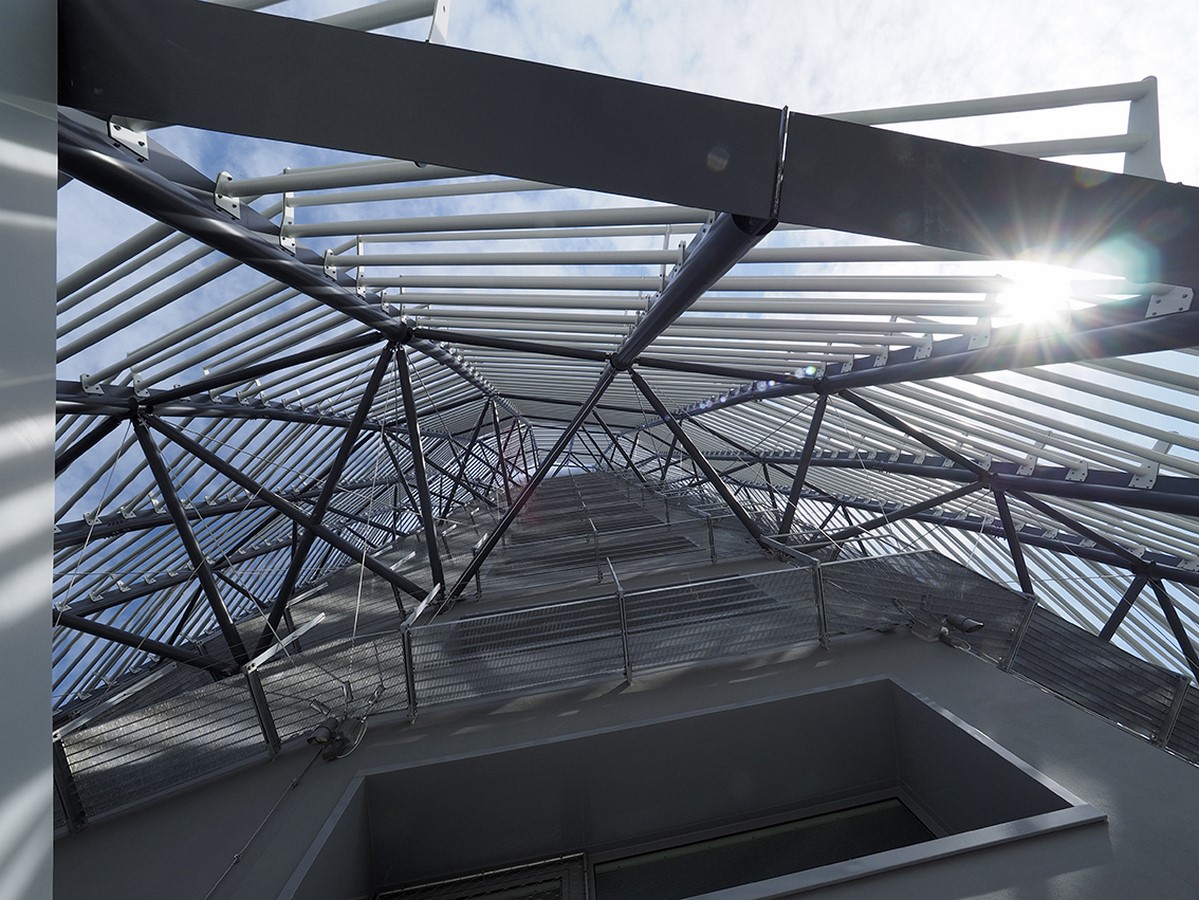
The design integrates the fluidity of the shading elements with the structural rigor of the supporting framework. The three-dimensional spatial structure consists of a series of trusses supported by cables, capable of holding the complex system of steel fins. The project includes a large transparent shell containing spaces dedicated to intellectual functions. The base platform, which reflects the full shape of the tower in the water basins, also houses a kiosk and services for the local community.

INTERNAL FUNCTION
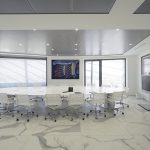
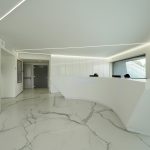
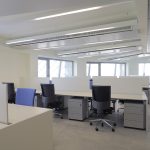
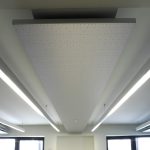
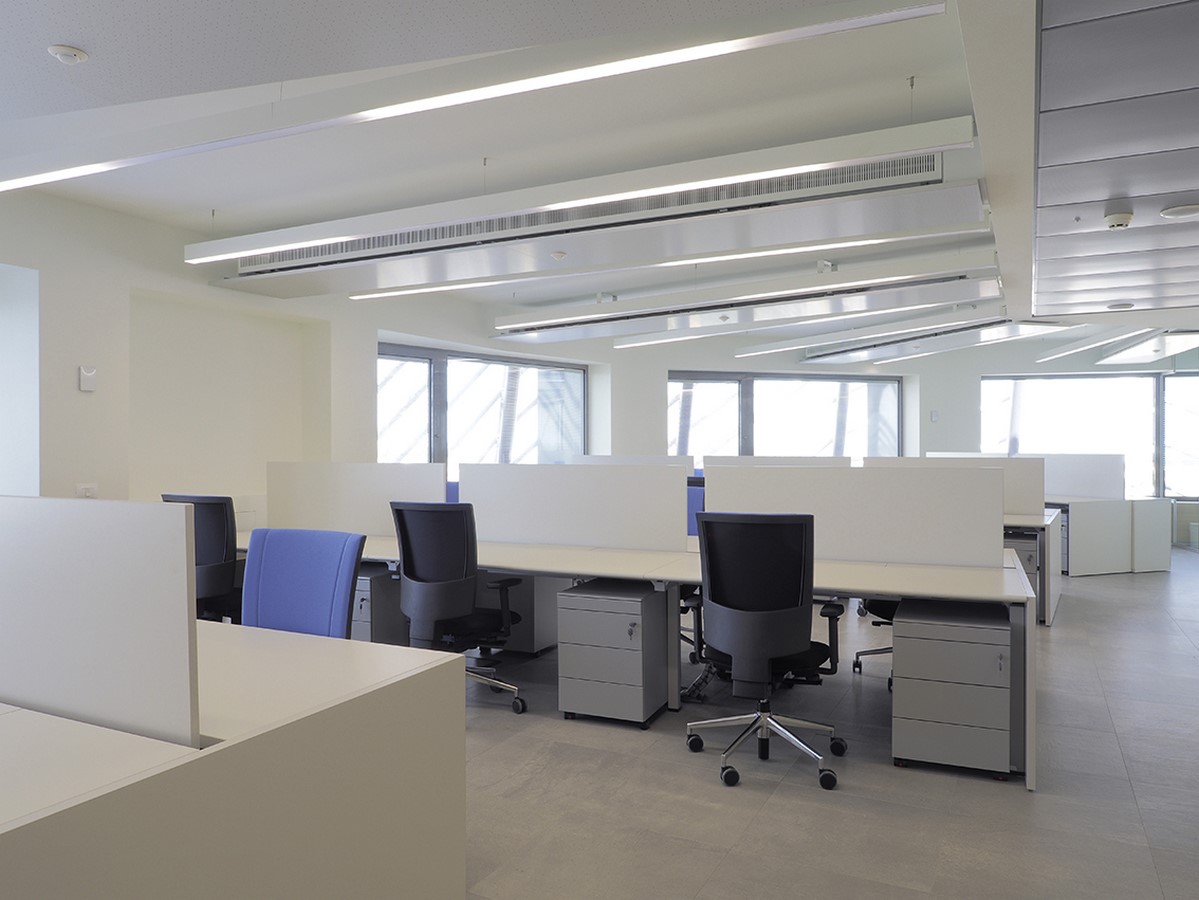
Functionally, the building is designed for office use. Floor areas along the perimeters were expanded, and vertical access was improved with the renovation of the internal staircase and the addition of two new elevators. Two new access points provide flexibility: one for employees, located on the ground floor, directly connected to the parking lot and public transport, and the other for visitors, located on the first floor. The tower also includes a training center on the two levels adjacent to the visitor’s hall and a meeting room with views of the terrace on the top floor.
From a spatial distribution standpoint, the floor plan is designed to accommodate both open space and closed offices. Both layouts revolve around a corridor that surrounds the core of the tower, leading to restrooms, elevators, and stairwells.
MATERIALS
The materials used for the building’s exterior finishes were selected for their sustainability, durability, and ease of maintenance. The facades are covered with an insulating layer, onto which a fiber-cement panel is applied. The tower’s entire structural system also supports the tensile spatial structure holding the sun shading fins. This system is made of painted steel elements connected to the steel tube fins, creating a three-dimensional object with fluid lines, formed by straight fins placed at inclined angles. The interior flooring finishes are made from porcelain stoneware, while the windows and frames are aluminum.