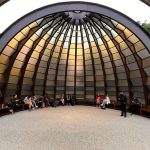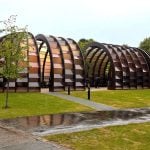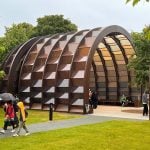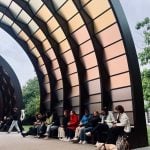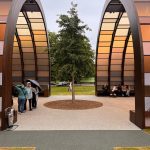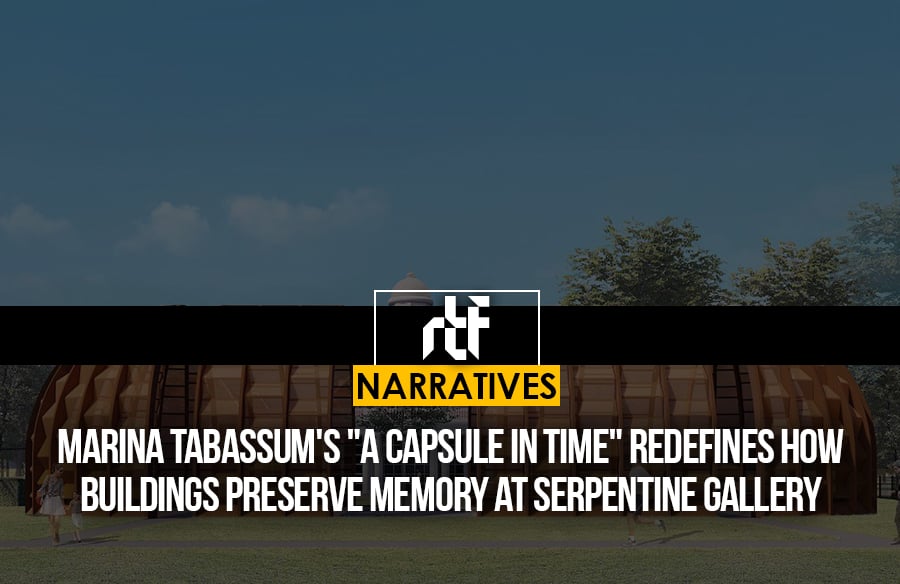
As one enters the beautiful Hyde Park in Central London and starts walking through its trails, towards the Serpentine Gallery, one cannot help but sense the presence of history along the trails. As the path leads towards the gallery, nothing can prepare the architectural eye for the pavilion of 2025, designed by Marina Tabassum, “A capsule in Time”, which stands bold at the lawns of the gallery. Marina Tabassum, a Bangladeshi Architect, is known for challenging all assumptions about how structures can represent cultural memory (Serpentine Galleries, 2025).
The pavilion, “A capsule in Time,” is meant to reflect how architectural narratives can evolve with time rather than just being a monument to permanence. For Tabassum, whose work has a history of engagement with impermanence, which is brought about by her country’s shifting deltas, this pavilion holds a deep personal significance and also resonates with a broader audience.
When Architecture Becomes Biography

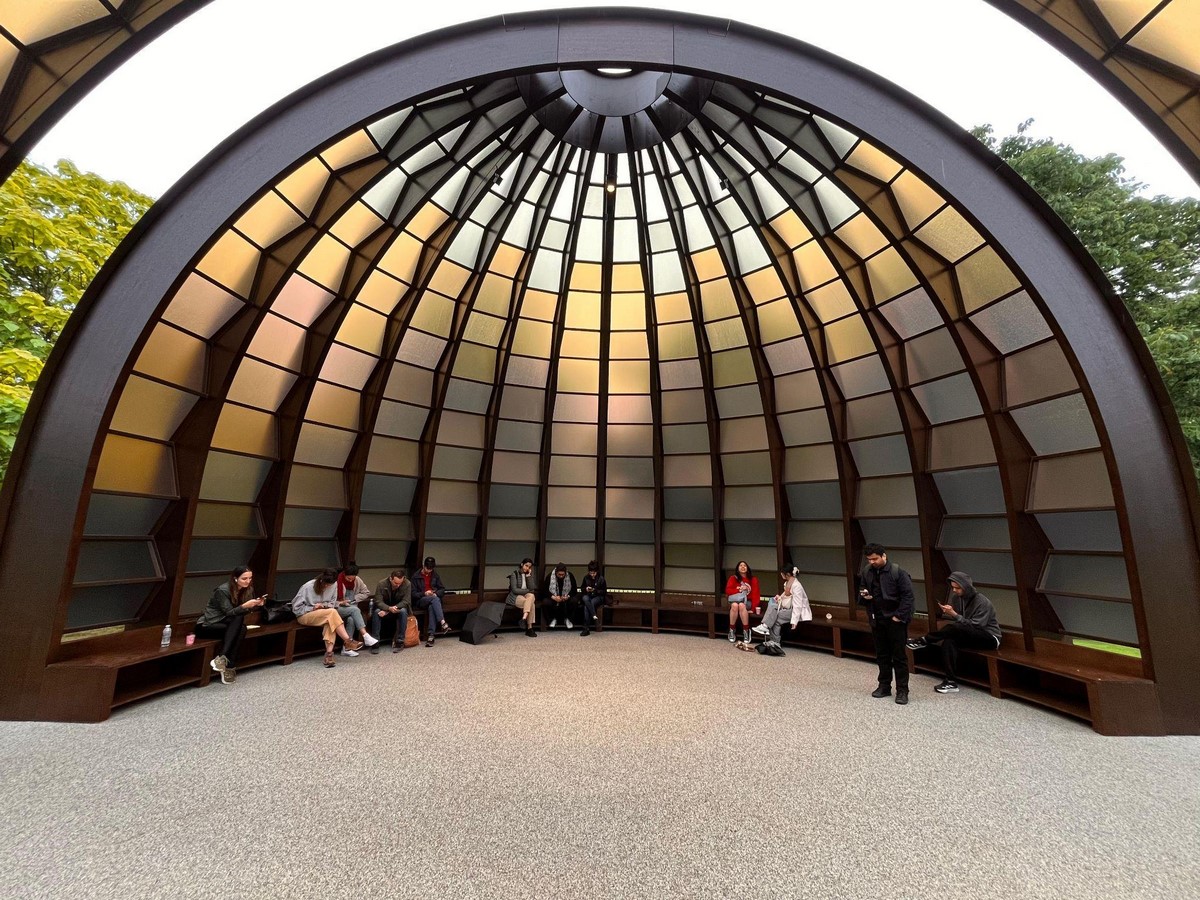
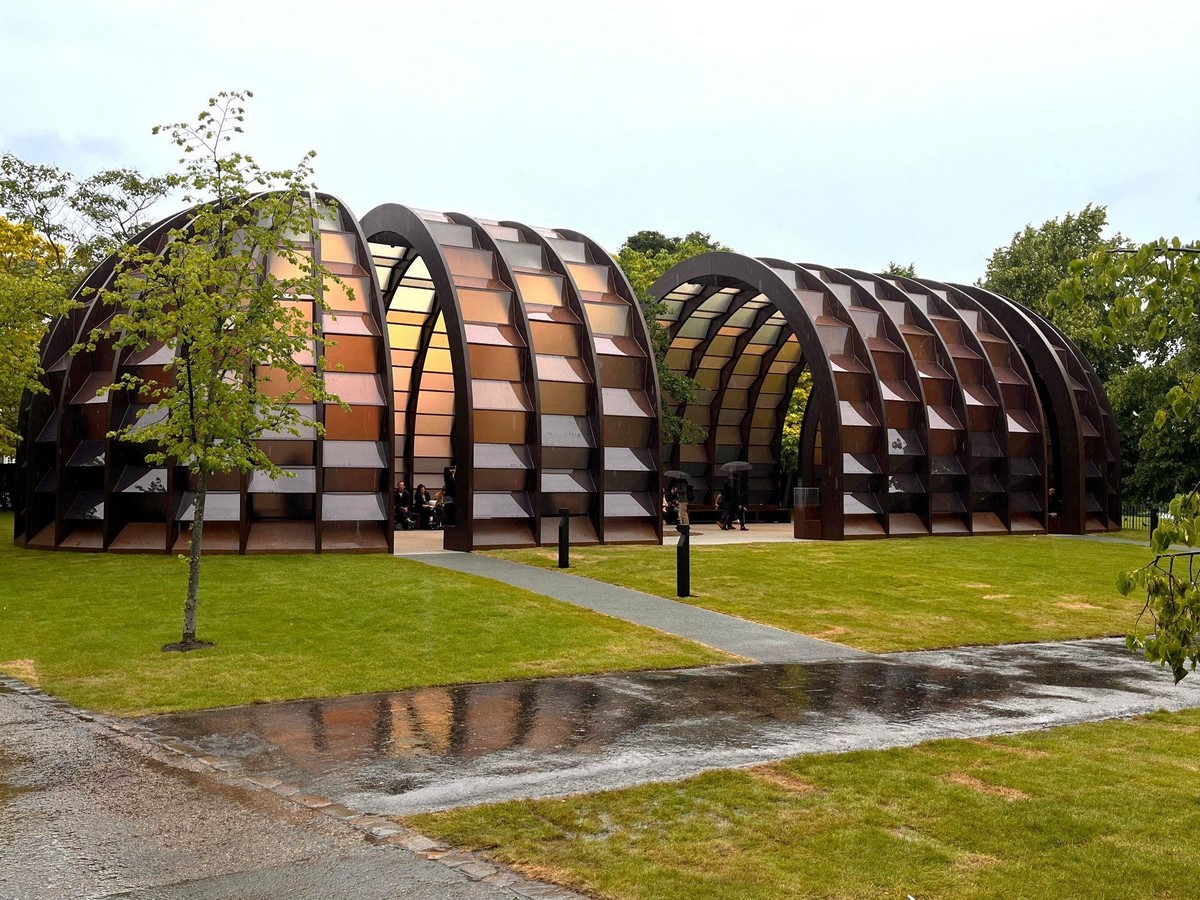
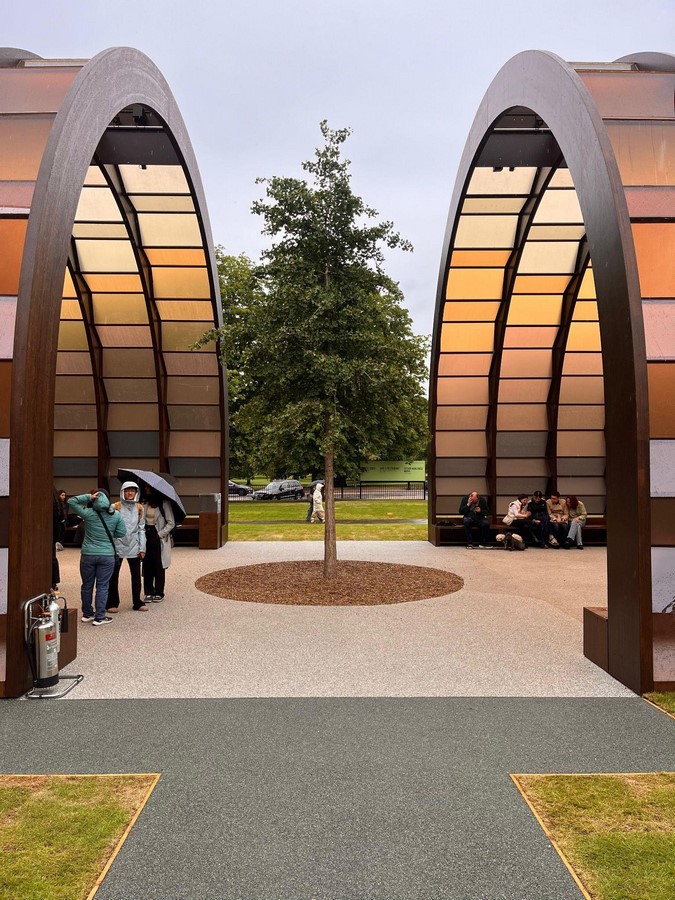
“Architecture becomes memories of the lived spaces, continued through tales,” says Tabassum, carrying the burden of a practitioner who has witnessed generations of a community adapting to landscapes that refuse to stand still (Designboom, 2025). This strong idea of hers spreads through every timber joint in the pavilion, “A Capsule in Time,” that stands aligned with the historic bell of the Serpentine south, along with forming a central courtyard with its four parts, which come together to form the shape of a capsule.
Aligning the four sections of the pavilion to form a capsule was a deliberate choice, symbolising the merging of histories and cultures, hence the name “A Capsule in Time.” Marina Tabassum positions her temporary building within London’s architectural legacy, acting as a “temporal bridge” that connects past and present (Wallpaper, 2025). The key argument here is that architecture can break down temporal and cultural barriers, fostering new connections across time and place.
Crafting Cultural Resistance Through Wood
Marina Tabassum’s approach to using wood for the entire structure of “A Capsule in Time” is what makes it unique and impressive. This choice of materials means more than just a change in the style for a firm that is well known for its skill in using brick and concrete (ArchDaily, 2025). Wood as a material here allows the architect to negotiate culture and build in association with the British building traditions while adhering to climate-responsive design principles.
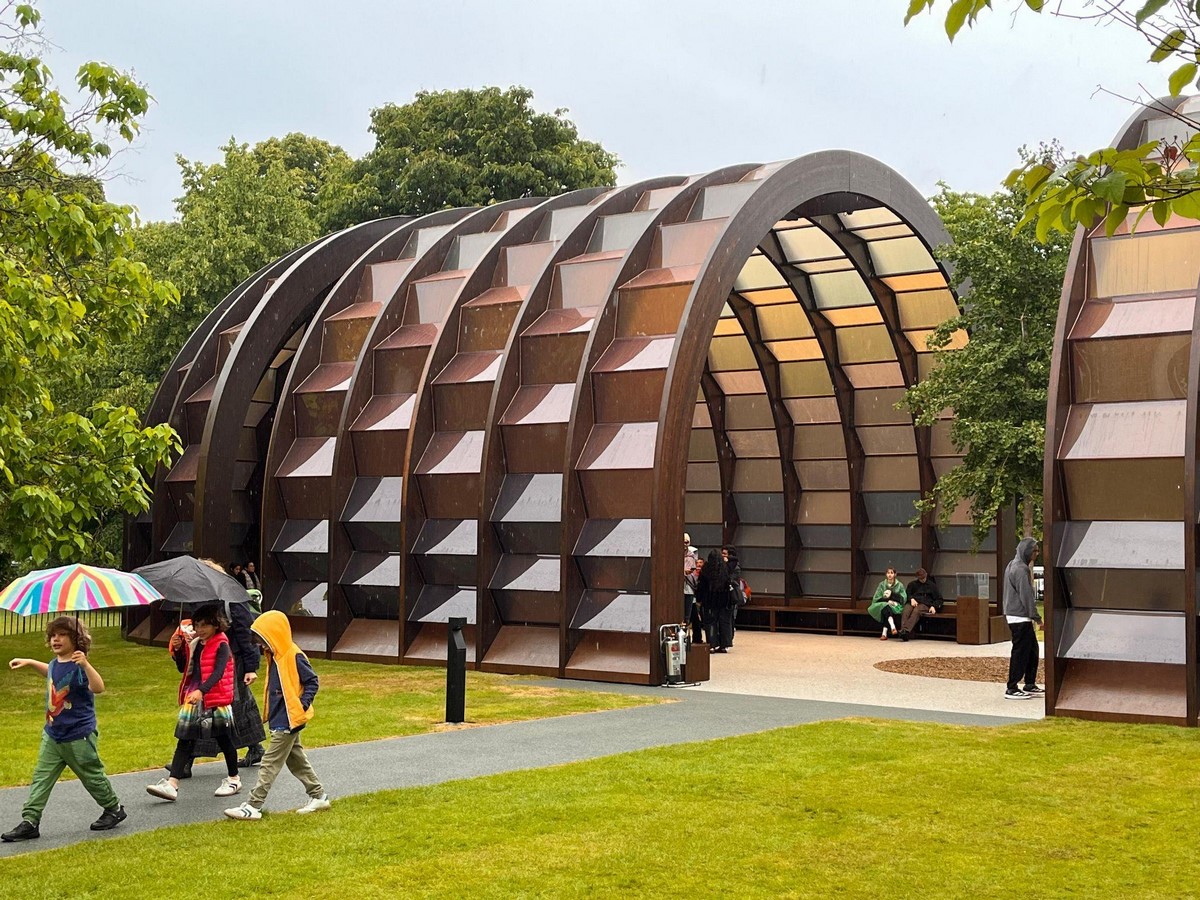
The wooden structure holds translucent panels of different colour shades, which filter daylight through. This visual is similar to the gentle and glowing ambience found beneath the traditional Shamiyana tents, which are known to have welcomed community gatherings for generations (The Plan, 2025). However, this is more than just an imitation. Tabsassum has used these everyday forms and turned them into something new and contemporary, which the architectural theorists call “critical regionalism” for the modern world.
A Library of Banned Books
Although the shape of “A Capsule in Time” is a captivating feature, it is also built to serve as an environment to store the knowledge that is vulnerable to being forgotten. According to the architect, “In a time when many books are being banned and education is being questioned, the very idea of knowledge feels under threat.” The pavilion contains a carefully chosen collection of Bengali Literature, which also consists of the works by authors whose books are banned in Bangladesh (Designboom, 2025).
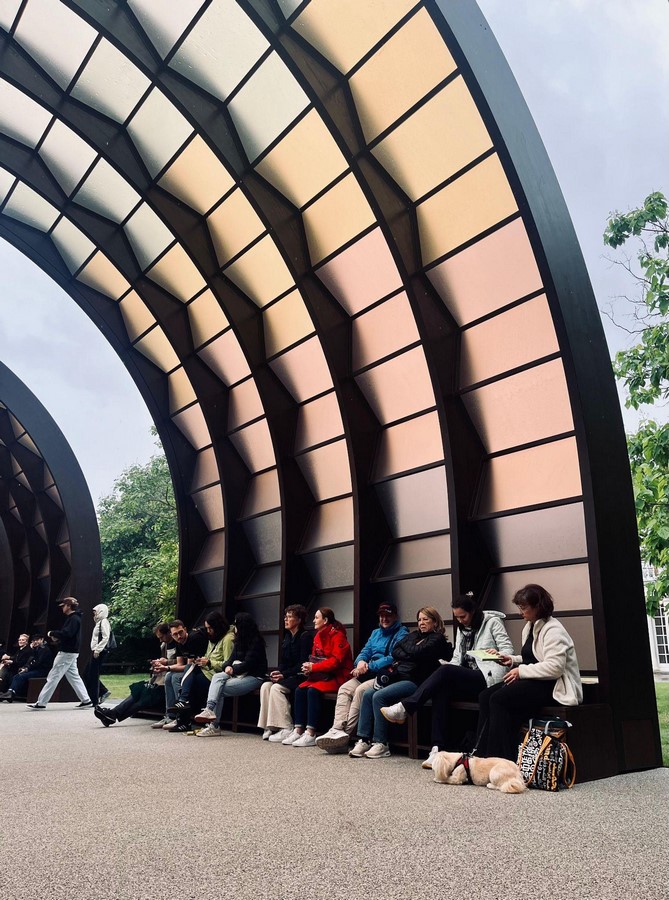
The bringing in of such books to the pavilion shifts the architectural time capsule into something more like activism. In the heart of London’s cultural scene, “A Capsule in Time” is a structure that discreetly but strongly argues for the right to intellectual freedom. Also, a Ginkgo tree in the centre of the pavilion, which dates back to the Jurassic Era, is an impactful portrayal of the kind of tenacity that is needed to depict cultural preservation (Divisare, 2025).
Redefining Architectural Legacy
The pavilion, “A Capsule in Time” by Marina, provides the architectural community with beneficial concepts about how a temporary structure can achieve permanence through influence rather than durability. Marina Tabassum is known to be the first South Asian architect to receive this esteemed opportunity by placing herself amongst the notable figures like Peter Zumthor and Zaha Hadid (UIA Architectes, 2025).
The real significance of this pavilion lies in its illustration of the ability of architecture to narrate stories that go beyond material permanence. As one capsule moves and can transform how a space is perceived through the inventive kinetic elements, the structure also symbolises the adaptive resilience that climate change demands from modern practices (Sayer, 2025).
As the closure of the pavilion on the 26th of October nears, the impact of “A Capsule in Time” on the architectural discourse appears to become certain (Serpentine Galleries, 2025). Marina has created something beyond just a pavilion, and she has showcased how architecture serves as a cultural sanctuary and as a catalyst for change.
For the budding architects filled with questions of cultural identity, adapting to climate change and social responsibility, “A Capsule in Time” offers a masterclass about how structures can preserve memories along with remaining sensitive to contemporary challenges.
References:
Sayer, J. (2025). 2025 Serpentine Pavilion – Architecture Today, Architecture Today – The independent architecture magazine. Available at: https://architecturetoday.co.uk/2025-serpentine-pavilion-marina-tabassum-a-capusule-in-time/ (Accessed: 13 August 2025).
Designboom, Thomai Tsimpou I. (2025) Marina Tabassum on designing the 2025 Serpentine Pavilion as it opens in London, designboom. Available at: https://www.designboom.com/architecture/marina-tabassum-design-serpentine-pavilion-2025-london-kensington-gardens-capsule-time-interview-06-03-2025/ (Accessed: 13 August 2025).
Marina Tabassum architects, Iwan Baan · a capsule in time. Serpentine Pavilion 2025 (no date) Divisare. Available at: https://divisare.com/projects/532703-marina-tabassum-architects-iwan-baan-a-capsule-in-time-serpentine-pavilion-2025 (Accessed: 15 August 2025).
Serpentine Galleries. (2025). Serpentine Pavilion 2025 by Marina Tabassum. Serpentine Galleries. Retrieved from https://www.serpentinegalleries.org/whats-on/serpentine-pavilion-2025-by-marina-tabassum/
The Plan. (2025). Serpentine Pavilion 2025: “A Capsule in Time”. The Plan. Retrieved from https://www.theplan.it/eng/whats_on/serpentine-pavilion-2025-a-capsule-in-time-marina-tabassum
UIA Architectes. (2025). 2025 Serpentine Pavilion – A Capsule in Time. Union Internationale des Architectes. Retrieved from https://www.uia-architectes.org/en/news/2025-serpentine-pavilion-a-capsule-in-time/
Wallpaper. (2025). 2025 Serpentine Pavilion to be designed by Marina Tabassum. Wallpaper. Retrieved from https://www.wallpaper.com/architecture/2025-serpentine-pavilion-london-marina-tabassum