
The Greek philosopher Heraclitus once said, “Change is the only constant.” He believed that the entire world was in a constant state of transition. Societies change, their beliefs change and so does the architecture, shaped by these societies, change. In this entire process, only one thought remains constant – the thought of Uncertainty. Since architecture is a diversified field, this thought of uncertainty should not be seen through a single perspective. This essay will look at some possible alternatives for the ‘future of architecture’.
The Language
The ideologies of the people of that era transformed architecture’s language. For example, in the 17th century, people across Europe developed a taste for Baroque architecture. This style is highly ornate and dramatic in terms of interior and exterior. Detailed vaulted ceilings, luxurious materials, and large central domes are some of its characteristics that give the visitor a heightened feeling of grandeur and sensuality. By the 1920s, a new style, catering to more artistic freedom, emerged, popularly called Art Deco. Art Deco transcended its precedents’ great details and gave rise to sleek forms, bold geometric shapes, and streamlined edges. The language of this style was toned down when the nation faced depression which eventually led to the formation of Modernist architecture. Modernism gained its popularity through the industrial growth of glass and concrete, and it favored the idea of minimalism. Due to globalism, post-modern, brutalist, and parametric architecture are becoming common in other nations worldwide as well. Architecture is losing its ‘region-centric’ characteristic and is becoming more ‘homogenized’. What can be observed from this is how the future of architecture and the language of architecture are linked. The evolving future will reshape the architecture we perceive now.


The Apocalypse
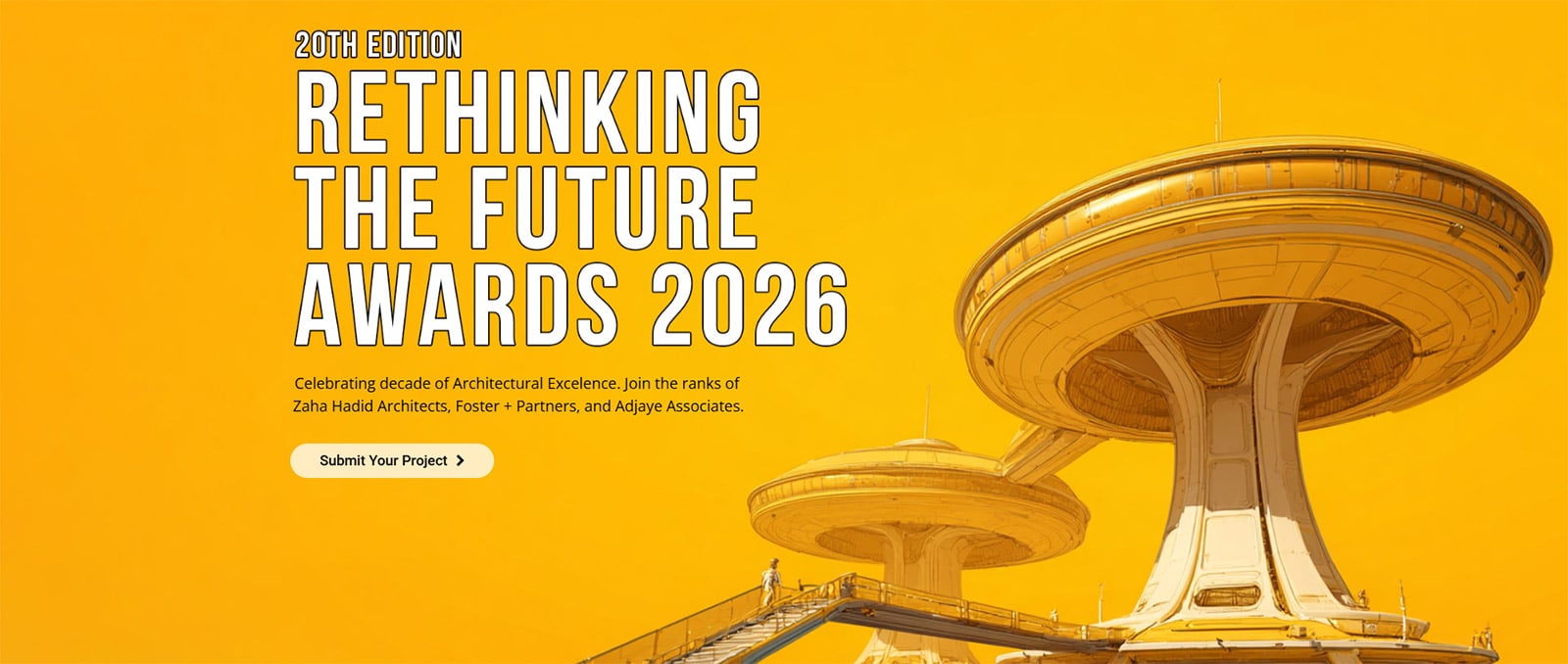
According to a report by the Global Alliance for Buildings and Construction 2018 Status Report, more than 40% of global emissions of CO2 are because of the current built environment. If architects, without any concern, go on building the current concrete and glass blocks, then there is only one outcome, which is ‘the apocalypse’. However, there still is enough time for architects and scientists to collaborate and create an easily available material that will replace glass and concrete, stop the adverse effects of construction, and create an eco-friendly utopian city. One way to envision this could be by picturing a hyper-futuristic city filled with parametric buildings illuminated by neon lights, having functional, aesthetic yet environmentally sustainable architecture. The city might have buildings with plants growing onto its façade. A clear reflective surface might replace glass without trapping the heat. This city will be the ultimate utopia.
Cities like Medellin in Colombia, have started introducing biophilic design in each of their buildings. They are revamping parks and adding trees on streets wherever possible to help create “green corridors”. This has significantly lowered the city’s temperature by 2 degrees Celsius since 2018! Some more eco-centric architectural interventions include self-sustaining buildings; terrace gardens and green facades; smart facades responding to the direction of sun and automatically preventing harsh sunlight from entering the building etc. Those small steps pave the way to the idea of ultimate sustainable eco-centric architectural design.

Another way of imagining the future of architecture would be by assuming that Earth is beyond human repair. In that case, architects will have to take up the job of designing in outer space. Maybe on a different planet, for which many competitions are held worldwide, and is a trendy topic for discussion; or maybe designing a spaceship huge enough to accommodate all the people, flora, fauna and while still leaving enough space for recreational activity. The entire spaceship could be a giant piece of architecture floating around in the universe, inhabiting the last generation of humans alive, before leaving the planet. Much like it was shown in Pixar’s Wall-E.
The Role of Architects
Considering the aftermath of the apocalypse, architects do have a demand. Being able to build habitable spaces can be done by none other than the architects themselves, at least that is the case right now. If we consider that humans can build something as advanced as a spaceship housing all the humans on Earth, it will be hard to believe that artificial intelligence (AI) will remain stagnant. If AI does reach the limit of intelligence a human can impart to a robot, then these robots might be able to help out humans with creative decisions as well. In the current era, robots are helping with surgeries, so there is a slight possibility that the future of the jobs of creative people is at risk. The only way to protect their jobs in the future from AI would be by being more efficient than robots. Humans should impart knowledge to AI only to the extent that does not snatch away jobs and does not have any emotional quotient.
The Nearer Future
Everything mentioned above will happen 200-500 years from now. But what will happen in between? In cases like Mumbai, this question arises in many architects whose only wish is to create good habitable spaces but end up making spaces that only profit the ‘developers’. The building codes which were once created to lead a healthy lifestyle within a building, are now the reason for the deaths of many. The deaths are not direct, but the inadequate sunlight and ventilation, not enough space to loiter, etc., are resulting in poor health which later cannot fight diseases. The ‘chawl’ system, which was once very common in Maharashtra, is now looked down upon by many, calling it unhygienic, while the irony is that the new tall needle-like scrapers have much more substandard plans. Even though the cost of real estate is touching the sky, it is hard to own an apartment. Architecture, in such cases, is becoming prey to a system that favors capitalism and corruption and it is in the hands of architects to conserve architecture as an applied and functional art rather than just leaving it ignored. Such ignored architecture creates look-alike buildings, with absolutely bad living conditions.
References:
- Bannister, T.C. and Giedion, S. (1944) ‘Space, time and architecture, the growth of a new tradition,’ The Art Bulletin, 26(2), p. 134. https://doi.org/10.2307/3046945.
- Rodriguez, E.L., Beusterien, J. and Menocal, N.G. (1996) ‘The Architectural Avant-Garde: from art deco to modern regionalism,’ The Journal of Decorative and Propaganda Arts, 22, p. 254. https://doi.org/10.2307/1504156.
- Gbri (2024) Understanding Architecture 2030 and its impact on sustainable building. https://www.gbrionline.org/architecture-2030-what-you-need-to-know/#:~:text=Background%20on%20Architecture%202030&text=That%20is%20over%20a%20third,outlined%20in%20the%20Paris%20Agreement.
- This Colombian city is growing ‘green corridors’ to tackle rising heat (2024). https://www.weforum.org/agenda/2021/08/colombias-medellin-plants-green-corridors-to-beat-rising-heat/#:~:text=Foundation/Anastasia%20Moloney-,Bring%20back%20nature,heating%20carbon%20emissions%2C%20he%20said.
- Padora, S. (2019). Mumbai’s Architecture is Killing Us !!