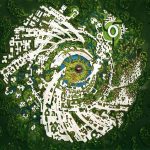
When we disembarked from the train after a 48-hour journey at Chennai railway station, we were still brimming with excitement. The name Auroville had that magic. When it was announced in college that we would be able to go and attend a construction workshop in Auroville, I was absolutely thrilled. I had heard much about Auroville, about its history and more importantly about its way of life. Auroville is an experimental township designed to facilitate a sustainable way of life. It aims to be progressive and egalitarian. Thus, the planning of the town by Roger Anger and the architecture that has followed has strived to reflect these values.
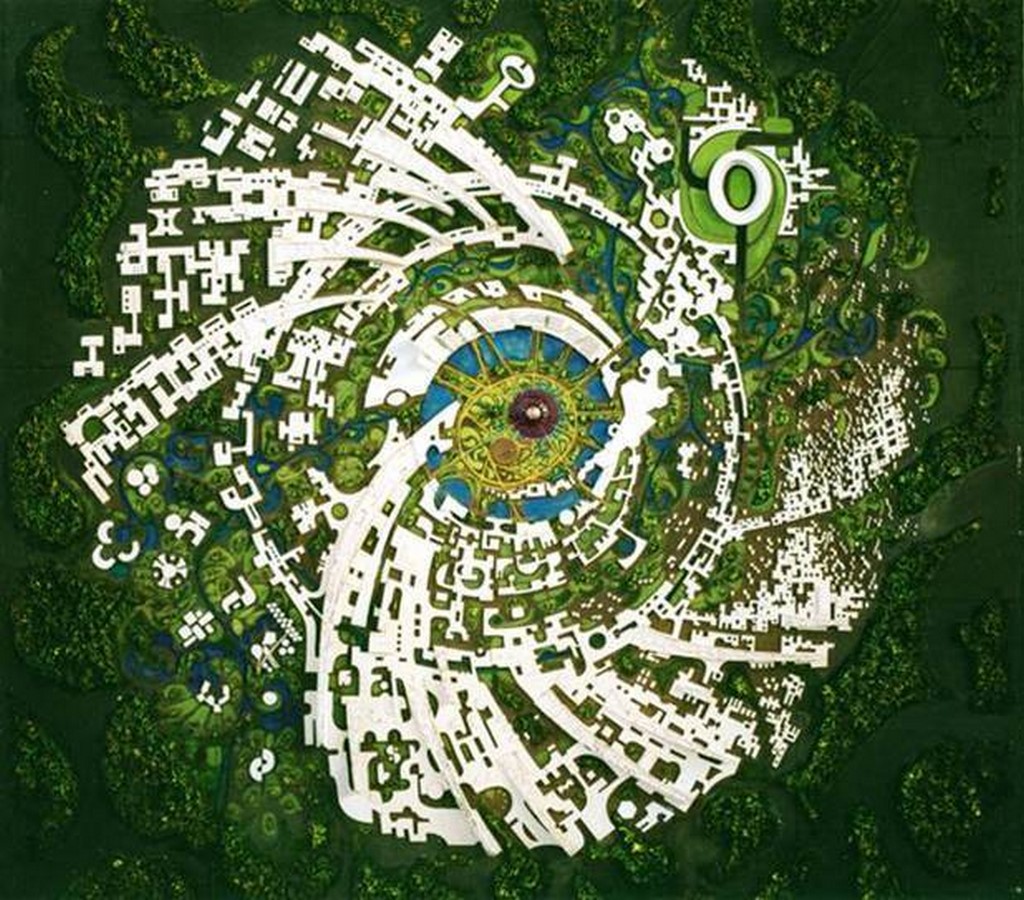
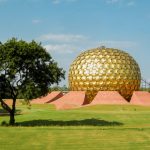
So, from Chennai, we took a bus and in the early hours of morning reached the famed Auroville. We were welcomed at the Youth Camp guest house and allotted our rooms. And then we quickly headed out to the Interpretation centre where we first acquainted ourselves with the idea behind Auroville and its journey from an idea to a settlement. While the concept and planning fascinated me, what was even more intriguing was the idea behind setting up this town, a sustainable way of life. It was no wonder that we were going to explore alternative, eco-friendly building techniques here. But before we began, Auroville is home to so many remarkable works of architecture, foremost of which is the Matrimandir, that a tour was in order.
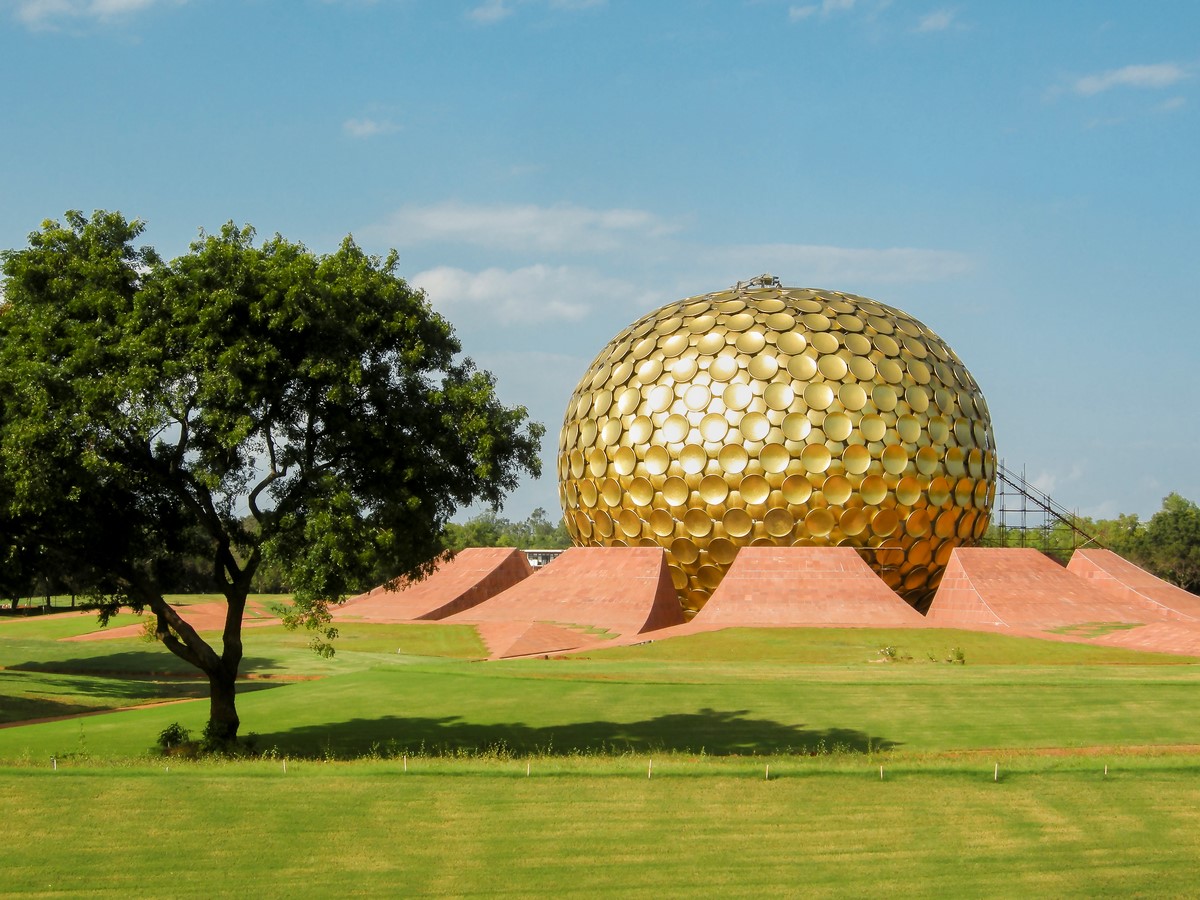
However, meditating in Matrimandir is not an easy task. You need to first explore the Matrimandir from outside and understand the concept behind it. Only then the entry is granted, that too upon advanced booking. Our exploration of the Matrimandir from the viewing point left us in awe. Even upon viewing it from outside, Matrimandir made us speculative and we all gradually fell silent, as if in introspection.
Finally, it was time for the bamboo workshop. The workshop was held in a clearing. We had our instructors to guide us through the various building techniques. We were divided into three groups. Our task was to erect the basic structure for a hexagonal cabin with each group constructing two walls. Plans were drawn and we were off to work. There is a big difference in drawing something on paper and constructing it in reality. This was our first taste of that difference. As we continued to strive in arranging the bamboos, measuring them to size, cutting them correctly; our appreciation for the labourers and artisans continued to grow. What started as a friendly tussle between our three groups quickly evolved into a fierce competition to see who constructs their wall first.
A routine fell in place. After breakfast at the hostel, we would head to the clearing and work on our bamboo cabin until everyone was sweaty and hot. We would come back to the solar kitchen for a healthy solar-powered lunch. Then head back to the clearing for more work.
Quickly the differences between Auroville and our hometowns were apparent to us. We lived in a hostel-like guest house and shared common washrooms, whereas while some of us lived in a hostel, most were still living at home. We ate healthy meals at the solar kitchen everyday while back home we would eat all kinds of junk food. We walked as a group from one place to another, while back home we would take different public transport. And most importantly, as the sun set the roads would become dark and empty whereas the cities where we came from, they would be alight with a thousand lights.
As the competition between our three groups was to heat up, it happened, the highlight of my trip. I was trying to split the bamboo into shorter pieces and then carve them into dowels. As I was trying to split the bamboo as quickly as possible, I was swinging the knife hard. Only instead of catching the bamboo, you guessed it, it caught my finger. The knife was so sharp, I didn’t even feel any pain. I was still looking at it in wonderment when somebody noticed all the blood. Of course, our instructors were prepared for such an occasion. I was quickly taken aside. They cleaned my wound and bandaged it quickly. Luckily, the injury didn’t need any stitches. But I had not just injured myself, I had injured our team’s chances of getting both the walls up. But that’s when our team spirit shone. The whole group rallied around, as I tried to be helpful where I could, and we got back to work with a renewed vigour.
In the end, it didn’t matter who won the race to the finish line. Because what matters is the whole picture and not just individual pieces. The cabin mattered and not just the walls. All three groups constructed their walls and came together to work on the most complex part, the roof. On the last day of the workshop, we were racing against the sun. We missed that deadline but continued to work in the light of small lamps. But eventually, we finished the cabin and felt that particular joy that comes only after seeing your imagination come to life. We walked back to the hostel in pitch dark, as little squares of flashlights shone here and there with a sense of achievement and unity.