My relationship with architecture goes back to my toddler days when solving jigsaw puzzles and playing with Lego blocks was my top game. As I matured, it transformed into an admiration towards the new age buildings and a keen curiosity to understand its vast history. A trip to Taj Mahal, Agra, in the 8th grade is still fresh in my mind, where everyone was busy clicking pictures, and I, on the contrary, was hyper inquisitive to understand the mechanics behind its grandeur and pristine ethereal splendor. I was eager for more such experiences but at that time “Internet” was still out of vogue, so I discovered through sources that a course in “Architecture” was what I needed. My tryst with architecture began with full zeal and vigor, and felt like a breath of fresh air, after the overpowering presence of physics, chemistry, and mathematics in my life.

After whatever little time I have spent with it, learning and teaching both, it’s easy to say that “First Year” is quite literally the foundation of your career. It authenticates that “Observation” and “Imagination” are the two major mainstays in this field. Le Corbusier had once said, “I prefer drawing to talking, drawing is faster and leaves less room for lies.” Observational Sketching is a technical skill that resonates with the above adage and is etched at the beginning of the course through exercises like live sketching of objects and streetscapes. It is taught to increase awareness in students, as the more you are aware of your surroundings, the more you can add and subtract to it for its upheaval, as an architect. Also, the art of observation augments your innate ability to visually represent your design in the form of a sketch or a drawing, endorsed with minute details, giving it credibility and clarity both. Moving on, Frank Lloyd Wright through his quote, “Architecture is the triumph of human imagination over materials, methods, and men, to put a man into possession of his earth.” establishes the paramount importance of Imagination in the various design development stages. To ignite it in the minds of young students, various Basic Design exercises like conceptual compositions or freehand sketching, with a thorough understanding of elements and principles of design, is imparted to the first-timers and sowed in their novice minds well in time to reap prolific results in the future.
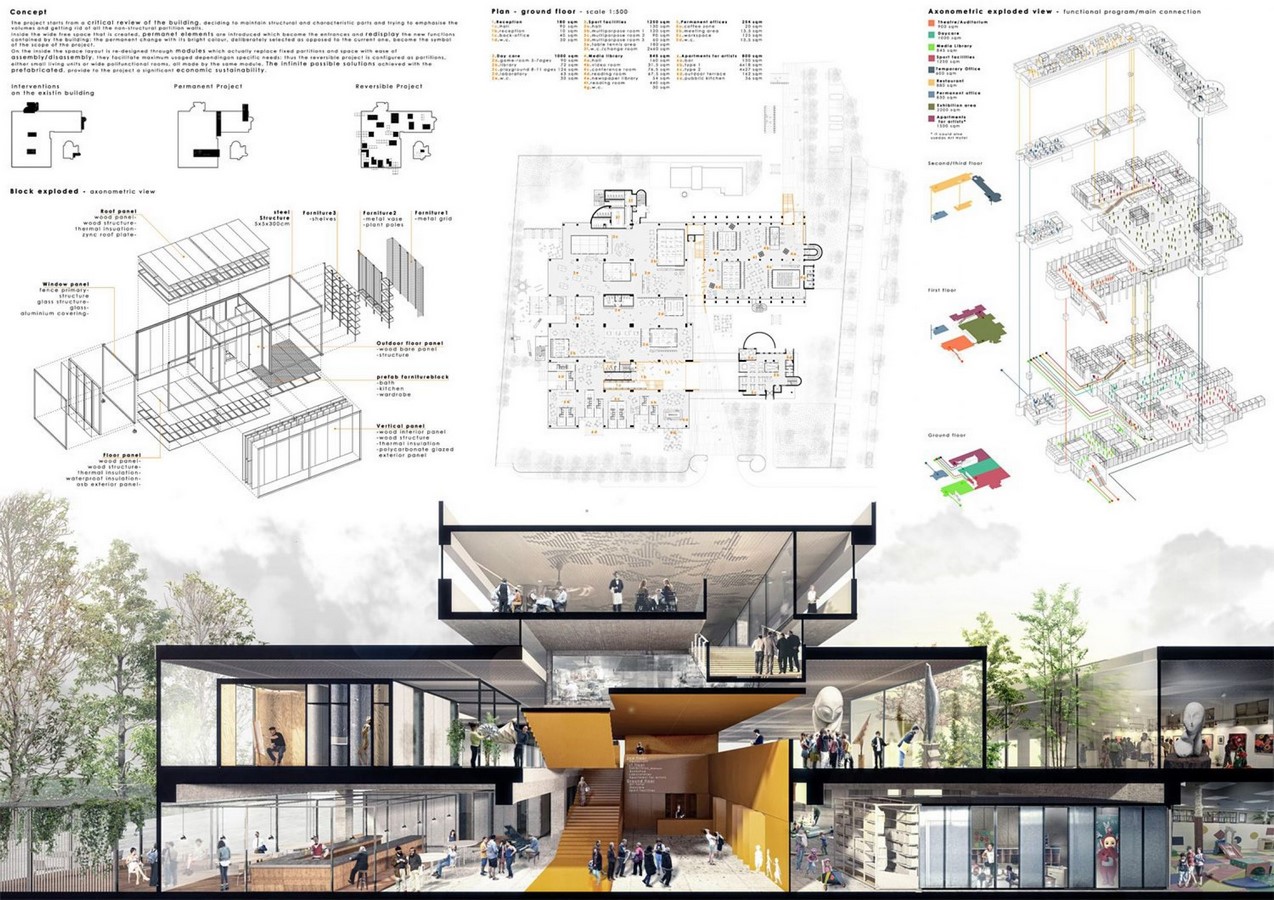
Since ages, the whole idea about architecture is to design and sell, which brings forth another important technical skill, which is the art of making presentation drawings. From engraved drawings on clay tiles and papyrus leaves in ancient times to full-fledge computer-aided drawings, the development has been uncanny. Crafting hand-rendered sheets in the first year with the help of power tools like a drafting table, parallel bar, and a set square, makes you feel no less than a warrior. Its well-coordinated dance helps to unfold our mindless imaginations on paper, but well within standards and measurements. The tectonic shift from the innocence of hand rendering drawings to the sharpness of computer-aided drawings is a must and most pertinent in the present times. The appearance of Computer-Aided Design (CAD) can be dated back to the 1960s and holds fort even today, only improving with time and giving the preferred flair and confidence to an architect. It takes practice to become acquainted with it, but once educated, it is a crucial technical skill taught to the students to aid them in presenting their ideas conveniently as well as commercially in the impending future. Along with AutoCAD, many other 2D and 3D generation software in the likes of Revit, Sketchup, Grasshopper, Archicad, and 3DMax were a part of our curriculum, sadly making us “Jack of all but master of none.”
Architectural Research and Documentation is yet another crucial technical skill, I picked up during my architectural education. The etymology of the word “Research” is “Re” as in to repeat and “Search” as in to look or find, that is, it means to repeatedly search till you find your answers. Our core learning outcomes for Architecture Design were majorly about Design Research and its methodology. Whether it was an exercise to propose a micro project like a bus stand or to design an urban level Commercial Business Center, design research was imperative. Hence, training us that an articulate composition consisting of case studies, the pre texts and contexts of the problem, the literature standards, and a precise design program makes a design firm, commodious and delightful. Documentation to research is what butter is to bread. A well-documented design is a job half done for the designer, it amplifies the research process and gives transparency in the thoughts and notions that underlie the basic concepts.
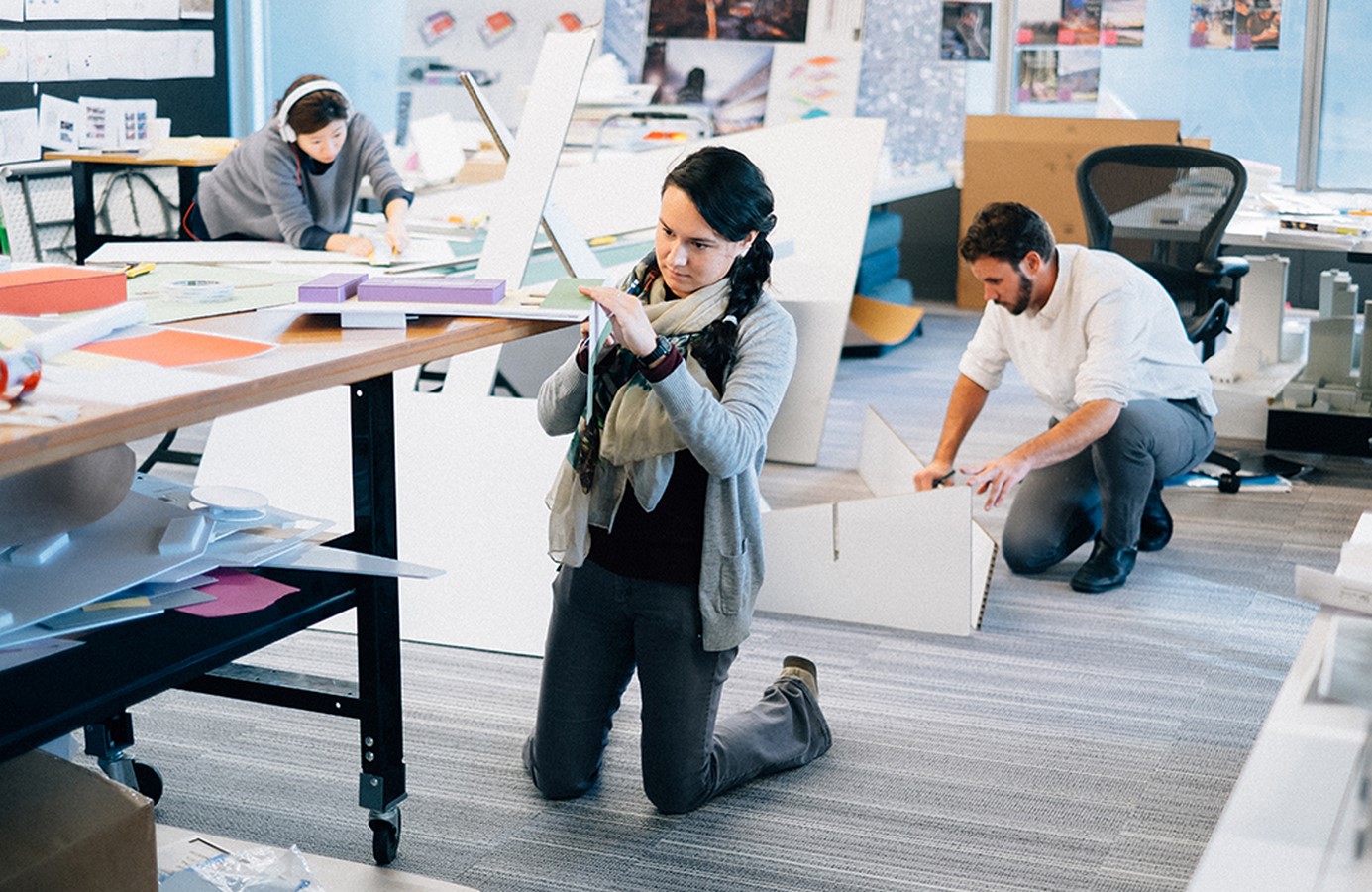
After four years of academic training and ready to leap the “Internship”, my enthusiasm was in manifolds, only to be shattered by reality. The training was like relearning architecture all over again, it changed my perception, made it parallel with the real world, and sensationalized me with its commercial aspect. It is an overwhelming experience and is a repertoire of knowledge, induced with site visits, measured drawings, capstone projects, and client communications. It’s like the first year all over again, only there is no scope for resubmissions. Since then I have been an advocate for internship programs to be conducted every year, as then the gap between academics and practice can be bridged.
Though it is very early for me to conclude because I have just begun, nevertheless, I would like to say with all the pros and cons of the architecture curriculum and its pedagogics, it has still given me my ”opinion”. It has helped me understand that it’s okay to learn and unlearn in all the phases of life. It has given me purpose and the required skills, to work on the following quote, “It is a belief that someday these mundane pieces of art would conduce to form substantial realities.” said by myself.