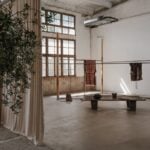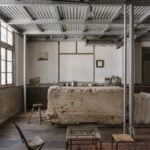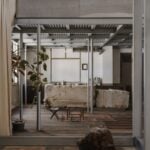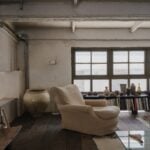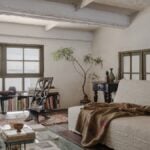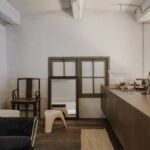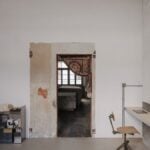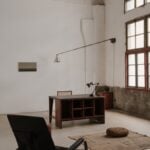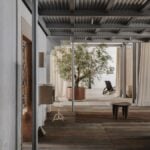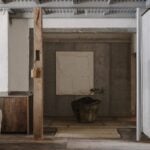
Sans Raison is a 406-square-metre renovation project located in Jiading District, Shanghai. Originally an industrial building, the site retains much of its existing structure and the traces of its previous use.
Project Name: Sans Raison
Studio Name: Mountain Soil Design
Location: Shanghai, China
Floor Area: 406 sqm
Design Director: Tiantian Dong
Photography: Wen Studio
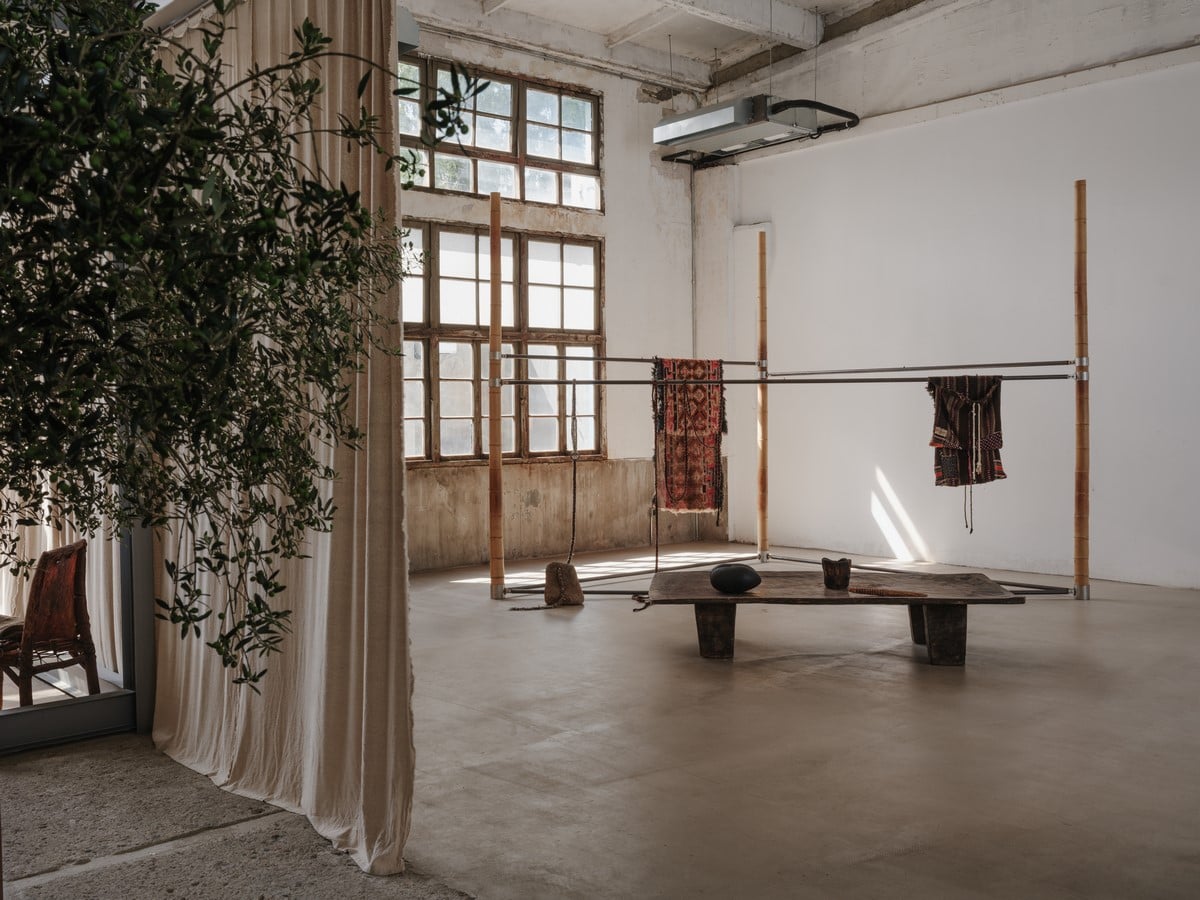
Rather than introducing an entirely new spatial arrangement, the design takes these existing conditions as a starting point, exploring how the building can accommodate new functions while retaining its original character.
The renovation takes a different approach to each part of the building. The front section is minimally altered to accommodate exhibitions, preserving the original scale and openness of the factory. The rear section undergoes a more substantial transformation, accommodating a café, workspace and reception areas. The transition between these areas allows exhibition activities and everyday use to occupy the same building without being strictly separated.
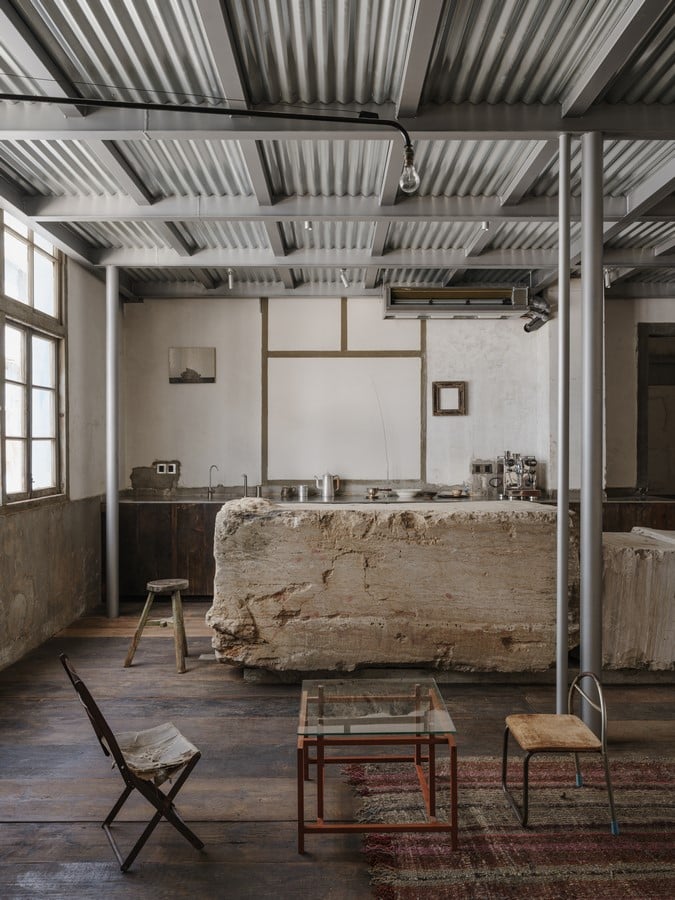
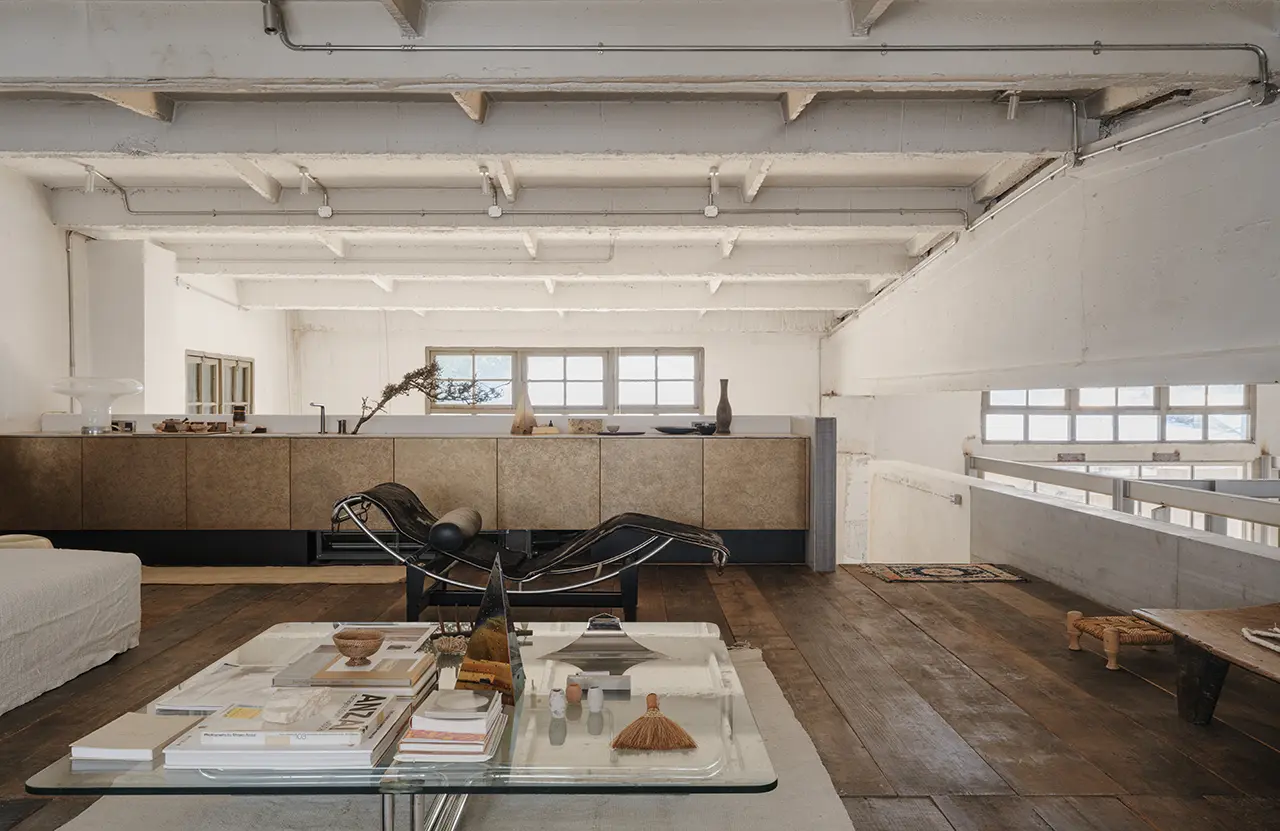
Mountain Soil Interior Design approached the project by working with the building’s existing structure and proportions. Original concrete beams, aged walls, timber flooring and window frames were retained wherever possible. New steel frameworks were introduced as clearly defined additions, with their construction and materiality deliberately distinguished from the original fabric. Rather than attempting to unify the old and new elements, the design allows their differences to remain visible, revealing the building’s successive layers of use and alteration.
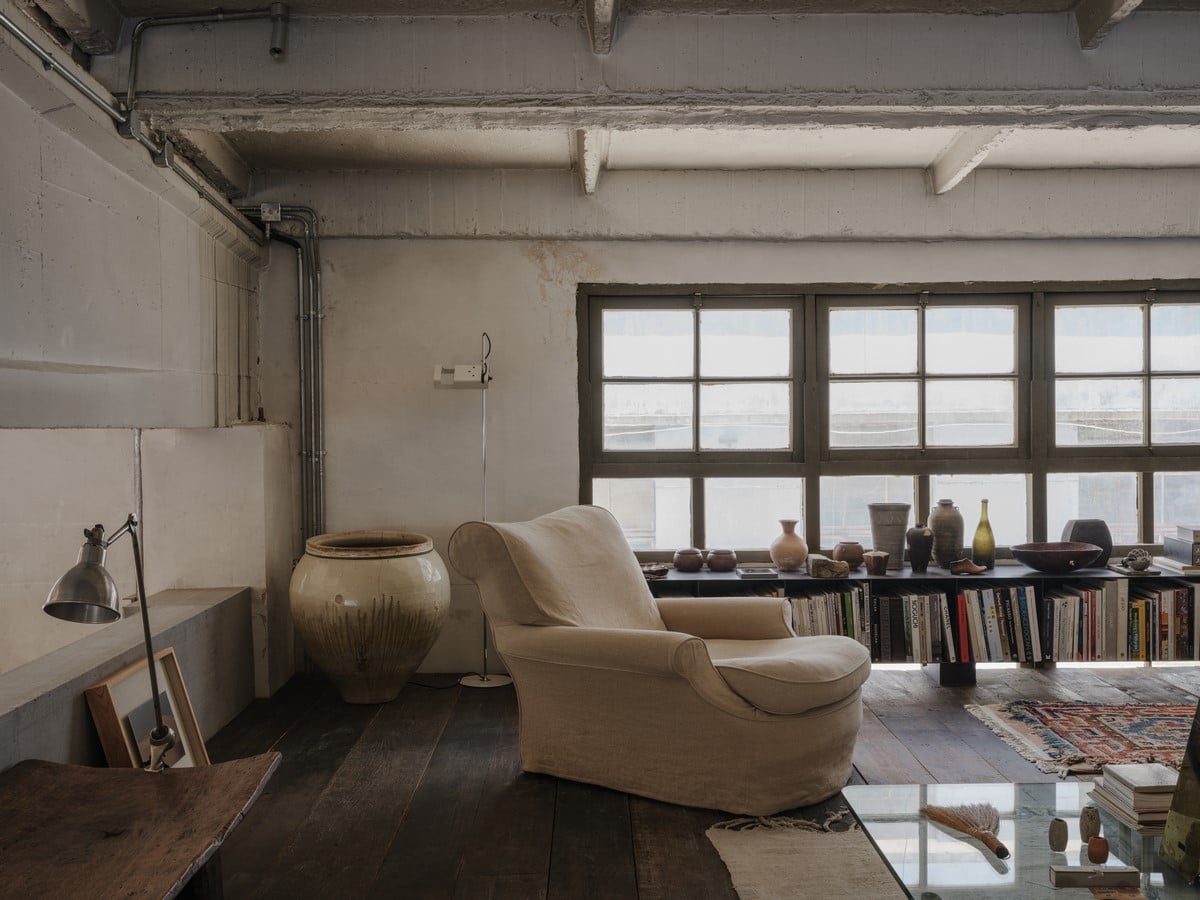
The new steel frameworks also help organise the interior, defining smaller areas within the larger industrial volume. Metal elements, curtains and changes in flooring establish varying degrees of enclosure, allowing spaces to shift between open and more private settings. The landscaped entrance, communal areas and outdoor courtyard are connected through the layout, with boundaries used to define functions while maintaining visual and spatial connections between them.
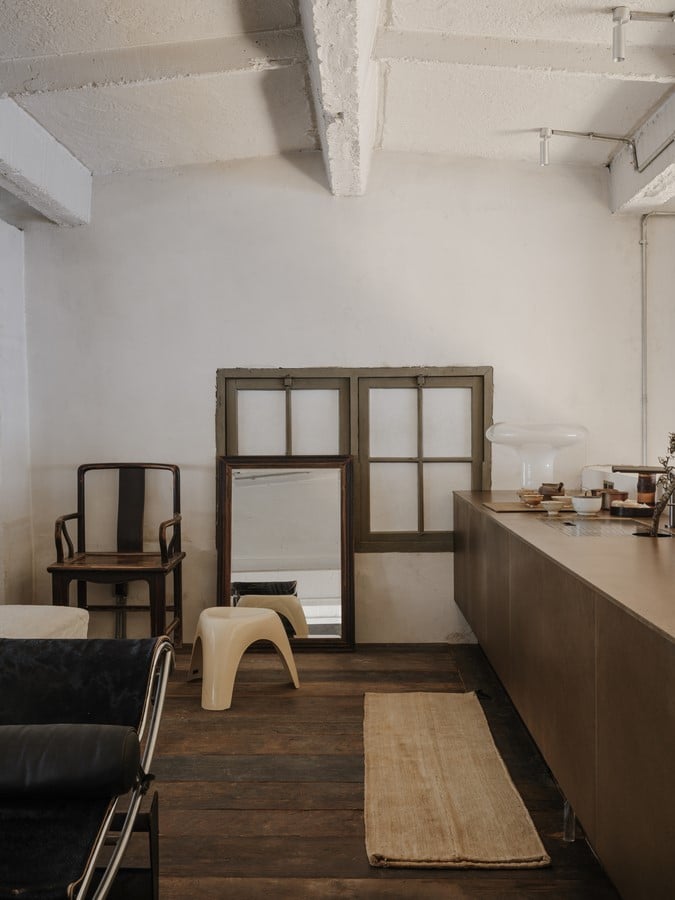
The selection of materials follows a similar approach. The café counter was made from a single discarded block of marble sourced from a former stone factory. Its irregular shape and rough edges were retained during fabrication, preserving the character of the original stone. The solid mass of marble sits alongside a precisely finished stainless steel worktop, creating a contrast in texture, weight and surface treatment. By adapting the discarded stone for a new purpose, the design retains the material’s existing qualities rather than concealing them.
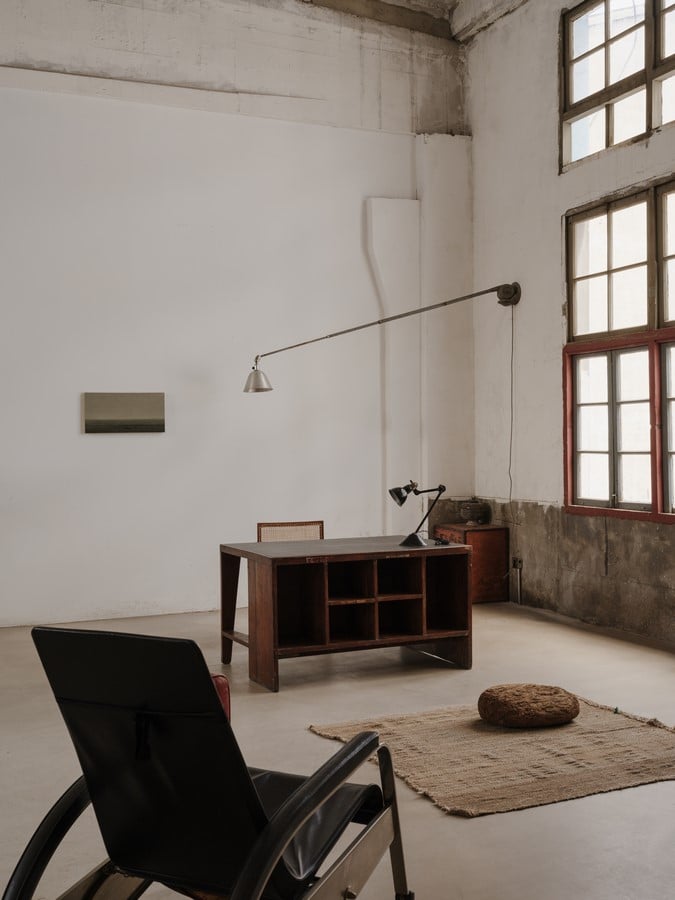
Throughout the interior, the rough surfaces of the original building sit alongside the more precise detailing of the new additions. Vintage furniture, objects and plants introduce a domestic quality to the industrial setting. Daylight enters through the existing windows, revealing variations in the surfaces of concrete, metal, timber and stone. Instead of relying on a consistent material finish throughout, the design allows each material to retain its own texture and character, contributing to the overall composition of the space.
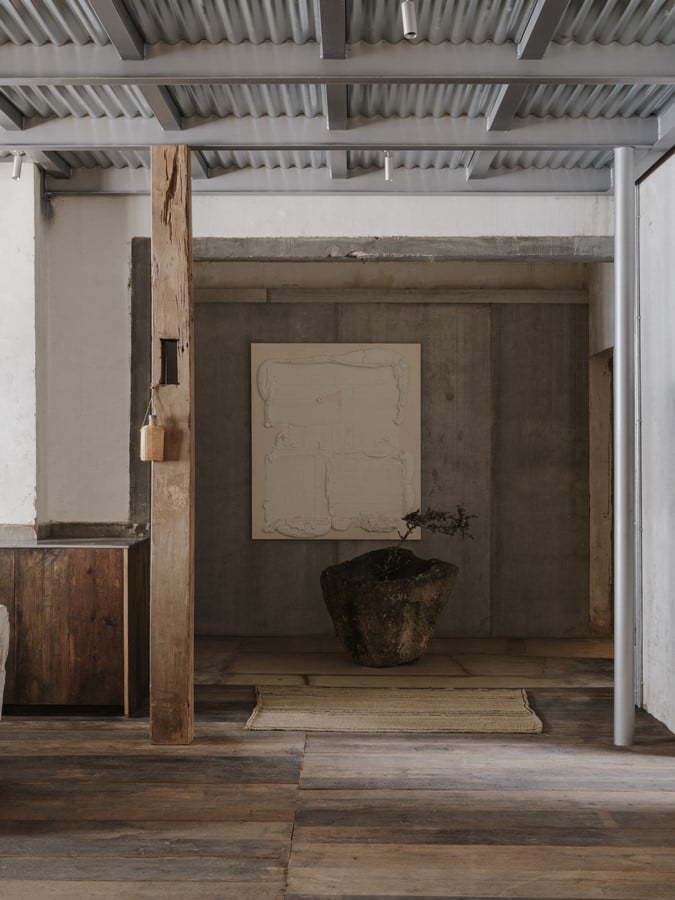
The renovation of Sans Raison focuses on making use of what already exists while accommodating new activities. The original building remains legible through its structure, surfaces and proportions, while the new additions support its changing functions. Exhibition, work, hospitality and everyday use are brought together within a shared setting, allowing the former industrial building to take on a different role without losing its existing identity.