The Joseph Brant Hospital (JBH) redevelopment is a landmark healthcare project that redefines the role of hospitals in healing, sustainability, and community inclusion. Parkin Architects, in joint venture with Adamson Associates Architects, led the transformation, designing a new 7-storey, 400,000-square-foot patient care tower and overseeing 120,000 square feet of renovations to the existing facility. Their thoughtful and phased design approach allowed the hospital to remain fully operational throughout construction—an essential consideration in any healthcare redevelopment.
Project Name: Joseph Brant Hospital
Studio Name: Parkin Architects
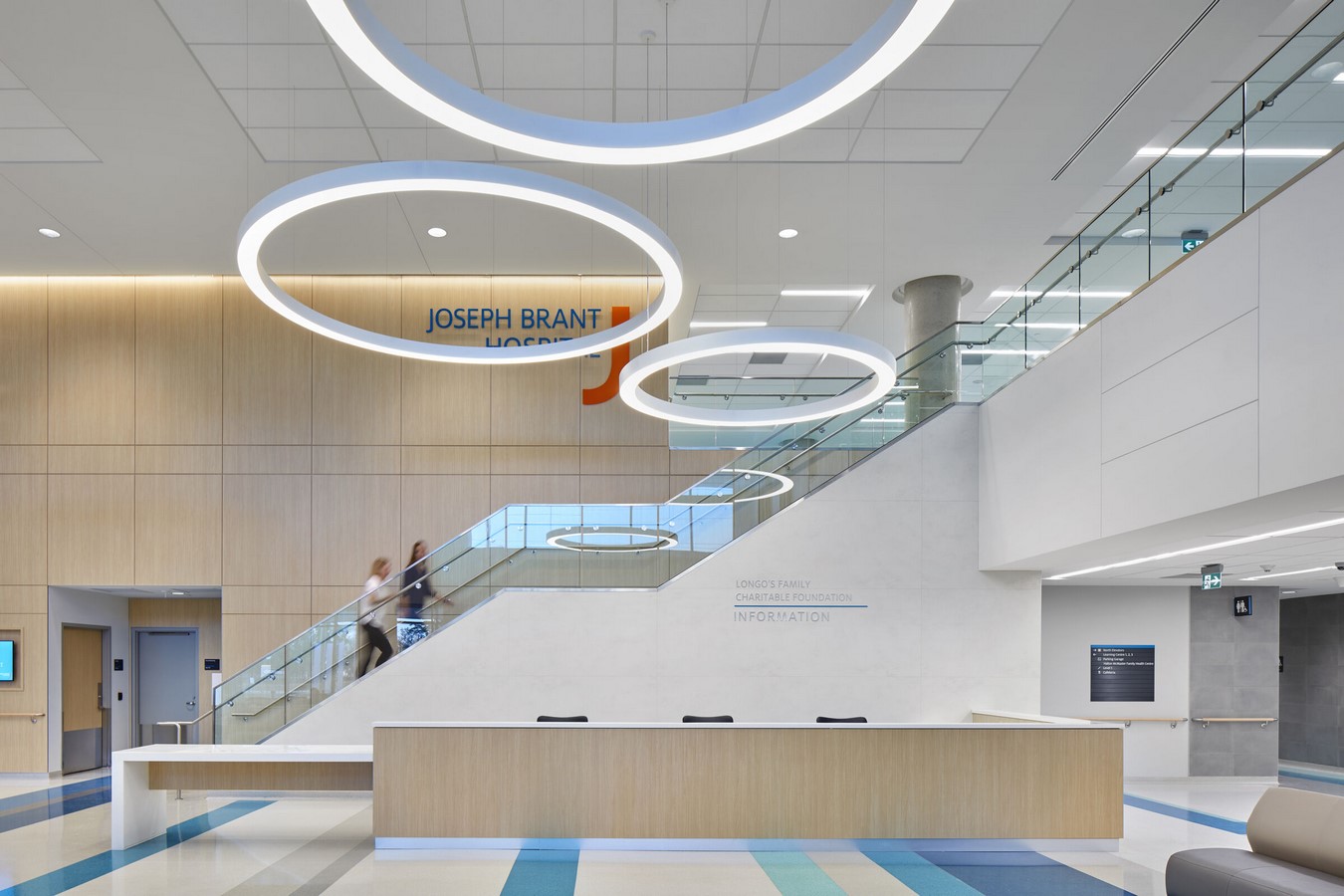
Parkin’s role was central to both the strategic planning and the detailed architectural execution. By proposing the placement of the new tower to the south of the existing structure, the design team maximized the usable site area and minimized disruption to hospital operations. Their comprehensive phasing, decanting, and commissioning plan ensured smooth transitions between new and existing spaces, maintaining uninterrupted delivery of care.


The new patient care tower houses a range of critical services, including three floors of medical-surgical inpatient units, Intensive Care, Surgical Services programs such as Ambulatory Procedures, a Medical Day Care/Oncology Program, a modern Emergency Department, Laboratories, and a welcoming new main entrance. Renovations to existing spaces upgraded vital clinical departments such as Diagnostic Imaging, Ambulatory Care Clinics, the Level 2B Nursery, and both Pediatric and Post-Partum Inpatient Units.

A key design goal was to connect people – patients, staff, and visitors – to nature. Nearly 75% of patient rooms feature unobstructed views of Lake Ontario, while the rest look toward the Niagara Escarpment. Roof areas visible from patient rooms were transformed into green roofs with a multilayered planting system. These natural touchpoints extend to public spaces as well, where large windows provide daylight and visual access to JBH’s cherished protected woodlot. The design incorporates healing gardens, landscaped forecourts, and outdoor dining terraces, offering accessible green space that supports therapeutic outcomes.
Accessibility and inclusivity were deeply embedded in the design philosophy. The building was carefully planned to accommodate people of all ages, with a wide range of physical, sensory, and psychological needs. The materials and layout emphasize clarity and comfort, helping reduce stress for all users navigating the facility.

The project was also designed to achieve LEED Silver certification, underscoring the hospital’s commitment to sustainability. Key features include large windows that bring daylight deep into interior spaces, combined with solar control strategies to mitigate heat gain. Low-VOC paints, adhesives, and sealants enhance indoor air quality, while bicycle storage facilities promote alternative transportation for staff and visitors. The design not only minimizes the building’s environmental footprint but also supports occupant wellness.
Material choices throughout the hospital reinforce durability, hygiene, and warmth. Flooring solutions include epoxy, terrazzo, vinyl, and linoleum, carefully selected for their function and finish. Walls are clad in low-emission paints, protective finishes, and high-quality laminates. Furniture was selected with a focus on comfort and adaptability, from clinical systems to cafe seating.

From its nature-inspired views and inclusive design to its phased implementation strategy, the Joseph Brant Hospital redevelopment sets a new standard for modern healthcare environments. Parkin Architects’ leadership ensured that this complex, multi-phase project achieved its goals without sacrificing operational continuity or the patient experience. The result is a sustainable, human-centered hospital that reflects and serves the community it belongs to.