The new Chaika Clinic occupies 530 square meters on the ground floor of a business center. The architectural concept is rooted in the principles of Healing Architecture — a design philosophy focused on creating spaces that promote physical, psychological, and emotional well-being.
Project Name: Chaika Clinic
Studio Name: Archiproba Studios
Launch Date: 2024
Area: 530 m²
Team: Tamara Muradova (Lead Architect), Tokzhan Serikzhan, Natalia Trusheva
Photography: Natalia Pokrovskaya

Healing Architecture emerged in the early 21st century as a discipline in which architecture itself becomes part of the therapeutic process. Its core principles include the creation of a comfortable environment, reduction of stress, and development of spaces that actively support human health.
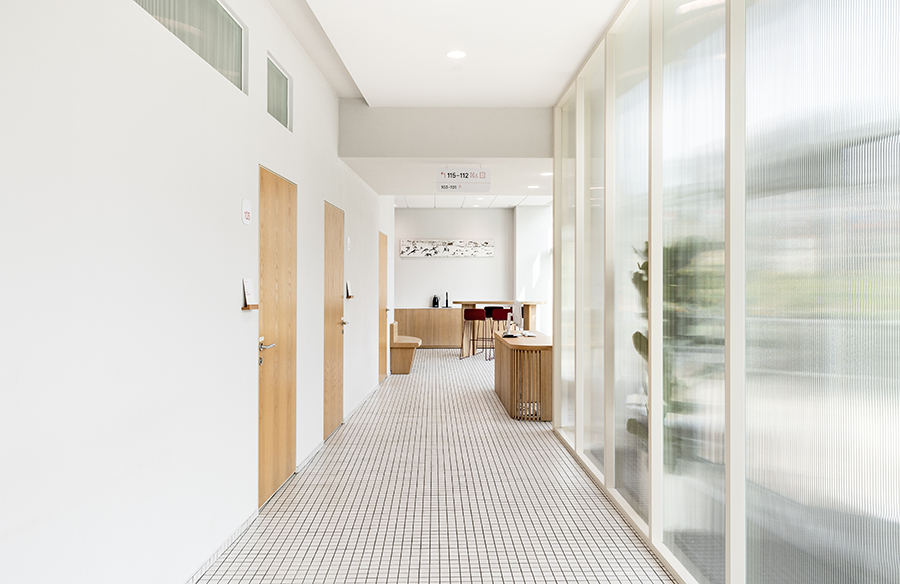
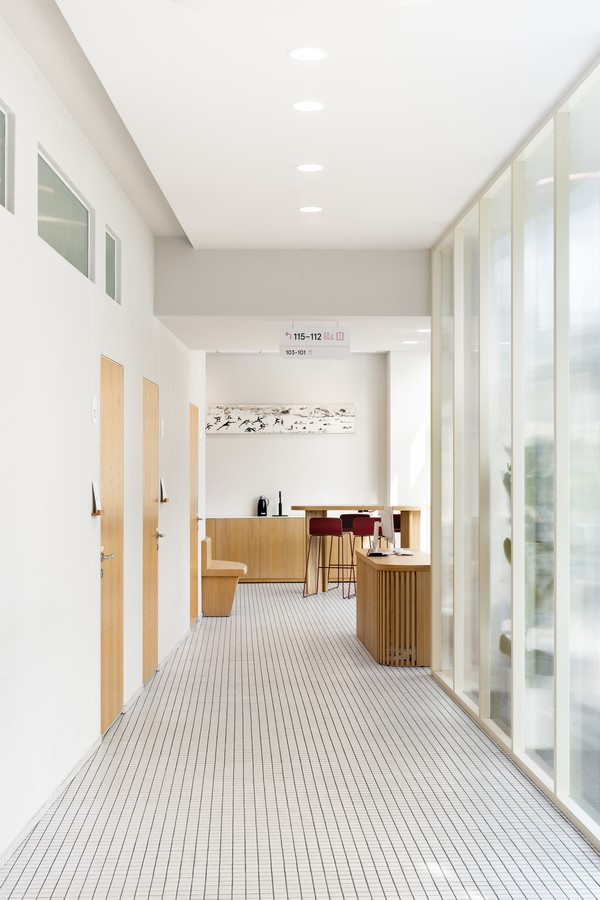
The clinic’s floor plan follows a circular layout: all functional rooms are organized along the inner perimeter, while a soft-cornered corridor gallery forms a continuous recreational loop. This approach not only improves navigation but also reduces emotional tension through intuitive ergonomics.
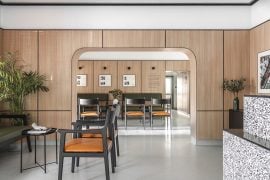
Public zones are united into a seamless flow, gently transitioning from one function to another: the entrance area, various waiting zones (both quiet and social), a children’s zone, coffee station, consultation room, and medical assistant work areas.
Natural light plays a central role in the project. Floor-to-ceiling windows fill the interior with daylight, while translucent transoms above the treatment rooms enhance brightness. In addition, a biodynamic lighting system has been integrated — one that adjusts to the body’s circadian rhythms by mimicking natural daylight cycles. This solution positively influences patients’ mood and overall well-being.
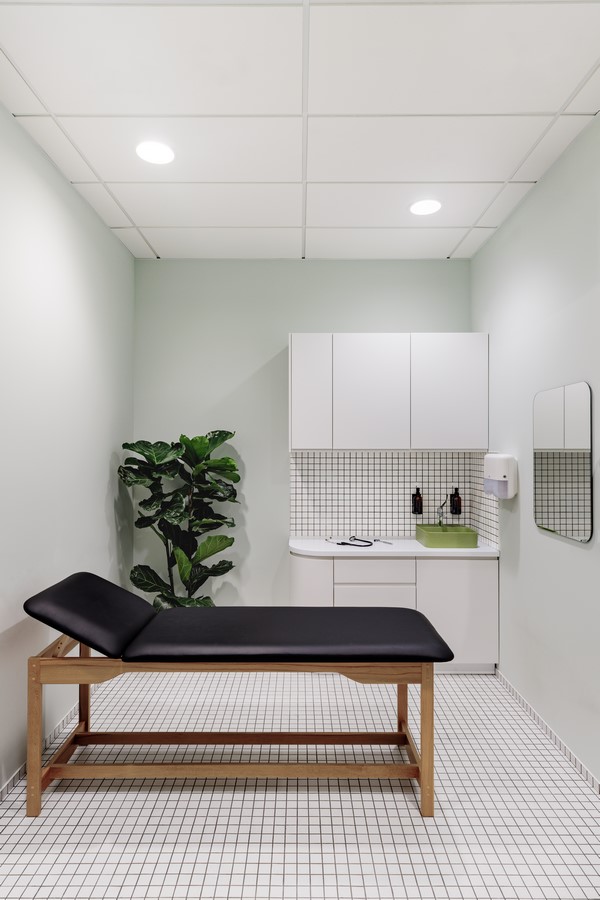
The clinic’s color palette is based on the principles of chromotherapy. Public areas are finished in a soft off-white, creating a calming and neutral backdrop. Treatment rooms are rendered in a gentle sage tone — a color associated with nature and relaxation.
Special attention has been given to materials: natural wood and stone are used throughout the interior. Wooden doors, built-in furniture, and textured wall surfaces soften the spatial experience, while green zones with live plants create small oasis-like pockets within the clinic.
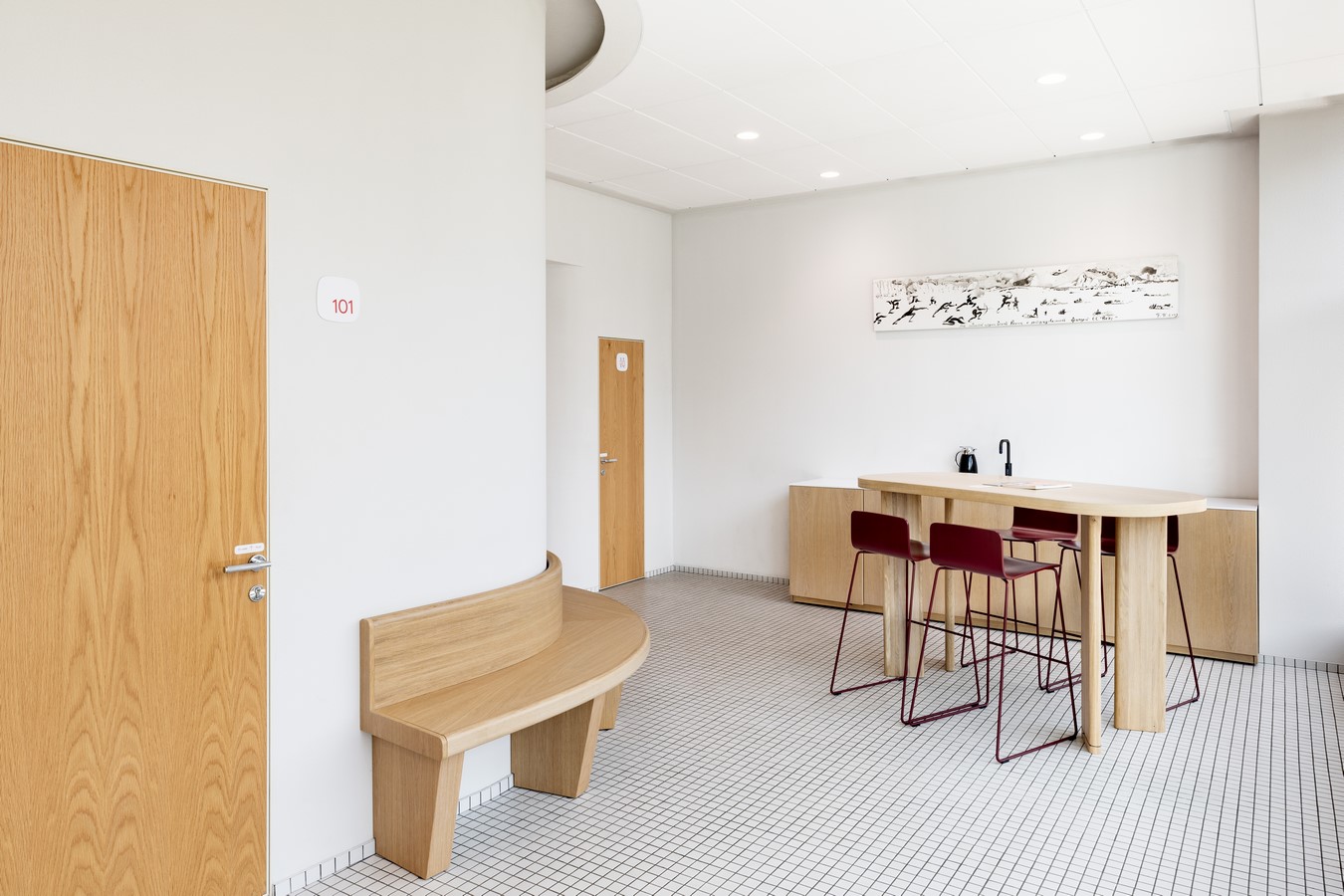
The Chaika Clinic interior is designed with a timeless aesthetic that serves as a quiet backdrop for healing and improved quality of life. This project illustrates how architecture can be more than just a container — it can be an active participant in the therapeutic process, creating a space where design becomes part of the healing itself.