On paper tickets, balcony whistles, and a city’s shared memory.
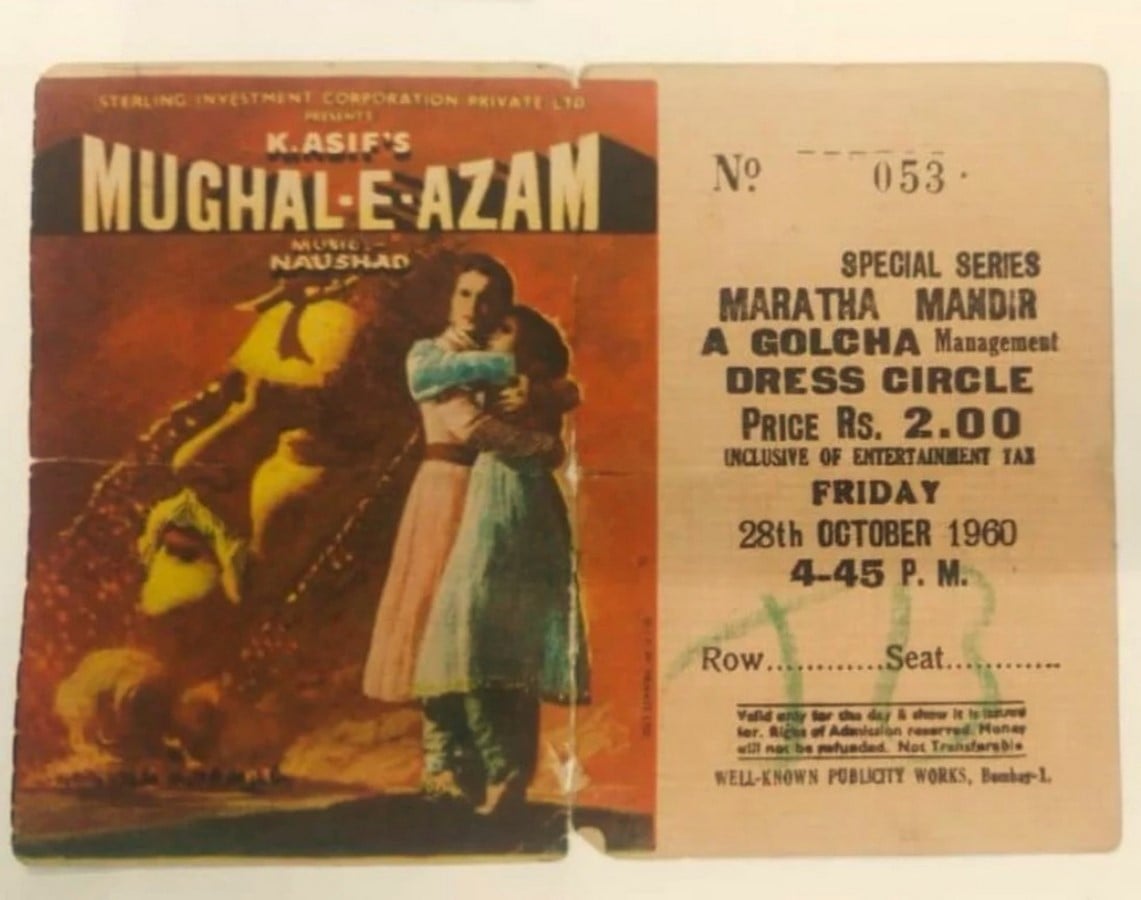
There is a particular sound at the ticket window of an old Mumbai cinema. A few notes slide across a steel counter, a small hand reaches back through the grille, and a slightly creased paper ticket appears with a row and a seat printed on it. No app, no confirmation email, no QR code. Just a slip of paper and the promise of a very large screen.
I keep coming back to that small ritual because it says so much about what a single-screen cinema actually is. It is not simply a building with a projector. It is a place where the evening begins before the film does, at the queue, at the foyer, at the tea stall across the road where everyone argues about the lead actor.
And it is a place that is quietly disappearing. In a city that adds new multiplex screens inside shopping malls almost every year, the single-screen cinema has become something close to an endangered species. This article is an argument for why we should care, and what we can realistically do about it.
A City Built to Watch Films
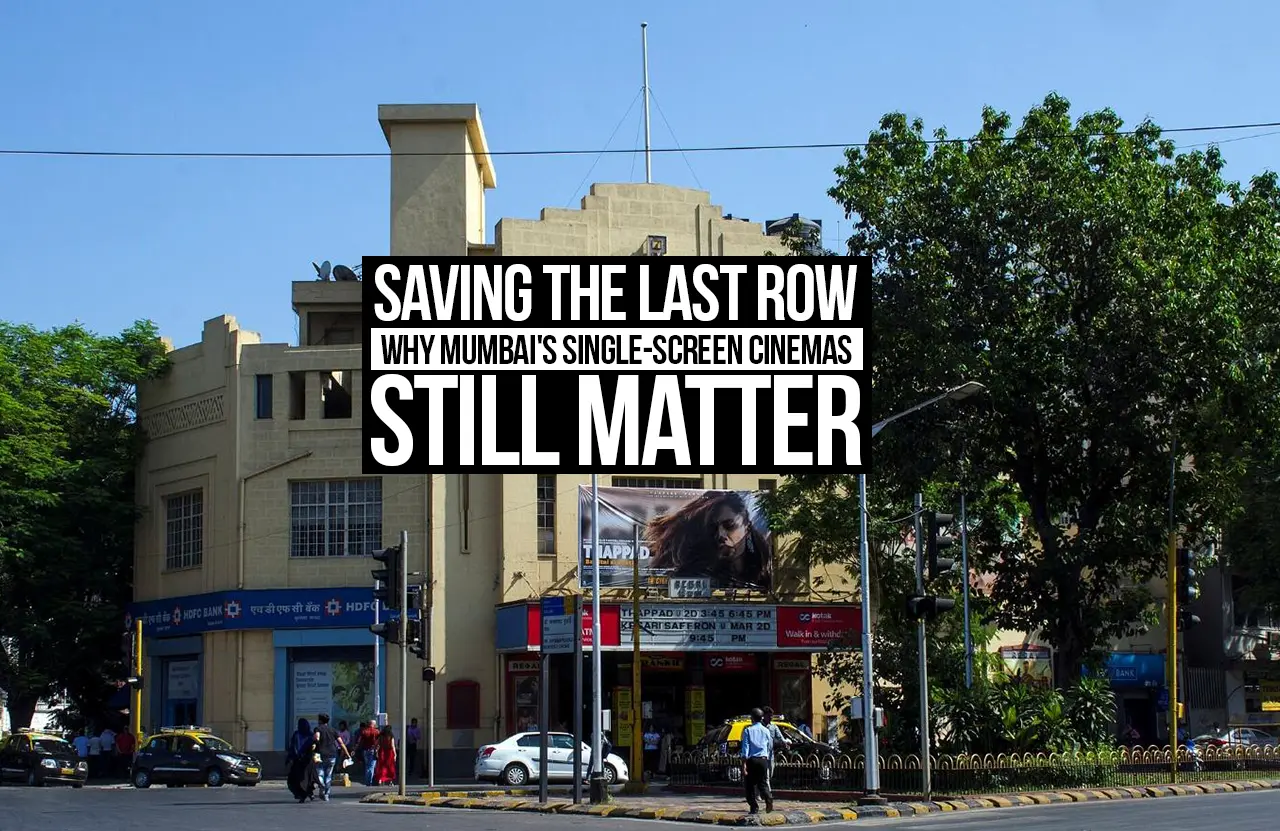
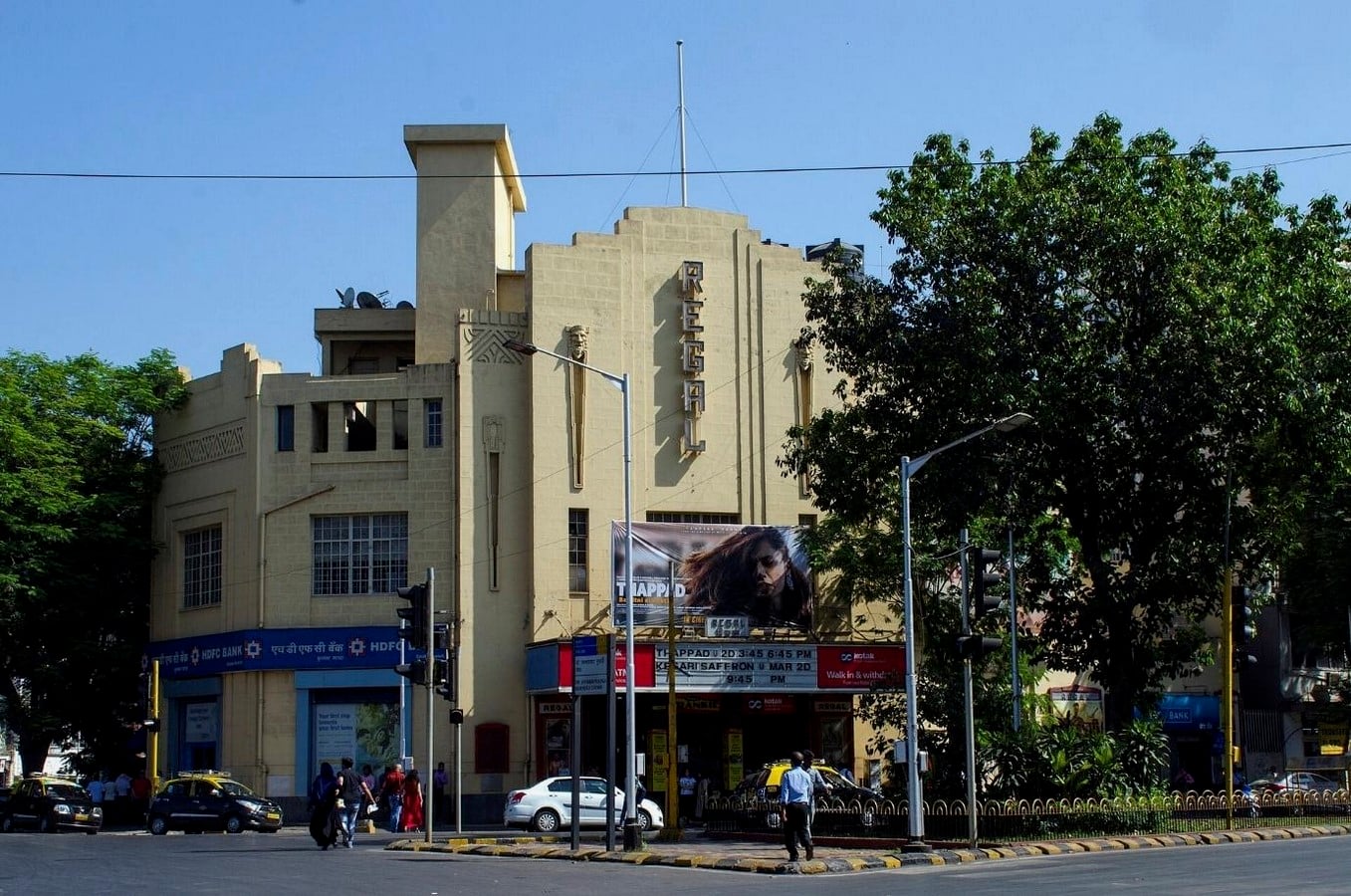
Few cities in the world are as tangled up with cinema as Mumbai. The film industry that grew here shaped how the city speaks, dresses, sings and dreams. It also shaped how the city looks. The picture palaces of South Mumbai, with their sweeping curves, bold geometry and confident lettering, belong to the Art Deco wave that swept the city in the 1930s and 1940s. Regal, opened in 1933, Eros, from 1938, and Liberty, from 1949, are still standing, and the first two are among the buildings that helped Mumbai win UNESCO World Heritage recognition for its Victorian Gothic and Art Deco ensembles in 2018 (UNESCO World Heritage Centre, 2018).
What strikes me about these halls is that they were designed as occasions. Going to the cinema meant dressing up a little, queuing with neighbours and stepping into a foyer that told you this evening mattered. Scholars of Bombay cinema have long argued that the city and its films were built together, each feeding the other (Mazumdar, 2007). The single-screen theatre was the meeting point where that exchange happened every single night.
It is also worth remembering how democratic the experience was. The old seating plan, with its stalls, dress circle and balcony, charged different prices for different pockets, but everybody sat under the same roof and watched the same story. Few spaces in Mumbai have managed that quite as well.
How the Lights Began to Go Down
The decline did not happen overnight, and it did not happen because audiences stopped loving films. From the late 1990s, multiplexes arrived with air-conditioning, comfortable seating, food courts and several screens under one roof. Researchers who studied this shift described a change in how Indian cities thought about leisure itself: cinema moved from the street into the mall and became one activity among many (Athique and Hill, 2010).
Then other pressures piled on. Television, home video and, more recently, streaming platforms pulled people towards their sofas. Piracy hurt box office takings. The move from film reels to digital projection demanded investment that many owners of ageing theatres simply could not afford.
And then there is land. In a city where space is the scarcest commodity of all, a large hall sitting on a prime plot can look, on a spreadsheet, more valuable as a tower than as a theatre. A number of much-loved single-screen cinemas across Mumbai have closed over the years. Some shut for good. Others closed for repairs that never seemed to end, which is often the slower way of saying the same thing.
What a Multiplex Cannot Copy
I want to be fair to multiplexes. They are clean, comfortable and convenient, and they gave audiences real choice. But there are things a mall cannot recreate, however good the seats.
Start with scale. A single enormous screen, framed by a proscenium and watched from the stalls and the balcony, gives a film a physical presence that a compact auditorium struggles to match. A song sequence feels different when the screen towers over you. A close-up becomes an event.
Then there is the crowd. In a single-screen cinema, a hero’s entrance is met with applause, a punchline with a roar, a heartbreak with a hush so complete you can hear the projector humming. Cinema stops being a private experience that happens to take place next to strangers. It becomes a collective one. The audience is part of the performance, and the film plays differently because of it.
Then the price. Ticket rates at many older halls remain well within reach of students, drivers, shopkeepers and retired clerks. That matters, because cinema is one of the few art forms that a whole city can still afford to share.
And finally, the visual culture around the building. Hand-painted hoardings, tall posters, neon lettering and ornate facades make these theatres part of the street in a way that glass-fronted mall screens never will. For anyone who loves photography or art, they are among the most photogenic places in Mumbai. The cinema announces itself to the neighbourhood before you even reach the door.
When a Film Becomes a Ritual
Nothing shows what a single-screen cinema can do better than Maratha Mandir in Mumbai Central. Mughal-e-Azam premiered there in 1960. Decades later, Dilwale Dulhania Le Jayenge began its run at the same hall in 1995 and kept playing, in one form or another, until the pandemic closed theatres in 2020 (Chopra, 2002). That is a quarter of a century of the same film in the same building.
Think about what that means. A multiplex programmes by the week, rotating titles according to what the data says will fill seats. A single-screen cinema with a loyal audience can do something far more unusual: it can turn a film into a habit. Generations of Mumbaikars grew up with that screening as a fixed point in the city’s calendar, a place couples visited, a place families brought children to see what their parents saw.
The same logic explains first-day-first-show culture, where fans gather before dawn to see a favourite star’s new release in a hall that becomes a festival for a few hours. Whatever one thinks of the excesses, the energy is real, and it belongs to the single screen in a way it never quite will to a mall.
The People Behind the Curtain
When we talk about saving a single-screen cinema, we tend to talk about architecture. But these theatres are workplaces before they are monuments. There are the ticket sellers and ushers, the projectionists who understand the quirks of one particular machine, the sign painters, the snack vendors, and the tea stall owner whose whole business depends on the interval.
When a hall closes, all of them lose something. A neighbourhood loses a meeting point. The city loses a landmark and, with it, a physical connection between today’s audiences and the generations of people who came before them. That is not nostalgia. It is an economy and a community going quiet.
There is a cultural cost too. Regional, independent and smaller films often struggle to find space in schedules dominated by big releases. A flexible, community-rooted hall can take risks that a chain optimising every seat cannot.
Preservation Is Not the Same as Nostalgia
It is easy to dismiss all this as sentimentality, so let me answer that directly. Nobody is asking Mumbai to freeze its cinemas in 1950. A theatre preserved as an empty shell is not a cinema; it is a museum, and an expensive one. The goal is a living single-screen cinema: restored where it matters, upgraded where it helps, and full of audiences.
Around the world, historic cinemas have survived by changing what they offer without abandoning who they are. They restore their interiors, upgrade sound and projection, run themed seasons and revival screenings, host festivals and conversations with filmmakers, and introduce special shows for families and students. Some have turned their fading glory into a reason to visit.
Mumbai has the right ingredients. It has an audience that loves film passionately, a rich archive of classics that deserve a big screen, and buildings already recognised for their architectural value. What it lacks is a plan that treats these theatres as cultural assets rather than problem properties.
What Revival Could Look Like
If I were drawing up a modest list, it would begin with heritage protection. Clear rules, properly enforced, can discourage demolition and encourage sensitive restoration. Alongside that, there is a case for financial support, such as tax relief or restoration grants, to help owners meet the cost of upgrading old buildings for modern audiences.
Owners and programmers can help themselves, too. Classic film weeks, anniversary screenings, live-commentary nights, student discounts and tie-ins with film schools can turn a quiet Tuesday show into a reason to come out. Photography walks and architecture tours of the building could draw in people who might never otherwise visit.
And then there is us, the audience. Every ticket bought at a single-screen cinema is a small vote for its future. It sounds modest, but cultural institutions have always survived because enough people chose to turn up.
So. Why Does This Matter?
Mumbai has always been a city that reinvents itself without entirely letting go of its past. The single-screen cinema is a chance to prove that those two instincts can live together. These halls hold architecture, craft, community and a particular way of experiencing a story together in the dark.
So the next time a film you love is playing at one of these old halls, skip the mall. Buy the paper ticket, find your seat in the stalls, and wait for the lights to dim. The single-screen cinema is not a relic of how Mumbai used to watch films. It is still one of the best ways to watch them. Let us make sure the last row stays open.
References:
Athique, A. and Hill, D. (2010) The Multiplex in India: A Cultural Economy of Urban Leisure. London: Routledge.
Chopra, A. (2002) Dilwale Dulhania Le Jayenge. London: BFI Publishing.
Dwyer, R. and Patel, D. (2002) Cinema India: The Visual Culture of Hindi Film. London: Reaktion Books.
Mazumdar, R. (2007) Bombay Cinema: An Archive of the City. Minneapolis: University of Minnesota Press.
UNESCO World Heritage Centre (2018) Victorian Gothic and Art Deco Ensembles of Mumbai. Available at: https://whc.unesco.org/en/list/1480 (Accessed: 7 October 2026).
About the Author
Resham Uppal is a participant in the RTF Training Programme. This article draws on research into the history, architecture and culture of Mumbai’s single-screen cinemas, and reflects on why they remain relevant to the city today.