“My house is my refuge, an emotional piece of architecture, not a cold piece of convenience.”
- Luis Barragan
Remember what a kid draws when he or she is asked to do a landscape drawing? It is a drawing that has a series of mountains in the backdrop with sunrise or sunset(the kid also doesn’t know if it is sunset or sunrise), a river coming down the mountain, and on the right-hand side, a single-story house is there with sloping roof and couple of trees with a hardscaped pathway leading to the main door of the house. It is the most basic imagination of all kids up till millennia.

Residential design is the oldest and the first typology of architecture to exist. The need for shelter has been basic since human life’s dawn. Starting from caves, architecture has evolved with time, culture, society, and technology. The primary intent of a home is a design that offers refuge suited to the climate with available resources. As civilization happened, residential architecture evolved into settlements of communities. Later on with industrialization, technological advancement, various art movements, urbanisation and increasing population definition and style of architecture evolved.
With evolution comes challenges. Different times demand creative solutions. In today’s time architects and end users both face various challenges when designing, constructing, purchasing, and settling in a house.
An Architect’s POV
The target audience for the architect to serve has drastically expanded. Irrespective of the location the architect is working from, the end users are worldwide. Addressing the needs of a diverse population, dealing with urban density, incorporating all codes and regulations, making energy-efficient and sustainable designs, and ensuring affordability all at once is quite a task.
The Demand and Supply Chain

When it comes to residential architecture, the demand is always ahead of supply. As the population grows, urbanisation happens and migration happens, the need for a home keeps on increasing. While the availability of land is limited. Especially in a country like India, where farming is the occupation of the majority, agricultural land becomes a target. In cities, with technological advancement and speedy construction, high-rise residential schemes have taken over. Vertical housing is the easiest and almost only option available for the middle and lower-middle-class population, which is again the majority.
Being an architect, one has to utilise the maximum built-up and FSI available in the given land, which leads to tall buildings with fewer or no open spaces. These typologies also restrict individuality. A modular apartment design is mass-produced everywhere regardless of the geological location. How come a design can be copied and pasted anywhere in the world? Shouldn’t it be unique to its site, geography, climate, and culture? If it is so, then why are architecture schools teaching climate and contextual studios? The answer is that architects are trained to think and design for all these instances but are rarely allowed to materialise it in reality.
It is not completely true that high-rise apartments can not be designed considering all the above things. It can be and it takes a lot of support from all the stakeholders and users for it to become reality.
The Amenities and Safety
When many cities are providing unlimited FSI and building vertically is no longer time-consuming, there are still a few aspects that are difficult to deal with. As the number of floors and hence the number of apartments are increasing in a building, proportionally parking spaces, open spaces, and recreational spaces are not increasing. Due to the land availability and allowance of basement floors, parking needs are getting challenging to satisfy. As the cities are expanding drastically, and high-rise apartments are being constructed to satisfy the need, vehicular needs are also rapidly increasing to satisfy the need for the commute. Most families have vehicles per person in cities since everything is technically inside the city but takes hours to travel. As the number of people living in the building increases, the demand for the amenities also proportionally increases which requires equal accessibility to all locations in the premises.
Safety is a crucial aspect of residential architecture. The main intent of housing is refuge. These high-rise communities have to be gated and the risk of abandoned apartments and higher floors getting vandalised is higher. These types of abandoned spaces become hubs for crimes and illegal activities because human interaction is very less. The design has a crucial role to play in making spaces more interactive to prevent these issues.
The Post-pandemic Lifestyle
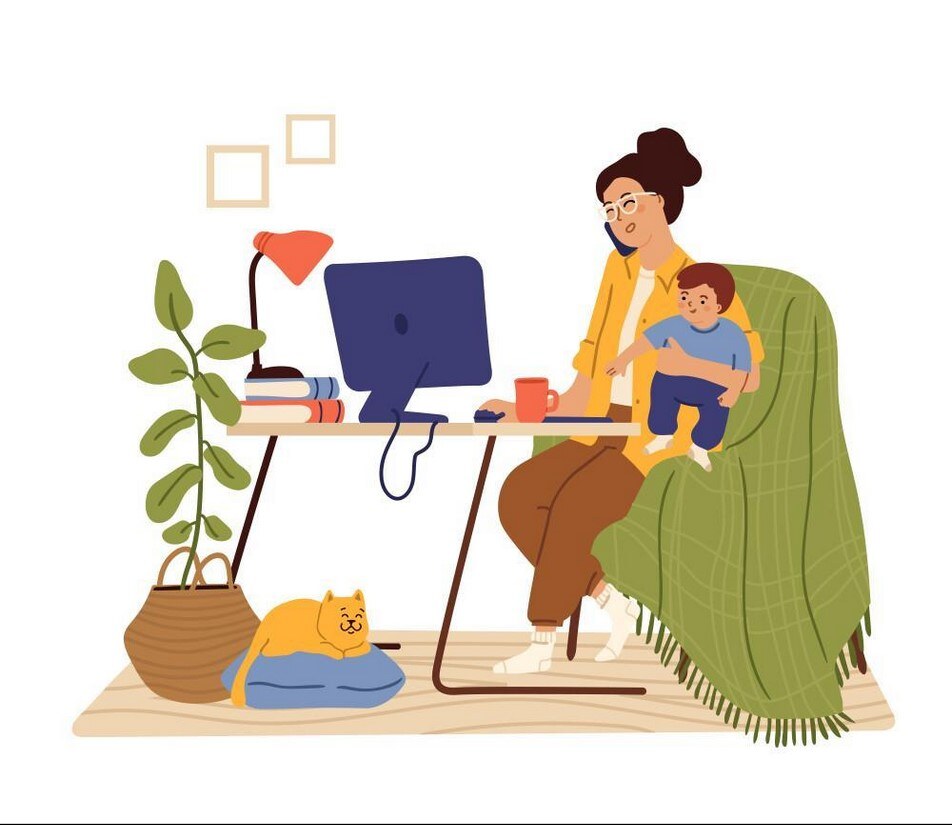
People’s lifestyles have changed in many ways after COVID. One of the challenges is to incorporate those lifestyle changes into the design of their homes. The existing residential interiors also require some adaptation, as well as new ones, which have to be thought of and designed with consideration. New residential architecture should factor in health and hygiene. The material selection has to be such that it caters to the cleanliness and hygiene of the built environment and nature. Designing in detail with materials such that they are easy to clean and minimise the spread of viruses and bacteria. For example, door handles, floors, and kitchen surfaces that come into frequent physical contact should be made with such material and design that they can withstand frequent cleaning without deterioration. When and if needed the spaces of the house shall be adaptive enough for the isolation of the sick member to implement social distancing.
The pandemic has introduced a work-from-home culture in many fields. Apart from job professionals, businesses are starting and growing through social media. These contribute to major lifestyle changes where people need spaces that can be adapted or converted to working spaces. This is a challenge for architects and interior designers to address in their designs innovatively. The solution should be such that it encourages productivity while maintaining comfort, involving efficient ergonomics, lighting, and ventilation. Also, it has to be in balance with other living areas of the home minimising disturbance to the daily chores and vice versa. A great deal of flexibility and adaptability is now needed from a home that initially was just a shelter showing how far humans have come.
Affordable and Equitable Housing
The majority of the Indian population belongs to the middle or lower-middle class. They look for affordable housing but sadly affordability compromises the quality and functionality of designs. Architects face the challenge of designing homes that are affordable and sustainable. Low-cost housing with a good quality design which includes enough carpet area, health and hygiene consideration, adaptive space planning, satisfying cultural and social needs, and open and community spaces is a combination difficult to achieve. Mostly this leads to modular and prefabricated homes to reduce the cost. But does the design be biassed to any class? The challenge of affordability can be answered through the materials, and construction methods but can the design and livability be compromised to reduce the cost? Affordability does not mean poor living quality, it simply means cheaper means to acquire better living quality.
Modularity has restricted design variations in residential architecture and regardless of the site and locations, it is a one-size-fits-all scenario. It is a shame that many architects who are designing homes, have clients who are builders but not the actual end users-residents. Above all this is the biggest challenge, designing for mass, and constructing for mass while individual needs might or might not be satisfied. Having own land and constructing a home has become a dream for the common man and apartment schemes are all they are left with. Affordable, and adaptable housing is the challenge as well as the solution.