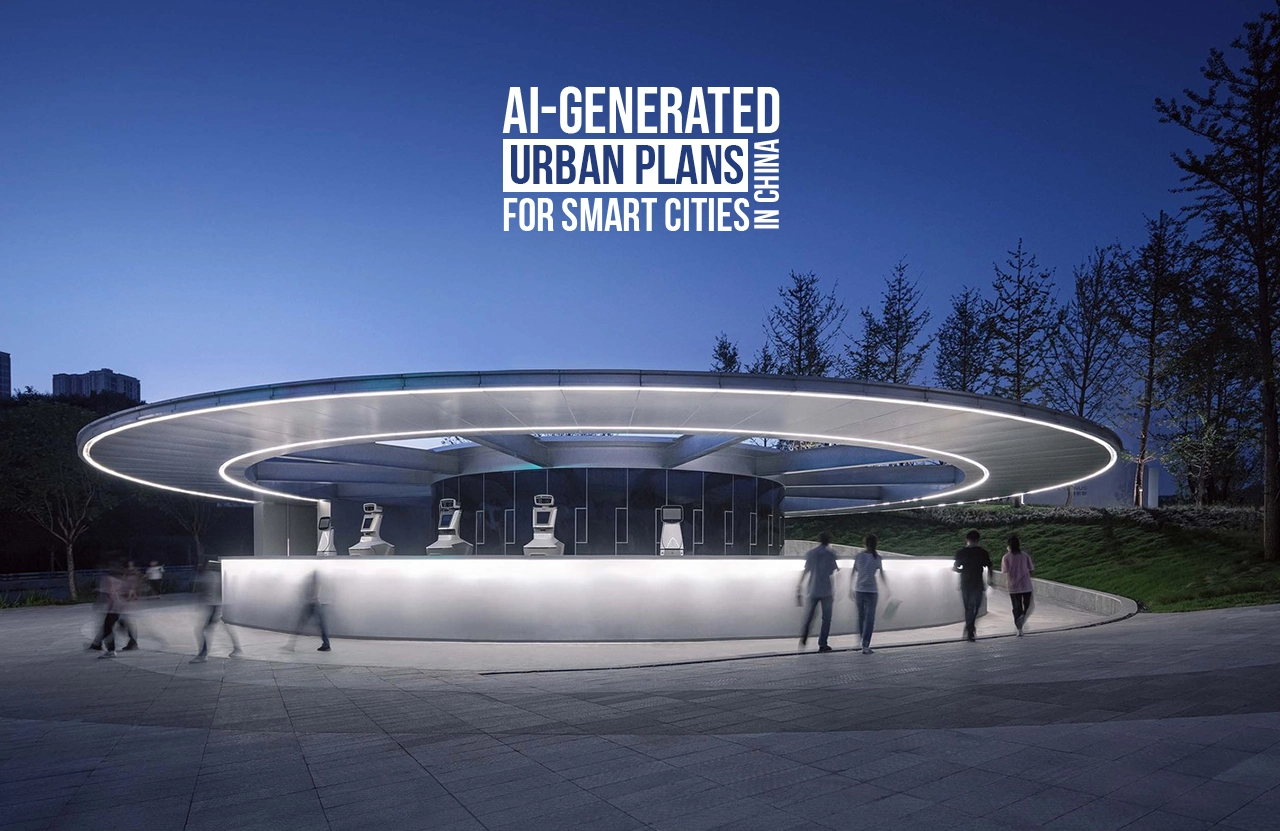
Urban planning is a complex task that necessitates the collection of data across multiple dimensions. With the rapid urbanisation, it has become crucial to integrate AI technology in urban planning processes. Proposed by John McCarthy in 1956, the concept of AI has significantly evolved with technological advancement, expanding from theoretical foundations to systems-level applications such as smart cities (Wu, 2025). In 91 publications reviewed between 2019 and 2022, it was concluded that the use of AI was growing in the urban planning process (Son et al., 2023). This article explores the use of AI in urban planning, specifically for cities in China.
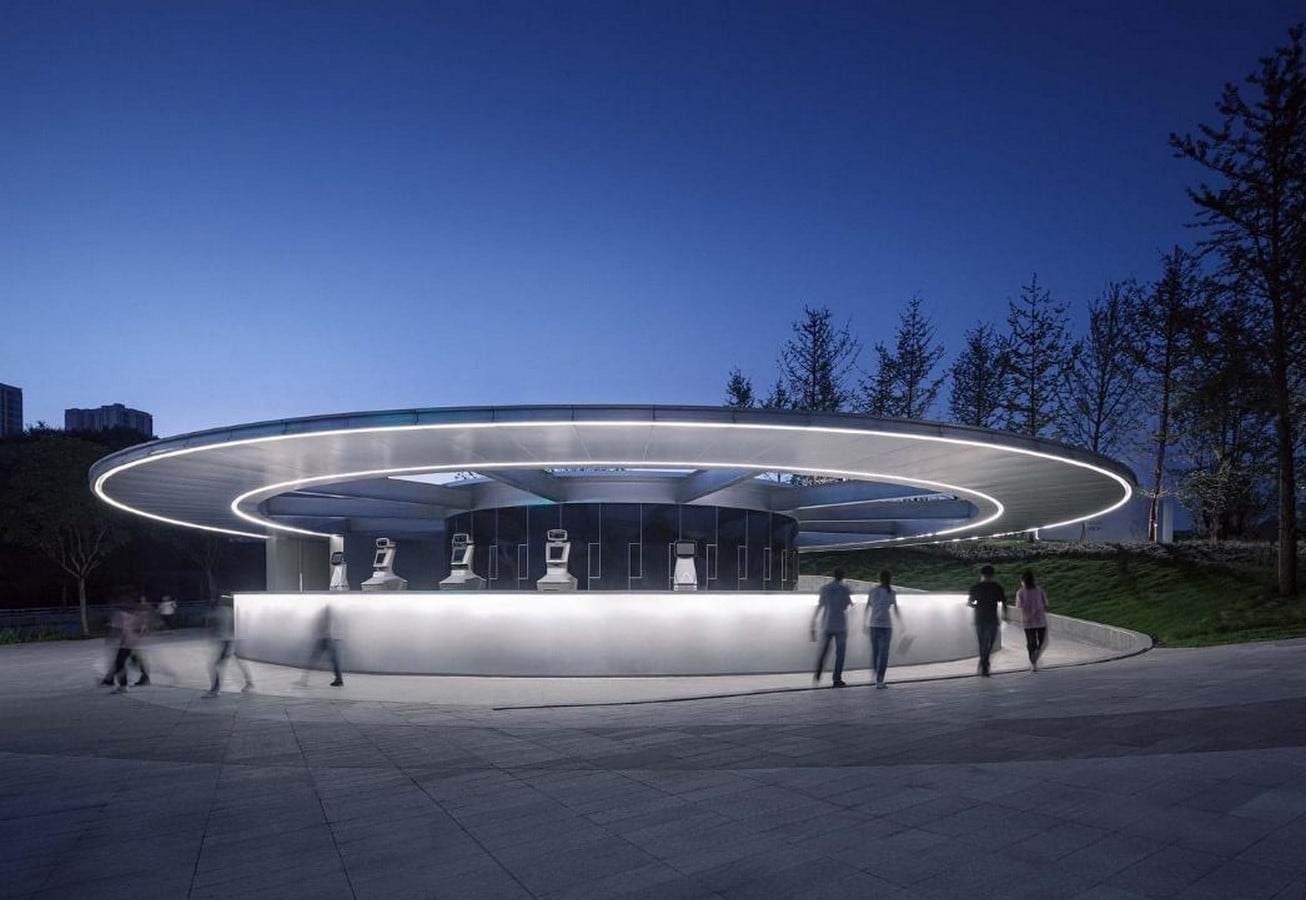
AI and Contemporary Urban Planning
Although first proposed in 1956, AI has gained widespread attention in the last few years across numerous fields. Intelligent technology is the core driver of modern urban planning (Cheng, 2025). With its new-age features and continuous technological advancement, AI has become beneficial to the urban planning process. AI became the national strategy in China through the ‘New Generation of AI Development Plan” (Wu, 2025). The ‘New Urban Science’ promotes an interdisciplinary, data-driven approach to urban challenges by incorporating big data, AI, and complex modelling with urban research to understand city dynamics (Ye et al., 2025). As an integral part of the urban planning process, AI enables the development of faster and more efficient solutions.
When integrated with other technologies, AI has significantly accelerated the urban planning process.
AI helps cities become more efficient and organised (Cheng, 2025). The government uses AI for urban service delivery, and policy and planning support (Son et al., 2023). Emerging tools like GeoAI improve the analysis of spatial and geospatial urban data (Son et al., 2023). Many cities adopt smart city approaches using technology to achieve sustainability goals (Son et al., 2023). AI has expanded the range of its applications when it comes to city planning. With its massive data collection, AI can be used to identify specific problem areas and support the achievement of targeted goals.
The Role of AI in City Planning
There is more than one way AI can be used in the urban planning process. Existing cities can be replicated as virtual models. The concept of urban digital twins is a virtual model of real cities that relies on real-time data from sensors, satellites, IoT, and social media (Ye et al., 2025). The data collected from every available source is overlaid to make this digital twin. These models then help stimulate and predict urban issues in planning, transportation, and public health (Ye et al., 2025). AI works with big data collected through sensors and IoT (Son et al., 2023). Data is available everywhere. The main idea is to collate and integrate this data into urban planning. AI city governance’s focus is to integrate AI in everyday urban management rather than a large, centralized platform, and existing cities are more suitable for this testing (Wu, 2025). AI picks on the small datasets available and provides a tailored output.
Use of AI in Urban Science
AI is a critical tool in urban planning, which enables cities to respond to rapid urbanisation, solve traffic problems, and address climate change issues. AI is primarily helpful in urban science by predicting traffic, infrastructural needs, environmental risks, and disasters (Ye et al., 2025). Data-driven decisions enhance both efficiency and sustainability of contemporary urban systems. The predictive capabilities benefit the real-time decision-making in cities in response to climate change and rapid urbanisation (Ye et al., 2025). Additionally, AI can measure urban spatial homogeneity (Wu, 2025). Such an assessment informs understanding of urban form and spatial equity.
In the transport sector, AI enables real-time traffic control and reduces congestion (Cheng, 2025). Additionally, from an environmental perspective, AI can help with environmental monitoring and air quality predictions (Son et al., 2023). Through cross-media platforms, AI integrates diverse data streams to deliver comprehensive and adaptive solutions to complex urban problems. AI applications extend to public health. When it comes to the health sector, it can predict risks and improve resource allocation (Cheng, 2025). Overall, this solution has the potential to eliminate chronic health-related risks in an urban space. In land use planning, digital twins and GeoAI help stimulate plans and support sustainable development (Cheng, 2025). This tool supports sustainable urban development and informed spatial decision-making.

China has emerged as a leading context for real-world AI city experimentation. The first AI city pilot was in Maqiao town, Shanghai, providing real-world testing scenarios for AI applications (Wu, 2025). Similarly, Quingdao Sino-German Eco Park represents a flagship China-Germany cooperation project with a focus on smart construction and green living (Wu, 2025). Central to these initiatives in AI City Core is support for self-update and continuous urban optimisation (Wu, 2025). Built around CIM (Construction Information Modelling), it includes three main modules: namely, intelligence planning, intelligence construction, and intelligence governance (Wu, 2025). AI theories are continuously being tested with other initiatives to enhance the real-world experience.
Benefits of Intelligent Urban Infrastructure
In an urban context, AI plays a critical role in planning, design, and management. In urban and infrastructure management, AI supports the process by solving complex problems (Son et al., 2023). Traditional planning methods no longer work well for complex cities (Cheng, 2025). These methods are inadequate for addressing the scale, dynamism, and interconnectivity of modern urban cities. AI can significantly increase efficiency, accuracy, and sustainability in urban planning by managing large and complex data sets (Son et al., 2023).
AI can bridge the gap between theory and real-world practice (Cheng, 2025). By bridging these gaps, AI enables more responsive and evidence-based decisions. Advanced techniques such as remote sensing and AI offer new ways to track urbanisation by predicting socio-economic conditions from aerial images (Wu, 2025). Similarly, an AI-based tool, the Urban Denoiser, filters urban noise to improve earthquake detection (Wu, 2025). Real-time AI-based mapping systems, such as the iSDF, enable robots operating in the cities to improve navigation, obstacle detection, and interaction in complex settings (Wu, 2025). This innovation highlights how AI moved beyond urban planning into the day-to-day functioning of urban infrastructure.
At a broader level, an AI city is a people-centred and demand-driven development (Wu, 2025). Eventually, with the help of AI, the system enhances the experience of citizens in urban settings. Being self-adjusting, AI cities continuously adapt to the changing urban conditions. This evolution is closely associated with the emergence of AI 2.0, which emphasises cross-media intelligence, with smart cities being the major application of cross-media intelligence, helping overcome data silos and fragmented urban perception (Wu, 2025). The core features of AI 2.0 are big data intelligence, swarm intelligence, cross-media intelligence, human-machine hybrid intelligence, and autonomous unmanned systems (Wu, 2025). Proposed in China, AI 2.0 addresses new information environments and development goals (Wu, 2025). AI is adaptive and continuously improves the system and itself for the greater good.
Technology is an invention of humans to help humans. Any advancement in technology should ultimately benefit society. Ever since AI has surfaced, humans have tried to understand its use, application, and extent. Yet there are areas where AI has proved to be helpful to mankind. AI cities can be the future of urban planning. The solutions provided by AI are comprehensive and wholesome.
References:
- Cheng, Y. (2025) Using Artificial Intelligence to Solve Urban Planning Problems: Insights from Shenzhen. Academic Journal of Management and Social Sciences, 13(3), pp. 620–624. doi:10.54097/vx16dx07.
- Son, T.H., Weedon, Z., Yigitcanlar, T., Sanchez, T., Corchado, J.M. and Mehmood, R., 2023. Algorithmic urban planning for smart and sustainable development: Systematic review of the literature. Sustainable Cities and Society, 94, 104562. Available at: https://www.sciencedirect.com/science/article/pii/S2210670723001737
- Wu, S.Z. (2025) The AI City. Singapore: Springer Singapore. doi:10.1007/978-981-96-2560-4.
- Ye, X., Yigitcanlar, T., Goodchild, M., Huang, X., Li, W., Shaw, S.-L., Fu, Y., Gong, W. & Newman, G. (2025) Artificial intelligence in urban science: why does it matter? Annals of GIS, 31(2), pp.181–189. Available at: https://pmc.ncbi.nlm.nih.gov/articles/PMC12435530/
Image References:
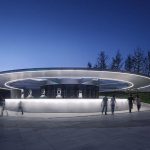
- ArchDaily (2021) AI PARK / XING DESIGN. Available at: https://www.archdaily.com/973564/ai-park-xing-design/61b93d93f91c81e5f20000a5-ai-park-xing-design-photo
- ArchDaily (2021) AI PARK inserted into landscape [online image]. Available at: https://images.adsttc.com/media/images/61b8/bd04/f91c/81c9/2800/0031/slideshow/GIF_1_INSERTED_INTO_LANDSCAPE__XINGDESIGN.jpg?1639496936
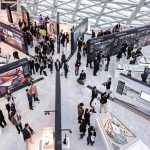
- ArchDaily (2021) Exhibition overview by Zaha Hadid Architects [online image]. Available at: https://images.adsttc.com/media/images/694d/dc30/369e/5f37/1720/35e8/slideshow/zha_30.jpg?1766710376