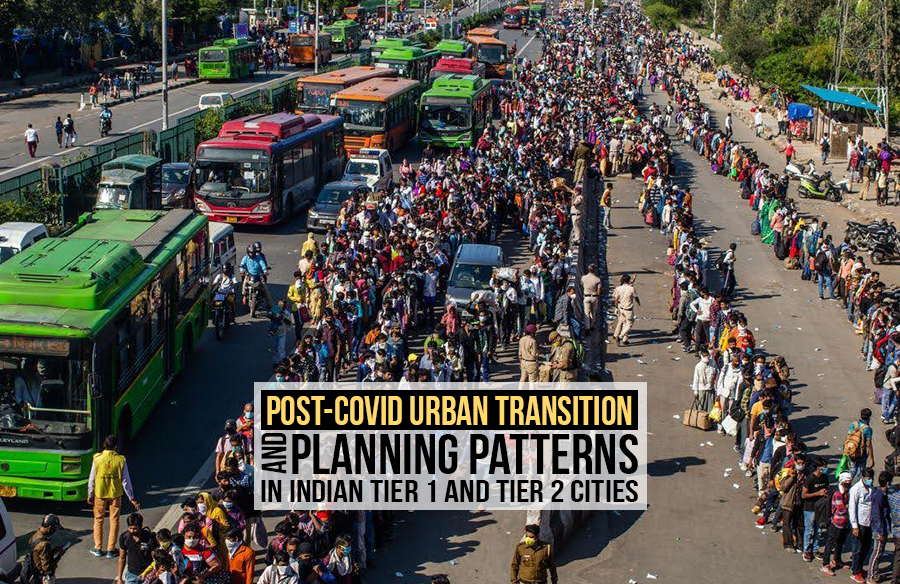
In recent times, the COVID pandemic has altered the basic urban fabric all across the globe, and the Indian cities were no exception. The post-pandemic period became the evolving time to rethink and design the urban infrastructure to mitigate the public health issues, migration, lack of infrastructure and economic strain. There was a contrast in the urban pattern in tier 1, i.e. metropolitan cities and tier 2, i.e. emerging cities. This contrast provided both challenges and opportunities to redefine their respective urban landscape to be more inclusive, sustainable and accessible for all.
Understanding the basic differences between metropolitan and regional cities
The metropolitan cities in India are some of the most densely populated cities in the world and have mostly been the epicentres of India’s economy. These cities have international connections, major infrastructure, boast public transport and have the ability to create jobs continuously. Whereas the up-and-coming cities have all the amenities mentioned above, but on a smaller scale. But these cities, as stats have grown more rapidly in recent years than the metro cities. They offer a sustainable life with low-cost housing, and they are essential in supporting and expanding the job market, being the regional hub with the potential for further growth. Post pandemic, these differences were visible and exposed their transformation in recent years.
Demographic shift and migration flow
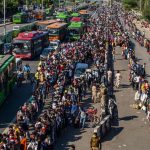
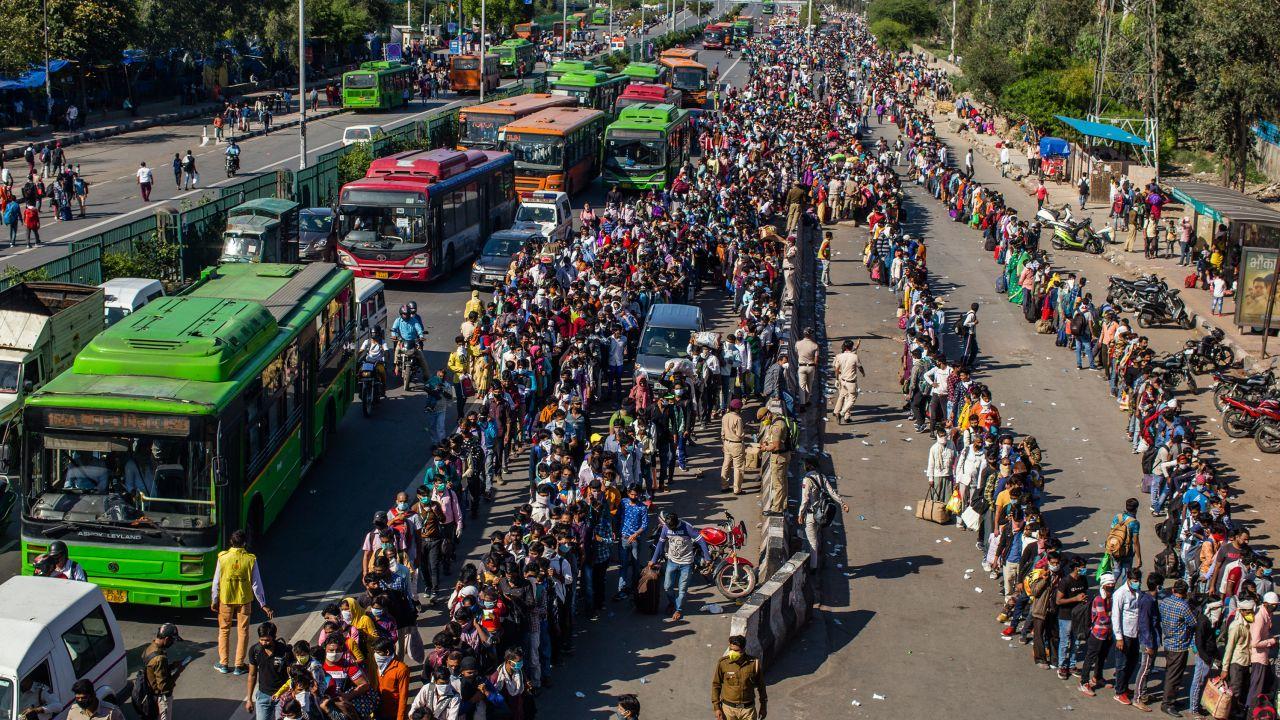
The most common behavioural pattern was the reverse migration. Traditionally, India has been an industrial-based sector. The people working in these industries, in the informal sector, have been mostly dependent on daily wages. Due to the pandemic lockdown were imposed there was a halt in economic activity. With no work, they were forced to relocate to their hometown, which was mostly based in the rural areas. This outflow disrupted the functioning of the major cities, and the sectors which were most affected were construction, hospitality, domestic services and transportation.
This reverse migration in the rural areas assisted the region in its development. The pattern happened to escape the health risk and the restrictions imposed. Remote working became a major change in the formal sector, while the informal sector, especially the skilled workforce, provided an opportunity to create and update their surrounding infrastructure and bring economic growth in the region.
Economic reorientation and distribution
The pandemic gave the opportunity to further explore remote working. Due to the lockdown, the commercial hub was at a standstill, and the offices started to work in a hybrid work model. This reduced the reliance on the office space in the city centres and provided opportunities for mixed-use developments. New satellite offices, flexible co-working spaces and digital infrastructure started to take precedence in the suburban areas.
The tier 2 cities gained the benefit of this situation, where the workforce started relocating, hybrid working model emerged. The low-cost housing, real estate and a pool of skilled workforce made an attractive combination for corporates to expand and set up their new offices, back offices, warehouses and IT infrastructure. This provided the opportunity to upgrade and expand the city infrastructure as well.
Affordable housing and urban development patterns
The metro cities lost their appeal and were exposed for their discrimination towards people. The workforce started to move away from the city centre towards the suburbs for more space and amenities. The developers started building on the outskirts of the city and were pushing boundaries for a better infrastructure, and at an affordable cost. The satellite cities gained a major boost as the public transit system and road connectivity were upgraded and expanded.
This rising demand for affordable housing created new issues such as the lack of civic infrastructure, illegal encroachments. This absence of a strong planning framework has led the local civic bodies to adapt and provide better planning, revise their master plans and promote a planned urban landscape.
Building smart cities with digital infrastructure for the future
The metropolitan cities are equipped with resources and data, are capable of assisting in city expansion, smart governance and real-time information. These resources were helpful during the pandemic response and to provide a long-term development management plan.
The Pandemic also assisted in expanding the internet coverage to the rural areas. Implementing an integrated command and control centre (ICCC) for pandemic management. This initiative helped in programs like Digital India and the Smart City Mission. It assisted in digitising a putting a plan for future growth with smart governance.
Challenges and Opportunities
Despite the difference, the pandemic showed the common problems the cities were facing. The lack of adequate planning, infrastructure, long-term strategies and citizen-centric designs. Cities must be designed and built to be all-inclusive, climate-responsive and data-driven to provide a better governance model.
Certain aspects still brought new challenges and opportunities as the population pressure in tier 1 cities was high and congested, and in tier 2 cities, it showed a potential for planned growth. The infrastructure is overused and not upgraded in tier 1 cities, in tier 2, there is a space for innovation and still in the developing stage. The housing became expensive, which pushed their citizens to the outskirts and fringe areas, whereas in tier 2 cities, the housing was more affordable, and there was a growing market. The employment also shifted to remote working in tier 1 cities, and in tier 2, it continues to expand due to the decentralisation of the corporations. The governance is better funded to bring a change, but as a complex bureaucracy in tier 2, it’s more lean to expand but less equipped to scale. The major sustainability focus for tier should be to increase its green coverage, manage the waste, energy and connectivity, whereas the emerging cities can focus on long-term growth with a planned vision.
Strategic planning to move forward
The pandemic reshaped the growth and presented a complex but promising future. The tier 1 cities are recalculating and planning their high-density areas, infrastructure and centralised model for growth; the tier 2 cities are planning to be alternatives to the densely populated metro cities. Their major strength is the potential to build and plan citizen-centric design, where it is more adaptable and equitable. The contrast in the responses of these cities provides a great insight into the city typology, its resources and provides an opportunity to reshape them to be more resilient, inclusive and adaptive.
References:
- Fao (1970) Reverse migration to rural areas of origin in the context of the COVID-19 pandemic, Knowledge Repository. Available at: https://openknowledge.fao.org/items/06b0db57-cd1d-44fc-b232-024fd7126bf5 (Accessed: 13 July 2025).
- (No date) Indian cities in the post-pandemic world. Available at: https://www3.weforum.org/docs/WEF_Indian_Cities_in_the_Post_Pandemic_World_2020.pdf (Accessed: 13 July 2025).
- (No date a) Liveability of Indian cities and spread of covid-19– case … Available at: https://journals.sagepub.com/doi/10.1177/00195561211038063 (Accessed: 13 July 2025).
- Aijaz, R. (2021) Managing India’s urban transition in 2021, orfonline.org. Available at: https://www.orfonline.org/expert-speak/managing-india-urban-transition-2021 (Accessed: 13 July 2025).
- (No date a) Reforms in urban planning capacity in India. Available at: https://www.niti.gov.in/sites/default/files/2021-09/UrbanPlanningCapacity-in-India-16092021.pdf (Accessed: 13 July 2025).
- Panda, S. and Ray, S.S. (2021) Exploring urban dynamics of crowding with covid-19 incidence a case study of Mumbai and Bengaluru City in India, Journal of Urban Management. Available at: https://ncbi.nlm.nih.gov/pmc/articles/PMC8612390 (Accessed: 13 July 2025).
- Moving ahead: Urban mobility reforms for post-COVID resilience in India (2023) High Volume Transport. Available at: https://transport-links.com/hvt-publications/moving-ahead-urban-mobility-reforms-for-post-covid-resilience-in-india (Accessed: 13 July 2025).
- Sur, P. and Mitra, E. (2020) In India, social distancing is a privilege of the middle class, CNN. Available at: https://edition.cnn.com/2020/03/30/india/india-coronavirus-social-distancing-intl-hnk (Accessed: 13 July 2025).