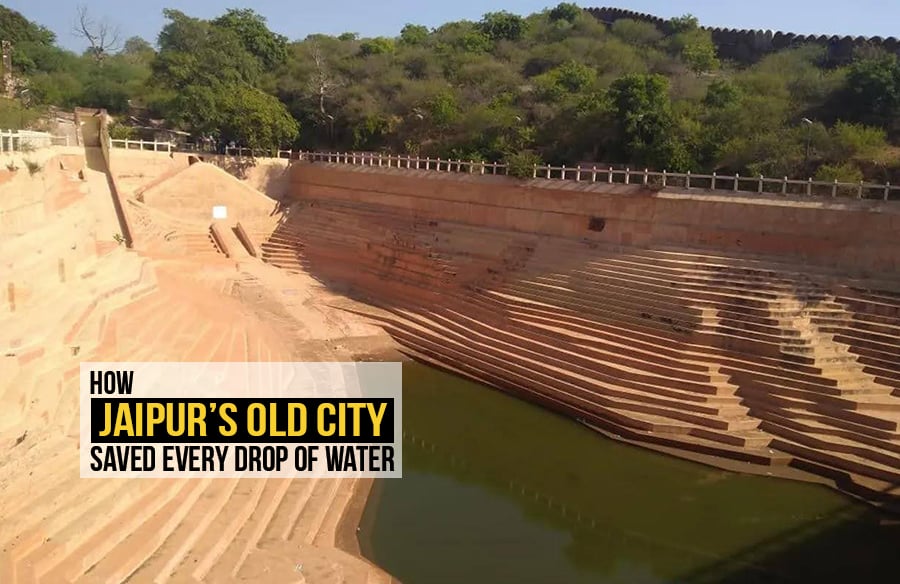
We cannot imagine the world without water. And still, we do not take any steps to preserve it, ensuring its quality. Water conservation has been an essential aspect of survival for civilizations, especially in arid regions. Jaipur, the capital of Rajasthan, India, is an excellent example of how traditional water management techniques can sustain urban populations. Designed in the 18th century by Maharaja Sawai Jai Singh II, after whom the city was named, Jaipur’s Old City integrated advanced water conservation methods into its urban planning, which ensured that every drop of rainwater was captured, stored, and efficiently utilized.
The Need for Water Conservation in Jaipur
Jaipur is located in the semi-arid zone of India, which has high temperatures, mild winters, and low rainfall. It receives an average annual rainfall of around 600 mm. Jaipur is the first planned city in India, to consider water security. Historically, water scarcity was a significant challenge due to its location, where water availability was scarce, uneven, uncertain, and unreliable. Hence, the development of efficient water conservation techniques was necessary in Jaipur.
Stepwells and Baoris: Ingenious Water Storage Systems
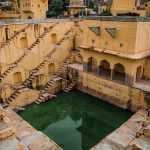
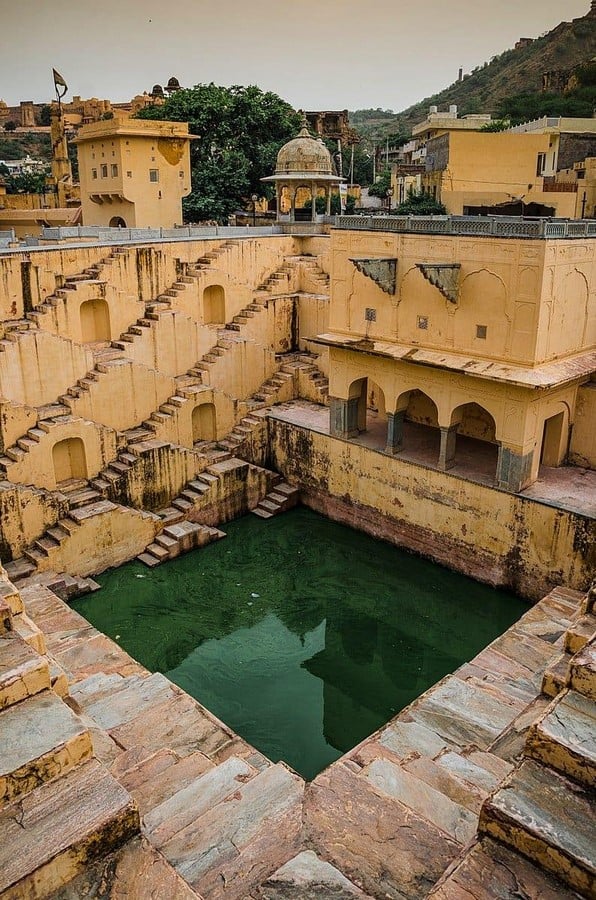
Stepwells, which are also known as baoris in Hindi, are ancient water conservation methods commonly found in the Indian subcontinent. These structures were designed and built to harvest rainwater during the monsoon season and store it for the dry months. Stepwells allow rainwater to seep into the ground, recharging groundwater levels. Not only this, step-wells served other purposes too, except providing drinking water, like a community gathering space, and a place to worship, and also helped to regulate temperature. They had elaborate staircases leading to the water level, which provided easy access for people to fetch water. Jaipur was home to several well-preserved step-wells that date back to the medieval era. The intricate carvings and architectural details on the walls of these step-wells are an example of skilled craftsmanship and the artisans of that time. Some of the step-wells of Jaipur are: Panna Meena ka Kund, Chand Baori, Nahargarh Baori, Stepwell at Galta Ji, etc.
Panna Meena ka Kund
It is located near Amer Fort in Jaipur. It showcases the innovation of water harvesting techniques. It was built in a symmetrical design. It is full of water all year round, and it is regarded as a reliable source of water, especially during periods of low rain. It used to be a water supply for locals in the past.
Jal Mahal and Man Sagar Lake
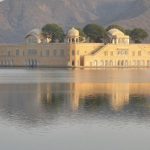
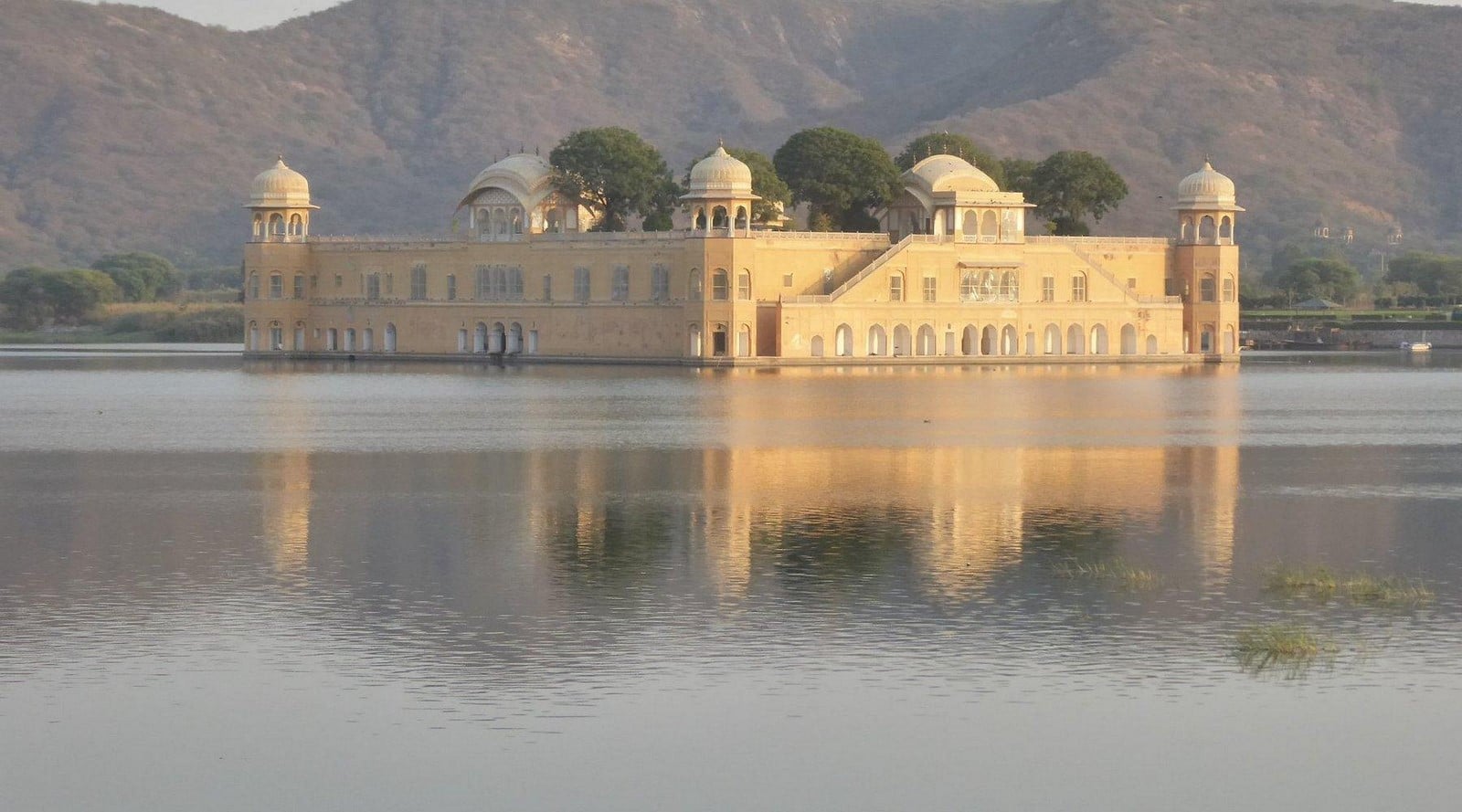
Man Sagar Lake is another remarkable example of Jaipur’s water conservation system. It is an artificial lake in Jaipur. It was named after Raja Man Singh, the then ruler of Amer who constructed it. It was created by damming of the river Dravyavati to conserve water. In the middle of the lake stands Jal Mahal, a palace partially submerged in water, which served as a summer retreat for the royal family.
The lake was designed as a natural rainwater harvesting and reservoir to address the water scarcity of the region. It collected and restored rainwater from the surrounding Aravalli hills and the runoff. It helped to recharge groundwater levels. It also acted as a buffer against urban flooding by holding excess monsoon water. It created a cooler microclimate and helped to keep the surrounding areas cooler in the hot, scorching summers.
Nahargarh Fort
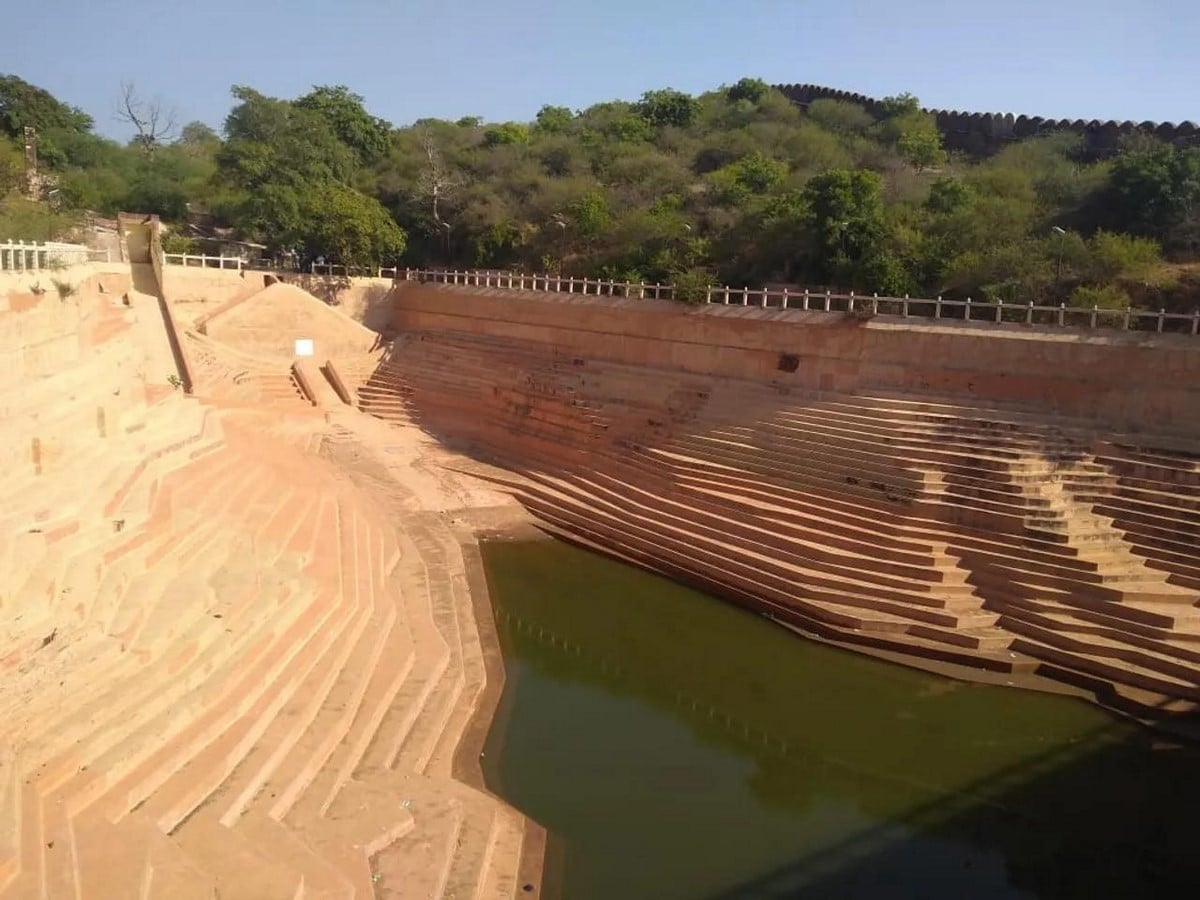
The Nahargarh Fort, located on the Aravalli Hills, was another important part of Jaipur’s water conservation system. Since forts were built on elevated lands where water scarcity was common, the architects devised an intricate rainwater harvesting system.
Nahargarh Fort had multiple catchment areas extending about 6 km around the fortress. The network of six closed catchment areas was connected by small canals, while water channels and drainage channels were placed inside and outside the fortress. The catchment areas directed rainwater into underground reservoirs and stepwells. The system ensured that rainwater was collected efficiently, stored for future use, and prevented from being wasted. The fort’s storage capacity was enough to sustain its inhabitants during droughts. This showcases the approach of Jaipur’s planners in addressing water scarcity.
Johads and Talabs: Traditional Rainwater Harvesting Ponds
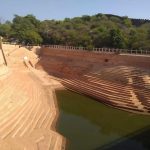
Apart from stepwells and reservoirs, Jaipur also relied on johads (small check dams) and talabs (traditional ponds) to store rainwater. These structures played a significant role in recharging groundwater levels and ensuring year-round water availability.
The urban planning of Jaipur incorporated water bodies at strategic locations, ensuring that excess rainwater was directed toward these reservoirs rather than being wasted. Many of these traditional ponds have been lost to urbanization, but efforts are being made to restore them to their original function.
Underground Water Channels and Canals
Jaipur’s Old City also had a network of underground water channels that transported rainwater from one location to another. These channels prevented surface evaporation and ensured that water reached storage areas efficiently. The design of these underground canals was inspired by Persian and Mughal water systems, demonstrating a fusion of different architectural influences.
The system worked in harmony with Jaipur’s grid-based city layout, ensuring that every drop of rainwater was put to use. Some of these canals are still operational today, showcasing the durability and efficiency of ancient water conservation methods.
Water-Conscious Urban Planning
The urban planning of Jaipur played a crucial role in its water conservation success. The planning was focused on the canals, ponds, reservoirs, dams, tanks, kunds, wells, step wells, channels, and aqueducts. The city’s grid-based layout, inspired by Vastu Shastra and Shilpa Shastra, incorporated wide roads, natural slopes, and designated areas for water collection. The city was established in such a way that its topography was utilized in the best possible way to preserve water.
Similarly, houses in the Old City were built with sloping roofs that directed rainwater into individual storage tanks, ensuring that each household had its own water supply. Additionally, the use of porous materials in construction allowed water to percolate into the ground, aiding in groundwater recharge. These processes helped in conserving water and distributing it to cater to various human needs inside and outside the city.
Jaipur’s Old City is an example of the brilliance of traditional water conservation techniques. The integration of stepwells, reservoirs, underground canals, and thoughtful urban planning made it one of the most water-efficient cities of its time. These ancient practices not only ensured water security but also fostered a sustainable relationship between the city and its natural resources. It is also essential for modern cities to revisit these age-old methods for sustainable solutions.
References:
TRADITIONAL RAINWATER HARVESTING METHODS IN HERITAGE SITES OF JAIPUR AND THEIR PRESENT SCENARIO. (n.d.). Available at: https://www.ijrti.org/papers/IJRTI2302054.pdf [Accessed 29 Mar. 2025].
Saxena, A. and Chandela, A.V.S. (2025). An analysis of water supply system in Jaipur city: Problems and prospects. International Journal of Geography, Geology and Environment, [online] 7(1), pp.08-14. doi:https://doi.org/10.22271/27067483.2025.v7.i1a.323.
Maharana Cab (2024). Are you planning a trip to Jaipur, India and looking for unique attractions to explore? One hidden gem that you should definitely not miss out on is the stunning stepwells in Jaipur. These architectural marvels not only showcase the ingenuity of ancient engineers but also provide a cool retreat from. [online] Linkedin.com. Available at: https://www.linkedin.com/pulse/stepwells-jaipur-exploring-architectural-marvels-maharanacab-nhb1c/ [Accessed 29 Mar. 2025].
Jaipurtourism.co.in. (2024). Panna Meena ka Kund Jaipur, India (Entry Fee, Timings, History, Built by, Images & Location) – Jaipur Tourism 2024. [online] Available at: https://jaipurtourism.co.in/panna-meena-ka-kund-jaipur.