In India, religion has shaped beliefs, communities and culture for centuries. It has been merging and intertwining with personal and collective identities as both a force of unity and a source of conflict, shaping everything from local customs to national debates. In such a country where religion permeates everything from politics to culture and media, its influence on the development of towns and cities is inevitably a strong one. The presence of religion in town planning is evident in the design of cities, the structure of neighbourhoods, and the rhythms of everyday life. From temple-centred towns in Tamil Nadu to Sufi shrines that shaped Delhi’s historical landscape, religion continues to define how Indian cities grow and function.
The Mythic Origins of Urban Space:

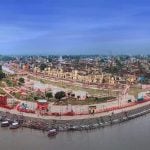
The urban identity of places like Ayodhya is deeply entwined with religious narratives. Ramayana, a foundational Hindu epic, recounts Ayodhya as the divine birthplace and righteous kingdom of Rama, an incarnation of Vishnu. This belief has shaped the development of Ayodhya for centuries as it became a significant pilgrimage centre, influencing its priorities to accommodate devotees and religious institutions. Even today, Ayodhya is undergoing massive transformations aimed at reinforcing its religious significance and attracting global Hindu pilgrimage This redevelopment not only reaffirms its religious prominence but also reshapes the city’s urban fabric, reflecting how sacred narratives continue to drive town planning. A similar example is Lumbini in Nepal, the birthplace of Siddhartha Gautama Buddha. Once a garden, Lumbini has evolved into a UNESCO World Heritage Site and an international Buddhist pilgrimage centre. Its development is carefully curated to preserve its spiritual atmosphere with restricted commercial activity, demonstrating how sacred narratives can be the foundation of urban planning, influencing spatial organization, economic priorities, and architectural aesthetics across different civilizations.
Sacred Waters and Urban Arteries:
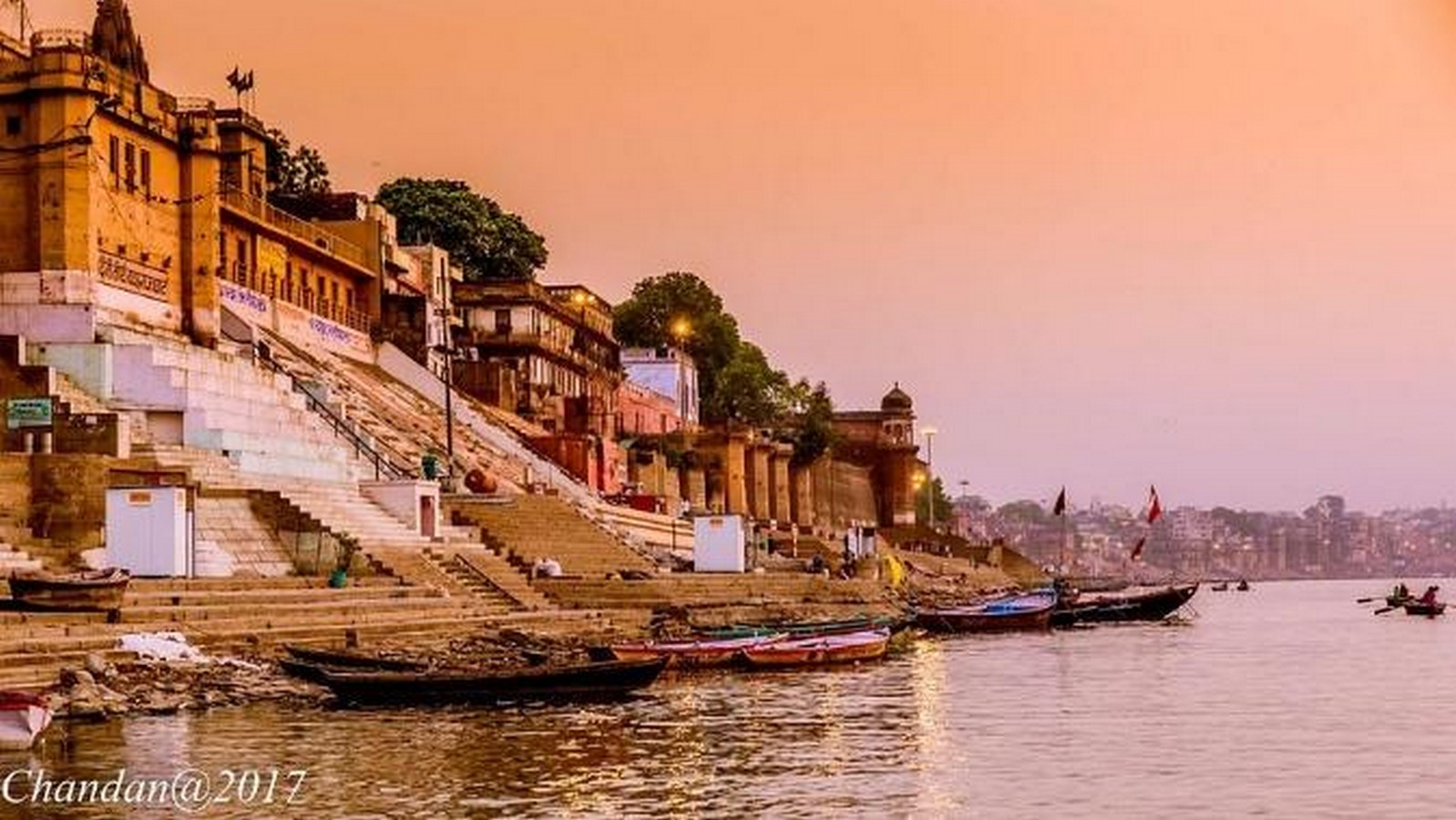
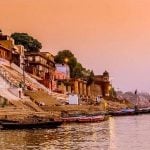
All ancient settlements originate near a water body, and in India, this practical need is inseparable from deep spiritual significance. Nowhere is this connection more evident than in Varanasi, with its iconic ghats along the Ganges River. Here, the river is not just a resource, but Ganga Mata, revered as a living goddess in Hinduism. The ghats of Varanasi, a continuous series of stone steps lining the riverbank, are not merely for river access; they are intricately designed public spaces. Here, daily rituals unfold in harmony with the river—sacred baths believed to purify sins, grand fire ceremonies like the Ganga Aarti, and cremation rites at Manikarnika and Harishchandra Ghats, where attaining moksha (liberation) is believed to be most auspicious. The dense urban fabric of Varanasi is tightly woven around these ghats, with narrow, winding lanes leading from the riverfront into the city, lined with temples, ashrams, and businesses catering to religious needs. This urban morphology, dictated by the sacred river and its associated rituals, creates Varanasi’s unparalleled spiritual and urban character.
Beyond India, we see echoes of this in other cultures though their urban manifestations differ. The Jordan River in the Middle East, while significantly smaller, is revered as the site of Jesus Christ’s baptism in Christianity, historically influencing settlement patterns and becoming a focal point for Christian pilgrimage. While shaped by distinct religious traditions and geographical contexts, these examples underscore a universal truth—rivers are not just physical landmarks but sacred spaces that define the urban character of the civilizations that grow around them.
Cities Defined by Faith: Centres of Pilgrimage and Identity:
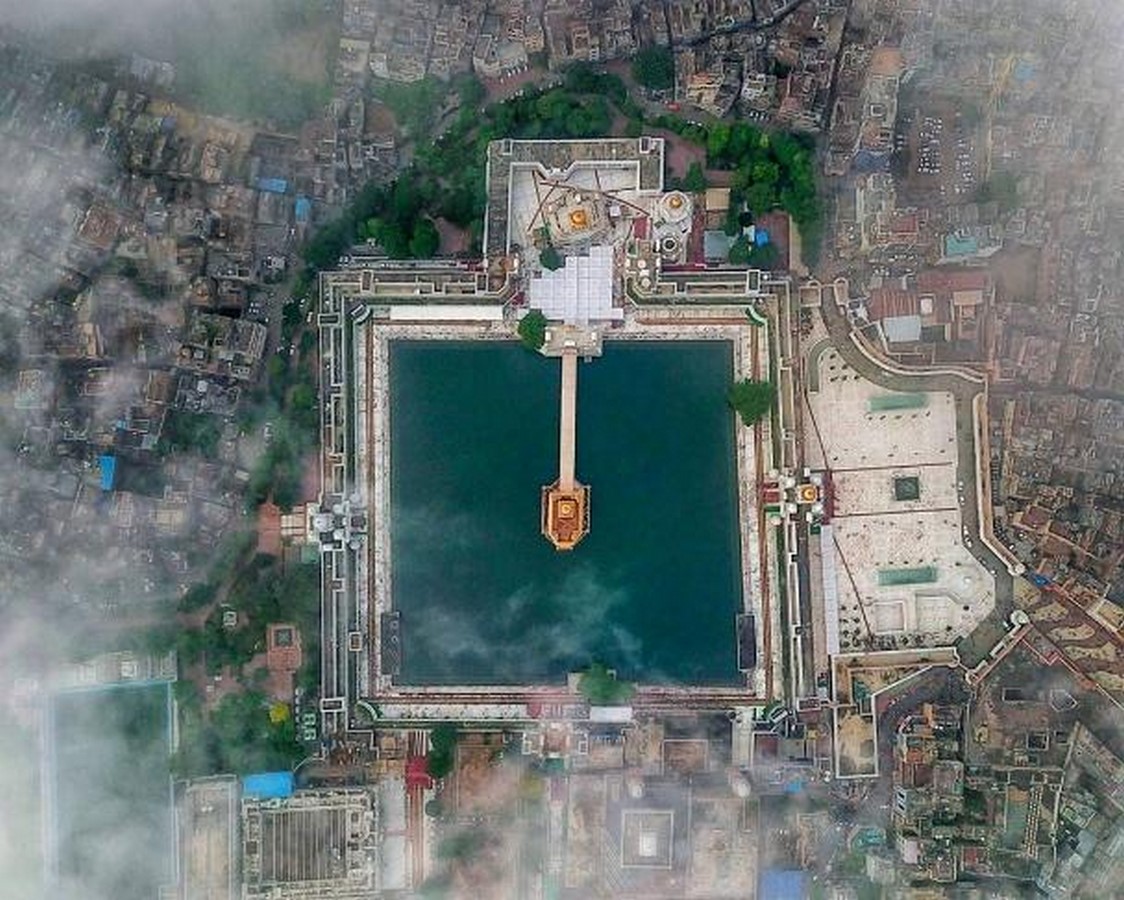
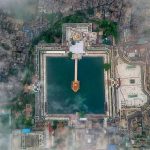
Some cities become synonymous with a particular faith; their very identities inextricably linked to religious practice. Amritsar provides a compelling example. Though a bustling modern metropolis, its heart—and the reason for its global significance—is the Harmandir Sahib, or the Golden Temple, the holiest shrine in Sikhism. This resplendent gold-leafed gurdwara, situated in the centre of the Amrit Sarovar, is the holiest shrine in Sikhism. Amritsar’s urban development, particularly its economy, tourism, and infrastructure, are profoundly shaped by the constant influx of pilgrims visiting Harmandir Sahib from around the world. The langar, the community kitchen serving free meals to all visitors regardless of faith, is the world’s largest free kitchen and a central institution in Sikhism located within the temple complex, further shaping the urban activities and social fabric of Amritsar.
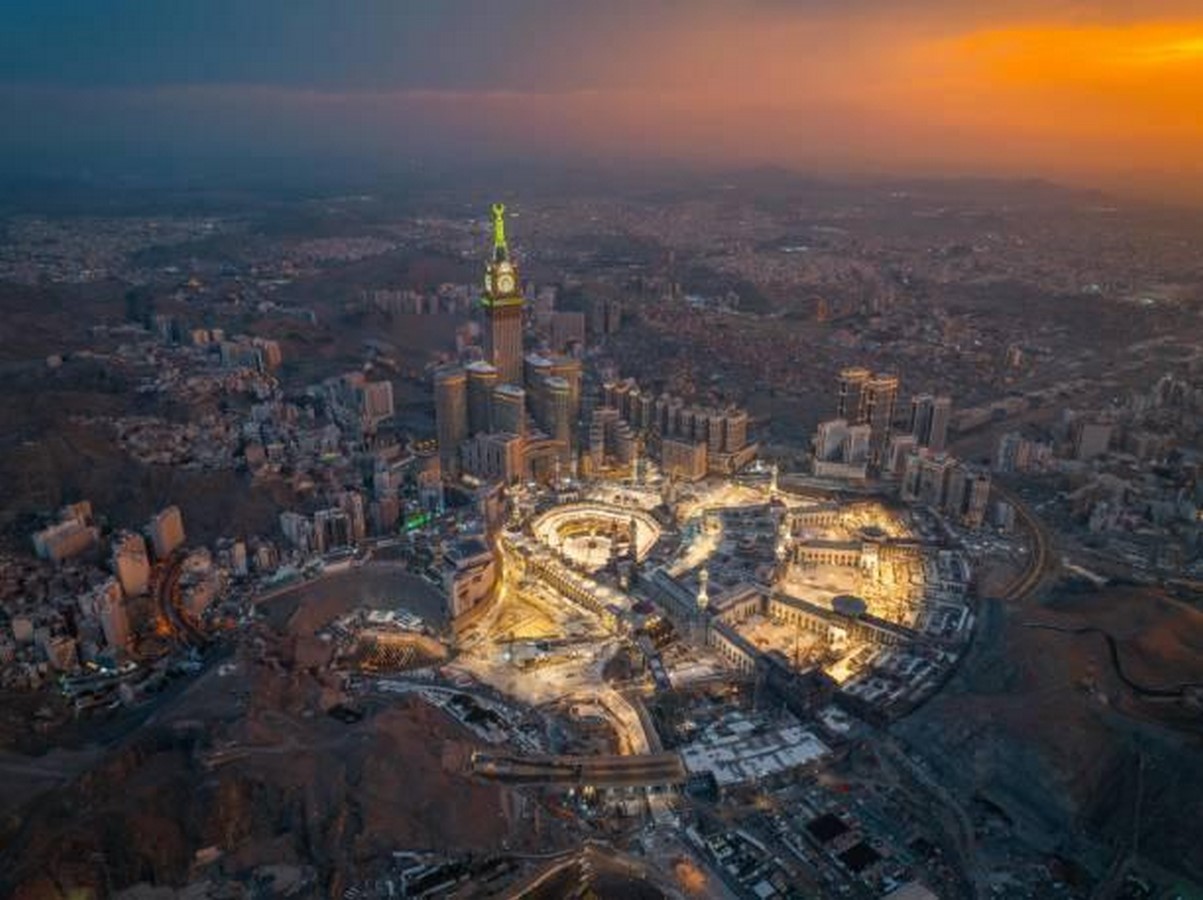
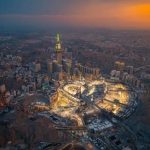
Looking beyond Sikhism, we can also consider Mecca, in Saudi Arabia, Islam’s holiest city. Here, the Kaaba, the cube-shaped structure at the centre of the Masjid al-Haram, dictates the city’s entire urban structure. Mecca’s urban plan is designed to accommodate millions of pilgrims annually during the Hajj pilgrimage, with vast prayer spaces, temporary accommodations, and transportation networks all oriented towards facilitating the religious rituals centred around the Kaaba, illustrating how religious imperatives can shape urban landscapes on a monumental scale, transforming cities into embodiments of faith itself.
Architectural Languages of Faith Across Cultures:
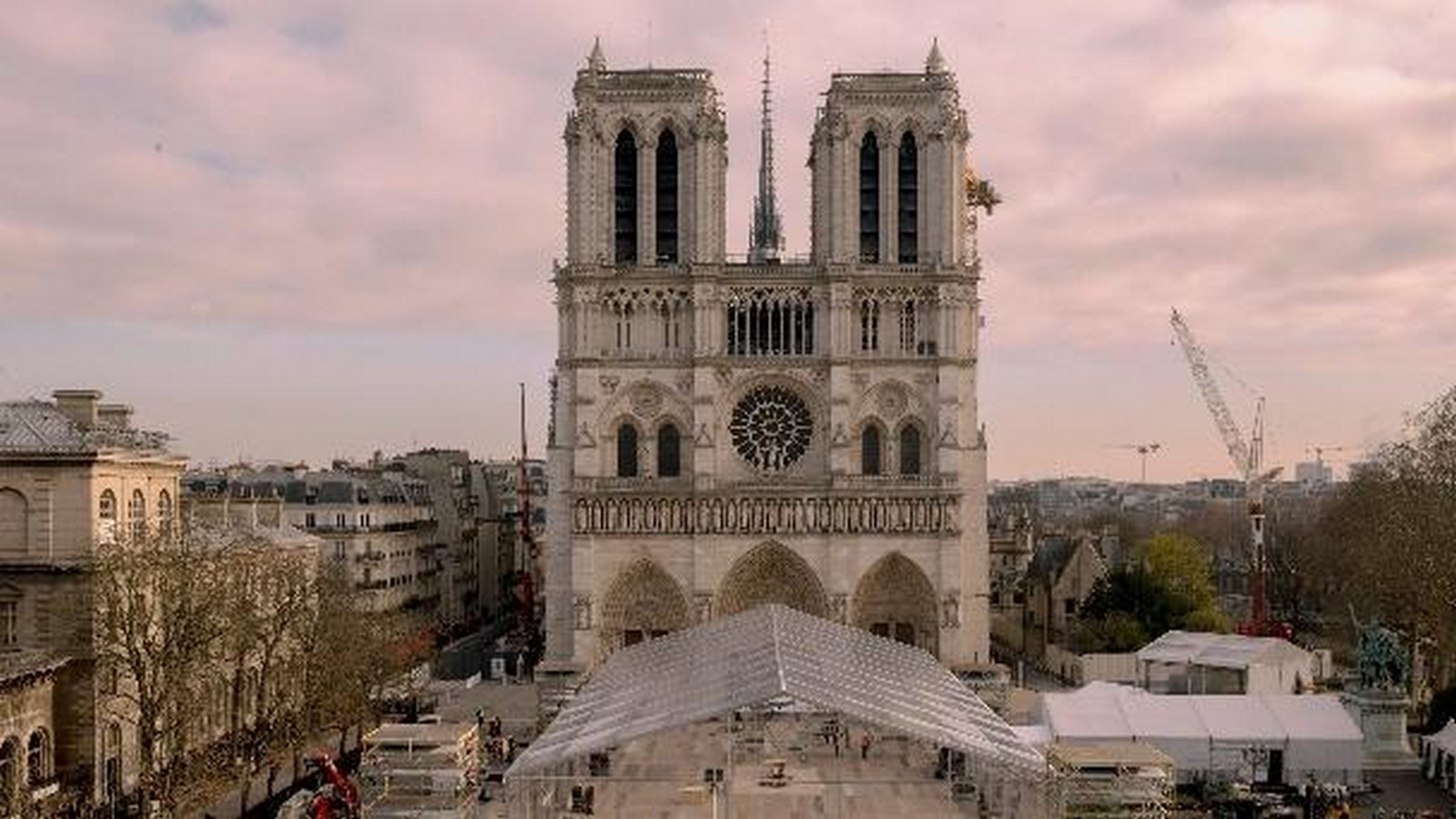
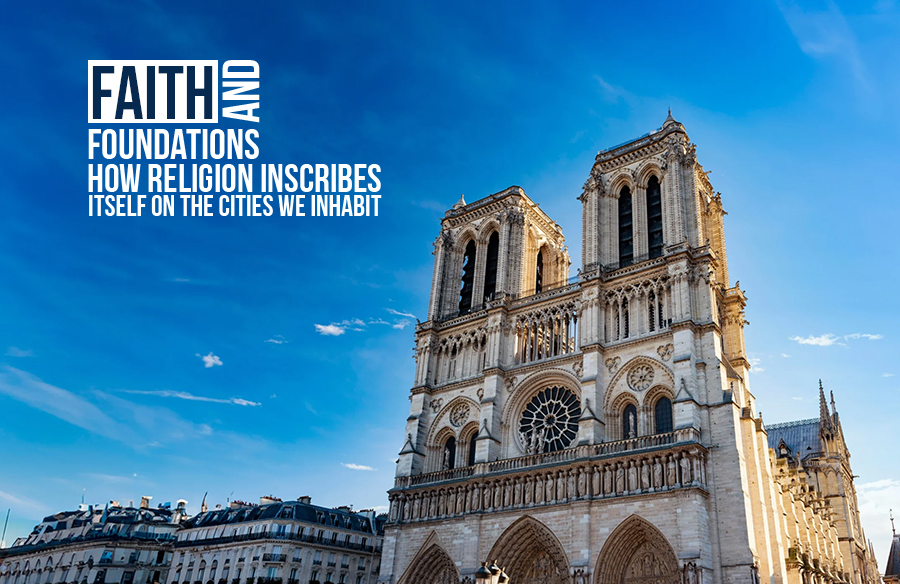
The influence of religion on urban spaces manifests through diverse architectural forms, creating distinct “architectural languages of faith.” Consider the Gothic cathedrals of Europe, such as the Notre Dame in Paris and Cologne Cathedral in Germany. These towering structures, primarily built between the 12th and 16th centuries, are not merely places of worship; they are monumental expressions of medieval Christian faith and theological principles. Usage of features such as pointed arches, ribbed vaults, and flying buttresses allowed for unprecedented height and vast interior spaces, designed to evoke a sense of awe and transcendence, drawing the eye upwards towards the heavens, symbolizing the divine realm. Extensive stained-glass windows, another hallmark of Gothic architecture, transformed sunlight into a mystical element and depicted biblical narratives, playing a role in educating a largely illiterate populace. These cathedrals, often positioned at the centre of medieval cities, were not only religious sites but also civic landmarks that reinforced the Church’s influence over urban life.
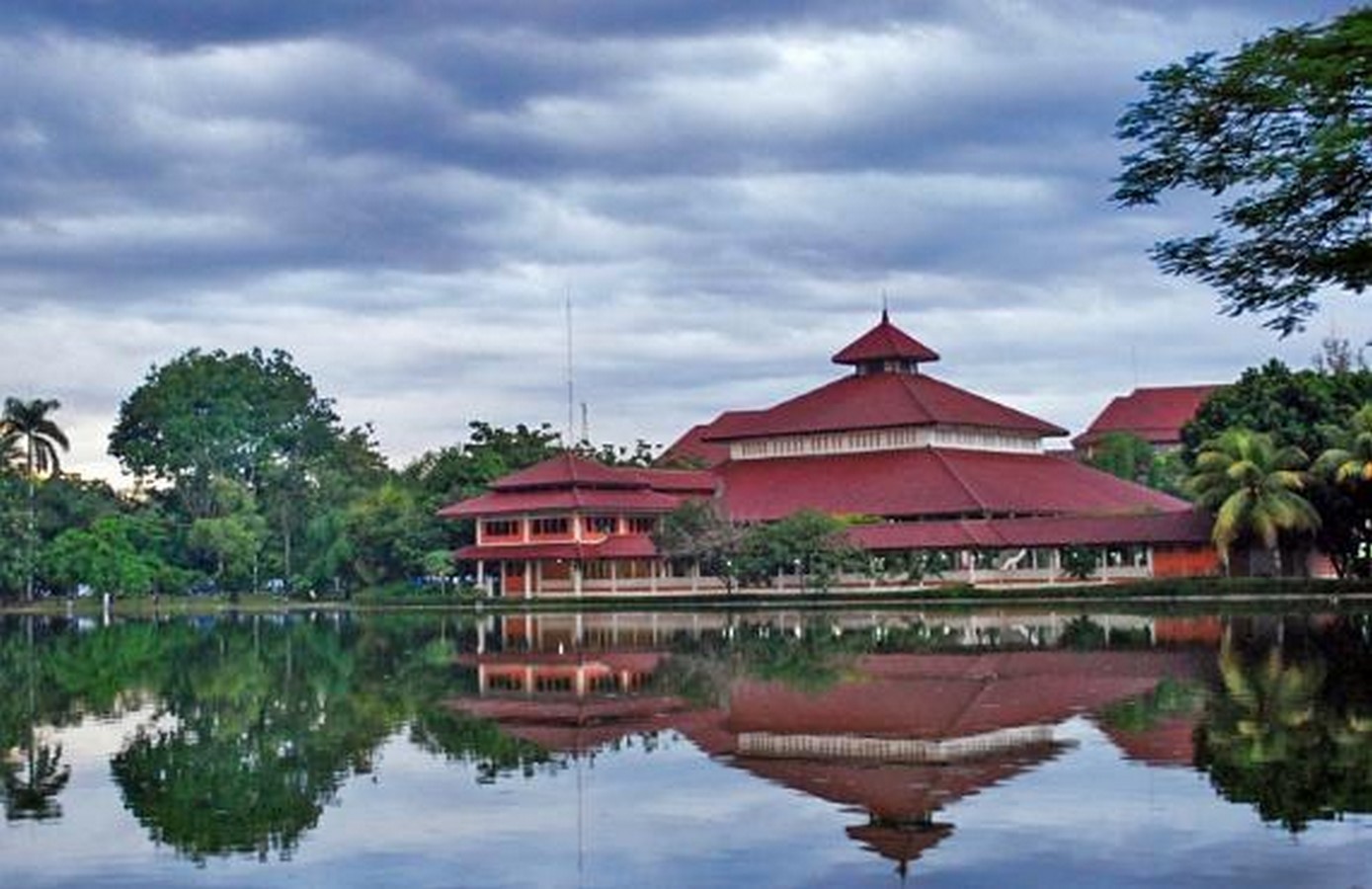
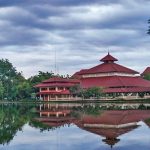
In contrast, mosque architecture in Indonesia demonstrates how religious structures adapt to local settings, uniquely blending core Islamic architectural principles with diverse building traditions. While mosques across the archipelago share similar cultural features, such as orientation towards the Qibla (Mecca) and the presence of domes and minarets, their designs integrate indigenous materials and styles. For example, early Javanese mosques incorporated tiered roofs reminiscent of pre-Islamic temple architecture, and minarets are often adapted in height and form to suit the Indonesian landscape and available materials like wood and bamboo. The resulting regional variations vividly demonstrate how religious architecture becomes locally contextualized while retaining its core religious function and identity.
Religion and the Urban Fabric:
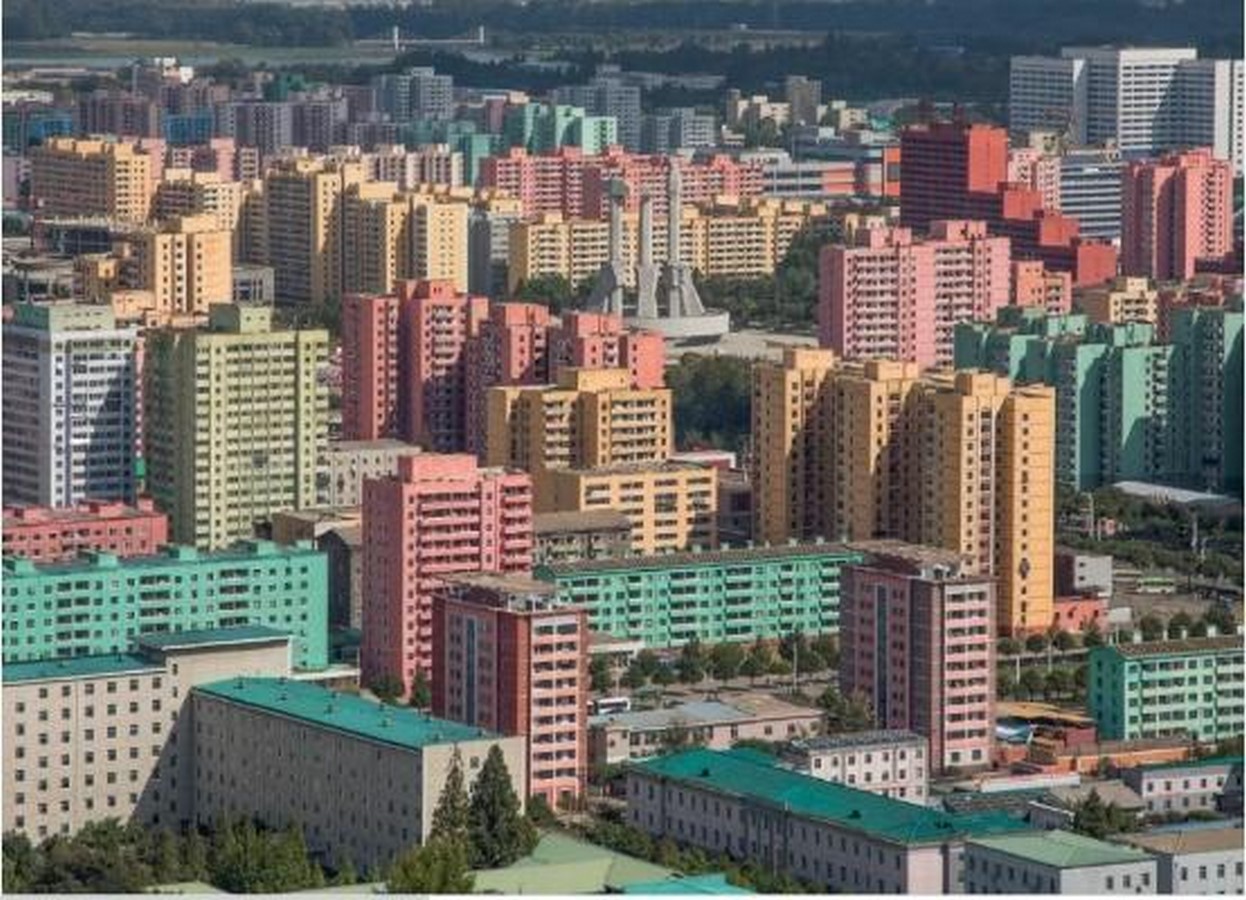
In North Korea, the deliberate suppression of religion has stripped its cities of cultural depth. Pyongyang’s rigid, uniform architecture—defined by state-controlled monuments and monotonous apartment blocks—reflects an ideology that erases faith, resulting in a sterile urban landscape disconnected from history and organic human expression.
In contrast, Kochi, Kerala, embodies religious coexistence, where Hindu temples, mosques, churches, and synagogues stand side by side, reflecting centuries of trade, migration, and shared heritage. While modernization has altered parts of the city, its architectural legacy—sloped roofs, laterite stone walls, and wooden detailing—continues to showcase mutual influence and adaptation among religious communities, shaping a cityscape where faiths exist in harmony rather than competition.
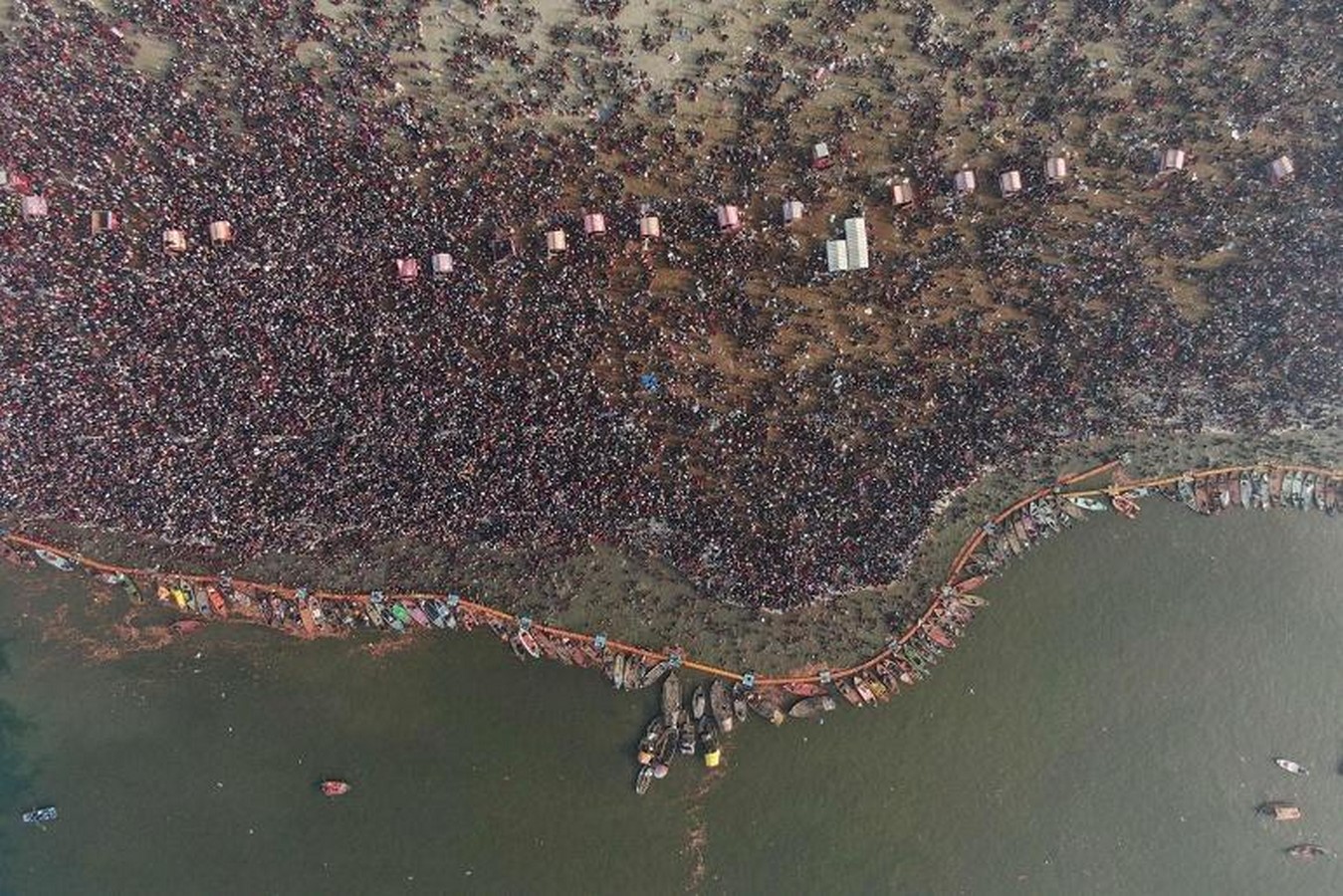
Then there is Prayagraj during the Maha Kumbh Mela, where religion does not just influence the city—it completely takes it over. Every twelve years, Prayagraj transforms into a vast temporary metropolis, with roads, sanitation, medical facilities, and security infrastructure constructed solely to support millions of pilgrims. Faith dictates the city’s form and function, creating an urban space that thrives on devotion before vanishing, leaving behind only its cultural and spiritual imprint.
The relationship between religion and town planning is a deeply interwoven and dynamic one. From the mythic origins of settlements to the architectural expressions of faith and the dynamics of religious pluralism, faith traditions have indelibly shaped the urban spaces we inhabit. Understanding this complex interplay is not just about appreciating the historical and cultural richness of our cities; it is essential for thoughtfully planning inclusive, resilient, and vibrant urban futures. As cities become increasingly diverse and globalized, recognizing and respecting the diverse spiritual and cultural heritages that shape our urban environments is paramount to creating truly inclusive and harmonious urban spaces for all.
References:
Allam, Z. (2020) Theology and urban sustainability. Cham: Springer.
Chaudhuri, S. and Dutta, R. (2024) Religion and the city in India, Religion and Urbanity ed. Available at: https://www.academia.edu/88730842/Religion_and_the_City_in_India (Accessed: 24 February 2025).
Narayanan, Y. (2017) Religion, heritage and the sustainable city: Hinduism and urbanisation in Jaipur. London: Routledge.
Rau, S. et al. (2025) Category: South Asia, Religion and Urbanity Reciprocal Formations. Available at: https://urbrel.hypotheses.org/category/case-studies/southasia (Accessed: 24 February 2025).
Upadhyay, S. (no date) Sociology of urban transformations, Urban Religions – Sociology of urban transformations. Available at: https://ebooks.inflibnet.ac.in/socp07/chapter/urban-religions/#:~:text=In%20fact%2C%20some%20cities%2C%20for,pilgrimage%20such%20as%20Varanasi%2C%20Haridwar. (Accessed: 24 February 2025).