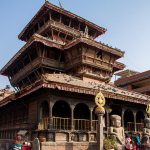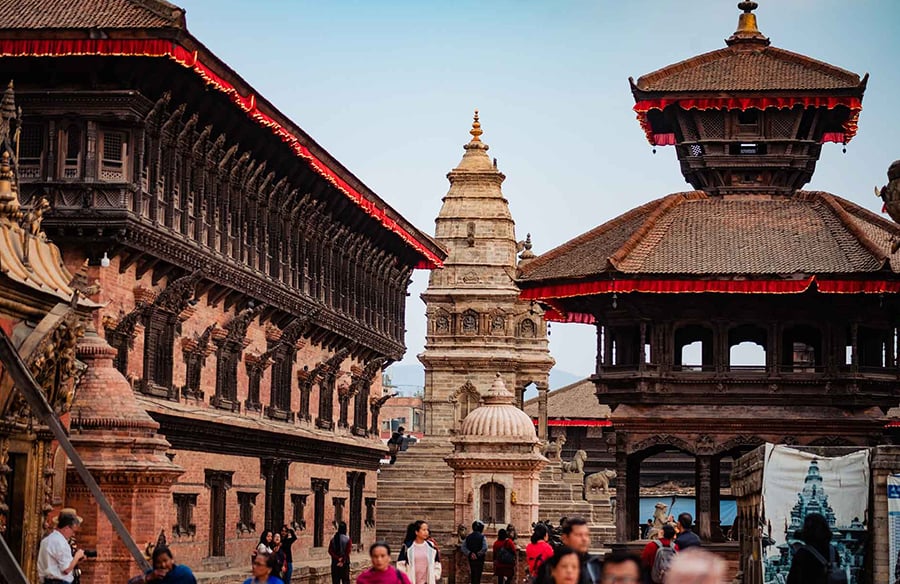
Nestled in the historic city of Bhaktapur, the Dattatreya Temple, constructed in 1427 A.D. during the reign of King Yaksha Malla, stands as one of the oldest surviving temples in the Kathmandu Valley. It was originally established as a Mandapa Satal, a rest house for the community, composed of wood purportedly from a single tree, and expanded by King Vishwa Malla in 1458 A.D. to house the sacred trinity of Shiva, Vishnu, and Brahma, worshipped together as Dattatreya. After the devastating earthquake of 1934, it was reconstructed, regaining its original Malla form (linear, symmetry, and spatial hierarchy), serving today as both a sacred shrine and cultural landmark.
Social and Political Importance
Historical Context:
During the 15th century, the Dattatreya temple served as a powerful symbol of royal support and spiritual dedication under the Malla dynasty. The temple originally served as a Mandapa Satal, a public shelter that highlighted the Malla rulers’ commitment to serving the community. Its transformation into a sanyasis and eventually a temple housing the Dattatreya deity under Vishwa Malla exemplified the religious and cultural institutions by which the Malla rulers sought to centralize authority. The temple is dedicated to Dattatreya, a god who combines Brahma, Vishnu, and Shiva. This showed a message of unity among different Hindu groups and helped bring people together during a time when the Kathmandu Valley was politically divided. The stone Wrestlers named Jai Mal and Patta, and the fierce lions in the entrance further strengthened royal authority, extending strength and protection.
Contemporary Role:
Today, the Dattatreya Temple is a vital cultural and tourist site in Bhaktapur, attracting visitors for its architectural splendor and spiritual significance. It acts as a resting place for locals and pilgrims and also as a functioning shrine, protecting its role as a community hub. Its location in Dattatreya Square, a UNESCO World Heritage Site, draws global tourists, contributing to Bhaktapur’s economy through heritage tourism. Different Festivals like Dashain and Tihar are hosted here, which emphasize cultural traditions and community identity. Its preservation reflects Nepal’s post-monarchy emphasis on heritage as a national asset, promoting cultural pride and economic growth through tourism.
Impact on Urban Fabric
The Dattatreya Temple is a center of Dattatreya Square, a vibrant public square in Bhaktapur’s old city center, which significantly impacts the city’s urban form. Elevated on three plinths, the temple’s imposing presence creates a focal point, organizing the surrounding square as a social and commercial hub. Within Bhaktapur’s maze-like streets. Within Bhaktapur’s maze-like streets, a 20-foot stone pillar topped with a Garuda figure and the grand temple entrance provide a sense of place. The temple’s presence within the urban setting boosts tourism-related activities, as the steady flow of visitors supports the growth of nearby shops, cafes, and handicraft stalls. Its open courtyard and circumambulatory path facilitate community gatherings and religious processions, maintaining Bhaktapur’s traditional urban rhythm. The temple’s preservation amidst modern development preserves Bhaktapur’s historic identity, balancing heritage with urban growth and enhancing the city’s status as a cultural destination.
Architectural Style and Relevance to Era
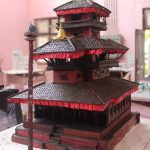
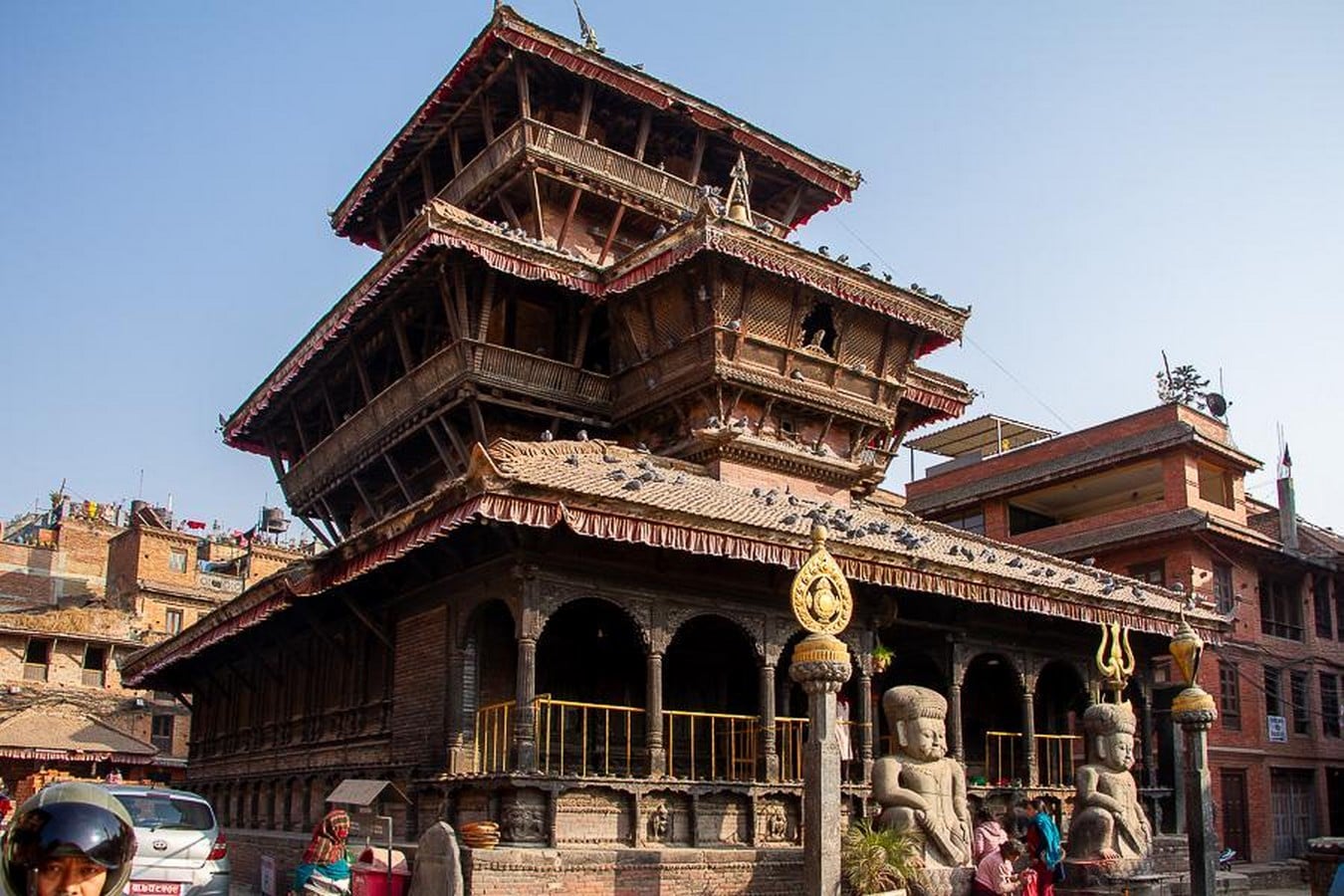
Style: Multi-level Pagoda form, wooden carvings, and steady brickwork reflect the Dattatreya temple as a prime example of Malla-period architecture. Its three-story, square-plan design, with a sloping roof covered in Jhingati tiles and supported by richly carved Tundal (wooden struts), reflects the Newar craftsmanship that defined the Kathmandu Valley’s golden age. The temple’s ornate features, such as the gilded torana at the shrine’s doorway, lattice windows (Ga Jhya), and erotic carvings on the outer walls, blend spiritual symbolism with artistic expression. Local building techniques like the use of Dachi appa, joined with Traditional mortar of oil, resin, and red earth, showcase the local building technique.
Relevance to Era:.This temple reflects the Mall era’s cultural and Architectural zenith when Bhaktapur was a thriving centre of art, trade, and religion. The Malla kings used architecture to legitimize their rule, and the temple’s initial role as a Mandapa Satal addressed communal needs, while its later expansion into a Dattatreya shrine aligned with the era’s emphasis on syncretic Hinduism to unify diverse communities. The incorporation of symbolic elements, like the Gajur (gold-plated pinnacle) as a conduit between heaven and earth, and the Asta Matrika carvings, tied the temple to Malla-era spiritual beliefs. The use of local materials and Newar craftsmanship, combined with defensive elements like the elevated plinths, responded to the era’s need for durability and cultural expression in a politically competitive valley.
Symbolism: The temple’s architectural features are rich with meaning. At the center of Hindu offerings is the flow of divine power from heaven to earth in the Gajur. The conch and discus pillars at the entrance are offerings to the gods. The Asta Matrika carvings are also divine protective mothers, which demonstrates spirituality at the time of the Mallas.
Architectural Features and Innovation

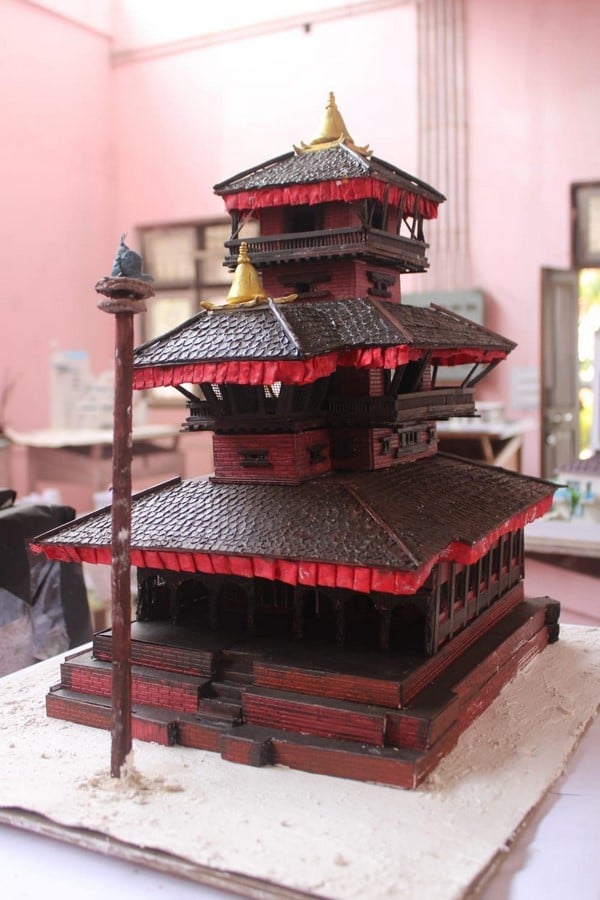
The east-west aligned temple is an excellent illustration of the classic Nepalese temple style, constructed of Dachi Appa cornice brick bonded by a special oil, resin, and red earth mortar. The three-storeyed square structure has each successive storey duplicating the plan of the one below it, and is placed on three plinth levels, both to prevent dampness and to elevate the temple visually above street level. Its entrance is heralded by a 20-foot stone pillar with a lotus base topped by a five-foot Garuda in reverence, with symbolic motifs on either side of the doorway—a metal conch shell to the left and a discus to the right. On the right-hand side of the steps is a trishul, emphasizing the spiritual affiliation of the temple. Guarding the entrance are 10-foot stone statues of wrestlers Jai Mal and Patta, with two fierce stone lions behind them.
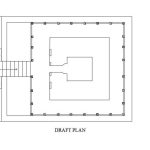
The double-wall design of the temple provides a wide circumambulatory path around the sanctum at the first-floor level, about 10 feet in height and 6 feet in width, accessed through a U-shaped path at the entrance. The core wall on the first floor extends to the sanctum, and the inner and outer walls are connected by wooden pegs and other beams, providing structural strength. The sanctum accommodates Dattatreya, depicted with Vishnu in the center, Brahma on the right side, and Shiva on the left side, with the support of a semi-circular metal plate featuring the ten incarnations of Vishnu. A gilt torana above the entrance of the inner shrine and some suspended bells and lanterns enhance the sacred atmosphere.
Architecturally, a square first-floor balcony, and a front projection with a pinnacle of its own, giving separate character, veined with lattice windows (Ga Jhya) on the Bhimsen Temple side, render it conspicuous. A statue believed to be Shankaracharya is visible through the central window. The outer walls have erotic carvings beneath lattice windows, symbolizing creation and the nature of man, while 216 oil-lamp railings encircle the main structure, contributing to night-time ceremonies. The sloping roofs, which are covered with Jhingati tiles, are supported by Tundal struts, which are intricately carved, with Vyala figures at the corners. Ornamental details like the Kinkinmala (red cloth fringe) and gold-plated finials (Gajur), and striped pinnacles relate the form to religious symbolism, which represents the interaction of earth and spiritual realms.
Reference:
- https://www.orientalarchitecture.com/sid/1495/nepal/bhaktapur/dattatreya-temple
- https://www.bhaktapur.com/discover/dattatraya-temple/
- https://www.canva.com/design/DAGm1cXLC5M/BK70gjJkE16OMQBLBxuLyQ/edit
- https://www.travellingcamera.com/2025/06/dattatraya-temple-timeless-heart-of.html
- https://www.orientalarchitecture.com/sid/1495/nepal/bhaktapur/dattatreya-temple