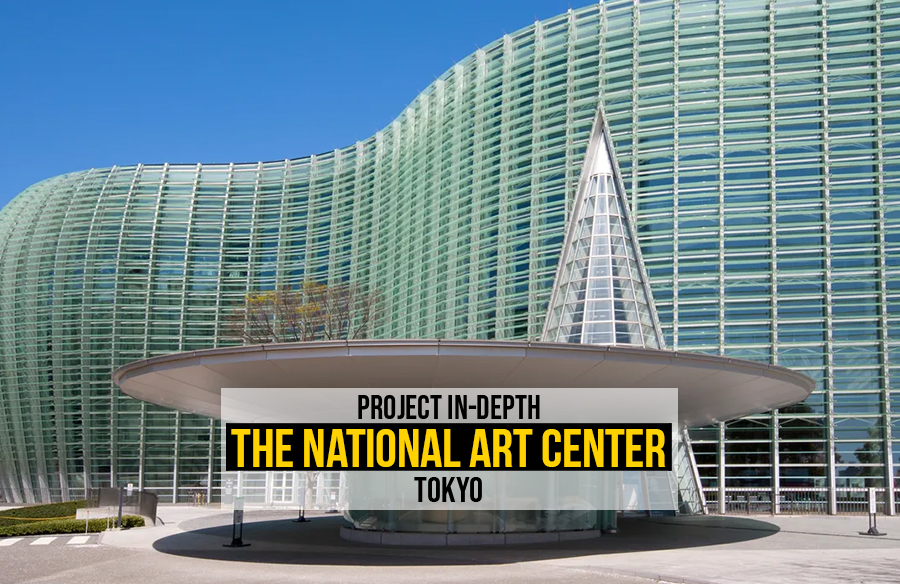
The National Art Centre, Tokyo: A Spatial Manifesto of Cultural Flexibility and Visionary Architecture
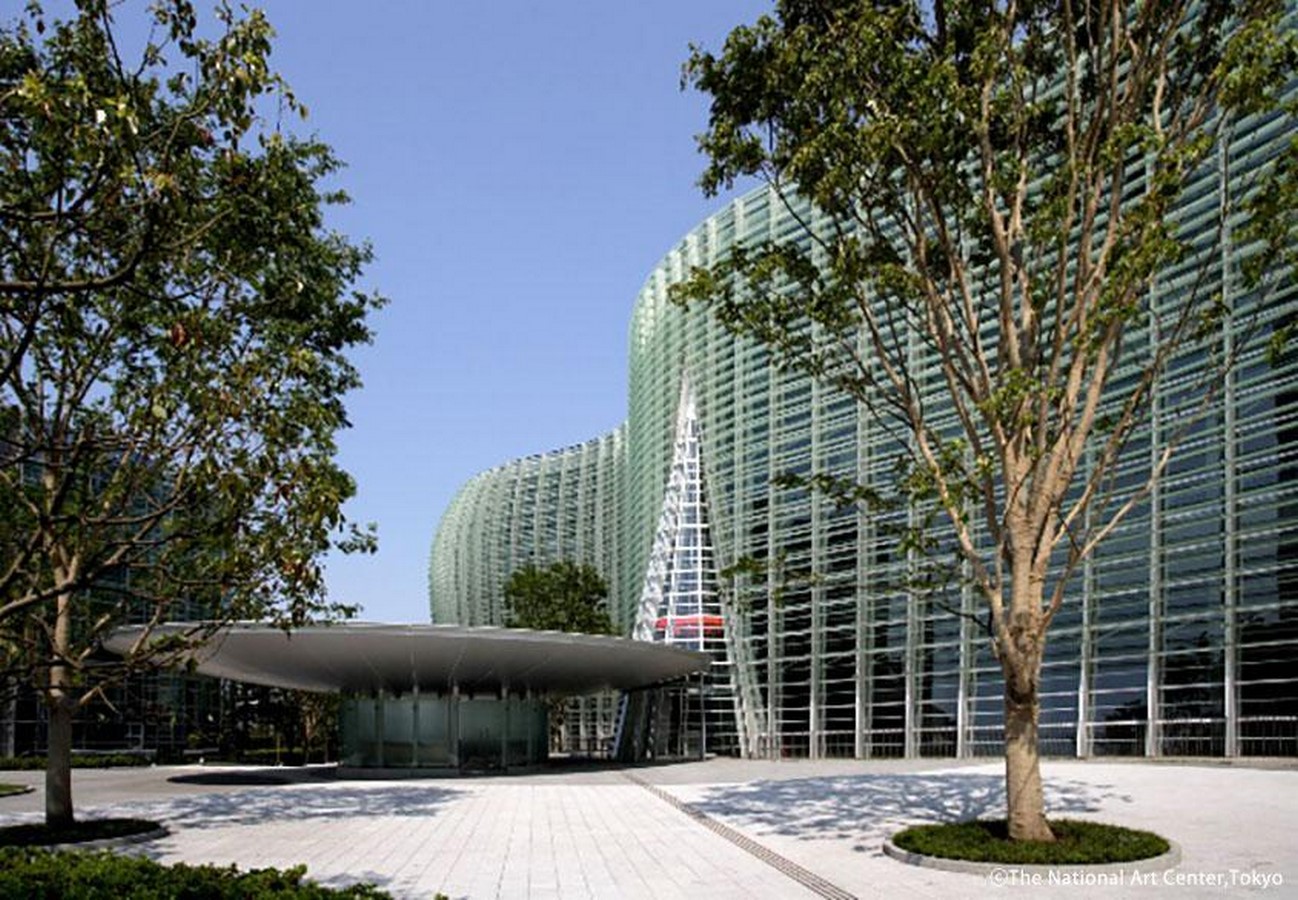
The National Art Centre, Tokyo (NACT), is an unusual model of a publicly funded cultural centre without a permanent collection. Designed by Kisho Kurokawa and opened in 2006, the centre is an advancement in museum typology, characterised by flexibility, transparency, and dynamic hosting of temporary exhibitions. This article critiques the entire development process of the project: from its political and institutional origins to its vision for design, stakeholder engagement, construction process, critical response, and future directions. Situating NACT in the larger Japanese and international discourse on cultural infrastructure, the article contributes to the knowledge base on how architecture can serve as a tool for participatory cultural involvement.
The National Art Centre, Tokyo (NACT), in Roppongi, Minato-ku, is a departure from traditional museum norms. It opened in 2007 and is commonly referred to as an “empty museum”—a site for temporary exhibitions and no permanent collection (Yoshimoto, 2009). The building’s design by celebrated architect Kisho Kurokawa was both philosophical and functional, and in line with Metabolist ideals of flexibility and openness. The centre is included in the National Museum of Art’s organisation within the Independent Administrative Institution system and has developed into a cultural landmark, with exhibitions, lectures, and cross-disciplinary events.
Institutional Origins and Cultural Policy Context
The origins of NACT are in wider post-war Japanese cultural policies that focused on decentralisation and modernisation. During the 1990s, with demands to innovate public sector museums, the government restructured its cultural institutions, forming the Independent Administrative Institution National Museum of Art in 2001 (MEXT, 2001). The government aimed to establish a more independent and responsive system of national art museums.
The idea of NACT developed out of the necessity for an open space which would be capable of housing artist unions and international cultural exchange. Unlike many of Japan’s national museums, including the Tokyo National Museum or the National Museum of Western Art, NACT was not established to create a collection but to accommodate short-term exhibitions organised by outside organisations.
Stakeholder Framework and Governance
The stakeholders in the NACT project were:
The Ministry of Education, Culture, Sports, Science and Technology (MEXT), which underwrote primary administration and funding.
The Agency for Cultural Affairs, which implemented cultural policy.
The National Museum of Art administration governed operations.
A wide range of artist associations, such as the Japan Fine Arts Exhibition (Nitten), needed to have exhibition sites.
The architectural firm Kisho Kurokawa Architect & Associates and engineering consultants.
Local municipal stakeholders, such as the Minato Ward Office.
Through discussion and consultation, the vision of a centre that would be able to accommodate various concurrent exhibitions across genres—from modernism to manga—was formed. This pluralistic spirit informed both the program model and the architectural brief (Tanaka, 2007).
Design Vision: Metabolism Meets Cultural Infrastructure
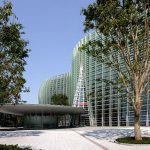
The participation of architect Kisho Kurokawa brought a revolutionary shift away from museum conventions. A member of the Metabolist movement since its inception, Kurokawa has been a proponent of buildings as dynamic, adaptive systems. His vision for NACT was not only to create an architectural landmark but to design a “display machine “, an efficient, effective, and effective venue for short-term exhibitions (Kurokawa, 2007).
Major features of the design are:
- A 21.6-metre-high curving glass curtain wall.
- A 160-metre curved façade integrating urban and green spaces.
- Seven column-free exhibition halls designed for spatial flexibility.
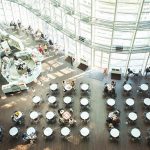
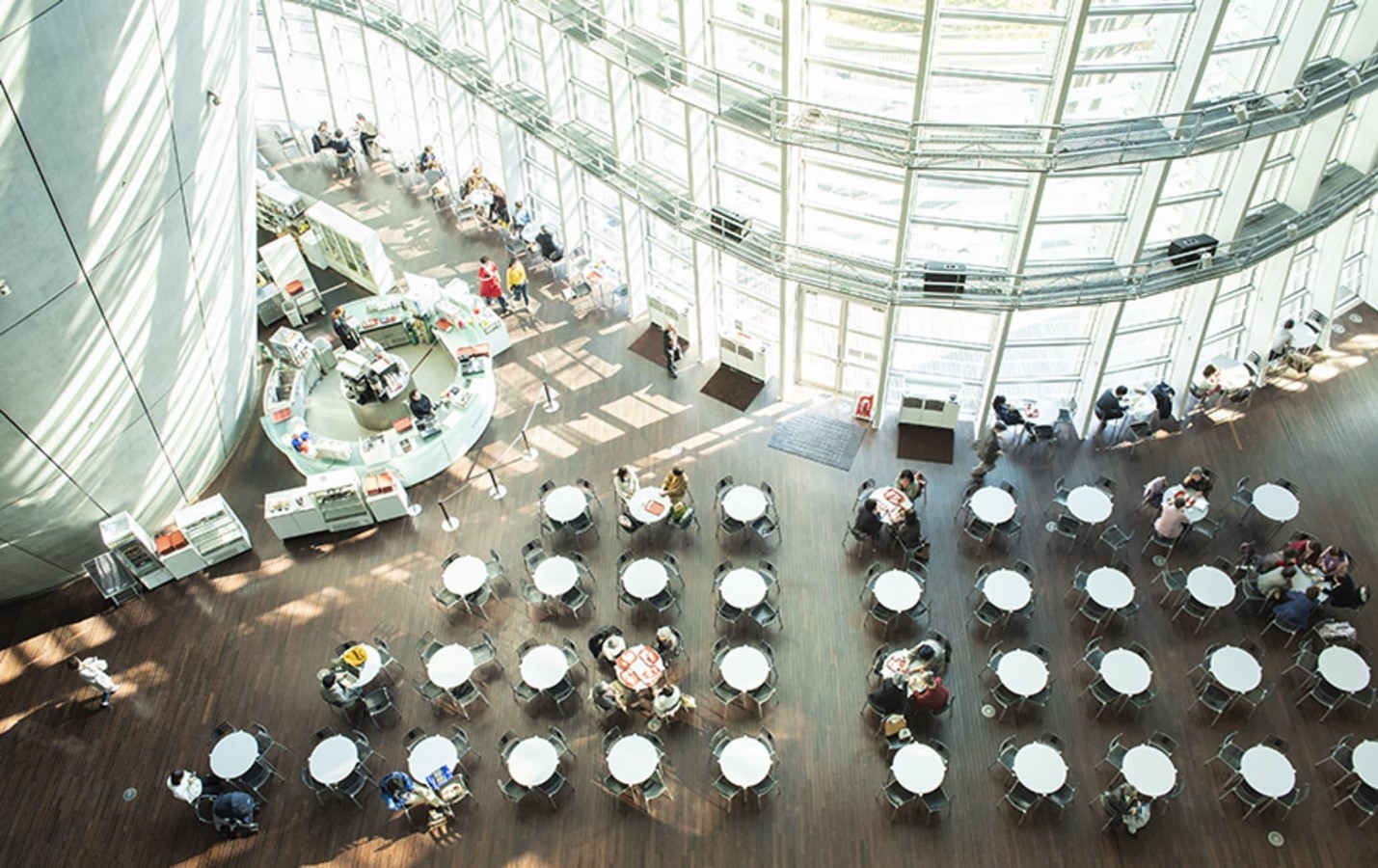
- Inverted cone structures that house a restaurant and café, acting as social nodes.
- Use of natural light, universal access, and seismic resilience, crucial for Tokyo’s geography (Yoshimoto, 2009).
Kurokawa’s architecture here embodies symbiosis, his theory of coexistence between nature and urbanity, technology and humanity.
Construction and Technical Realisation
Construction started in July 2002 and was completed in May 2006, with the centre being officially opened in January 2007. Two large construction consortia—Kajima–Taisei, Matsumura and Shimizu, Obayashi, and Mitsui—carried out the complex construction (NACT, 2007).
Technical design highlights include:
- Seismic base-isolation systems to facilitate post-disaster operation.
- Underfloor air-conditioning to deliver even climate control without compromising visual appeal.
- Rainwater harvesting systems for sustainable operation.
Direct integration with the Tokyo Metro’s Nogizaka Station, enabling barrier-free public access (Nihon Sekkei, 2006).
The project employed mock-up testing of light, progressed in co-operation with lighting designer Tatsuya Iwai, to mimic daylighting conditions and maximise the exhibition atmosphere (Iwai, 2007).
Spatial Programme and Use
NACT contains:
- 12 galleries with about 14,000 m² of exhibition space.
- A library, auditorium, lecture rooms, and media zone.
- Visitor facilities: bookshops, cafes, and restaurant areas.
The spatial organisation accommodates concurrent exhibitions, enabling artist collectives and international institutions to share a roof. This arrangement discourages hierarchical practices of curating and encourages all genres to be given equal prominence.
Public and Critical Reception
When opened, the NACT was highly complimented on its architecture and programme model. It received more than two million people in its initial year (Japan Foundation, 2008). It hosted prominent exhibitions, such as Claude Monet’s retrospective, which was among the most visited exhibitions worldwide in 2007 (The Art Newspaper, 2008).
Critics pointed to the building’s dualism: “monumental but transparent,” providing civic splendour and openness. Architectural Review and Domus publications welcomed the building as fluid, respectful of the landscape, and effective as a multidisciplinary exhibition space (Mendini, 2007).
Operational Model and Institutional Innovation
- NACT’s operational philosophy is distinctive:
- It does not store or acquire art.
- It is a venue provider and co-organiser.
The program involves exhibitions curated by:
- Artist groups
- Foreign cultural centres
- Universities
Private curators and event promoters (NACT, 2016)
This model disrupts the traditional museum function of being authoritative custodians of collections. Rather, it advocates for accessibility, temporality, and diversity of curatorial modes. This, scholars argue, accords with postmodern museum practices that place value on audience experience and curatorial decentralisation (Bennett, 2011).
Architecture as Cultural Soft Power
NACT has contributed to Japan’s soft power foreign policy. Its hosting of overseas art fairs, biennials, and thematic exhibitions on issues like manga, design, and sustainability has assisted in globalising Japanese culture. Specifically, the “Japan Cultural Diplomacy Series” has drawn in embassies and foreign ministries for collaborative programming (MOFA, 2015).
The centre is one of the Roppongi Art Triangle, alongside the numerous Mori Art Museum and the Suntory Museum of Art, together positioning Tokyo at the forefront of global arts destinations.
Kisho Kurokawa’s Legacy
NACT was one of the last significant works by Kisho Kurokawa before he died in 2007. It distils decades of his architectural philosophy—most notably the struggle between transience and permanence, and his belief that architecture has to be able to adapt to future change.
His vision for NACT continues to be relevant today in adaptive reuse discussions, curatorial innovation, and participatory design. It is a building conceived not for stasis, but for evolution.
Future Outlook and Current Challenges
Opportunities:
- International collaborations and touring exhibitions are on the rise.
- Development of digital infrastructure for hybrid (online + offline) exhibitions.
- Educational partnerships with universities and cultural institutions.
Challenges:
- Maintenance of a vast, highly technical complex.
- Curatorial diversity management while maintaining programme quality.
- Environmental sustainability and post-pandemic visitor engagement.
The test for the future will be reconciling public accessibility, curatorial autonomy, and affordability, especially as expectations around audiences shift.
The National Art Centre, Tokyo, is not merely a museum—it is a cultural dynamo. In its innovative design, both building and institution, it provides a template for the way that the built environment can facilitate multiple cultural stories. As international museum practice comes to increasingly prioritise flexibility, openness, and public connection, NACT is a trend-setting museum.
References:
Bennett, T. (2011). The birth of the museum: History, theory, politics. Routledge.
Iwai, T. (2007). Lighting design for the National Art Centre, Tokyo. Light and Architecture Journal, 12(3), 45–52.
Japan Foundation. (2008). Annual report. Retrieved from https://www.jpf.go.jp/
Kurokawa, K. (2007). Each One a Hero: The Philosophy of Symbiosis. Kodansha International.
Ministry of Education, Culture, Sports, Science and Technology (MEXT). (2001). Basic plan for promoting culture and the arts. Retrieved from https://www.mext.go.jp/
Ministry of Foreign Affairs of Japan (MOFA). (2015). Cultural diplomacy initiatives in Asia. Retrieved from https://www.mofa.go.jp/
Nihon Sekkei. (2006). Technical report on the National Art Centre. Tokyo: Nihon Sekkei Inc.
The National Art Centre, Tokyo (NACT). (2007). Architecture and Design. Retrieved from https://www.nact.jp/english/
The National Art Centre, Tokyo (NACT). (2016). Operational framework and programming. Retrieved from https://www.nact.jp/english/
Tanaka, M. (2007). Planning the National Art Center: Process and philosophy. Journal of Cultural Infrastructure, 5(2), 22–37.
The Art Newspaper. (2008). Visitor figures for world exhibitions 2007. Retrieved from https://www.theartnewspaper.com/
Yoshimoto, M. (2009). Japanese Museums and the Challenge of Multiculturalism. International Journal of Museum Studies, 18(4), 311–325.
Japan National Tourism Organisation. (n.d.). National Art Centre Tokyo | Travel Japan – Japan National Tourism Organisation (Official Site). Travel to Japan. https://www.japan.travel/en/spot/1716/