The Barnes Foundation, named after Albert C. Barnes (1872-1951), was chartered in 1922 to teach people from all walks of life how to look at art. His collection holds some of the world’s most important impressionist, post-impressionist and modern paintings, including works by Renoir, Cezanne, Matisse and Picasso. These peices were collected by him over the span of three decades. As a man who believed in the equality of all ethnicities and races, he displayed these paintings alongside African masks, Native American Jewelry, Greek antiquities and decorative metalwork.
He was an ardent supporter of education and justice. He is also known for his work with Black communities, under the belief that, like people, art mustn’t be segregated. He believed that art had the power to improve minds and transform lives.
The History
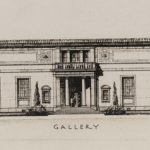
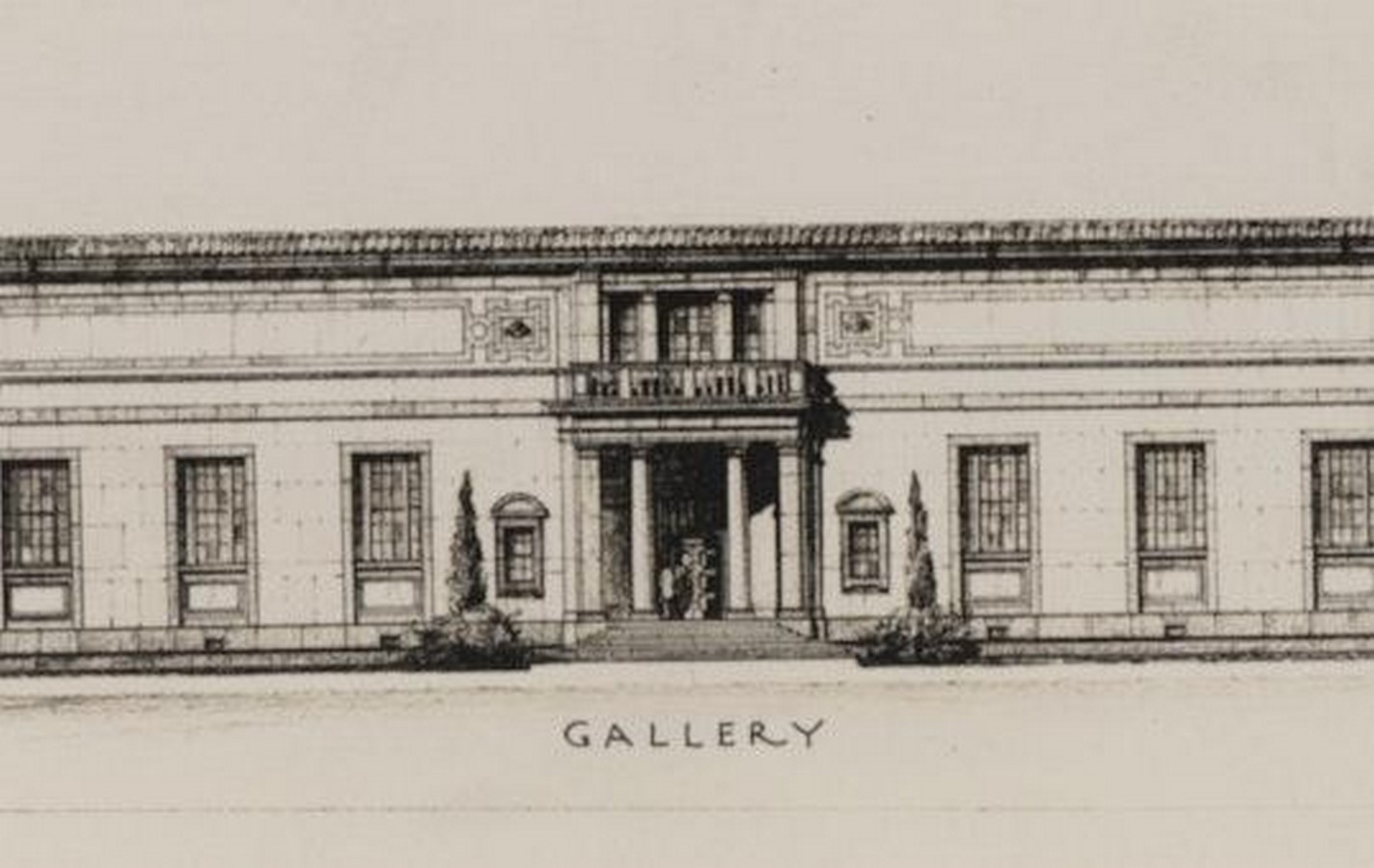
The Barnes Foundation had its beginnings in a 12-acre arboretum in Merlion, Pennsylvania. Built by architect Paul Phillips Cret, who designed a gallery and a residence for Dr. Barnes. The gallery became an educational institution that offered free art appreciation classes that gave rise to the Barnes method of teaching, involving close looking, critical thinking and prolonged engagement with original works of art.
In 2012, to better serve Dr. Barnes’s educational mission, the Barnes moved to Centre City, Philadelphia, in its new home built by award-winning architects Tod Williams Billie Tsien Architects, teaching 12,000 school children every year.
Concept
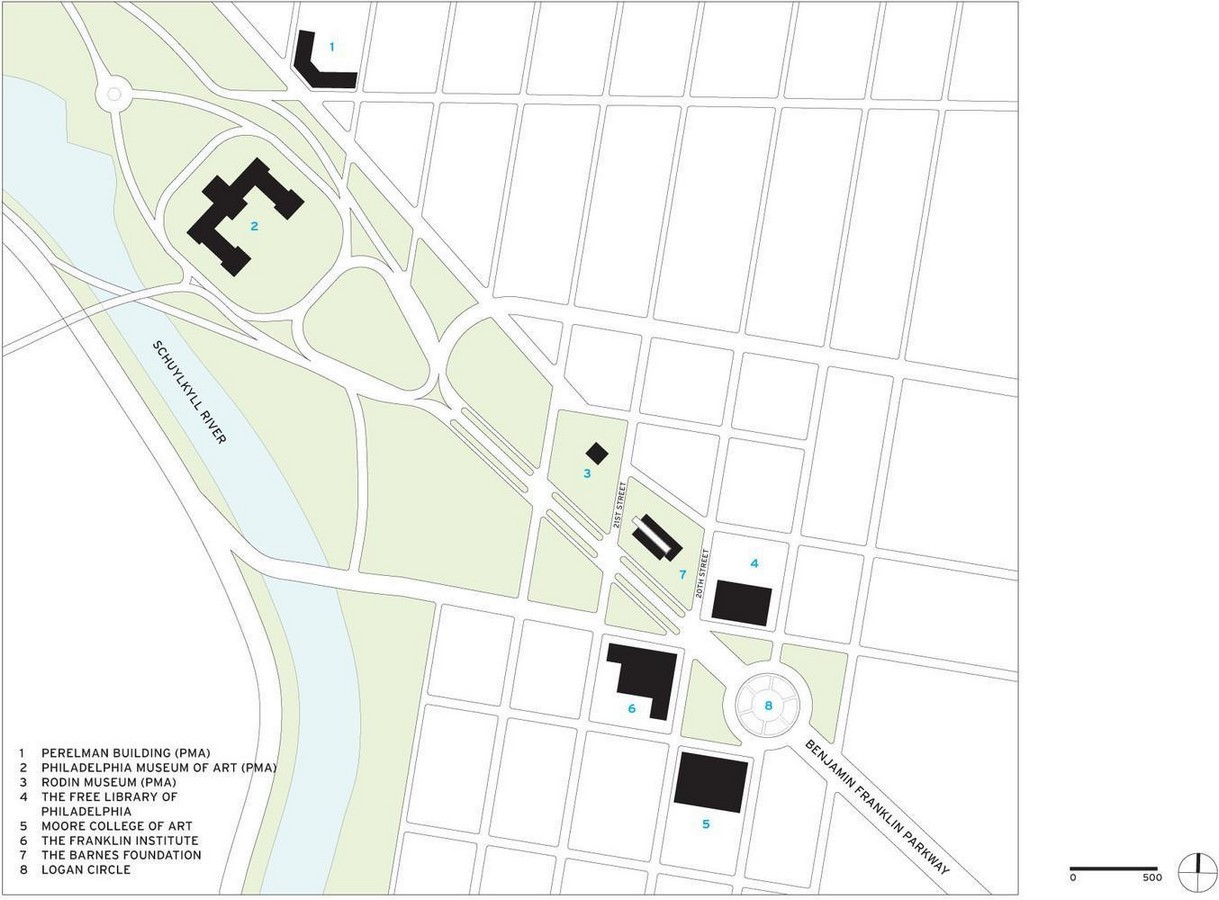
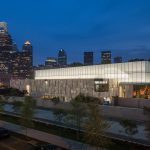
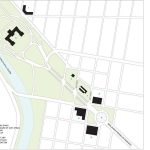
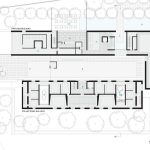
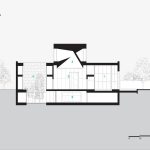
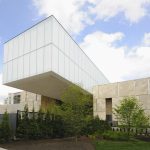
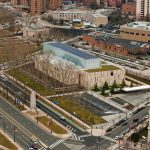
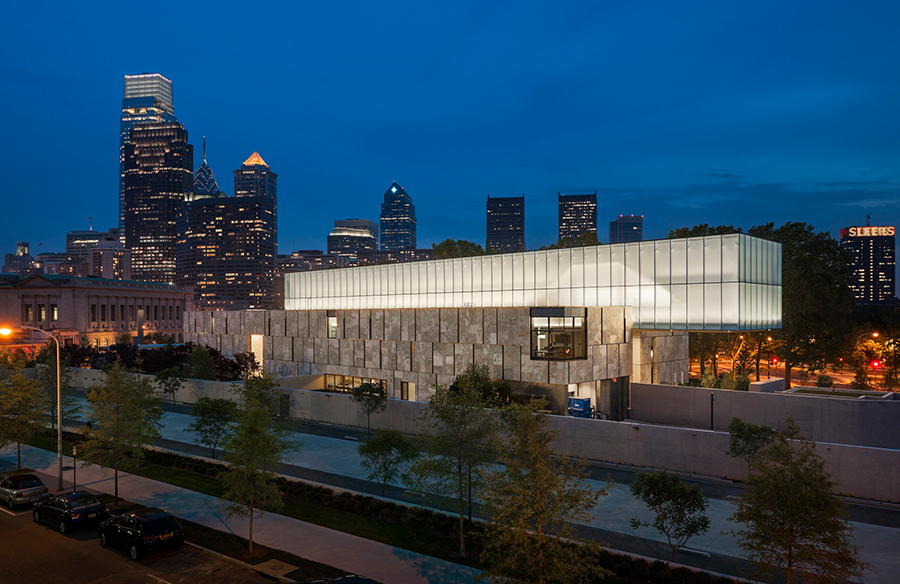
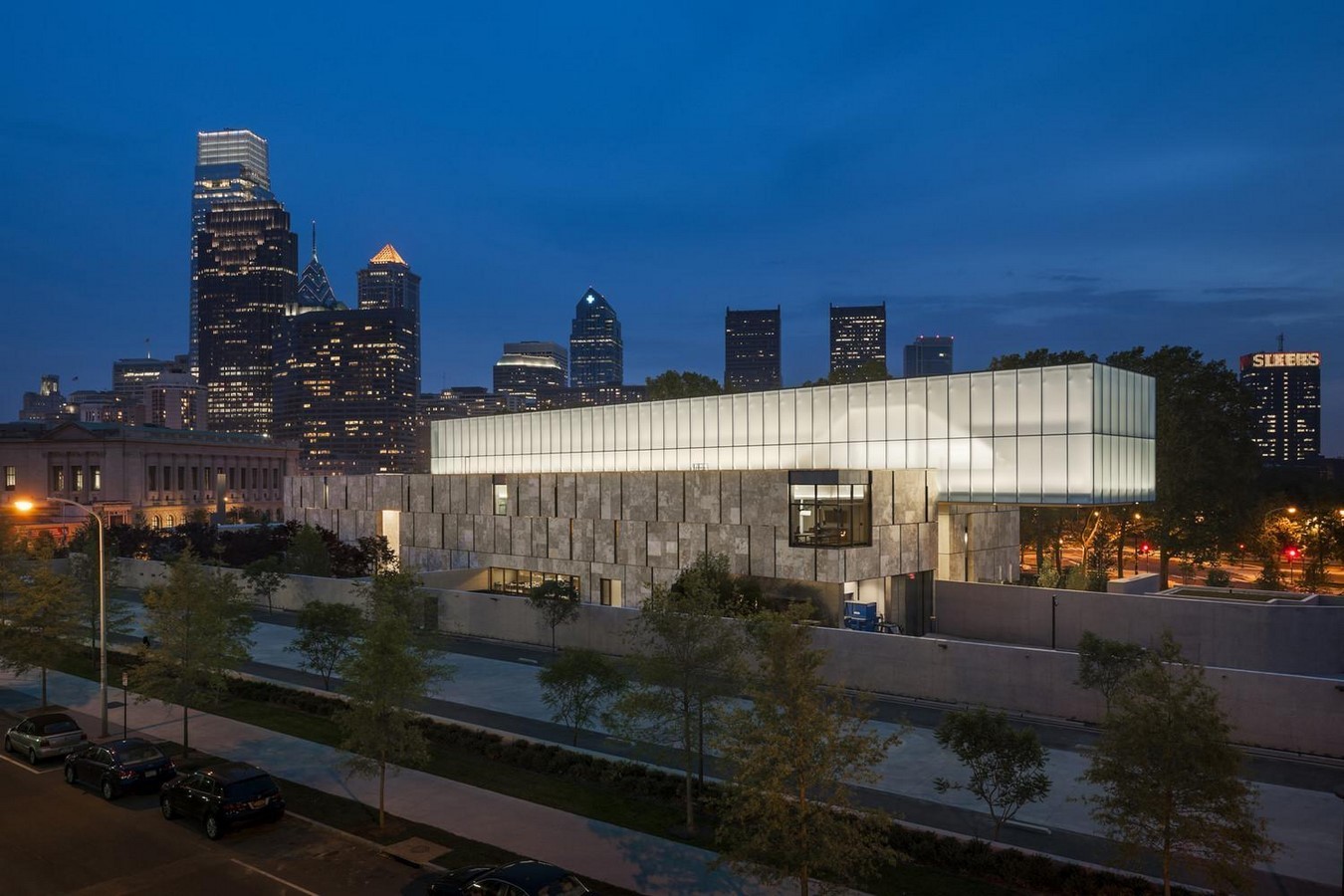
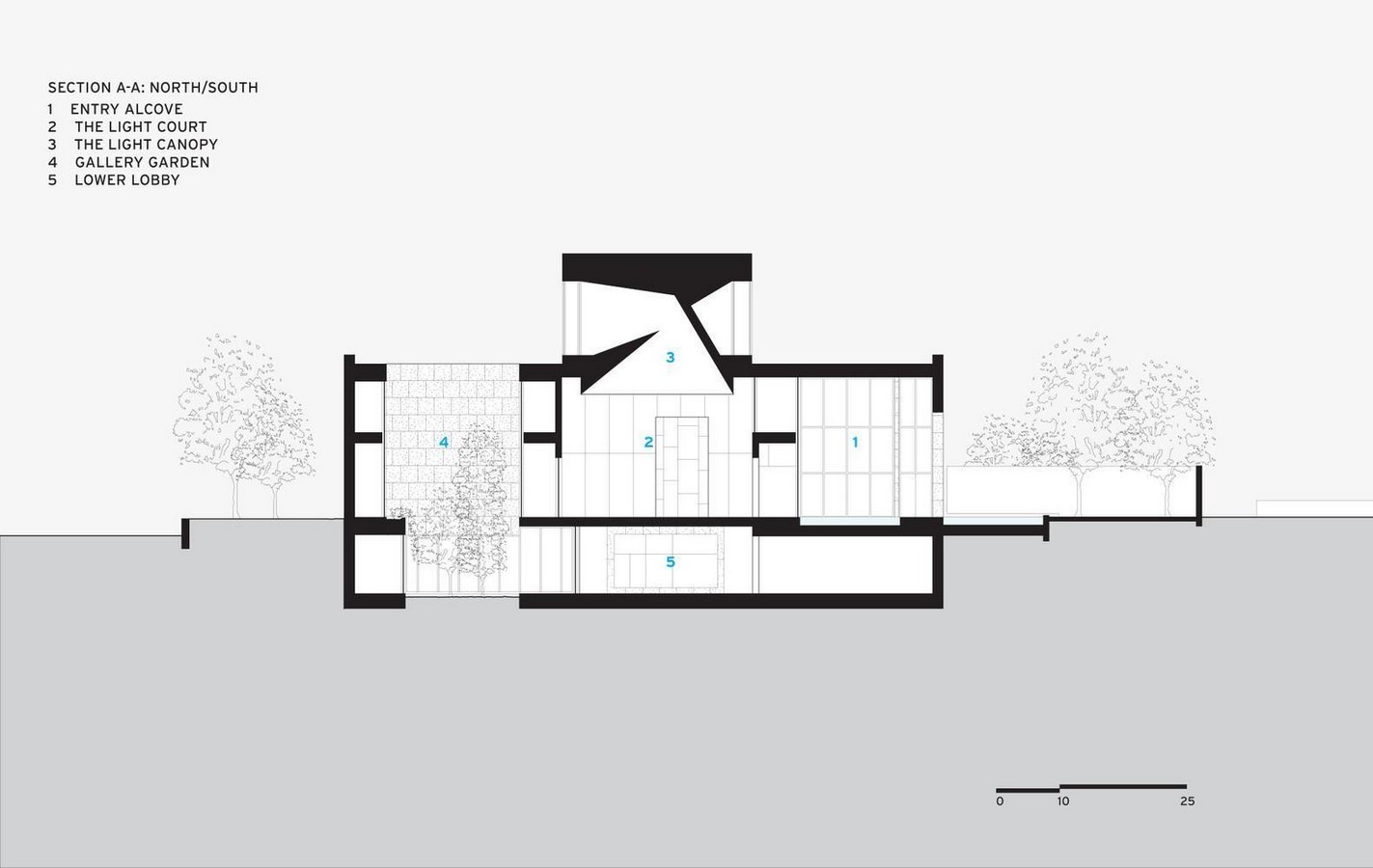
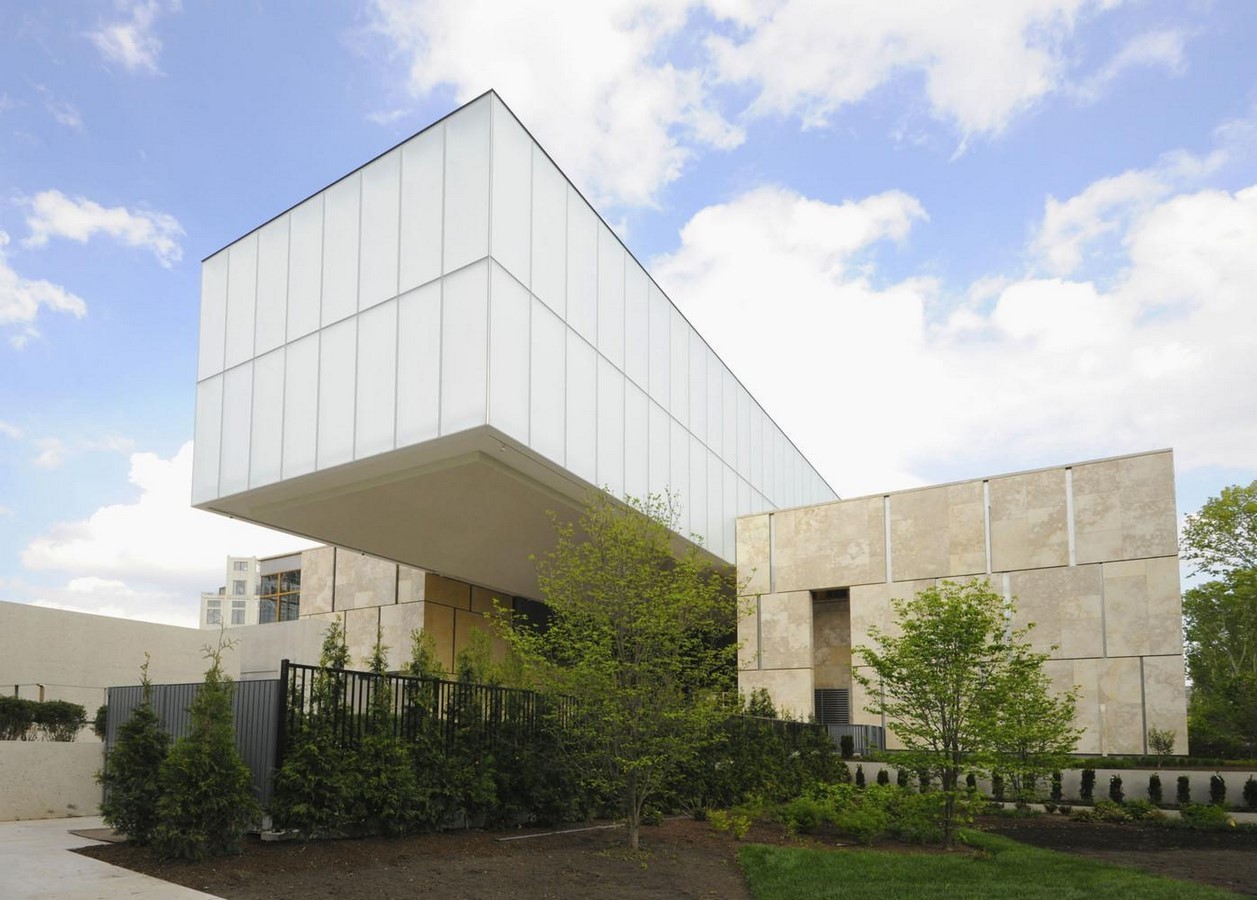
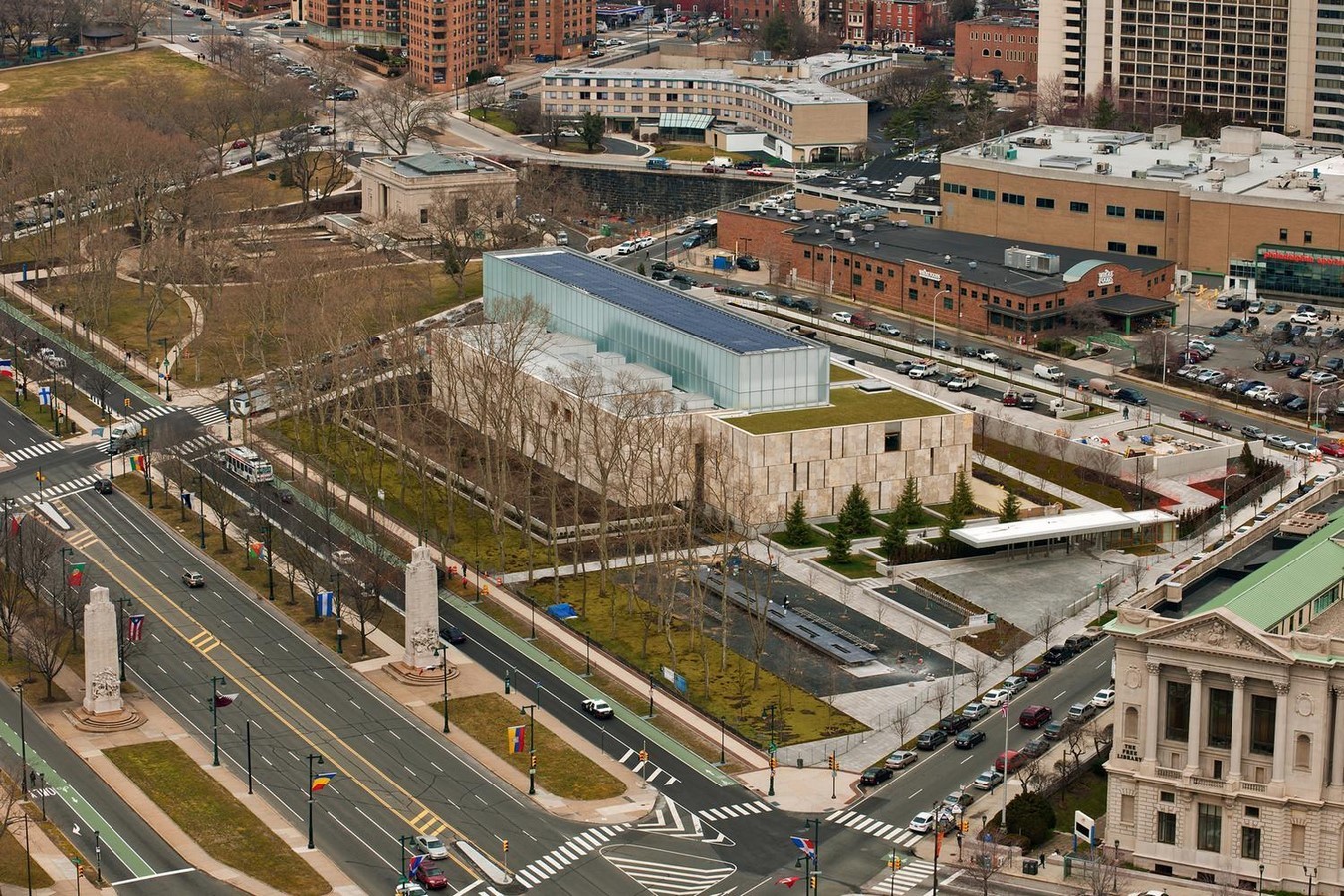
The Barnes Foundation, as we know it today, lies on the Benjamin Franklin Parkway in downtown Philadelphia. Conceived by the architects as “ a gallery in a garden and a garden in a gallery” provides visitors with a contemplative and personal experience. It is set in an inviting public garden designed by landscape architect Laurie Olin. It is clad in fossilised limestone and crowned by a luminous light box that casts daylight into the serene court space below. The courts and terrace serve as a place for visitors to gather for tours, repose, and have events in the evening.
Design Considerations
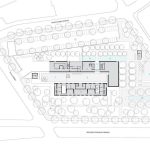
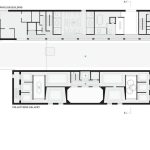
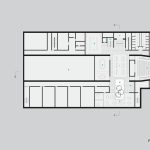
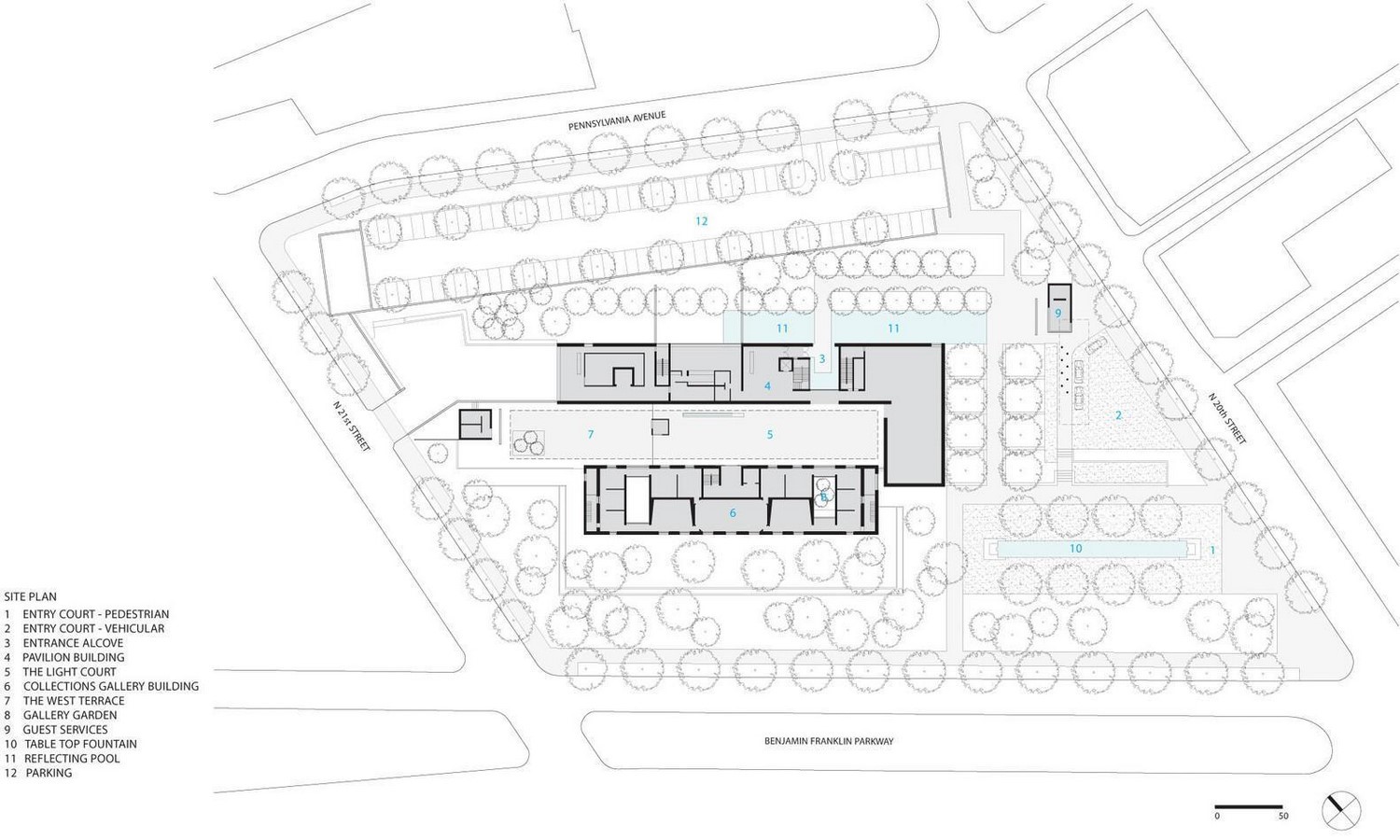
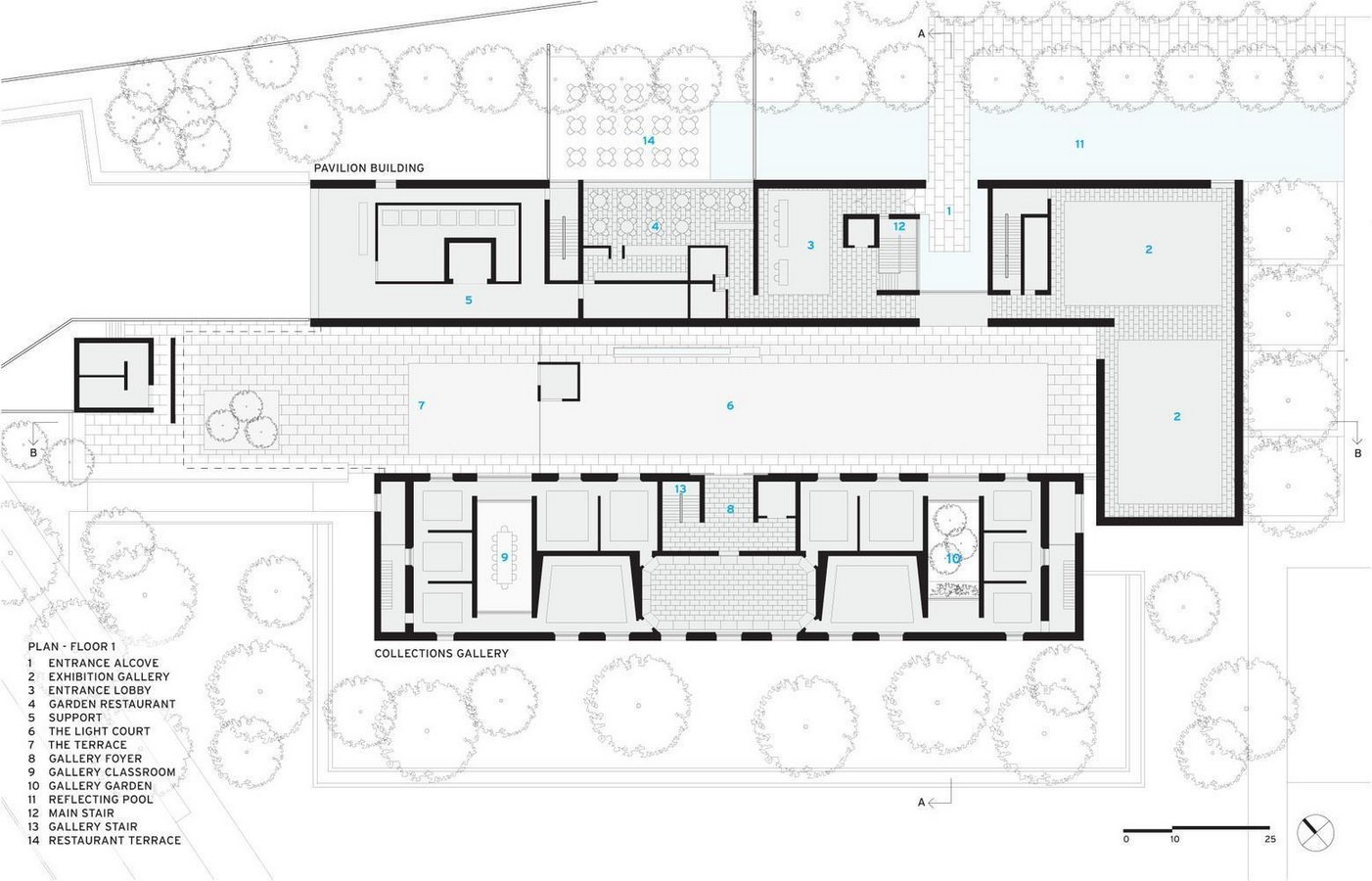
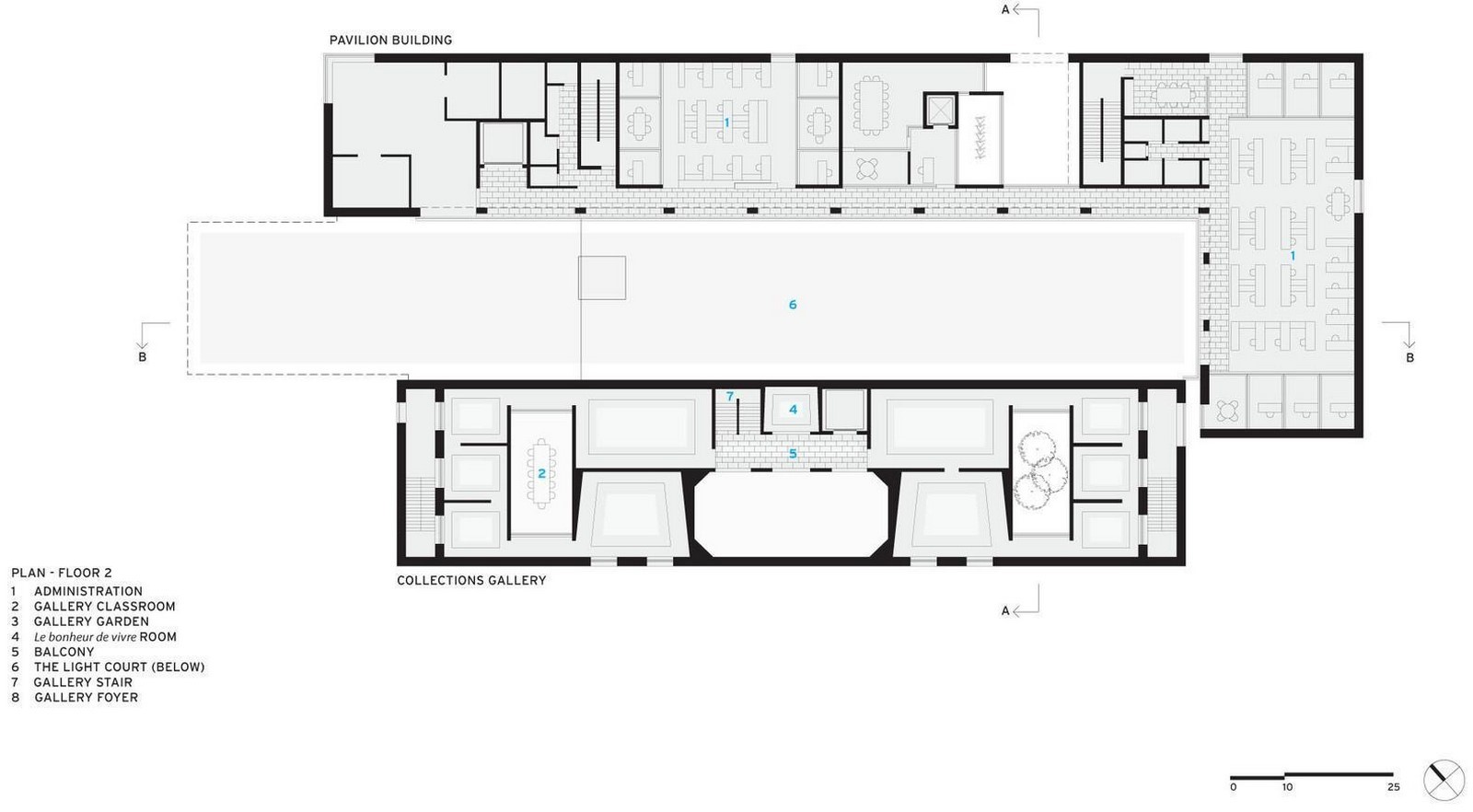
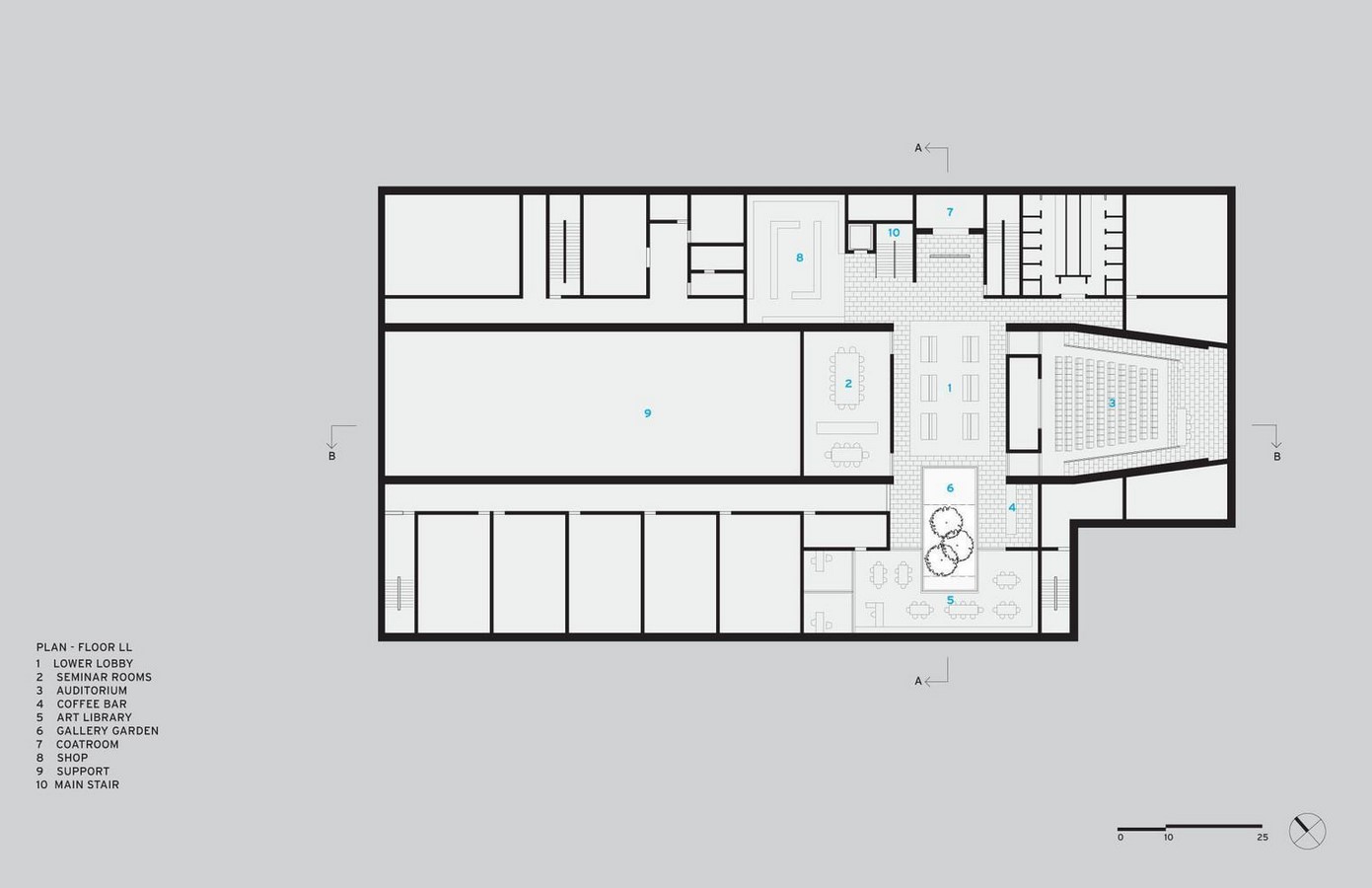
The two main buildings on site are the Gallery housing the collection and the L-shaped support building. The L-shaped building provides facilities for the Foundation’s core programs in art education, as well as for conservation, temporary exhibitions, and visitor amenities.
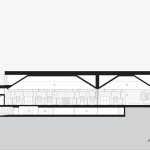
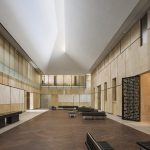
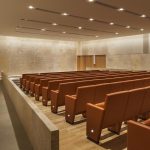
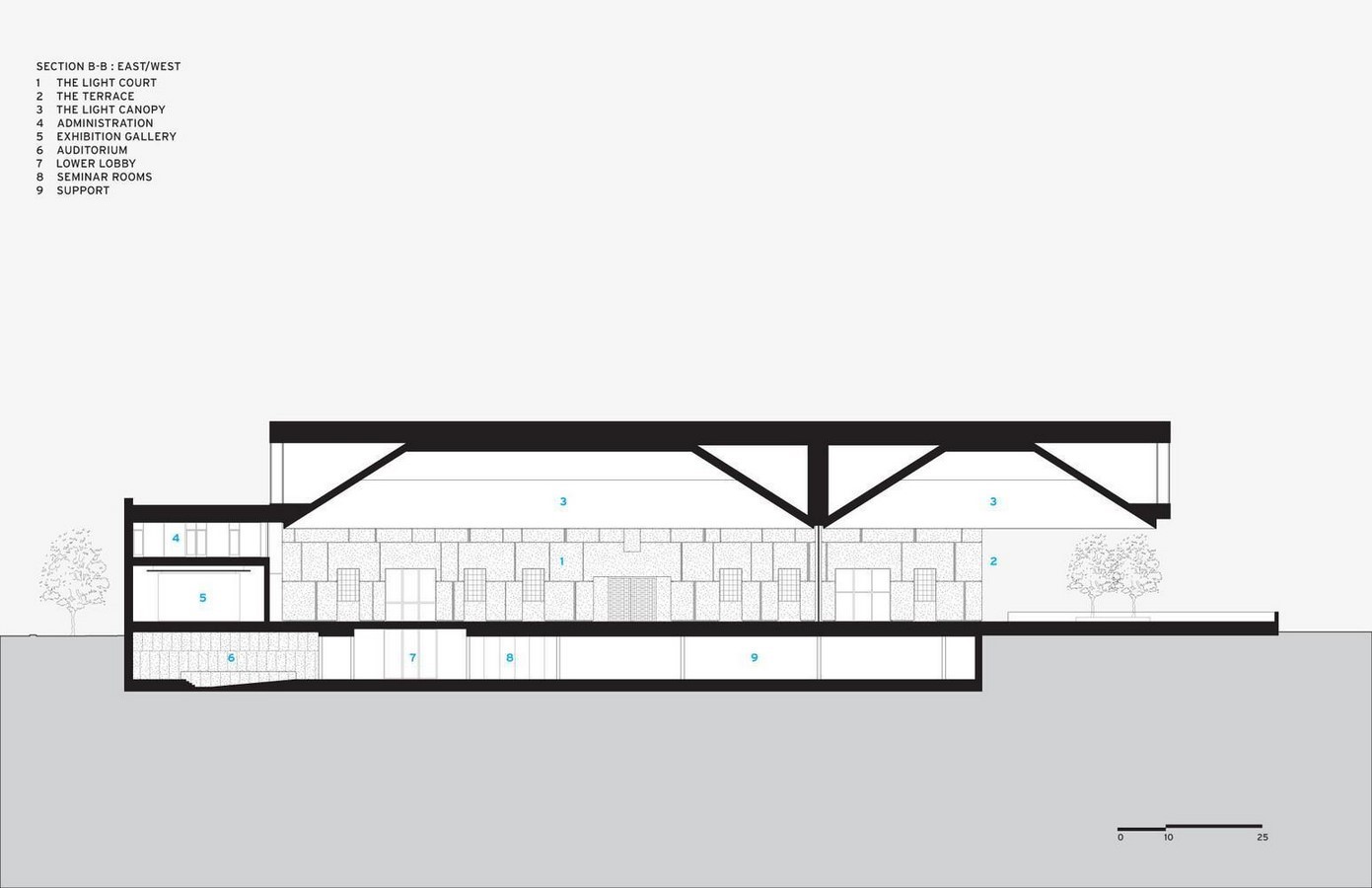
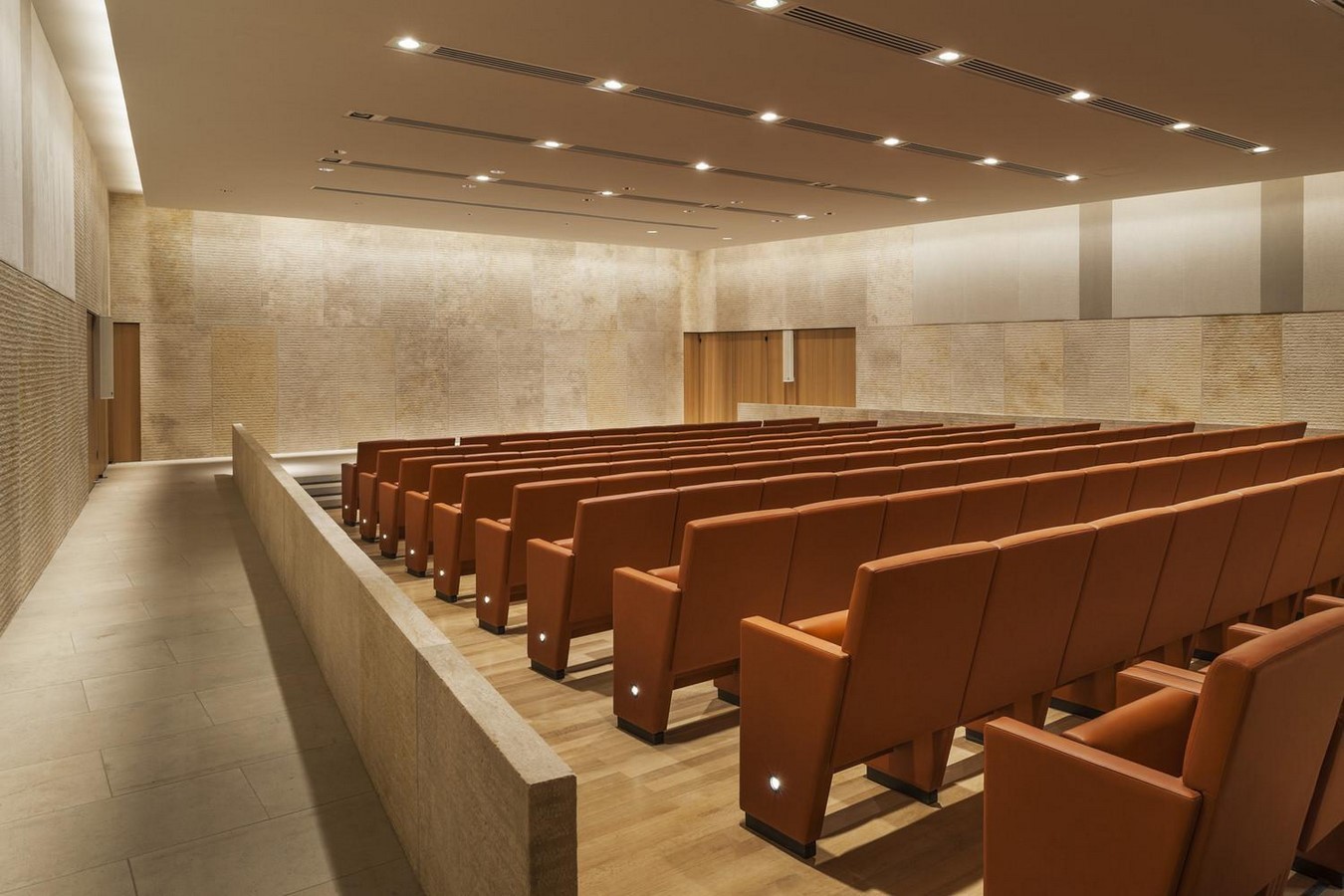
The building was designed with the solar orientation of the galleries in mind to provide better lighting for the paintings. The interior details were kept to a minimum to provide adequate luminosity to the artwork. The experience creates a tranquil environment to experience the art collection. The building houses a central light court that is used as a transitional space used for casual seating, group orientations and flexible event space at night. The tranquillity of the space is maintained by sound-absorbing wood panels on the ceiling. The exhibition galleries and collection galleries are distinguished by the volume of spaces while keeping the Material pallet the same for both spaces. The exhibition gallery is 16 ft high to house contemporary sculptures and digital projections.
Materiality
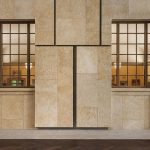
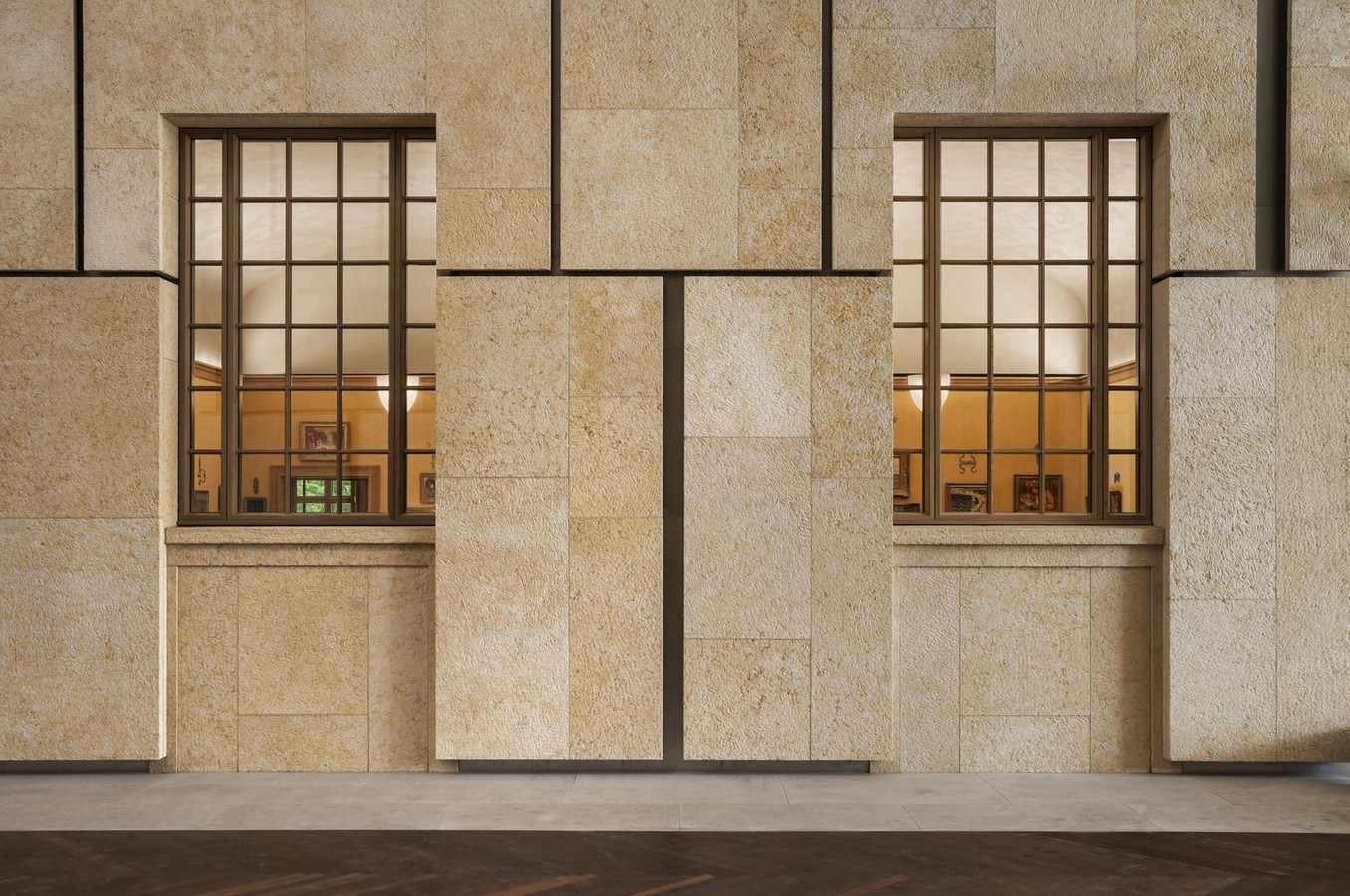
The materials used in the space play a huge role in its architectural expression. The use of light wood finishes, simple floor patterns, and reshaping the ceiling to distribute artificial light helped brighten and clarify the viewing within these galleries. The clearstoreys on the second-floor help light spaces below by using louvres. The materials used to amplify the space include oak wood batons, translucent green curtains, sand-blasted concrete, limestone, glass and linen. These apparent uses of materials carry with them notes from the history of the Barnes Foundation. The limestone that wraps the exterior of the building, called Ramon Grey, is a fossilised Israeli limestone that resonates with the French Limestone selected by Architect Paul Phillips Cret for the Merlion Gallery, where the Barnes Foundation had its beginnings. The sand-blasted concrete was chosen to express weight and permanence in relation to the contents of the building.

Sustainability initiatives
In line with LEED Platinum Certification guidelines, the building holds low/no VOC products, FDC-certified food, recycled and reclaimed materials, ensuring a 40% reduction in energy use, 12000 square feet of photovoltaic panels on the light canopy and irrigation to the gardens provided by 40000-gallon rainwater collected in cisterns.
Conclusion
This 93,000-square-foot gallery located in Downtown Philadelphia provides the city with essential facilities and core programs involving art education, exhibitions and amenities. It brings the essence of the Merlion Gallery but interprets it for the contemporary world. It creates a green space in the city while also striving to meet sustainability goals. The Barnes Foundation is the recipient of many awards, such as the 2012 AIA Institute Honor Award for Architecture,the 2013 Building Stone Institute Tucker Award, and the 2012 Apollo Award for Museum Opening of Year. The architect’s vision for the design of the building does justice to Albert Barnes’s vision, crafting spaces that are conscious, equal and give back to society through its form and function while acknowledging the history and journey of the foundation itself.