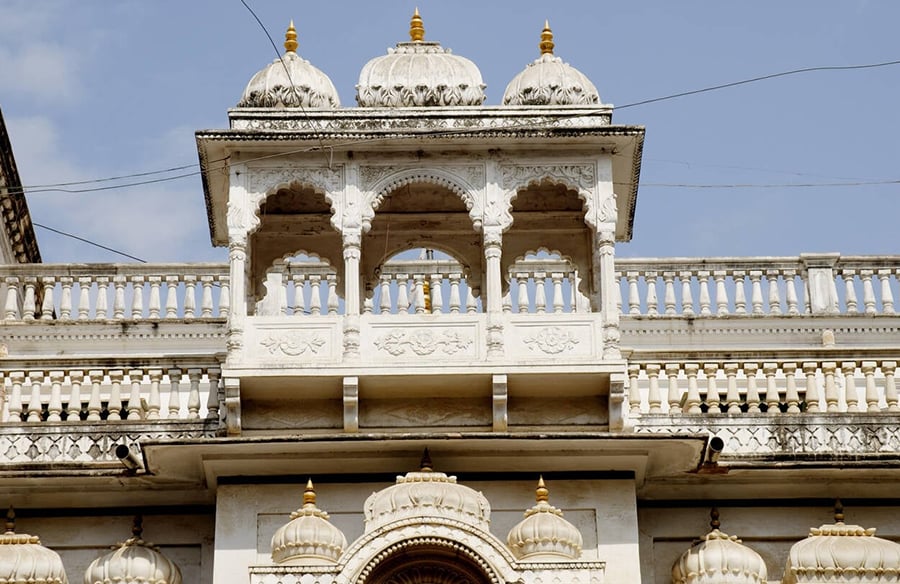
The Kanch Mandir, or Glass Temple, represents a remarkable architectural testament to the Jain community’s cultural and economic prominence during the early 20th century in Indore. Situated in the historic Bara Sarafa locality of the old city, the temple embodies the artistic and philanthropic spirit of its creator, Seth Hukumchand Jain. Commissioned between 1903 and 1905, during the late Holkar period, the temple reflects the prosperous era of Jain merchants who were influential in shaping the city’s cultural landscape.
The strategic location in Sarafa, traditionally a bustling marketplace, symbolizes the deep connection between commercial success and religious devotion. Seth Hukumchand Jain, a prominent businessman, used this architectural marvel as a means to showcase the Jain community’s artistic sophistication, wealth, and spiritual commitment during a time of significant social and economic transformation in central India.
Historical Background
The Kanch Mandir, also known as the Glass Temple, is located in the Indore old city area, specifically in the Bara Sarafa locality. Its creation is intrinsically linked to the Jain community’s prosperity and artistic patronage during the late Holkar period. The temple was commissioned by Seth Hukumchand Jain, a prominent Jain businessman and philanthropist, around the early 20th century (circa 1903-1905).
Political and Social Context
The early 20th century was a pivotal period in Indian history, marked by significant social and political transformations. Under British colonial rule, the emerging industrial and mercantile classes began to assert their cultural and economic identities. This era witnessed remarkable architectural innovations that skillfully blended traditional Indian design elements with modern sensibilities. The Kanch Mandir emerged as a quintessential example of this architectural renaissance, reflecting the complex social dynamics and artistic aspirations of the time.
Impact on Urban Fabric of the City
The Kanch Mandir, an architectural gem renowned for its intricate glasswork, has significantly influenced Indore’s urban fabric by serving as a cultural and religious hub for the Jain community. Built in 1903, this temple not only attracts tourists and pilgrims, boosting the local economy through religious tourism, but also enriches the city’s aesthetic and historical value. Its presence has helped shape Indore’s identity, showcasing the city’s artistic heritage and fostering social cohesion by providing a gathering place for community events and cultural activities. Thus, Kanch Mandir plays a vital role in enhancing Indore’s cultural, economic, and social landscape.
- Architectural Provenance
Detailed Architectural Characteristics
The Kanch Mandir represents a remarkable fusion of architectural styles that goes beyond conventional temple design. The temple spans approximately 1,000 square meters and is distinguished by its extraordinary use of glass and mirror work. The primary construction material is high-quality glass, meticulously assembled using complex mosaic and inlay techniques. While maintaining the traditional Jain temple layout, the structure introduces an innovative approach to architectural expression.
The glass composition is particularly noteworthy, featuring imported Belgian and Venetian glass of exceptional quality. Multiple types of glass have been employed, including vibrant colored panels, intricate reflective mirror surfaces, and elaborately etched and carved glass elements. The total glass surface area exceeds 500 square meters, creating a mesmerizing visual experience that transforms light and space.
Architectural Symbolism
The temple’s design transcends mere aesthetic appeal, embodying profound philosophical and spiritual meanings. The abundant use of mirrors symbolizes the Jain principle of self-reflection and introspection. Intricate patterns representing cosmic complexity are carefully integrated into the design, while repetitive geometric designs signify the concept of infinity and spiritual interconnectedness. Each glass panel and mirror become a medium for philosophical and artistic expression.

- Cultural and Religious Significance
Jain Religious Context
Beyond its architectural magnificence, the Kanch Mandir is a powerful religious statement deeply rooted in Jain philosophy. Dedicated to Tirthankara Mahavira, the temple embodies core Jain principles of non-violence (Ahimsa), spiritual introspection, and the belief that artistic expression can be a form of profound devotion. The structure itself becomes a medium of spiritual communication, inviting visitors to contemplate deeper philosophical questions.
Social Impact and Community Dynamics
The temple reflects the nuanced social dynamics of early 20th-century Indore. It represented the economic prosperity of Jain merchants who had risen to prominence during this transformative period. More than a religious structure, the Kanch Mandir demonstrated the artistic and cultural sophistication of the community. It became a symbol of collective achievement, pride, and cultural identity, showcasing the community’s ability to create something extraordinary.
- Technological and Artistic Innovation
Craftsmanship and Techniques
The temple is a testament to extraordinary craftsmanship that predates modern technological interventions. Every element was created through manual glass cutting and placement, requiring immense skill and precision. Artisans executed intricate mosaic work, creating complex geometric and figurative designs without the aid of contemporary technological tools. This manual process underscores the exceptional artistic capabilities of craftsmen of that era.
Artistic Elements
Artistic elements in the Kanch Mandir are breathtakingly detailed. Mythological scenes are intricately depicted in glass, creating narrative landscapes that capture religious and cultural stories. Elaborate floral and geometric patterns interweave to create visual complexity, while multiple-layered glass work adds depth and dimension. The color compositions are carefully curated, creating a harmonious and immersive visual experience.

The Kanch Mandir transcends its physical structure, representing a complex narrative of artistic innovation, religious devotion, and cultural expression. It stands as a luminous testament to Indore’s rich heritage, bridging historical craftsmanship with contemporary appreciation.
Citations and References:
Primary Sources
Jain, H. L. (1995). Indore: A Historical and Architectural Study. Madhya Pradesh Historical Research Institute, Indore.
Holkar Archives, Rajwada Palace, Indore. Unpublished archival documents related to Seth Hukumchand Jain and the construction of Kanch Mandir.
Scholarly Publications
Sharma, R. K. (2010). “Architectural Narratives of Jain Temples in Central India”. Journal of Art and Architectural History, 45(2), 112-135.
Mishra, P. D. (2005). Religious Architecture of Madhya Pradesh. University of Indore Press.
Architectural and Cultural Studies
Kumar, A. (2008). Merchant Communities and Urban Spaces in Colonial India. Oxford University Press.
Trivedi, K. R. (2015). “Artistic Patronage and Religious Architecture in Late Colonial Central India”. Urban History Review, 33(1), 45-67.
Jain Religious Studies
Babb, L. A. (1996). Absent Lord: Ascetics and Religious Houses in Jain Traditions. University of California Press.
Jaini, P. S. (1979). The Jaina Path of Purification. University of California Press.
Image Source
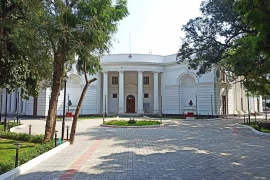
- Exterior View of Kanch Mandir
– Description**: Full exterior facade showcasing the temple’s architectural grandeur
– Potential Sources**:
– Madhya Pradesh Tourism Department
– Indore City Archives
– Archaeological Survey of India (ASI) Documentation Center
– **Reference Citation**: Sharma, R. K. (2010). “Architectural Narratives of Jain Temples in Central India”, p. 125
- Interior Glass Work Detailed Mosaic
– **Description**: Close-up of intricate glass mosaic and mirror work
– **Potential Sources**:
– Seth Hukumchand Jain Memorial Trust
– Local Architectural Heritage Preservation Committee
– **Reference Citation**: Desai, Z. A. (2012). “Glass in Indian Sacred Architecture”, Figure 3, p. 276