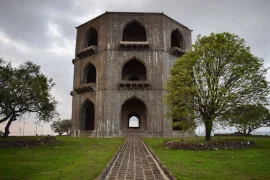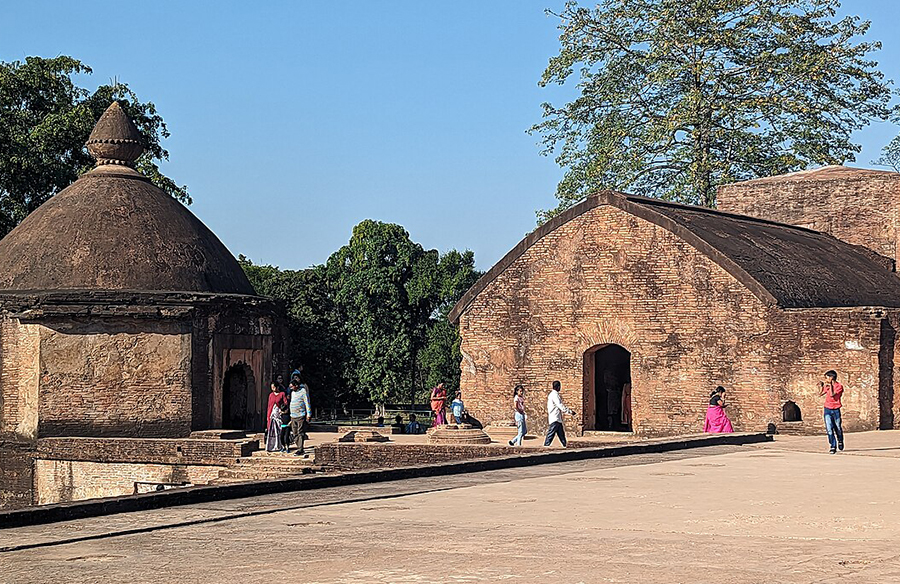
Situated in the storied town of Sivasagar, Assam, Talatal Ghar is a prime example of the architectural magnificence of the Ahom kingdom. This remarkable structure goes beyond the concept of a palace itself, representing an elegant fusion of military defence with regal grandeur. Constructed in the 17th century under the patronage of Swargadeo Rudra Singha, the building is a masterful example of the seamless fusion of native Assamese workmanship with subtle influences from Mughal and Southeast Asian architectural traditions. It is one of the most monumental historical sites in Assam due to its enormous scale and complexity, symbolising the majesty and tactical cunning of the Ahom monarchs in their defence.
Beyond its aesthetic appeal, Talatal Ghar is a veritable feast of engineering, with its multi-level design that includes a labyrinth of underground tunnels, some of which are said to have extended miles away for secretive escapes and military manoeuvring. The edifice is a testament to the Ahoms’ mastery in merging form with function—each layer of the structure serving as a symbol of power and a tactical military stronghold. Today, Talatal Ghar remains a vital cultural heritage site, offering a profound glimpse into the innovative spirit and the complex socio-political landscape of mediaeval Assam, inviting scholars and visitors alike to unravel its rich historical tapestry.

Echoes of the Past: The Ahom Dynasty’s Architectural Mastery in Talatal Ghar
For nearly six centuries, the Ahom dynasty shaped the cultural and architectural landscape of Assam, leaving behind a rich legacy marked by their innovation and strategic brilliance. One of their most extraordinary creations is Talatal Ghar, a seven-storied structure with three underground levels—hence its name “Talatal”—and four above-ground floors. This architectural wonder goes beyond being a royal palace, serving a dual purpose as a formidable military stronghold.
Talatal Ghar’s design includes underground chambers and secret tunnels, rumoured to extend to distant forts and rivers. These concealed passageways provided a secure escape route during times of invasion, showcasing the Ahoms’ expertise in merging architectural grandeur with military strategy. The structure is a testament to their ability to fuse elegance with practicality, creating a monument that highlights both their royal heritage and tactical foresight.

The Architectural Marvels of Talatal Ghar: A Detailed Overview
Materials and Construction Techniques
Talatal Ghar was built using locally sourced materials, including bricks and a unique mortar made from a blend of rice paste and eggshells. These materials were well-suited to the region’s climate and demonstrated a sophisticated understanding of sustainable building practices. The structure reflects the Ahoms’ expertise in employing indigenous construction techniques that prioritised durability and resourcefulness.

The Seven Levels
The palace consists of seven levels, with three underground floors and four above ground. The above-ground floors were used for royal activities such as meetings and administrative affairs, while the subterranean levels functioned as military zones. These underground chambers contained secret passages, some reportedly extending up to 16 kilometres, connecting to the Dikhow River and other nearby fortresses. These tunnels allowed the king and his soldiers to retreat safely in times of peril.
Defensive Design
The fortified design of Talatal Ghar was key to its defensive purpose. The structure’s thick walls, secret escape routes, and elevated position made it difficult for enemies to attack or breach. The underground passages facilitated swift movement and provided secure escape routes during invasions. This strategic layout underscores Talatal Ghar’s significance as a unique blend of architectural beauty and military utility.

Ventilation and Climate Control
A notable feature of Talatal Ghar is its passive climate control system. The thick walls helped maintain a stable interior temperature, keeping the palace cool during hot summers and warm during the winter months. Ventilation was likely achieved through small, strategically placed windows and air ducts, though much of the original system has been lost over time. These innovative features exemplify the Ahoms’ understanding of comfort and functionality in architecture.
Safeguarding Talatal Ghar: Conservation Challenges and Efforts
Despite its historical splendour, Talatal Ghar confronts significant challenges related to time, weathering, and inadequate upkeep over the centuries. The Archaeological Survey of India (ASI) has undertaken efforts to conserve what remains of this remarkable site, yet many of the underground tunnels have deteriorated or become inaccessible. The palace’s surviving sections still draw visitors, scholars, and historians, providing a valuable window into Assam’s rich historical heritage.
Preservation efforts are complicated by the region’s heavy monsoons, which pose a threat to the monument’s structural integrity. The intense rainfall exacerbates wear and tear, making proper maintenance and restoration essential for safeguarding Talatal Ghar for future generations.

Talatal Ghar exemplifies the architectural brilliance of the Ahom dynasty, seamlessly blending aesthetic elegance, functional design, and military strategy into a single remarkable structure. Beyond being a mere architectural site, it serves as a vibrant testament to Assam‘s rich historical heritage. As ongoing efforts strive to preserve and protect this extraordinary monument, Talatal Ghar acts as a conduit between historical and contemporary times, offering profound insights into the architectural, cultural, and historical dimensions of the Ahom kingdom.
For both architecture enthusiasts and historians, Talatal Ghar represents a fascinating study of the versatility of traditional construction methods and the harmonious integration of form with function. Set against Assam’s verdant landscape, it stands as a testament to the enduring legacy of the Ahom dynasty and their innovative approach to architecture.

Reference List:
https://sivasagar.assam.gov.in/tourist-place-detail/277
https://www.youtube.com/watch?v=fPEd5B7bif8&t=5s
https://onlinesivasagar.com/tourism/talatal-ghar.html