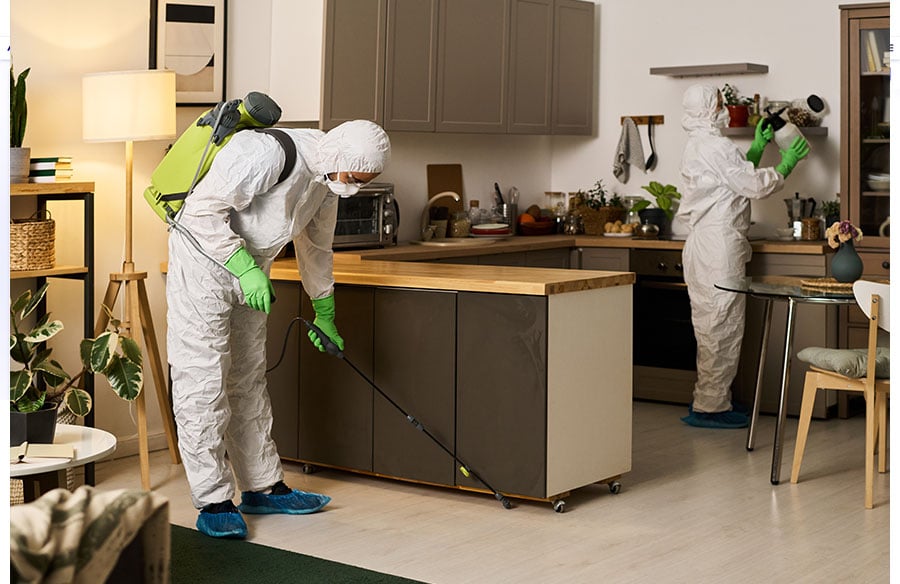
A kitchen is one of the most pest-prone areas of a home because it naturally brings together the conditions insects need to survive. Food supplies provide nourishment, sinks and plumbing provide moisture, appliances create warmth, and cabinets and structural gaps offer protected shelter. Even a well-maintained kitchen can experience pest activity when its layout makes certain areas difficult to inspect or clean. Conversely, thoughtful design and consistent upkeep can remove many of the conditions that allow insects to establish themselves.
Ants may follow tiny food residues along counters and floors, while cockroaches can exploit dark spaces near plumbing, appliances, and cabinets. Flies are attracted to exposed waste and organic material, and pantry pests can develop unnoticed in stored grains, cereals, flour, and other dry foods. Understanding how kitchen construction and maintenance influence these insects is therefore an important part of preventing infestations before they become established.
Hidden Spaces Behind Cabinets Can Become Pest Shelters
Kitchen cabinetry can create valuable hiding places when it is installed in ways that leave inaccessible voids. Gaps behind base cabinets, beneath counters, or around built-in units may collect crumbs, grease, moisture, and dust without being noticed during routine cleaning. These areas can also remain dark and relatively undisturbed, making them attractive to cockroaches and other insects.
The problem is not simply that insects can enter these spaces. Once food debris and moisture accumulate, the space can become a stable environment where pests remain hidden during the day and emerge when the kitchen is quiet. Designers can reduce this risk by limiting unnecessary voids and providing access panels or removable components where inspection is necessary. Homeowners should also avoid storing forgotten food items in deep, inaccessible cabinet corners.
For practical guidance, reviewing the five mistakes that invite bugs into your kitchen can help homeowners recognize everyday behaviors that may unintentionally create similar hiding and feeding opportunities. The value of such guidance is that pest prevention often depends on small details rather than a single major cleaning task.
Plumbing Penetrations and Moisture Give Insects an Easy Route
Pipes entering walls, floors, and cabinets can create openings that insects use to move between concealed areas and living spaces. Plumbing penetrations may also be associated with condensation, minor leaks, or persistent dampness. Cockroaches, ants, and other moisture-seeking pests can take advantage of these conditions, particularly when the surrounding area remains undisturbed.
Sealing unnecessary openings around pipes and utility lines is a straightforward design consideration. However, sealing should not conceal an active leak or prevent necessary plumbing access. Any dripping faucet, damaged supply line, or leaking drain should be corrected promptly because even small amounts of water can contribute to persistent moisture.
Ventilation is equally important. Kitchens generate steam from cooking, dishwashing, and boiling water, and poorly ventilated spaces can remain humid for extended periods. An effective exhaust system that properly vents moisture outside can help reduce lingering dampness. Keeping sinks and surrounding surfaces dry when practical adds another layer of prevention.
These measures also relate closely to 5 mistakes that invite bugs into your kitchen, particularly when poor maintenance allows water and structural openings to persist unnoticed. Preventing pest access is much easier when plumbing areas are both sealed and routinely inspected.
Open Waste Storage Can Attract Flies and Other Pests
Waste management has a direct connection to kitchen pest activity. Food scraps, packaging residues, and discarded organic material can provide insects with both food and odors that help them locate a potential source. An uncovered waste container makes this material continuously available, especially when it remains inside the kitchen for long periods.
A better layout places waste storage in a convenient location that does not interfere with food preparation but still allows frequent emptying and cleaning. Containers with secure lids can help limit access, while washable interiors make it easier to remove residue. Waste should not be allowed to accumulate simply because a container is large enough to hold several days of rubbish.
Homeowners should also clean around waste-storage areas rather than focusing only on the container itself. Small spills underneath or behind a bin can become overlooked food sources. Recycling containers deserve similar attention because bottles, cans, and food packaging may retain traces of sugary or greasy substances.
Appliance Gaps Require More Than Surface Cleaning
Refrigerators, dishwashers, ovens, and other kitchen appliances can create narrow gaps that are difficult to reach with ordinary cleaning tools. Crumbs and grease may collect beneath or behind these appliances, while warmth generated by motors and cooking equipment can make nearby concealed areas appealing to insects.
This is particularly relevant to cockroaches, which can exploit protected cracks around appliances and cabinets. Ants may also follow food residue along edges and beneath equipment. Flies can benefit from organic debris that remains hidden in difficult-to-clean spaces.
Kitchen design should therefore allow appliances to be moved or accessed when appropriate for cleaning and maintenance. Where possible, minimizing unnecessary cracks and using properly fitted trim can reduce places where debris accumulates. Homeowners should periodically clean accessible edges, floors, and walls around appliances rather than treating visible countertops as the entire kitchen-cleaning area.
The objective is not to make every part of a kitchen permanently exposed. Instead, the goal is to ensure that important areas can be inspected, cleaned, and maintained without excessive difficulty.
Designing Kitchens for Inspection and Prevention
Good pest prevention begins with a kitchen that supports ordinary housekeeping. Cabinets should be arranged so frequently used storage areas are easy to see and reach. Deep corners should not become permanent storage locations for rarely used food, and shelves should allow enough visibility to identify spilled products or signs of insects.
Dry foods should be stored in clean, tightly closed containers when appropriate, particularly after packages have been opened. This helps reduce access for pantry pests and makes it easier to identify contamination. Regularly checking older stored foods is also useful because pantry insects may remain unnoticed until their numbers increase.
Ventilation systems should be maintained so they continue removing moisture effectively. Plumbing penetrations should be inspected for openings, and waste containers should be positioned where they can be emptied and cleaned conveniently. These design choices support prevention because they make the kitchen easier to monitor.
Maintenance should follow the same principle. A kitchen does not need constant deep cleaning, but it does require consistent attention to places that ordinary wiping misses. Checking beneath appliances, around plumbing, inside cabinets, and along wall junctions can reveal moisture, food debris, droppings, insect bodies, or other early warning signs.
A Kitchen That Is Easy to Maintain Is Easier to Protect
Kitchen layout and upkeep influence pest activity because they determine how easily insects can find food, water, warmth, and shelter. Ants can exploit tiny food residues and structural openings, cockroaches can remain hidden around plumbing and appliances, flies can take advantage of exposed waste, and pantry pests can develop in overlooked dry goods.
A well-designed kitchen does not guarantee that insects will never appear. Instead, it reduces the number of places where pests can hide and makes problems easier to detect. Accessible cabinetry, sealed utility penetrations, effective ventilation, controlled waste storage, and cleanable appliance gaps all contribute to that objective.
Ultimately, prevention is strongest when design and maintenance work together. By removing unnecessary hiding places, controlling moisture and food sources, and making concealed areas easier to inspect, homeowners can make the kitchen considerably less favorable to unwanted insects. Small improvements can have lasting value because they address the environmental conditions that allow pest activity to develop in the first place.