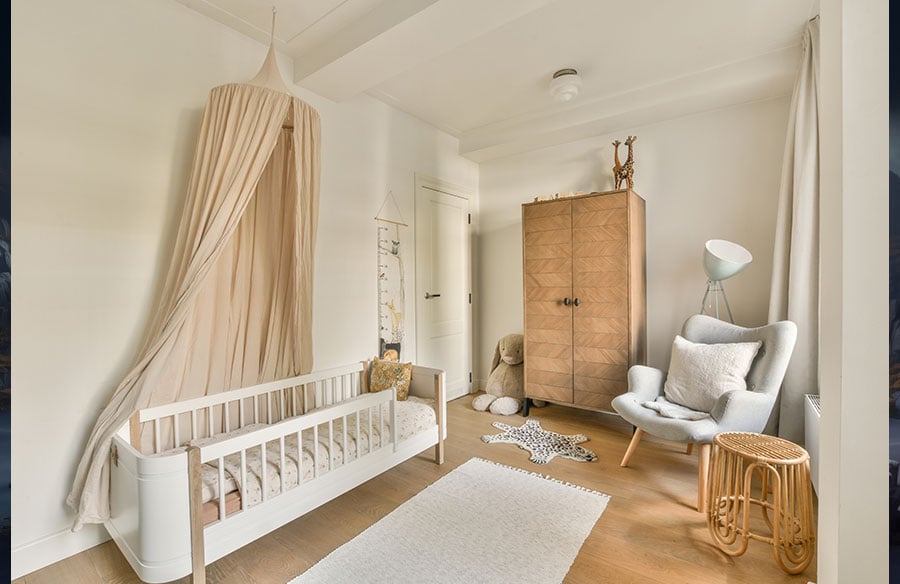
A nursery is often the smallest room in a home, yet it carries one of the biggest design briefs. It has to be calm at 3 a.m., practical at 7 a.m., and safe at every hour in between. It also has to change quickly, because a baby’s needs shift every few months.
Good nursery design is not about filling a room with cute things. It is about the same ideas architects and product designers use everywhere: clear zones, honest materials, easy movement, and objects that earn their place. This article looks at how those ideas apply to a baby’s first room, and how a few well-designed products can make daily life smoother.
Start with zones, not furniture
Before choosing any product, it helps to map how the room will be used. Most nurseries need three simple zones:
- A sleep zone – quiet, away from windows and drafts, with a clear floor around it.
- A care zone – for changing, dressing and soothing, with storage close at hand.
- A feeding and cleaning zone – often outside the nursery, in the kitchen, where bottles are washed and stored.
Thinking in zones keeps the room open and reduces clutter. It also shows where each object should live, so parents are not crossing the house in the dark to find one item.
The sleep zone: one object, many roles
In the first months, many parents keep the baby close, often in the main bedroom. This is where product design matters most. A well-made baby bassinet can act as a bedside sleeper, a standalone bed and a gentle rocker, all in one footprint.
Grownsy’s 5-in-1 Rocking Bedside Bassinet is a good example of this flexible thinking. It offers six bedside height settings, a drop-down side panel for bedside use, a 360° breathable mesh body and locking wheels so it can move from room to room. The legs can also be removed for floor-level use. One object adapts to the room, instead of the room adapting to many objects.
From a design point of view, a few things are worth looking for in any bassinet:
| Design feature | Why it matters |
|---|---|
| Breathable mesh sides | Allows airflow and lets parents see the baby easily |
| Adjustable height | Lines up with different bed heights for bedside use |
| Firm, flat mattress | Follows safe-sleep guidance for infants |
| Locking wheels | Easy to move, stable when parked |
| Simple, neutral form | Fits modern interiors and ages well |
Whatever the design, safety comes first. Babies should sleep on their backs, on a firm and flat surface, with no pillows, bumpers or loose blankets. Parents should always follow the maker’s instructions and weight limits.
Materials and color: quiet by design
The best nurseries feel calm. Soft, neutral tones such as beige, cream and grey help the room feel restful, and they work well as the child grows. Natural textures like cotton and wood add warmth without visual noise.
Materials should also be easy to clean. Removable, machine-washable covers, smooth surfaces and fewer fabric layers make daily care faster. In a nursery, low maintenance is not a luxury. It is part of good design.
Light and sound
Layered lighting helps a nursery work day and night. Daylight is ideal for play, while a soft, warm lamp is better for night feeds. Blackout curtains help with daytime naps. Soft furnishings such as a rug can also reduce echo and keep the room quieter.
The feeding zone: design beyond the nursery
Feeding is one of the most repeated tasks in early parenthood. Bottles, nipples and pump parts need washing many times a day. This work usually happens in the kitchen, and it can quickly take over the counter with drying racks, brushes and sterilizing pots.
This is where appliance design can bring order. A countertop bottle washer combines washing, steam sterilizing, drying and storage in one closed unit. Grownsy’s 4-in-1 Bottle Washer Sterilizer and Dryer holds up to eight bottles along with pump parts and other small accessories. It uses 26 water jets, 212°F steam and hot-air drying, and it can keep items stored behind a HEPA filter for up to 72 hours, according to the brand.
For a designer, the value is simple: one appliance replaces several loose tools. The counter stays clearer, and the cleaning routine becomes one step instead of four.
Design for change
A nursery is never finished. Within a year, the baby will move from a bassinet to a crib, and feeding routines will change. Good choices plan for this:
- Pick pieces that convert or move easily.
- Keep walls and large furniture neutral, and add color through small, changeable items.
- Leave open floor space for play as the child grows.
- Choose storage that can hold toys and books later, not just diapers.
Conclusion
Nursery design follows the same rules as any good space: clear zones, honest materials, and objects that serve more than one purpose. A flexible bassinet in the sleep zone and a compact cleaning appliance in the feeding zone can make the first months calmer for the whole family. When each object earns its place, the room stays simple, safe and ready to grow with the child.