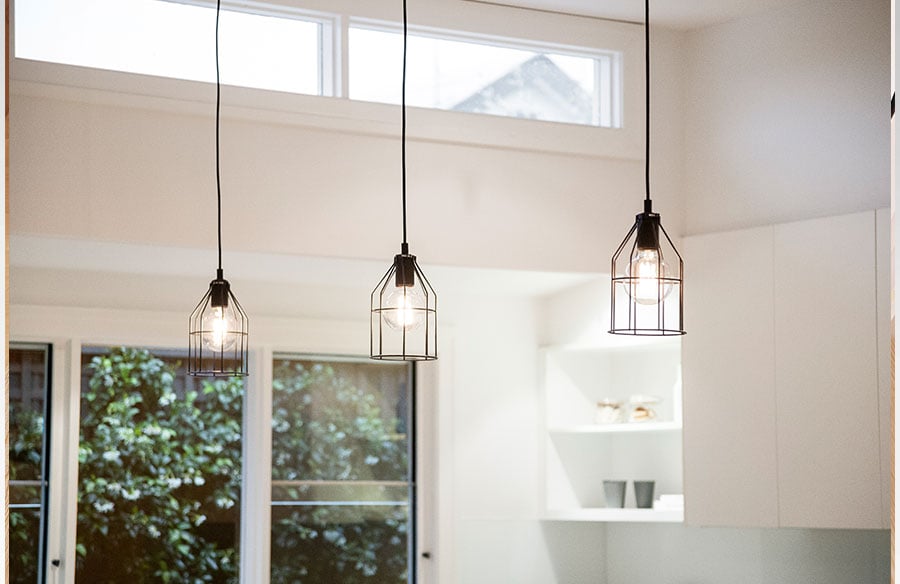
With so many moving parts in a home renovation, lighting is one aspect that is easy to overlook, but getting it right can have a huge impact on how a room looks and works once the project is complete.
Homeowners often spend weeks choosing flooring, paint colours, tiles, and furniture, only to have a last-minute panic about lighting once those factors are sorted.
Planning your lighting earlier gives you that flexibility to consider where it needs to go before the walls and ceilings are finished, rather than trying to work around the existing setup.
Start with how you will use your room
It all depends on what you actually do with the space in each room. For example, a kitchen needs good illumination around worktops and a sitting room may need softer lighting in the evening. A home office has different requirements again, particularly if you spend several hours working there.
Open-plan rooms need a little more thought because one space can have several purposes. A kitchen island and dining table can sit in the same area, yet both can benefit from different lighting styles for different uses and moments. You need to think about how you use the room during the day and after dark before deciding where your lights should go.
Plan before the electrical works take place
Lighting should be discussed before the electrician starts the first-fix work.
The position of ceiling lights and other electrical points is much easier to change at this stage. Once the walls have been plastered and decorated, moving a fitting can become far more disruptive.
Furniture needs to be considered too. A pendant that looks perfectly centred on an empty floor plan may end up in an awkward position once you install a dining table or kitchen island.
Marking out the intended furniture layout can help you work out where the lighting needs to sit.
Don’t just rely on one ceiling light
It’s common for homeowners to finish a renovation and end up with just one main ceiling light to illuminate a full room, but this doesn’t always provide the most useful lighting scheme.
Utilising different light sources can give you more control over the room at any given time. A kitchen might have ceiling lighting alongside lights underneath wall cabinets, while a living room could combine its main fitting with a lamp beside a sofa or reading chair.
You do not need to fill every room with different fittings. The aim is to make sure you can light the areas that need it without having to illuminate the entire room every time.
Choose the right colour temperature
Colour temperature can drastically change the appearance and mood. It is measured in Kelvin (K), with lower numbers producing warmer, more yellow-toned light and higher numbers creating cooler white light.
Warm light is usually attainable to 2700K and can work well in bedrooms and living rooms, where a softer atmosphere is usually preferred. Cooler lighting can be useful in areas where you need clearer visibility.
As a general guide, the team at The LED Specialist recommend:
| Room | Recommended colour temperature |
| Living room | 2700-3000K |
| Bedroom | 2700-3000K |
| Bathroom | Around 3500K |
| Kitchen | Around 4000K |
| Home office | 3500-4000K |
Ultimately, these are starting points, not strict rules. The amount of natural light in a room and the colours used in the interior can affect what works best.
Look at lumens rather than just wattage
When buying LED bulbs, something to keep in mind is that wattage isn’t always the best indicator of brightness. Lumens tell you how much visible light a bulb produces, while wattage tells you how much electricity it uses. A bulb with a higher lumen output will generally produce more light.
Checking the lumen output before buying can help you avoid ending up with lighting that is either too dim or unnecessarily bright.
Think about dimming
Dimmable lighting puts you in control over the atmosphere in a room. A brighter setting can be useful when reading or cleaning, while a lower level may feel more comfortable when relaxing and watching TV in the evening. This can be particularly useful in living rooms and open-plan spaces that are used at different times of day.
If you want dimmable LEDs, check that the bulb and dimmer are compatible before installation, as not every LED bulb works with every dimmer switch.
Is smart lighting worth considering?
A renovation can also be a good opportunity to add smart lighting if you want a bit more technical flair to the setup.
Compatible smart bulbs can be controlled through an app or voice assistants such as Amazon Alexa and Google Assistant. Depending on the system, you may also be able to schedule your lights, change brightness or adjust the colour temperature.
Some systems can follow sunrise and sunset patterns, while others allow you to create scenes for different parts of the day. You could have gradual light brighten in the morning and then switch to a warmer setting later in the evening.
If you are planning a whole-home smart lighting system, make sure to discuss it with your electrician before the wiring is completed.
Take extra care in the bathroom
Bathroom lighting needs to meet specific requirements because of the presence of water and moisture.
Choose appropriate fittings for their intended location, and let your electrician advise on what is suitable. Lighting around the mirror is also worth considering and a popular choice in this day and age, as this can provide useful illumination for everyday tasks such as flossing and skincare routines without relying solely on an overhead fitting.
Make the most of natural light
Artificial lighting is only part of the picture, and during a renovation it is crucial to think about how daylight enters each room and whether your new layout makes the most of it. Furniture can block light from reaching deeper into a space, while heavy window coverings can make a room feel darker.
Larger projects may also provide an opportunity to introduce more natural light through features such as rooflights or additional glazing.
Choose the fittings last
Once you know how a room will be used and where the lighting needs to go, choosing the fittings becomes much easier.
Consider the size of the room and overall style before buying. A large pendant may work well over a dining table, but it could be overwhelming in a smaller space, while recessed lighting can provide a more discreet finish.
LED bulbs come in a wide range of plentiful brightness levels and colour temperatures, with smart options such as Philips Hue offering extra control for homeowners who want connected lighting.
Most importantly, do not leave your lighting plan until the renovation is nearly finished. Making these decisions early gives you far more freedom to create lighting that suits the room, rather than adapting the room around the lighting.