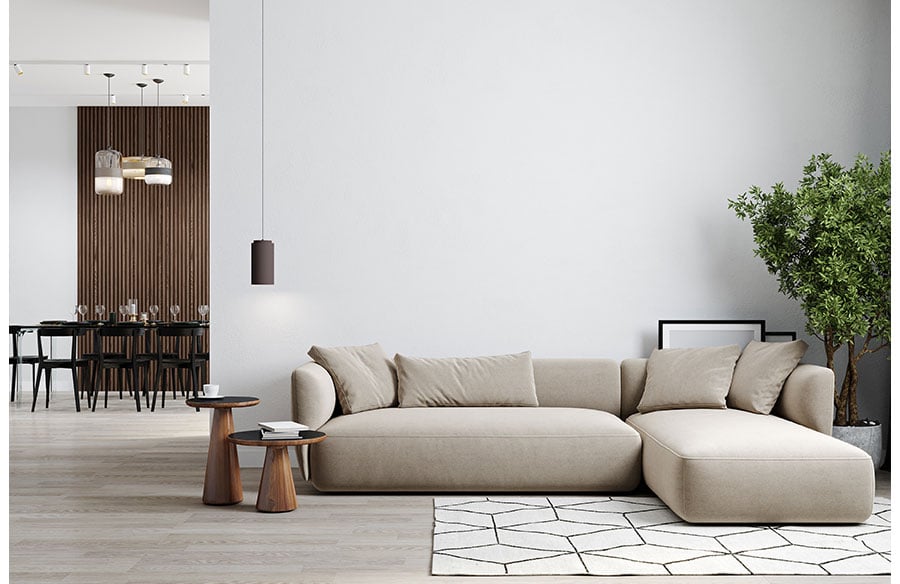
Let’s talk about the most stressful furniture purchase you will ever make: thesofa. For decades, we’ve treated buying a couch like a long-termcommitment. You spend weeks scouring showrooms, debating over fabric swatches, andfinally praying that the massive, 90-inch frame will actually fit through your front door. But here is the reality of modern life: we move, we downsize, weupsize, and our living rooms are constantly being asked to performnewroles.
In an era where our homes double as offices, cinemas, and sanctuaries, thetraditional “fixed” sofa often feels like an anchor—heavy, immovable, andunable to evolve.
After years of helping clients navigate the frustrations of rigid furniture, I haveofficially shifted my design philosophy. The era of the static “forever couch” is over. We have entered the age of flexible design, and the undisputed heroof this movement is the modular sofa. If you’ve ever felt trapped by your ownfurniture, here is why a modular system is the smartest investment you canmake for your home.
 Understanding the Modular Shift
Before we dive into the benefits, it is important to clear up a common designmisconception. Many people use the term sectional sofa and modular sofainterchangeably, but they are fundamentally different.
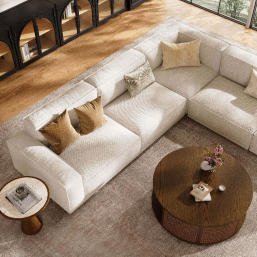
A traditional sectional is usually a fixed L-shaped or U-shaped piece that connects in one specific orientation. If you buy a “left-facing” chaise, it will always be left-facing, regardless of the room you move it into. A modular sofa, however, is a seating system made of individual units corners, armless chairs, and ottomans that can be rearranged, separated, or expanded in infinite ways.
At HOULTE, the focus is on “Silent Architecture” the idea that your furnitureshould work behind the scenes to organize your life. A modular systemdoesn’t just sit in your room; it evolves with it.
The Magic of the Evolving Layout
The most significant benefit of modular seating is its ability to handle a changing living room layout. In the past, if you moved froma large housetoasmaller apartment, you often had to sell your sofa because it simply wouldn’t fit.
Modular design eliminates this heartbreak. Because you are working withseparate units, you can scale your seating up or down. You might start withamodest three-piece setup for a cozy apartment and later add modules tocreatea sprawling u-shape sofa for a dedicated media room.
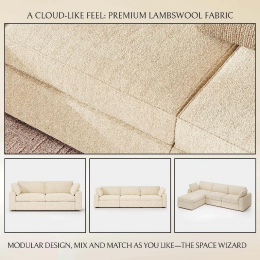 It also adapts to the rhythm of your week.
∙ The Party Setup: Separate the modules into individual chairs tocreatedistinct conversation zones, allowing guests to mingle freely.
∙ The Movie Night: Push all the pieces together to create a massive, deep
“pit” where the whole family can pile in.
∙ The WFH Balance: Shift an ottoman to one side to create a temporary”desk” area or a clear walkway during the day.
The “Apartment-Friendly” Savior
If you have ever lived in a city, you know the dreaded “Pivot!” moment. Tryingtomaneuver a traditional sofa through narrow hallways, up five flights of stairs, or into a tiny elevator is a nightmare.
Modular units are the ultimate apartment-friendly furniture. Because eachmodule is delivered in its own manageable box, they easily navigate tight corners and standard doorways. This takes the delivery anxiety out of the equation entirely. Whether you are moving into a fifth-floor walk-up or a historic home with quirky architecture, modular pieces ensure that gettingyour furniture inside is stress-free.
Sustainability Through Longevity
In a world increasingly focused on moving away from “fast furniture,” modularity is a deeply sustainable choice. When you buy a traditional sofaandthe puppy chews through one armrest or a guest spills red wine on a center cushion, the entire piece of furniture is often considered ruined.
With a modular system, you are no longer forced to replace the whole unit. Yousimply replace the damaged module. This scalable, repairable design ensures
that your investment stays out of the landfill and in your home for decades. It isa long-term strategy that values quality and longevity over disposable trends.
 Elevating the Aesthetic: Textures and Silhouettes
One common myth about modular furniture is that it looks utilitarian. Today’sdesigns prove the opposite. You can achieve a high-end, curated look by playing with different materials and shapes.
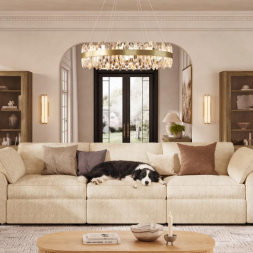
For a touch of tactile luxury, consider a deep-toned velvet sofa module. Velvet catches the light beautifully and adds a layer of sophistication to a minimal room. If your space is filled with sharp, right angles, look for modules withcurved or arched silhouettes. These soft lines break up the rigidity of a roomand make the entire living room layout feel more organic and inviting.
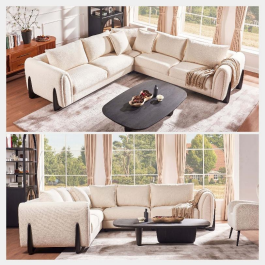
For those with large families, a high-capacity L-Shape sofa made of modular
units provides ample seating without making the room feel heavy. The key is tolook for pieces that balance comfort with clean, architectural lines.
 Final Thoughts
Your home should be a reflection of your life, and life is rarely static. We needfurniture that bends, flexes, and grows alongside us.
If you are ready to reclaim your floor plan and stop letting your furniture dictatehow you live, the modular revolution is calling. By prioritizing adaptability andquality, you create a home that isn’t just a place to sit it’s a space that truly supports your daily rhythm. Invest in pieces that work as hard as you do, andyou will never look at a “fixed” sofa the same way again.