A child’s brain at age six is not a small adult brain. It processes the world differently, learns through physical experience, and absorbs its environment in ways that are direct and largely unconscious.
Yet when most schools get built or renovated, the conversation centers on square footage, fire exits, and cost per classroom. The physical qualities that actually shape how children think and learn, such as light, sound, spatial variety, and access to outdoor areas, tend to get treated as afterthoughts.
That disconnect has real consequences.
The Space Teaches Before the Teacher Does
Children between six and twelve are the most active users of spatial environments of any age group. This is the phase when spatial reasoning solidifies, when children start to navigate their world with real independence, and when the habits of learning take root.
A building that supports that process produces different outcomes than one that ignores it, and those differences compound over time in ways that are difficult to reverse.
Natural light is the clearest example. Classrooms with adequate daylighting consistently produce faster academic progress than rooms that rely primarily on artificial light, and the gap shows most visibly in reading and early numeracy.
Acoustic quality follows a similar pattern. Young children who are still developing phonemic awareness and language processing spend a disproportionate amount of cognitive energy in reverberant rooms just trying to separate the teacher’s voice from background noise, and that energy comes directly out of what should go toward comprehension and retention.
Neither of these variables is expensive to address in new construction. Both are almost universally deprioritized anyway.
When the Curriculum and the Classroom Pull in Opposite Directions
A well-designed elementary math curriculum asks children to move between individual thinking and group problem-solving, to work with physical objects, to visualize patterns, and to test ideas through hands-on activity. That is how young children actually build mathematical understanding, not by sitting still and copying from a board.
The problem is that most classrooms are still arranged as if the opposite were true: fixed desks in rows, minimal floor space, walls covered in static displays that no child had any part in making.
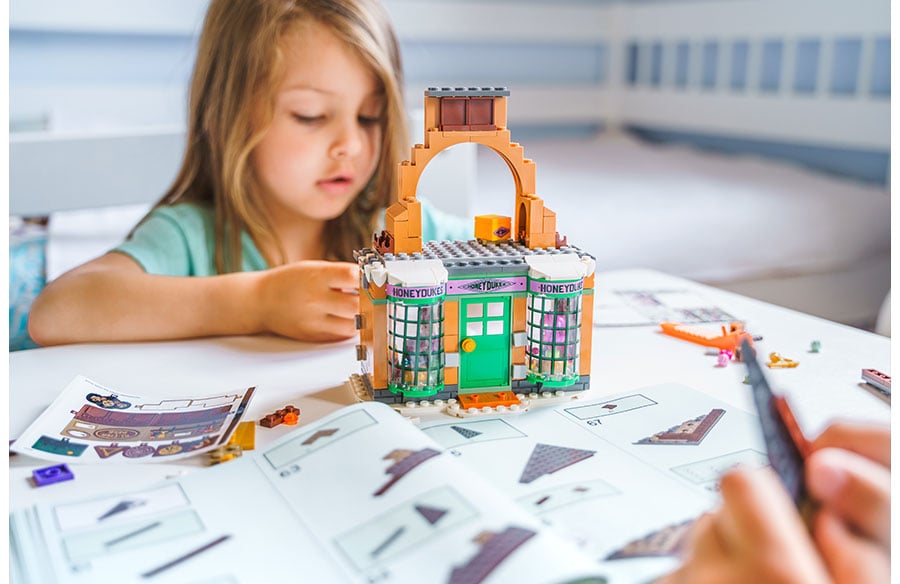
When children build and assemble physical structures, they develop spatial awareness, logical sequencing, and the specific kind of persistence that comes from something collapsing and having to work out why.
These are not soft skills sitting alongside academic learning. They are the cognitive foundations that academic learning is built on, and they need physical space and appropriate materials to develop properly.
Three Things That Actually Move the Needle
Transitional spaces between indoors and outdoors. Children regulate attention partly through movement and sensory change. Schools that build covered corridors, small courtyards, or shaded breakout zones between classrooms and outdoor areas give children the reset that makes returning to focused work more effective.
Schools that treat outdoor access as a fixed part of the daily structure, rather than something that gets cut when the timetable runs over, consistently report better sustained concentration during indoor sessions.
Acoustic management in learning areas. Carpeted reading corners, soft materials on walls, and partitions that absorb rather than reflect sound are inexpensive relative to what they produce.
Lower ambient noise levels in early primary classrooms correlate with better phonics outcomes and fewer behavioral interruptions per session, which means teachers spend less time repeating themselves and more time actually teaching.
Visual complexity that is deliberate. Overly decorated classrooms reduce performance on tasks that need sustained concentration. Bare rooms offer nothing for children to anchor themselves cognitively.
What works is displays that rotate with what is currently being learned, color that varies by zone and purpose, and wall space that shows children’s own work rather than generic purchased imagery.
The room should reflect what the class is thinking about right now, not what someone decorated it with three years ago.
What Can Change Without a Renovation
Not every school can be torn down and rebuilt, and frankly, most cannot even afford a serious renovation. But that does not mean nothing can change.
Rearranging furniture to create distinct zones for reading, building, and group work costs nothing and shifts how children orient themselves to learning in ways that are immediate and visible.
Clearing visual clutter from the wall space directly in front of students during instruction is free. A rug and a couple of cushions in a hard-floored corner do more for acoustic comfort than most people expect from something that costs under a hundred dollars.
Outdoor time is the one that requires no money at all, only the discipline to protect it on the timetable instead of cutting it the moment another subject runs long.
None of this replaces good architecture. But children spend years inside these buildings during the period when their capacity for learning, reasoning, and attention is being built from the ground up.
Getting the environment right is not a finishing touch that comes after everything else is sorted. It is part of the work itself, and it is past time schools and the people who fund them started treating it that way.