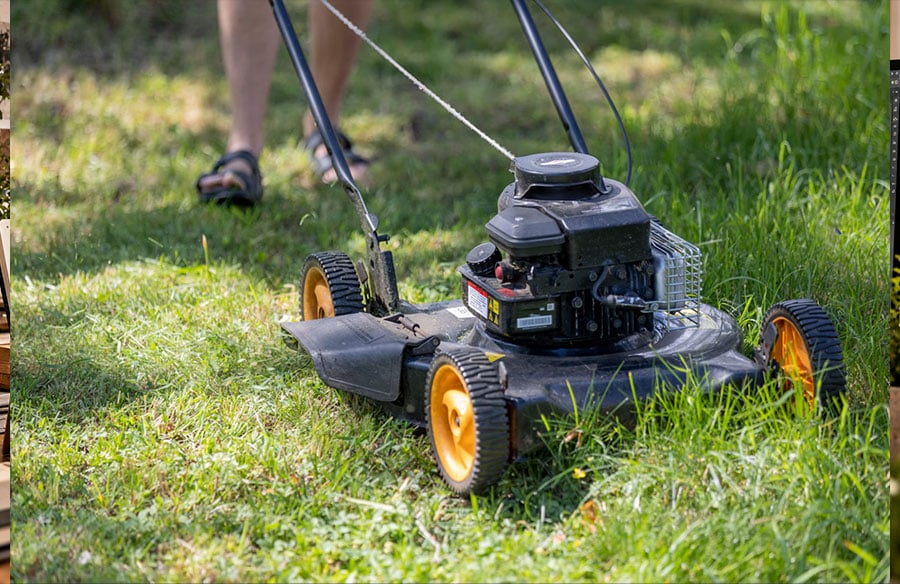
A backyard with three scattered flower beds, a strip of grass between the fence and shed, and a tight corner can make mowing frustrating. Every bed means another loop, every corner another stop. After a season of that, a more maneuverable machine starts to sound like the fix.
Check the layout before replacing the mower. Simplifying awkward spots may make the work easier with the machine you already own. Then judge any new equipment against the yard that remains.
Start With a Yard That Is Easier to Cut
Start with a rough sketch. Mark the grass you use for play, pets, or sitting, along with isolated planting beds, narrow strips, and corners where the mower has to stop and turn. Those awkward areas are worth reviewing first.
Mississippi State University Extension recommends reducing unused lawn area. For each spot on your sketch, decide whether that patch of lawn serves a purpose beyond needing to be cut. If an awkward corner can become a planting area, map the change with a simple backyard landscaping plan before you dig. A rock garden is one option, though it will still need periodic weeding.
Keep the useful grass. Preserve the lawn you walk and play on, and consider a bed, path, or groundcover for less useful patches. A gravel path could replace the narrow strip beside the shed, for example. Long, open curves leave more room to maneuver than tight corners between separate beds.
Bring planting beds together. Mississippi State Extension advises placing plants in masses rather than individually. Connecting the three scattered beds into one curved bed along the fence gives you one continuous edge to follow instead of separate islands to circle.
Simplify the edges. UF/IFAS recommends replacing sharp corners with gentle curves and keeping mowing strips level with the lawn for mower access. A flush paver or brick strip gives a mower wheel a surface to follow beside the bed.
This is the practical side of lawn design for easy mowing: fewer isolated edges mean fewer starts, stops, and tight turns.
Protect trees and planting. A mulched tree ring can remove a difficult trimming spot, but keep mulch off the bark. University of Maryland Extension advises that mulch should never touch the trunk. If you replace turf with groundcover, choose plants suited to your region and allow for establishment work. Maryland Extension advises clearing weeds before planting and notes that mulch between new plants helps hold weeds back until the groundcover fills in.
Match the Mower to the Yard You Keep
A stand-on mower is a zero-turn mower that the operator rides standing on a platform rather than sitting in a seat. Before considering a commercial model for home use, check whether it suits your access routes and terrain.
Measure the full route. Measure the narrowest gate, the path beside the house, and the shed door. Compare those measurements with the manufacturer’s overall machine dimensions. Cutting width alone cannot establish clearance. Account for the complete machine, including its chute, tires, and platform, in a manufacturer-approved configuration.
When comparing commercial stand-on mowers, use the Grasshopper OutStander specifications as one example, then check its deck choices and operator adjustments against your lawn and access route. The manufacturer lists cutting-height adjustment from 1 to 5.5 inches in quarter-inch increments. That range gives you adjustment options. It is an equipment specification, not a recommended mowing height for every grass species.
Respect the terrain. University of Minnesota Extension identifies steep slopes as difficult and dangerous to mow and advises postponing mowing when grass is wet. Zero-turn maneuverability does not remove those hazards. Follow the exact model’s operator’s manual, including its slope limits and operating restrictions. Stay away from banks, drop-offs, and water, and keep guards and safety interlocks in place.
The manufacturer’s safety guidance also recommends considering vegetation that does not require mowing for difficult terrain. A planted bank may be more appropriate than trying to find a machine that can mow every part of the property.
Check Operator Fit and Ownership Costs
Standing suits some people better than others. Ask a dealer for a demonstration on suitable grass, adjust the controls to your height, and compare the feel with a seated zero-turn or a smaller walk-behind. Use the demonstration to assess your reach, standing position, and comfort.
The manufacturer lists a shock-absorbent operator platform and a Command Center Tower with 4.5 inches of vertical adjustment on these stand-on models. It describes the platform as delivering a smoother ride, so test that claimed benefit during the demonstration. Adjustable features give you something concrete to compare, but they do not establish whether standing will be more comfortable for you than sitting.
As of October 19, 2026, the manufacturer’s stand-on product page listed a starting price of $13,365. Treat that as a dated starting-price snapshot and request a complete quote for the configuration you are considering.
Bring your yard measurements and these checks to the dealer:
- Access: Confirm that the complete machine fits the narrowest gate and the route to the lawn.
- Operator fit: Try the controls and platform after they have been adjusted for you.
- Operating limits: Review the exact model’s manual against your slopes and mowing conditions.
- Storage: Confirm that your dry storage space has clearance for the full machine.
- Total cost: Get a written quote that includes tax, dealer fees, and the options you plan to buy.
Conclusion
A better mowing decision starts with the yard, not the machine. Group beds, soften edges, measure the full route, and compare the equipment’s limits with your terrain and storage. A dealer demonstration can clarify whether the controls and platform suit you, while a written quote shows the actual purchase cost. The right choice is the one that fits your conditions without asking you to ignore safety guidance.
FAQs
What should I measure before buying?
Measure the narrowest gate, the entire route to the lawn, the shed door, and the storage area. Compare those measurements with the machine’s complete dimensions.
Can cutting width guarantee gate access?
No. Cutting width describes the deck, not necessarily the full machine. Check the manufacturer’s overall dimensions, including the chute, tires, and platform.
How should I handle slopes?
Read the exact model’s operator’s manual and follow its slope limits and operating restrictions. Avoid steep banks, drop-offs, and water, and postpone mowing when grass is wet.
What should a dealer quote include?
Request the current configuration, the manufacturer’s listed price, tax, dealer fees, and optional equipment. A written quote helps you distinguish the starting price from the complete purchase cost.