Bathroom renovations can dramatically improve the comfort, appearance, and value of a home, but successful remodeling requires looking beyond fixtures and finishes. Moisture management is especially important because bathrooms already generate significant humidity, and existing exterior water intrusion can create additional problems inside walls. Homeowners planning Bathroom Remodeling Thousand Oaks projects should consider the condition of the surrounding structure and exterior envelope before completing expensive interior upgrades.
Check for Moisture Problems Before Remodeling
Before demolition begins, homeowners should look for signs that water may already be entering or accumulating around the bathroom. Discoloration, peeling paint, musty odors, soft drywall, damaged trim, or recurring mildew can indicate a moisture problem that deserves further investigation.
Not every moisture issue originates inside the bathroom. Damaged exterior finishes, failed sealants, cracks around windows, roof drainage problems, and deteriorated stucco can allow rainwater to penetrate the building envelope. Identifying the actual source before installing new drywall, tile, cabinetry, and paint can help prevent newly renovated areas from being damaged later.
Understand How Stucco Damage Can Affect Interior Spaces
Stucco provides an important protective exterior layer, but cracks or improperly sealed penetrations can allow moisture to reach materials behind the surface. Over time, persistent water exposure may contribute to deterioration of sheathing, framing, insulation, and interior finishes.
Visible staining or cracking does not always reveal the full extent of the problem. Professional evaluation may be necessary when homeowners suspect water has moved behind the stucco system.
Addressing Stucco Water Damage Repair before or alongside an interior renovation can help ensure that contractors are not simply covering symptoms while the underlying source of moisture remains unresolved.
Coordinate Exterior Repairs With Bathroom Renovations
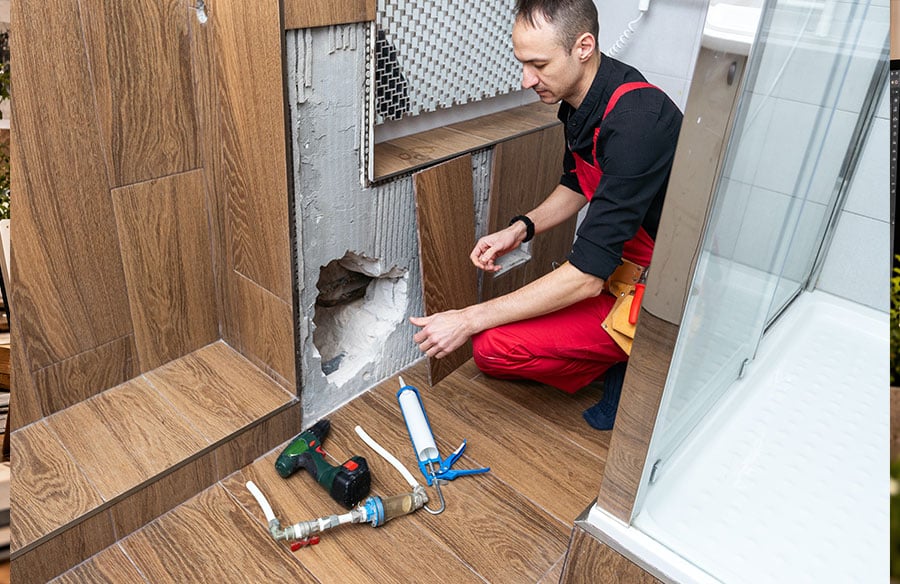
When exterior water damage and bathroom remodeling overlap, coordinating the projects can reduce unnecessary work. For example, opening bathroom walls during renovation may provide an opportunity to inspect framing, insulation, plumbing, and other areas that are normally concealed.
If exterior repairs are also required, contractors can determine the appropriate sequence of work. Generally, stopping active water intrusion should take priority before installing moisture-sensitive interior materials.
This coordination can also make budgeting more predictable because homeowners can identify structural or moisture-related repairs earlier instead of discovering them after the bathroom renovation is nearly complete.
Improve Bathroom Ventilation
Exterior leaks are not the only source of moisture problems. Bathrooms naturally produce large amounts of water vapor from showers and baths. Without adequate ventilation, that moisture can condense on walls, ceilings, windows, and other surfaces.
A remodeling project is a good opportunity to evaluate the bathroom’s exhaust ventilation. The fan should be appropriately sized for the room and vent moisture outdoors rather than into an attic or another enclosed space.
Homeowners may also consider ventilation controls such as timers or humidity sensors. Managing interior humidity helps protect paint, cabinetry, drywall, and other finishes while reducing conditions that encourage mold and mildew.
Pay Attention to Windows and Exterior Penetrations
Bathrooms located along exterior walls often include windows, exhaust vents, plumbing penetrations, or other openings. These areas require careful flashing and sealing because they represent potential paths for water intrusion.
During remodeling, inspect windows for deteriorated seals, damaged frames, staining, or other evidence of leakage. On the exterior, contractors should also evaluate how the surrounding stucco interfaces with windows, doors, vents, and other penetrations.
Proper detailing around these areas is just as important as repairing visible cracks in the stucco itself.
Choose Materials Suitable for Moisture-Prone Areas
Material selection also plays an important role in bathroom durability. Floors, walls, cabinetry, and finishes should be selected with regular exposure to humidity and occasional splashes in mind.
Tile and other water-resistant finishes can perform well when installed over properly prepared substrates and waterproofing systems. However, decorative surfaces alone should never be expected to correct an existing leak.
Waterproofing assemblies, properly sealed joints, suitable backer materials, and correct installation practices are fundamental parts of a durable bathroom renovation.
Consider Drainage Around the Home
Exterior drainage can influence both stucco performance and interior moisture conditions. Gutters, downspouts, grading, irrigation, and landscaping should direct water away from the structure rather than allowing it to repeatedly saturate exterior walls or collect near the foundation.
Homeowners experiencing recurring stucco moisture problems should therefore consider the broader drainage conditions around their property. Repairing damaged stucco without addressing the source of repeated water exposure may result in the same problem returning.
Plan for Unexpected Repairs
Remodeling sometimes reveals conditions that were impossible to see beforehand. Once walls or flooring are removed, contractors may discover deteriorated framing, plumbing leaks, damaged insulation, or previous repairs that were completed incorrectly.
Setting aside a contingency budget can make these discoveries easier to manage. This is particularly important when renovating older bathrooms or spaces where there have already been signs of water intrusion.
Protect the Investment in Your Renovation
A beautiful bathroom renovation should be designed to last. That means considering waterproofing, ventilation, exterior protection, drainage, and structural conditions alongside aesthetic choices.
For homeowners planning Bathroom Remodeling Thousand Oaks, inspecting potential moisture issues before construction can prevent costly surprises and help protect new finishes. When exterior deterioration is present, properly addressing Stucco Water Damage Repair at the appropriate stage can create a stronger foundation for the overall renovation.
By treating interior remodeling and exterior moisture protection as connected parts of the home rather than separate concerns, homeowners can create bathrooms that look better, perform better, and remain durable for years to come.