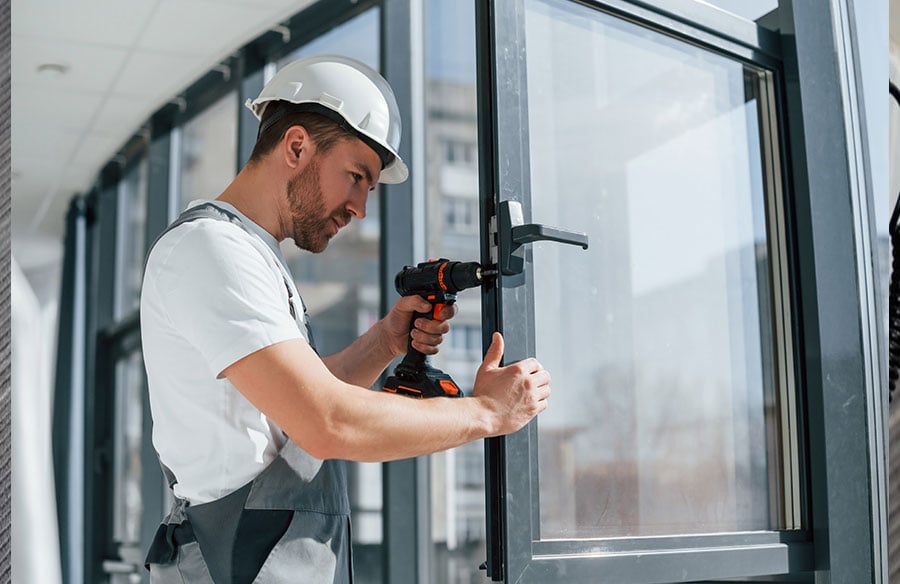
Commercial buildings deal with constant movement. Employees enter and leave, customers pass through storefronts, deliveries arrive, and equipment moves between different areas. With this level of activity, doors and windows naturally experience more stress than those found in a typical home.
For property owners and facility managers, maintaining these systems is about much more than keeping a building looking presentable. Well-maintained doors and windows contribute to security, safety, energy efficiency, and uninterrupted business operations.
The good news is that many common problems can be identified early. A consistent maintenance routine can help extend the useful life of these important building components while reducing unexpected repair costs.
Begin With Routine Inspections
Regular inspections are one of the simplest ways to identify problems before they become serious.
A commercial door that begins rubbing against its frame, becomes difficult to close, or develops unusual movement should not be ignored. These symptoms may indicate alignment problems, worn hardware, or damage that could become more expensive if left untreated.
Property managers should inspect hinges, handles, locks, closers, frames, seals, and glass. Frequently used entrances deserve particular attention because repeated operation places additional stress on moving components.
For larger commercial properties, creating a written inspection schedule can make maintenance easier to manage and document.
Don’t Ignore Small Door Problems
Minor door problems can become major operational issues surprisingly quickly.
A loose hinge, damaged closer, weak latch, or misaligned frame may initially seem like a cosmetic inconvenience. Over time, however, these issues can affect security and make the door increasingly difficult to operate.
When a problem appears, professional Commercial door repair can help determine whether the affected component can be repaired or whether replacement is necessary.
For example, a commercial aluminum door with an intact frame may only require hardware adjustment or replacement rather than an entirely new door. Addressing the problem early can also help prevent additional damage to the surrounding frame and hardware.
Check Door Closers and Hinges
Door closers perform an important but often overlooked function. They control how quickly a door closes and help ensure that it returns to the proper position after opening.
A closer that is too aggressive can cause the door to slam. One that is too weak may leave the door partially open. Both situations can create problems in busy commercial environments.
Hinges should also be checked for unusual noise, looseness, corrosion, or visible wear. If a door begins dragging against the floor or frame, it may be an indication that its alignment needs attention.
These components should be inspected and adjusted according to the manufacturer’s specifications rather than simply forcing the door back into position.
Inspect Window Frames and Seals
Commercial windows are constantly exposed to weather conditions. Rain, temperature changes, sunlight, wind, and humidity can gradually affect seals and frame materials.
Property managers should look for:
- Cracked or deteriorated sealant
- Visible gaps around frames
- Moisture or condensation between glass panes
- Damaged hardware
- Drafts around the window
- Difficulty opening or closing the unit
- Visible frame deterioration
Water infiltration deserves particular attention. A small leak can eventually affect surrounding drywall, insulation, flooring, and other interior materials.
Finding the source early is usually much easier than dealing with extensive water damage later.
Choose Systems According to Building Use
Not every commercial property has the same requirements.
A busy retail store may need entrances designed for continuous customer traffic. A warehouse may require heavy-duty doors capable of handling equipment and deliveries. An office building may place greater emphasis on controlled access, appearance, and energy efficiency.
This is why selecting suitable commercial windows and doors should begin with an understanding of how the building is actually used.
Factors such as traffic volume, security requirements, climate exposure, accessibility, maintenance requirements, and expected lifespan should all be considered before selecting a system.
A product that works well in a small office may not be appropriate for a high-traffic retail entrance.
Keep Exterior Areas Clear
The area around a door can affect its performance.
Boxes, furniture, carts, equipment, and other objects should not obstruct the opening or closing path. In industrial environments, vehicles and machinery can create additional risks around entrances.
Where doors are exposed to moving equipment, protective barriers may help prevent accidental impacts. Clear walkways also make entrances safer for employees, customers, and visitors.
Keeping these areas organised is a simple maintenance step that costs little but can prevent unnecessary damage.
Review Weather Protection Before Winter
Seasonal maintenance is particularly important for commercial properties in regions with changing weather conditions.
Before colder weather arrives, building managers can inspect exterior doors and windows for damaged seals, gaps, deteriorated weatherstripping, and other problems that could allow drafts or moisture into the building.
The same principle applies after periods of severe weather. Strong winds, heavy rain, snow, or sudden temperature changes can expose weaknesses that were not previously obvious.
Addressing these issues before they become serious can improve comfort while helping protect the building envelope.
Don’t Overlook Security
Commercial entrances are naturally important points in a property’s security strategy.
Locks, access-control hardware, frames, hinges, and glass should be inspected regularly. A door that does not close or latch correctly may create a security concern even if it still appears functional.
Businesses should also review access requirements when employees, tenants, or operating arrangements change.
Security does not always require a complete door replacement. In some situations, upgrading hardware, improving locking mechanisms, or repairing damaged components can address the immediate concern.
Know When Replacement Makes More Sense
Repair is not always the right answer.
If a door or window has extensive structural damage, repeated failures, severe deterioration, or outdated components that are difficult to maintain, replacement may provide better long-term value.
The decision should consider the age of the system, repair history, safety requirements, operating costs, availability of replacement parts, and expected future use.
A professional assessment can help property owners compare repair and replacement options rather than making the decision based solely on the initial price.
Build a Preventive Maintenance Schedule
A preventive maintenance programme can make commercial property management much easier.
Depending on the building, a schedule might include:
- Monthly checks of high-traffic doors
- Periodic inspection of locks and closers
- Seasonal inspection of window seals
- Regular cleaning of glass and frames
- Immediate investigation of leaks
- Annual professional inspection of heavily used systems
The frequency should reflect actual usage. A school, shopping centre, restaurant, or warehouse may require considerably more attention than a small office with limited daily traffic.
Protect the Building Through Consistent Maintenance
Commercial doors and windows are long-term investments, but their performance depends heavily on how they are maintained.
Small issues such as a loose hinge, worn seal, damaged closer, or misaligned frame can gradually become larger problems when they are ignored. Regular inspections provide property owners with an opportunity to address these issues before they interfere with business operations.
Good maintenance is ultimately about prevention. By choosing systems appropriate for the building, inspecting them regularly, responding quickly to damage, and scheduling professional maintenance when necessary, commercial property owners can protect their investment and keep their buildings operating reliably.
The objective is simple: doors should open and close safely, windows should perform as intended, and neither should become an unexpected interruption to the business inside.