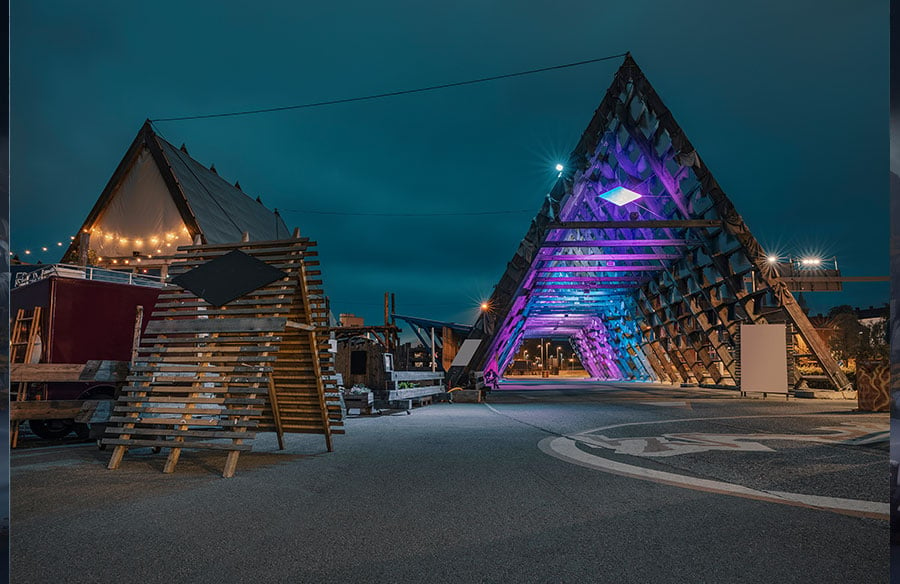
Outdoor Event Structures are temporary physical environments used for festivals, trade shows, product launches, sporting events, and other open-air activations. They can include branded canopies, modular frames, pavilions, inflatables, and truss systems. Their design affects more than shelter: structure, layout, materials, and branding influence what visitors notice, where they move, how long they stay, and how they remember a brand.
A well-designed temporary space creates a clear visual identity while making the experience easier to navigate and more comfortable. Even when an installation is in place for only a few hours or days, it can feel like a deliberate extension of the brand.
Why Temporary Structures Matter to the Brand Experience
Temporary structures shape brand perception because visitors often encounter the physical environment before speaking with anyone. A tall branded canopy can improve visibility across a crowded festival, while an open entrance can make a space feel more approachable than a closed wall system.
Scale, color, materials, lighting, and placement all influence the first impression. Consistent graphics can make a growing company appear established, while poor sightlines, clutter, or mismatched furniture can weaken an otherwise strong campaign.
The structure should also support the experience taking place inside. A sampling area, product demonstration, hospitality lounge, or photo opportunity works better when the physical environment has been designed around that interaction.
Choosing a Structure That Fits the Experience
The right temporary structure depends on the experience a brand needs to create, not simply on the amount of space available.
| Structure approach | Best for | Brand-experience advantage |
| Pop-up/canopy | Festivals, sampling, small activations | Fast setup and clear branded footprint |
| Frame/modular | Larger activations, hospitality | Flexible zoning and defined spaces |
| Inflatable | High-visibility campaigns | Distinctive shapes and visual impact |
| Pavilion/truss | Premium activations, launches | Strong architectural presence |
A small sampling campaign may need a compact footprint that a small crew can assemble quickly. A product launch may need several zones for reception, demonstration, storage, and hospitality. Some pop-up structures can be installed in well under an hour, while larger modular builds may require several hours and a dedicated production team.
The important distinction is function. Branded event spaces should support what people are expected to see, do, and experience once they enter.
Design the Space Around the Visitor Journey
A strong outdoor activation guides people naturally from arrival to interaction, so the layout should be planned around movement rather than simply filling the available footprint.
- Entry visibility: Make the main entrance easy to recognize from nearby traffic.
- Clear sightlines: Keep the main product, message, or focal point visible.
- Interaction zones: Allow enough room for demonstrations, sampling, or conversations.
- Circulation space: Prevent furniture and displays from creating bottlenecks.
- Staff access: Separate storage and work areas from visitor movement where possible.
- Focal points: Use lighting, signage, displays, or architectural details to direct attention.
A 10 x 10-foot footprint can work well for a focused demonstration but becomes crowded when seating, storage, and large displays are added. Larger modular event structures can separate these functions and create a smoother visitor flow.
The same principle applies to pop-up activations at festivals and sporting events. A structure may look impressive from outside, but the internal journey still needs to feel simple and intuitive.
Make Temporary Design Feel Distinctly On-Brand
Temporary spaces feel polished when their architecture and visual identity work together rather than relying on logos alone. Brand colors, typography, graphics, lighting, furniture, and finishes should reinforce the same identity from the entrance through the main interaction area.
A canopy with printed walls can create recognition from a distance, while coordinated counters, flags, flooring, and signage make the space feel complete up close. Custom Canopy Tents can provide a practical foundation for this approach because their portable format allows brands to carry a consistent visual identity across different venues and footprints.
The design should also reflect the company’s personality. A technology brand might use clean lines, integrated screens, and restrained graphics, while a consumer brand at a festival may benefit from open sides, brighter surfaces, product displays, and social areas.
Good event branding feels cohesive without covering every surface with a logo. Visitors should understand who the company is without having to decode the space.
Use Temporary Structures as Reusable Brand Assets
The strongest temporary structures are designed to evolve from one activation to the next. Modular components, adaptable graphics, interchangeable accessories, and scalable layouts can maintain visual consistency while allowing a brand to change its footprint for festivals, roadshows, sporting events, or trade shows.
This approach can also make event spending more practical. Instead of creating an entirely new environment for every campaign, teams can keep a recognizable physical brand system and update selected elements as objectives change. A compact setup might use the same core structure as a larger activation with additional walls, counters, lighting, or displays.
Frequently Asked Questions
What are outdoor event structures used for?
They provide temporary spaces for shelter, demonstrations, hospitality, exhibitions, sampling, and branded activations. They also define where and how visitors interact with a brand.
What type of structure is best for an outdoor brand activation?
There is no universal option. The choice depends on footprint, visitor flow, weather exposure, branding needs, setup time, and intended use.
How do outdoor event structures improve brand visibility?
Height, shape, color, graphics, and placement can make a structure recognizable from a distance. This gives visitors a clear visual reference point in busy environments.
How do you make a temporary event space feel premium?
Use cohesive graphics, quality materials, thoughtful lighting, and a clean layout. A polished result usually comes from coordination rather than adding more branding.
Conclusion
Temporary does not have to look temporary. When structure, branding, and visitor movement are designed as one system, an outdoor installation can become a genuine brand experience. Choose the structure around what visitors need to see, feel, and do, then build the space to support that experience.