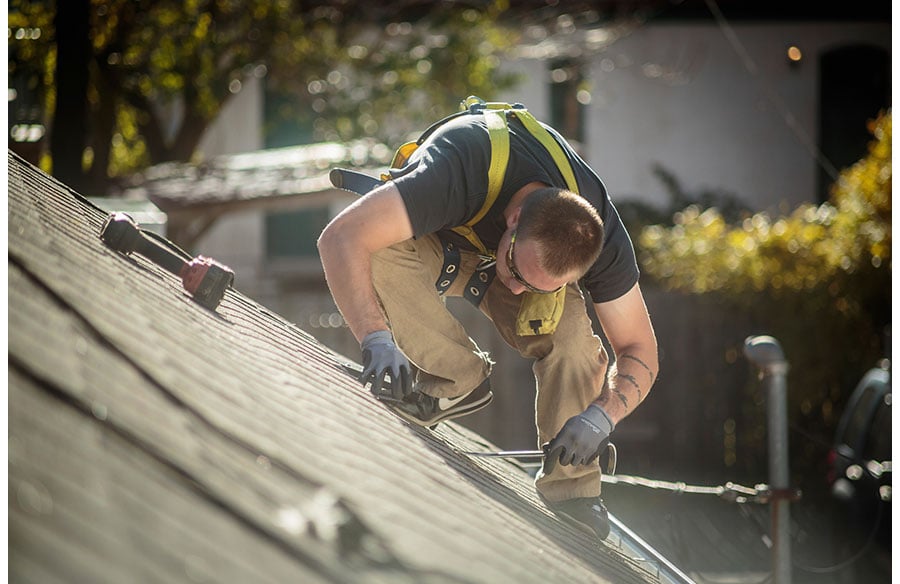
Three roofers quoted the same Kennewick ranch house. The spread was eleven thousand dollars, and all three handed over a certificate of insurance.
That gap isn’t a pricing quirk. It’s a signal that at least two of those bids were describing different scopes, different crews, or different levels of risk transfer. You can’t tell which one by reading the numbers. You tell by reading the paperwork and asking the right questions on the phone, before anyone climbs a ladder.
Tri-Cities weather stacks three separate assaults on a roof. Summer heat bakes shingles brittle. Spring wind events peel back flashing and ridge caps. Then the cold snaps arrive and find every tiny gap the heat made. A crew that installs well in a mild climate can still miss the specific details that matter here. So when you’re shortlisting roofing companies in tri cities homeowners actually hire, you want a vetting process that filters for local weather performance, not just a friendly estimate.
Why a cheap bid usually costs more than a good one
Here’s the part I’d underline twice: a low bid has to make its money back somewhere. It comes out of decking, ventilation, underlayment, or the crew’s pace. If the number is well under the others, ask exactly what is excluded and get it in writing. You’re not being difficult. You’re pricing the difference.
I’d take the middle bid from a crew that answers questions plainly over the cheapest one that talks fast. Every time. Price matters, but a roof you have to redo in six years is the most expensive option on the table.
The five-filter system I use before signing anything
I call it the Filter Stack, and it runs in a fixed order because each filter changes how you read the next one. Run them out of order and you end up judging a contractor by their handshake.
Filter 1: Registration and insurance, checked at the source
Washington requires roofing contractors to register with the state, and you can confirm a contractor’s status directly. Start at the Department of Labor and Industries and look up the company by name. The certificate in the bid packet is a copy. The state database is the live record. Check the bond too, since a lapsed bond is a quiet red flag that the business side is wobbling.
Filter 2: Wind and heat credibility
Ask two questions and listen for specifics. First: what wind rating do you install to, and what’s the manufacturer’s requirement for this area? Second: how do you handle attic ventilation in homes built before 1990? A contractor who starts talking about intake vents, ridge vent sizing, and how many penetrations your roof has is a contractor who thinks about performance. One who says “we use good materials” is telling you they don’t.
Filter 3: The written scope, line by line
Your estimate should name the shingle product and line, the underlayment, the decking repair allowance per sheet, ice and water shield placement, flashing replacement, and the dumpster and cleanup. Vague scopes are where change orders breed. If the bid says “tear off and install,” that’s not a scope. That’s a headline.
Filter 4: The crew question
Ask directly: will your own employees install this, or a subcontractor? Neither answer is automatically bad. But you deserve to know, because the warranty conversation gets murky when nobody on site works for the company that signed your contract.
Filter 5: Warranty math
Manufacturer warranties usually depend on proper installation, and the labor warranty comes from the contractor. Ask for the length of each, what voids them, and whether they transfer if you sell the house. Write the answers down in the margin of the bid. If the salesperson can’t state them without checking, that’s your answer.
A quick reference you can screenshot
If you’d rather skip the essay and walk outside with your phone, here’s the compressed version.
| Filter | What to check | Deal breaker
|
|---|---|---|
| Registration | State database lookup by company name | No active registration or expired bond |
| Insurance | Certificate of insurance, verified with the agent | Refuses to have the agent confirm |
| Weather credibility | Wind rating and ventilation answers | Can’t explain either |
| Written scope | Products, decking allowance, flashing, cleanup | One-line bid with no product names |
| Warranty | Labor term and manufacturer terms in writing | Verbal promises only |
Paperwork that protects you, not just them
Roofing contractors are small businesses, and the good ones run like small businesses. Their contracts should include a start window, a payment schedule tied to milestones rather than a big deposit, a lien notice process, and a written change order procedure. If you’re comparing how they operate, the Small Business Administration publishes plain guidance on reading contracts and protecting yourself with a home improvement agreement. It’s worth ten minutes before you sign.
Pay attention to the deposit. A crew that wants a large chunk of cash up front before materials are ordered is asking you to finance their cash flow. Reasonable deposits exist, but they should be tied to a delivery date and a dollar figure you can trace to materials.
What I’d ask on the phone before the truck arrives
Three calls, ten minutes each, and you’ll eliminate most of the field. When you reach the office, ask whether the person on the phone can answer scheduling questions themselves. Then work through this list:
- How far out are you booking, and do you schedule weather holds for wind?
- Who pulls the permit, and what’s the typical turnaround in your jurisdiction?
- What’s your decking policy if you find rot under the old shingles?
- Can I see two completed roofs in my zip code from the last two years?
- Who is my point of contact once work starts, and how do I reach them?
That last one matters more than people expect. A crew that hands you a cell number and answers it during the tear-off is a crew that has done this awhile. Silence in week one is a preview of silence when something goes wrong.
The neighbor test
Every neighborhood in the Tri-Cities has one house where a roofing crew spent a whole summer, and the owner still stops in the driveway to talk about it. Find that house. Ask the owner what went wrong, because something always does. Then ask how fast the contractor fixed it. That answer tells you more than any five-star review ever will.
According to the National Association of Home Builders, roofing falls under the broader home building and remodeling trades, which means the same basic rule applies: reputation travels locally, and a contractor who’s been in the community a while has a track record you can check. The ones who show up, quote, and vanish before the season is a good sign of a short runway.
The bottom line
You don’t need a perfect forecast or a perfect roof. You need a contractor whose paperwork matches their promises and whose crew knows how wind and heat behave on this side of the state. Run the five filters in order, hold the bids side by side until the scopes align, and get the warranty terms on paper. If someone pushes back on that process, treat the pushback as a data point.
So when the next wind advisory hits and your neighbor’s ridge cap is in the yard, whose number will you be glad you saved?