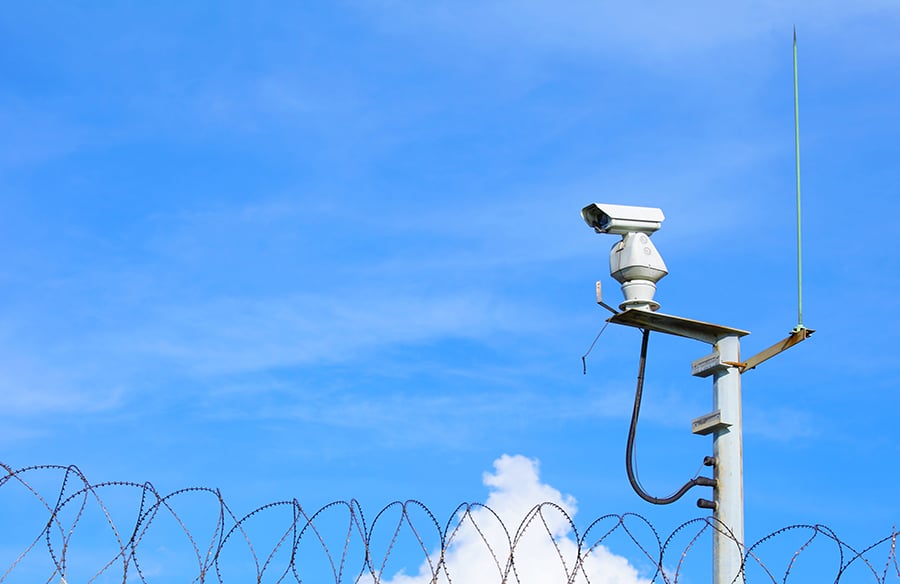
Mobile surveillance towers combat construction site theft by providing a multi-camera system with night vision, motion sensors, and floodlights. The idea of having a single tower equipped with all this technology is a game-changer because it can monitor a site 24/7. Nearly all equipment thefts occur at night or during the weekends when sites remain unoccupied. That means it is crucial that any tower that is able to detect movement, record it and alert the monitoring team takes away the thief’s window of opportunity. The only reason such cameras are so effective is that it’s just a matter of probability change. The risk-reward balance becomes the deciding factor for a potential crook when he is casing the place. The thief might think that he can sneak in undetected, but a large camera system with a red and blue flashing light and a loudspeaker changes his strategy quite early before any fence-climbing is done. For the passive CCTV, one has to rely on the footage only after the incident has happened. Such footage may be helpful in claiming compensation, but it is, in no way, capable of deterring the thief from running away with, for instance, the copper cable or mini excavator.
On the contrary, a live monitored surveillance tower not only catches footage of the event but, most importantly, it also prevents the crime through active presence rather than only collecting evidence.
What Makes a Mobile Surveillance Tower Different from Standard CCTV
Mobile does more than just the name. Since they are attached to trailers or skids, the units get towed into position and the setup is done in less than an hour without trenching and cable laying or connecting to mains power. The construction site is different every time, and the camera, which was attached to a portacabin in the first week is now pointing at the wrong area by the sixth week. A tower can be moved as the work progresses. This is quite helpful, mainly when the valuable plant migrates from one corner of the plot to another. The other main features are power and connectivity.
Batteries and solar panels keep most of the towers running. There may be a small fuel cell or a generator that is attached to one of them for darker winter months when there are fewer sunny days. They work through a wireless connection, so no wired network is necessary. That is why they are the choice in greenfields that don’t yet have a power supply or broadband internet. It is there that the first stage excavation works and deliveries of expensive equipment are most vulnerable to attack. Then there is the height. A tower that’s 6 to 9 metres tall brings an unobstructed view to the camera, which a ground-level unit cannot match. This results in a much larger coverage area with fewer hidden spots. The visibility from the road also draws attention to the camera. This presence alone can act as a crime prevention measure. Someone who would like to steal a thing and passes the construction site at 2 A. is going to observe the height of the tower long before they recognize the stolen item on the site.
The Deterrence Layer That Actually Stops Theft
Detection alone does not prevent much. What stops a theft in progress is the response the tower triggers the moment someone crosses a boundary. Modern units use analytics that can tell the difference between a fox, a swaying tarp, and a person, which cuts down the false alarms that make cheaper systems useless and eventually ignored. When the system does confirm a human intruder, it can fire floodlights, sound a recorded warning over a loudspeaker, and push live video to a monitoring station in the same second.
That monitoring station is the part people underestimate. An operator watching the live feed can issue a personalised challenge over the speaker, telling the intruder they have been seen and that the police have been called, which resolves a large share of incidents without anyone setting foot on site. Providers such as wifieye pair the physical tower with this kind of remote monitoring and rapid escalation, so the hardware and the human response function as one system rather than a camera hoping someone reviews the footage later.
The escalation path matters for a practical reason. UK police forces have moved towards not attending unverified alarms, so a system that can visually confirm a live intruder gets a materially better response than a bare alarm that might be a cat. Verified footage also shortens the gap between the alert and officers arriving, which is often the difference between recovering plant and filing a claim.
What It Costs and What You Get Back
Pricing tends to follow a weekly or monthly rental model, rather than outright purchase, which matches the transient nature of most projects. Prices differ from area to area and per specification, but a single monitored tower is generally in the region of a few hundred pounds a week, with multiple cluster deployments and longer contracts reducing the take of single towers. But just think of what is stolen? Construction and plant theft costs the UK sector alone is estimated to be in the high hundreds of millions annually, and the recovery rate is abysmal, often quoted as being in the low single digits! The maths has been somewhat skewed once the knock-on costs are taken into consideration. A stolen excavator is not simply the cost of getting a new one in its place.
It is the hire cost of a like-for-like replacement, the period of delay waiting for it to arrive, the idle team as they do that waiting, the increase in the insurance premium for that particular site following the claim. So far, a single safeguard of theft prevention during a medium-sized commercial build can be paid for by the savings of a single season of site monitoring. Some insurance companies now offer discounted premiums and nil excesses if the site is covered by monitored CCTV.
Two types of coverage problems you should consider before you commit yourself: A one tower with a 9 metre mast works over a huge area, but a linear route like a road scheme, or a site divided by buildings and structures of height, may need several units to prevent coverage holes. Good service providers take a good look at the plot, and advise on the correct number of towers required, not the least possible.
How Needs Differ Across Site Types
A little house addition and a forty-acre land development project are not going to give rise to the same problem, and the solution will differ correspondingly. On small city lots, the thief usually takes away only a few pieces of tools and a small amount of materials from the limited space, so they are often unnoticed. One surveillance tower covering both the compound and the entrance can prevent such theft most of the time. Yet, there is usually a limitation, which is overlooking private dwellings and the issue of privacy that the surveillance camera is not allowed to record.
Large civil work and highway construction projects are a whole other ball game. The most expensive items, like diesel, cable, and big machines (plant) are distributed across a long or irregular length of area, often times with no perimeter fence to speak of at all. Such construction sites are usually covered by several towers placed at choke points as well as areas like fuel stations and plant compounds. Camera networks are sometimes even set up so that an intruder can literally be tracked through different camera angles. These kinds of major construction works also depend heavily on tight schedules; one delay caused by a stolen tool can cause serious problems, so prevention is worth a lot here.
Isolated and rural locations have their own twists too. If the local police and the person who has the key to get into the premises are unable to come to the site quickly, then, quite likely, the only real deterrent that will actually intervene is the one that is situated on top of the tower. In such an environment, the audio alarm and the strobe light are neither a luxury feature nor an afterthought. They are the key tools that are used in a very visible, loud way. And the use of solar-powered and 4G independent systems becomes mandatory here and not a privilege anymore.