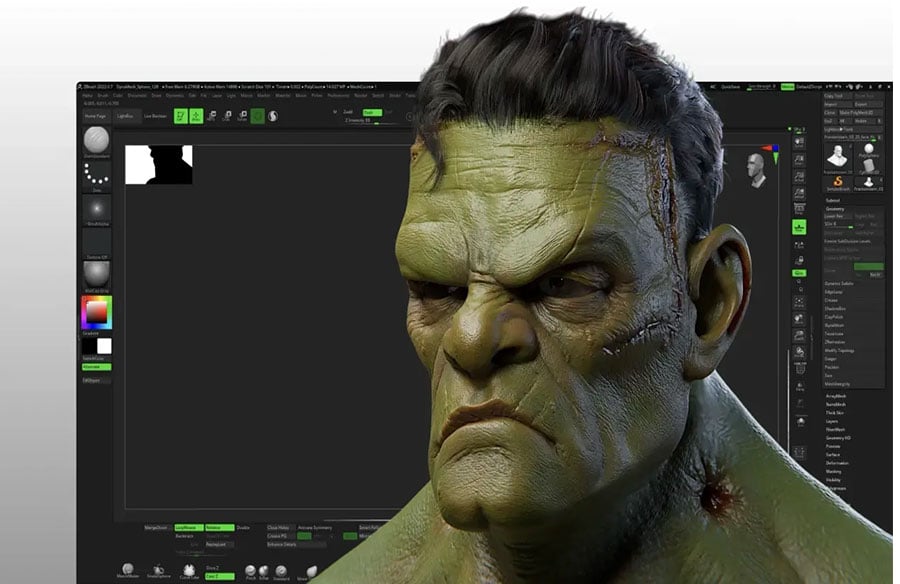
For decades, the journey from an initial design idea to a convincing visual representation has been one of the most time-intensive stages of the creative process. Whether in architecture, interior design, product design, or digital content creation, designers have traditionally relied on hand sketches, CAD software, SketchUp, Rhino, and other specialized tools to communicate early concepts. While these methods remain invaluable, they often require significant technical expertise and hours—sometimes days—of modeling before a concept can be presented to clients or collaborators.
Generative AI is changing that equation.
Rather than replacing designers, AI is dramatically shortening the gap between imagination and visualization. What once demanded multiple software packages and extensive manual work can now be achieved in minutes, allowing professionals to spend less time building preliminary models and more time refining ideas, exploring alternatives, and making informed design decisions.
The Traditional Bottleneck in Early Design
The conceptual phase has always been the most fluid part of any design project. Architects sketch massing studies, product designers experiment with forms, and creative teams brainstorm multiple directions before settling on a final concept.
However, converting those rough ideas into presentable 3D visuals has traditionally required a lengthy workflow:
- Developing concept sketches
- Building preliminary geometry
- Applying materials and textures
- Producing presentation-ready renders
- Revising models after client feedback
Every iteration consumes valuable time. Even small design changes may require rebuilding geometry or adjusting materials, slowing down the creative process before projects reach production.
As client expectations continue to evolve, faster concept visualization has become a competitive advantage rather than simply a convenience.
AI Brings Visualization Closer to the Idea
Generative AI is fundamentally changing the earliest stages of design by enabling creators to transform text descriptions or reference images directly into 3D models.
Instead of spending hours constructing an initial concept manually, designers can generate multiple visual directions almost instantly. This acceleration encourages experimentation because the cost—in both time and effort—of exploring new ideas becomes significantly lower.
Rather than committing early to a single concept, design teams can evaluate several alternatives side by side, helping clients participate in the creative process much earlier.
The result is not just increased speed but better collaboration and more confident decision-making.
A Practical Example of AI-Powered 3D Creation
One platform illustrating this shift is ****, an AI-powered 3D content creation platform that has become an early leader in AI-generated 3D assets.
Launched in 2023, the platform enables users to generate textured 3D models from simple text descriptions or reference images, reducing much of the manual modeling typically required during concept development.
Its recently introduced 3D Agent extends this capability even further by acting as a conversational assistant for multi-step 3D creation. Instead of navigating complex modeling workflows, users can describe what they want, refine the output through natural language, and progressively improve designs through iterative conversations.
This approach makes advanced 3D creation more accessible—not only for experienced modelers but also for architects, product designers, visualization specialists, and creative professionals whose expertise lies in design rather than technical modeling.
Faster Iteration Means Better Design
Design quality often improves through iteration. The more ideas a team can test, the more likely they are to discover innovative solutions.
Generative AI enables designers to:
- Explore multiple concepts in minutes instead of days.
- Produce client-ready visualizations earlier.
- Validate design directions before committing to detailed modeling.
- Experiment with materials, proportions, and forms rapidly.
- Reduce repetitive modeling tasks.
This acceleration shifts more project time toward creative thinking instead of technical execution.
Rather than replacing established software like Rhino or SketchUp, AI complements these tools by providing a rapid starting point that designers can further refine using traditional workflows.
From Digital Concepts to Physical Production
An emerging trend is the integration of AI-generated 3D content with manufacturing and prototyping workflows.
**** has expanded beyond digital asset creation through integrations with platforms such as MakerWorld by Bambu Lab and Formlabs’ Form Now, alongside partnerships with hardware companies including xTool, Snapmaker, and Flashforge.
These integrations help bridge the gap between digital ideation and physical production, allowing AI-generated concepts to move more quickly toward prototyping and fabrication.
For product designers and makers, this reduces friction between initial inspiration and tangible results.
Enterprise Adoption Signals Growing Confidence
As AI becomes part of professional design workflows, reliability and security are increasingly important.
Enterprise-ready certifications—including SOC 2 Type II, ISO 27001, and GDPR compliance—are becoming key considerations for organizations evaluating AI platforms.
These standards provide greater confidence that AI-assisted workflows can support commercial projects while meeting security and compliance requirements.
The Bigger Shift in Design Workflows
The broader story is not about AI replacing designers.
Instead, it is about removing friction from one of the slowest parts of the creative process: turning abstract ideas into visual representations that others can understand and evaluate.
When concept visualization takes minutes rather than hours, designers gain more opportunities to explore alternatives, collaborate with clients, and refine solutions before significant development resources are committed.
That shift changes the rhythm of design itself.
As AI continues to mature, platforms like Meshy demonstrate how tools such as an AI 3D model generator can accelerate early-stage visualization while leaving the essential creative decisions firmly in the hands of designers. Rather than replacing human creativity, generative AI is expanding the speed and flexibility with which great ideas can take shape.