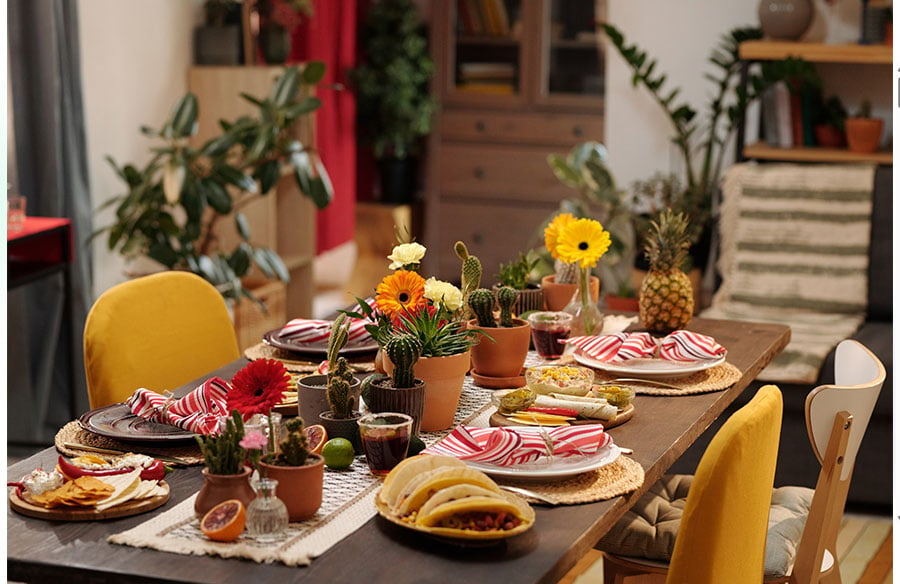
Not everyone has a dining room, and that’s rarely the reason a dinner party falls flat. A folding table pushed against the living room wall, a kitchen corner with two mismatched chairs, a narrow nook that technically counts as a hallway – people host in all of it, and the meal usually goes fine either way. What actually makes a small eating space feel intentional instead of improvised is rarely the table itself. It’s usually the dining room wall decor behind it – the one detail that tells a guest “this spot was chosen on purpose,” even when that same corner has three other jobs during the rest of the day.
The Illusion of a Room You Don’t Have
A dining room, technically, is just an agreement – a spot in the house where eating happens and nothing else competes for attention while it does. Apartments rarely have room for that agreement to get its own four walls, so the job falls to smaller signals instead. A rug that only lives under the table. A pendant light hung a little lower than the rest of the room. A single piece on the wall that has nothing to do with the couch six feet away. None of these take up floor space, but together they quietly draw a boundary the eye respects, even without an actual doorway to mark it off.
What Actually Signals “This Is Where We Eat”
Guests read a room faster than they’d admit, and walls do most of the talking before anyone even sits down at the table. A blank wall behind it reads as temporary, like the space is still deciding what it wants to be when it grows up. One grounded piece – framed art, a well-placed mirror, or a shelf holding something other than unopened mail – reads as decided. It doesn’t need to be large or expensive. It just needs to sit at the right height and stay consistent, so the eye stops scanning for what’s missing and finally settles somewhere calmer.
Hosting Small Without Feeling Small
The trick with limited space is resisting the urge to fill every surface to compensate for the room’s size. One good piece on the wall does more than a cluttered tablescape ever will, and it’s the one element that stays exactly in place after the extra chairs get folded up and put away for the night. Set the table simply, let the wall carry the atmosphere, and the room will feel considered long after the dishes are cleared and everyone’s gone home. That’s usually the part people remember afterward, even if they couldn’t quite explain why it worked.
Soft lighting, a few natural textures, and one well-chosen focal point can make even the smallest gathering feel warm and inviting. Guests rarely notice the square footage, but they do notice when a space feels comfortable, balanced, and thoughtfully put together. Creating that feeling is less about having more room and more about making intentional design choices.