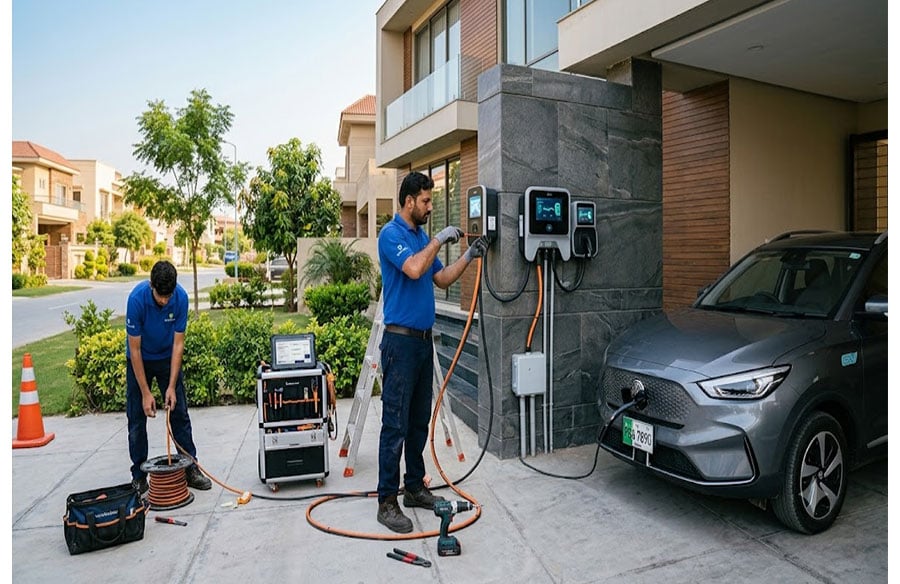
What Does EV Charger Installation Include?
EV charger installation is the process of setting up safe, code-compliant charging equipment at a home or property. It usually includes checking the power supply, choosing the charger location, running wiring, adding a dedicated circuit when needed, mounting the unit, testing the system, and confirming safe operation.
Most homeowners want one clear answer first: Can my home support a charger? The answer depends on your current power capacity, charger type, parking location, and local permit rules. A licensed professional can inspect these details before any work starts.
Level 1 vs Level 2 Charging
Level 1 charging uses a standard outlet. It can work for light daily driving, but it is slow. Level 2 charging uses 240 volts and gives faster charging for most drivers.
| Charger Type | Best Use |
| Level 1 | Short commutes and overnight charging with low daily mileage |
| Level 2 | Daily driving, longer commutes, and quicker home charging |
Many EV owners choose Level 2 because it makes daily charging easier. It helps the battery recover more range overnight and reduces the need to rely on public EV charging stations.
What Does a Charger Professional Check?
Before installing a unit, a qualified EV charger installer reviews the home’s power setup, parking area, and charger location. This step helps prevent surprise costs and delays.
A review may include:
- Distance from the panel to the parking space
- Wall space for the charger
- Breaker capacity
- Wiring route
- Indoor or outdoor placement
- Permit needs
Electrical Needs for Home Charging
A charger needs the right circuit, breaker, and wiring size. The electrical panel must have enough capacity to support the added load. If the panel is full or outdated, an upgrade may be needed before the charger can be installed safely.
The charger location also matters. A short wiring path can reduce labor, wall repairs, and material needs. A long run from the panel to the garage or driveway can increase the cost.
For outdoor installs, the equipment must be rated for weather exposure. The charging cable should also reach the vehicle without creating a tripping risk or crossing high-traffic areas.
Costs and Quote Factors
The costs to install an EV charger can vary because every property is different. A simple garage setup may cost less than a driveway installation that requires trenching, long wiring runs, or a panel upgrade.
The final quote often depends on:
- Charger type
- Wiring distance
- Panel capacity
- Permit fees
- Labor time
- Wall or surface materials
- Indoor or outdoor setup
- Inspection requirements
A good quote should explain what is included. It should also show whether the work covers permits, materials, labor, testing, and cleanup.
Permits and Inspections
Many areas require permits for installing a home EV charger. The permit process helps ensure that the work complies with local codes and safety regulations. After installation, an inspection may confirm that the wiring, breaker, and charger are safe to use.
This step may feel slow, but it protects the homeowner. It also helps avoid problems during a future home sale, insurance review, or electrical service upgrade.
An electric car charger installer should explain which permits apply before the project begins.
How the Installation Process Works
A simple home EV charger installation process usually follows a clear sequence. First, the installer reviews the home and confirms the best location for the charger. Then, the installer prepares the circuit, runs the wiring, mounts the unit, and tests the charger.
For some homes, the process may include photos, video review, or a virtual estimate before the final quote. This helps the installer understand the panel, parking space, and wiring route before arriving.
At this stage, working with Grounded Electric NJ can help homeowners plan the setup, avoid unsafe shortcuts, and understand what the project may require before the charger is installed.
Choosing the Right Charger
The best charger depends on your vehicle, driving habits, parking setup, and available power. Level 2 EV chargers are common for home use because they offer a better balance of speed and convenience.
Home chargers may include smart features, scheduling tools, app controls, and energy tracking. These features can help users charge during lower-rate hours when their utility offers time-based pricing.
If you drive a plug-in hybrid, you may not need as much power as a full electric vehicle owner. If you drive long distances each day, a higher-powered electric vehicle charger may make more sense.
Safety and Code Compliance
Installing a charger is not the same as plugging in a regular appliance. An electric car charger can draw power for several hours, so the circuit must safely handle a steady load.
Electric vehicle charger installers understand breaker sizing, wire type, load calculations, grounding, and local rules. They can also identify risks such as overloaded panels, outdated wiring, or unsafe outlet use.
A safe charger setup should:
- Match the vehicle and charger requirements
- Use proper wiring and breaker protection
- Follow permit and inspection rules
- Keep cables clear and secure
- Be tested before regular use
Final Checklist Before Installation
Before installing, confirm your vehicle’s charging needs, your parking location, and your preferred charger type. Ask the installer whether your panel can support the charger, whether permits are needed, and what the total quote includes.
A well-planned home EV charger should make daily driving easier, keep the vehicle charged, and enable reliable charging without guesswork. The right setup improves charging speed, reduces trips to public chargers, and provides a safer way to manage home EV charging.