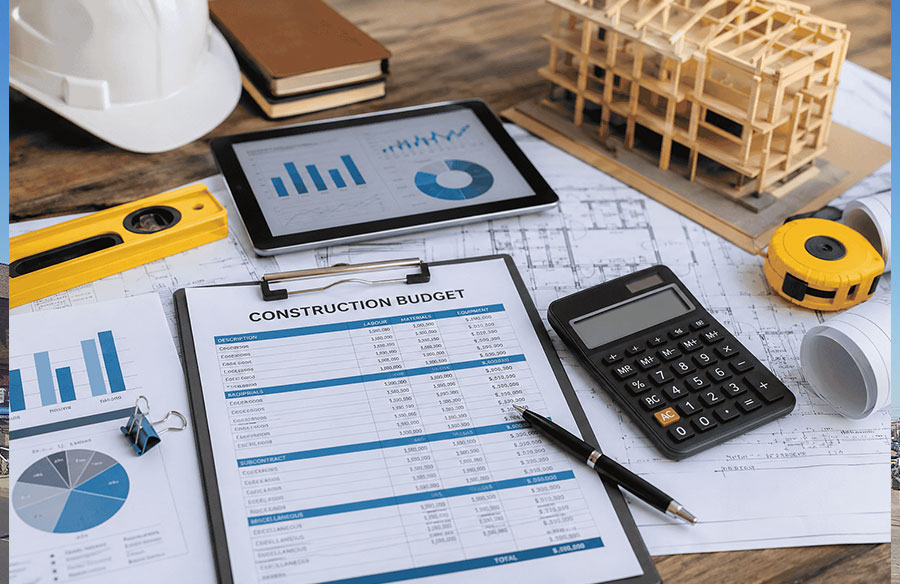
The construction industry has always been shaped by changing material prices, labor availability, economic conditions, and evolving client expectations. Today, however, budgeting has become far more than simply estimating costs before a project begins. It has evolved into a continuous process of planning, monitoring, forecasting, and adapting throughout the entire project lifecycle.
For contractors, developers, architects, and project managers, understanding emerging budgeting trends is becoming a competitive necessity. Every successful project depends on making informed financial decisions while maintaining quality, meeting schedules, and minimizing risk. This is why many professionals now collaborate with a reliable construction estimating company like Blaze Estimating Ltd. during the early planning phase to improve cost accuracy before work begins.
As projects become increasingly complex, contractors are moving beyond traditional spreadsheets and adopting smarter approaches that combine technology, market intelligence, and collaborative planning. This article explores the budgeting trends that are reshaping modern construction and explains why they matter for every contractor.
Why Construction Budgeting Is Evolving
Several factors have transformed construction budgeting over the past few years. Material price volatility, supply chain disruptions, inflation, labor shortages, sustainability requirements, and stricter regulations have all increased financial uncertainty.
A budget prepared six months before construction may no longer accurately reflect real project costs when work begins. Because of this, contractors are placing greater emphasis on flexibility rather than relying solely on fixed estimates.
Modern budgeting is now viewed as an ongoing financial management process that continues from concept design through project completion. Instead of creating one budget at the beginning and revisiting it only when problems occur, successful teams regularly compare forecasts against actual costs and adjust plans accordingly.
This proactive mindset reduces financial surprises and improves decision making throughout the project.
Data-Driven Cost Planning Is Becoming the Standard
One of the biggest shifts in construction budgeting is the growing use of data to improve forecasting.
Historical project information is no longer stored merely for record keeping. Contractors now analyze previous project performance to identify cost patterns, labor productivity, procurement timelines, equipment utilization, and common sources of budget overruns.
This information allows estimators to make more realistic assumptions rather than relying solely on experience.
Data-driven budgeting also enables contractors to:
- Compare similar completed projects
- Identify recurring cost risks
- Improve productivity forecasts
- Estimate contingency requirements more accurately
- Support better decision making during bidding
Companies that consistently collect and analyze project data are often able to produce more reliable budgets over time.
Real-Time Material Price Monitoring
Material costs remain one of the largest sources of uncertainty in construction.
Prices for steel, concrete, timber, insulation, electrical components, and mechanical equipment can fluctuate significantly due to global market conditions, transportation costs, and supply chain disruptions.
Instead of relying on outdated price books, contractors increasingly monitor supplier pricing throughout the planning process.
Real-time pricing helps teams:
- Update estimates before submitting bids
- Reduce pricing assumptions
- Plan procurement strategies earlier
- Lock in supplier agreements when appropriate
- Minimize unexpected cost increases
Budgeting has therefore become closely connected with procurement planning rather than existing as a completely separate activity.
Early Collaboration Between Design and Cost Teams
Traditional construction workflows often separated design from budgeting.
Architects completed drawings first, after which estimators calculated costs. This frequently resulted in expensive redesigns when budgets exceeded client expectations.
Today, early collaboration is becoming standard practice.
Design professionals, estimators, engineers, and contractors increasingly work together from the conceptual stage. Cost information is shared while design decisions are still flexible.
This collaborative approach helps project teams:
- Compare alternative materials
- Evaluate construction methods
- Prioritize client requirements
- Reduce redesign costs
- Improve budget confidence
Rather than limiting creativity, early budgeting supports informed design decisions.
Digital Estimating Tools Continue to Improve Accuracy
Technology is transforming how budgets are developed.
Modern estimating software allows contractors to calculate quantities, update pricing databases, automate repetitive calculations, and generate reports much faster than traditional manual methods.
Digital tools also improve consistency across projects by reducing human error.
Many platforms integrate with scheduling software, procurement systems, accounting platforms, and Building Information Modeling (BIM), creating a connected project environment where financial information can be updated more efficiently.
The result is greater transparency for contractors and clients alike.
Building Information Modeling Supports Better Budget Decisions
Building Information Modeling has become much more than a design tool.
BIM enables project teams to visualize building components while linking quantity information directly to cost calculations.
As designs evolve, quantity changes can be reflected much faster, allowing budgets to remain aligned with project development.
Benefits include:
- More accurate quantity takeoffs
- Better coordination between disciplines
- Reduced duplication
- Improved clash detection
- Better forecasting of construction costs
For contractors working on complex commercial or infrastructure projects, BIM-supported budgeting is becoming increasingly valuable.
Sustainability Is Changing Budget Priorities
Green construction is influencing financial planning across the industry.
While sustainable materials or energy-efficient systems may increase initial construction costs, they often reduce operational expenses over the life of the building.
Clients are increasingly requesting lifecycle cost analysis rather than focusing only on initial construction budgets.
Contractors therefore evaluate:
- Energy efficiency
- Material durability
- Maintenance requirements
- Carbon reduction strategies
- Long-term operating costs
Budget discussions now extend beyond construction to include long-term value.
Risk Management Is Built Into Modern Budgets
Construction projects always involve uncertainty.
Unexpected weather, labor shortages, regulatory changes, design revisions, and supplier delays can all affect project costs.
Rather than treating contingency as a fixed percentage, many contractors now perform structured risk assessments during budgeting.
Potential risks are identified, evaluated, and prioritized according to their financial impact.
This approach helps create contingency allowances that reflect actual project conditions instead of generic assumptions.
The result is improved financial resilience throughout construction.
Cash Flow Planning Receives Greater Attention
Winning a project does not guarantee financial success.
Even profitable projects can experience cash flow challenges if payment schedules, procurement costs, and labor expenses are not carefully managed.
Contractors increasingly prepare detailed cash flow forecasts alongside overall project budgets.
These forecasts help organizations:
- Schedule purchases efficiently
- Manage subcontractor payments
- Monitor monthly expenditures
- Reduce financing costs
- Improve financial stability
Cash flow planning has become a critical component of project budgeting rather than an afterthought.
Clients Expect Greater Cost Transparency
Modern clients want more visibility into how project budgets are developed.
Instead of receiving only a final number, they increasingly request detailed breakdowns of labor, materials, equipment, subcontractors, overheads, contingencies, and assumptions.
Transparent budgeting improves trust between contractors and clients.
It also supports faster decision making when project changes occur because stakeholders already understand where costs originate.
Contractors who communicate budget assumptions clearly are often better positioned to manage expectations throughout construction.
Scenario Planning Helps Contractors Prepare for Change
Construction rarely proceeds exactly as planned.
Because of this uncertainty, many contractors now prepare multiple budgeting scenarios during project planning.
For example, teams may evaluate:
- Higher material prices
- Extended project durations
- Alternative construction methods
- Labor shortages
- Design modifications
Scenario planning allows project teams to understand the financial impact of different situations before they occur.
Rather than reacting under pressure, contractors can respond with informed decisions supported by prior analysis.
Artificial Intelligence Is Supporting Cost Forecasting
Artificial intelligence is gradually entering construction budgeting.
Although experienced estimators remain essential, AI tools can analyze thousands of historical data points much faster than manual processes.
Potential applications include:
- Identifying pricing trends
- Predicting project risks
- Improving quantity verification
- Forecasting labor productivity
- Detecting unusual cost variations
These technologies are designed to support professional judgment rather than replace experienced construction professionals.
As adoption increases, AI will likely become another valuable decision-support tool within budgeting workflows.
Skilled Estimators Continue to Play a Critical Role
Despite rapid technological advancement, successful budgeting still depends on professional expertise.
Experienced estimators understand practical construction methods, local market conditions, supplier behavior, labor productivity, and project-specific risks that software alone cannot fully evaluate.
Their knowledge becomes especially valuable during:
- Conceptual budgeting
- Value engineering
- Tender preparation
- Scope reviews
- Change order evaluation
Technology provides speed, but experienced professionals provide context.
The strongest budgeting processes combine both.
Knowledge Sharing Is Strengthening Industry Practices
The construction industry increasingly benefits from shared knowledge among contractors, consultants, engineers, and estimating professionals.
Many organizations publish technical articles, project case studies, and educational resources that help improve industry standards.
For example, firms such as Blaze Estimating LTD frequently contribute professional insights into estimating practices, cost planning methodologies, and project budgeting discussions. Rather than serving purely as service providers, organizations like these help expand industry understanding by sharing practical experiences that contractors can learn from when improving their own budgeting processes.
Knowledge sharing ultimately benefits the wider construction community by encouraging more consistent and informed financial planning.
Budgeting Is Becoming a Continuous Process
Perhaps the most important trend is the shift away from treating budgeting as a one-time activity.
Successful contractors now monitor project costs continuously from design through closeout.
Budgets are regularly updated using:
- Actual project expenditures
- Supplier quotations
- Schedule changes
- Design revisions
- Productivity reports
- Market price movements
Continuous monitoring allows issues to be identified early, giving project teams more opportunities to implement corrective actions before costs escalate.
This ongoing approach improves financial control while supporting better project outcomes.
Looking Ahead
Construction budgeting will continue evolving as technology advances, sustainability expectations grow, and market conditions remain dynamic. Contractors who embrace data-driven planning, collaborative workflows, digital estimating tools, transparent communication, and continuous financial monitoring will be better prepared to manage uncertainty.
At its core, effective budgeting is not simply about producing accurate numbers. It is about enabling better decisions throughout every stage of a project. Whether planning a residential development, commercial facility, or major infrastructure project, contractors who understand these emerging budgeting trends will be better positioned to control costs, reduce risk, and deliver greater value for clients.
As the industry continues to modernize, budgeting will increasingly serve as a strategic management function that supports resilience, efficiency, and long-term project success rather than acting only as a preconstruction exercise.