Protecting a commercial property involves more than installing cameras or locking the main entrance. Businesses need reliable ways to control who enters their buildings, restrict access to sensitive areas, and monitor activity throughout their facilities. This is where modern commercial access control systems play an important role.
From office buildings and healthcare facilities to warehouses, retail properties, and apartment communities, electronic access management gives organizations greater control over their physical security. Instead of relying entirely on traditional keys, businesses can use key cards, mobile credentials, keypads, and cloud-based platforms to manage entry permissions.
Understanding how these technologies work can help property owners and facility managers choose a solution that supports their operational requirements while improving security.
What Are Commercial Access Control Systems?
Commercial access control systems are electronic security solutions that determine who is authorized to enter a building, individual room, or restricted area. They combine physical equipment with management software to verify credentials and control access through designated entry points.
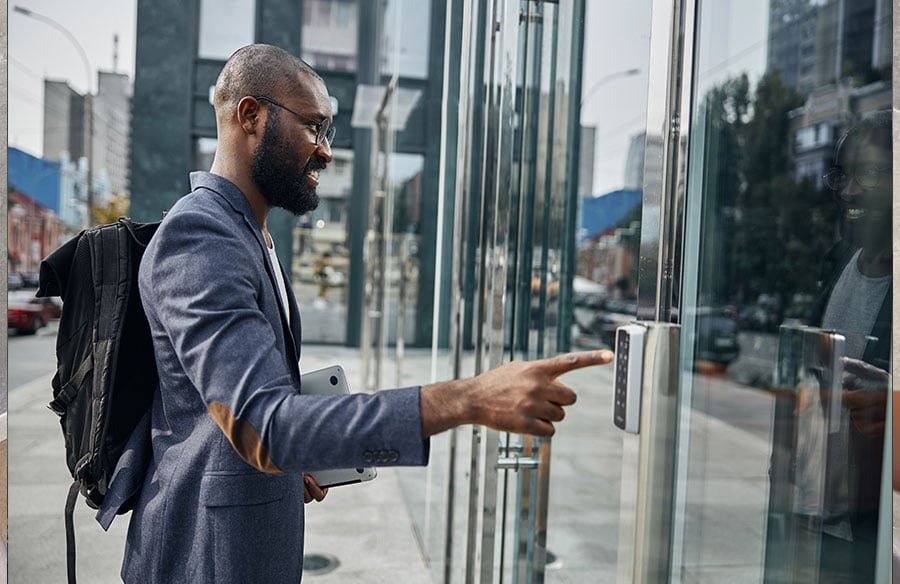
A typical system includes electronic door locks, access card readers, controllers, credentials, and software used to configure permissions. When an employee presents an authorized card, enters a PIN, or uses a mobile credential, the system checks their permissions before allowing the door to unlock.
Administrators can assign different access levels depending on an individual’s responsibilities. For example, employees may enter general office areas, while management and authorized personnel receive access to server rooms, storage areas, or other restricted spaces.
This approach makes security access control more flexible than traditional key-based systems. When an employee leaves the organization or changes departments, administrators can update or revoke their permissions without replacing physical locks throughout the building.
Understanding Different Types of Access Control Doors
Access control doors are entry points equipped with electronic hardware that allows businesses to regulate access. The appropriate configuration depends on the building layout, existing door hardware, security requirements, and the number of people using the facility.
Several technologies are commonly used:
- Key card readers: Employees and authorized visitors use assigned access cards to unlock designated doors.
- Key fob systems: Small electronic devices provide convenient credential-based entry without requiring traditional keys.
- Keypad access: Users enter an authorized PIN code to gain access to a secured area.
- Mobile credentials: Smartphones communicate with compatible readers, allowing employees to use digital credentials instead of physical cards.
- Magnetic locks: Electromagnetic locking devices secure compatible doors and can be incorporated into appropriately designed access control systems.
- Electric strikes: These devices allow an electronic access system to control the release of a compatible door latch.
The right combination depends on the type of entrance, expected traffic, and operational requirements. A small office may only need one controlled entrance, whereas a warehouse or multi-building commercial property may require coordinated access across numerous doors and gates.
Why Businesses Are Moving Beyond Traditional Keys
Traditional keys can create management challenges, particularly in buildings with multiple employees, tenants, contractors, and visitors. Keys can be lost, copied, or forgotten, and replacing locks after a security incident can become expensive.
Modern commercial access control systems address many of these limitations by allowing administrators to manage credentials electronically.
One important advantage is the ability to grant or revoke permissions quickly. If an employee leaves, their credentials can be deactivated without changing every physical lock. Businesses can also establish schedules that determine when specific users are allowed to enter particular areas.
Another benefit is improved visibility. Access activity reports can show which credentials were used, when entry occurred, and whether an access attempt was approved or denied. This information can help administrators investigate unusual activity and maintain better oversight of their facilities.
The Benefits of Cloud-Based Access Management
Cloud-based access control has made building security easier to manage, especially for businesses operating multiple locations.
Instead of relying entirely on on-site management systems, authorized administrators can use an online platform or mobile application to manage doors, credentials, and access permissions remotely.
Depending on the system, available features may include:
- Remote door locking and unlocking.
- Adding, removing, and updating employee credentials.
- Customized access schedules.
- Real-time notifications and system alerts.
- Searchable activity logs and audit trails.
- Centralized management of multiple buildings.
For property managers and business owners, these capabilities can reduce the need for on-site administrative changes. They also make it easier to respond when employees, tenants, or contractors require updated access permissions.
Integrating Access Control with Other Security Systems
Access control becomes even more useful when connected with other building security technologies. Integrating electronic doors with security cameras, video intercoms, gates, and fire alarm systems can provide a more coordinated approach to facility protection.
For example, connecting security cameras with access events allows authorized personnel to review video footage associated with a particular door entry. This can help verify who entered a restricted area or investigate a denied access attempt.
Video intercom integration can also improve visitor management. Reception staff can communicate with visitors, verify their identity, and release approved doors remotely.
Fire alarm integration is another important consideration. Access-controlled doors must support the building’s approved emergency operation and safe egress requirements. Depending on the door hardware and system design, designated magnetic locks or other secured entry points may need to release during an emergency.
Professional system design, installation, and testing help ensure that connected technologies operate according to the building’s requirements.
Choosing the Right Access Control Provider
Selecting an access control provider is an important part of implementing an effective security strategy. Businesses should consider the provider’s experience with commercial properties, available technologies, installation capabilities, and ongoing technical support.
A professional assessment should examine the number of doors, existing locks, electrical requirements, wiring, network infrastructure, and the way employees and visitors move throughout the property.
CFA Security provides customized commercial access control solutions for businesses throughout Metro Atlanta, North Georgia, and other areas of Georgia. Its services include new system installation, access control repairs, upgrades, cloud-based management, and integration with other security technologies.
The company works with different types of commercial properties, including offices, warehouses, healthcare facilities, retail locations, and multi-family communities. Its solutions can incorporate key cards, key fobs, keypads, mobile credentials, electronic locks, and centralized access management.
Businesses looking to improve their entry management can explore CFA Security’s commercial access control systems to learn more about available technologies and installation options.
Can Existing Doors Be Upgraded with Electronic Access Control?
In many cases, businesses do not need to replace every door to introduce electronic access management. Existing doors can often be upgraded, depending on their condition, frames, locking mechanisms, wiring, and compatibility with the proposed equipment.
A professional inspection helps determine which components can be retained and which need replacement. This can make upgrading an existing facility more practical than installing an entirely new system.
As business requirements change, additional readers, doors, credentials, or management features can also be incorporated into a compatible system.
Frequently Asked Questions About Commercial Access Control
How do commercial access control systems work?
Commercial access control systems verify a user’s credentials before allowing entry through an electronically controlled door. The system checks whether the person has permission to access that location and records the event for administrative monitoring.
What is the difference between key card and mobile access control?
Key card systems use physical cards to authenticate users, while mobile access control uses compatible smartphones as digital credentials. Both can provide controlled entry, but mobile credentials may offer additional flexibility for businesses that prefer managing access digitally.
Can access control systems work with security cameras?
Yes. Compatible access control systems can integrate with video surveillance platforms. This allows authorized personnel to associate door activity with recorded footage, improving security monitoring and incident investigation.
Are cloud-based access control systems suitable for multiple locations?
Yes. Cloud-based platforms can allow administrators to manage users, permissions, schedules, and connected doors across multiple buildings through a centralized interface. The exact capabilities depend on the selected platform and system configuration.
Can access control doors be connected to fire alarm systems?
Yes. Compatible access control equipment can be integrated with fire alarm systems to support approved emergency door-release functions and safe egress. The design and operation must follow applicable building and fire safety requirements.
Build a More Controlled and Secure Commercial Environment
Effective building security requires a solution that supports both protection and everyday operations. Commercial access control systems help businesses manage entry permissions, reduce dependence on physical keys, monitor access activity, and coordinate security across multiple doors and locations.
Whether a business needs a single controlled entrance, a multi-door installation, or an integrated cloud-managed solution, the right technology should be selected around its building layout and operational needs.
With professional planning, installation, and ongoing support from an experienced provider such as CFA Security, businesses can establish a more manageable and scalable approach to protecting their people, property, and assets.