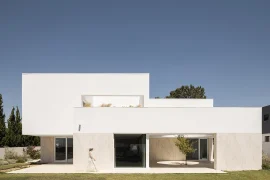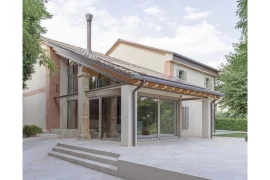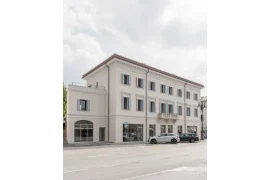
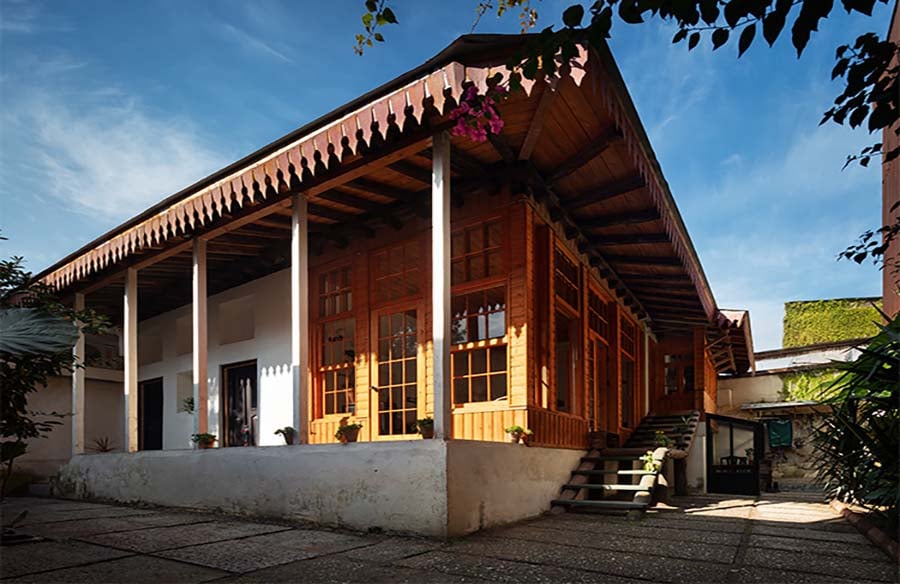
This century-old house project is located in the heart of the city of Rasht and its historical context. The structure and components used in this building, including the clay roof and the load-bearing wall made of clay, have made it unique and has stood for many years.
Project Name: Club House
Studio Name: Ronak Roshan Office
Location: Rasht, IR
Architect and restorer: Ronak Roshan gilvaei
Client: Amir Tehrani, Omid Mahdavian
Photo credit: Studio Nimkat

One of the defining features of this building is the varying height of its rooms, resulting in a division of the house into lower and upper half floors and an appealing layout.
In the face of restoration and renovation challenges, the comfort and modern amenities of the new residents were taken into consideration.

One essential aspect of interior design is the inclusion of a kitchen and bathroom, as well as a semi-open middle space that can serve as a versatile work area. This allows for new residents to have access to modern amenities and the opportunity to explore new spaces.
One of the shortcomings of this house is the lack of communication space between the lower half floor and the main porch. This has been addressed by creating a few stairs to connect the two areas. Additionally, a glass roof box has been added to the exterior of the kitchen space. This not only provides a new and unique space, but also allows the residents to have a direct connection to the yard and living space through the opening created.

One of the challenges faced during the restoration of this building was the unpredictable amount of damage and crumbling of the foundation. Additionally, the load-bearing wall had deviated due to moisture, while also needing to maintain the clay roof’s effectiveness against the continuous rains of Rasht. Furthermore, the walls had suffered damage from moisture, causing them to collapse and lose their load-bearing capacity on two and a half floors. To address this, in-situ installation with new pressure bricks was used to restore the load-bearing capacity to its original state. Another element of the restoration was the construction of “abushka”, which utilized wood and glass materials for the porch and iron, glass, and brick materials for the front entrance of the kitchen.

This type of window, known as “ABUSHKA” in Russian, is a defining feature of the urban architecture in Guilan. It has been a prominent element in buildings for the past century. The “ABUSHKA” was added during the second phase of the house’s restoration and is made up of three slats. The upper slat, called “Khafang”, is fixed with rails on both sides, while the other two slats are adjustable to allow for different sizes of window openings. The stairs in this house were originally built with a wooden trunk, but were later replaced with concrete. For the restoration, it was decided to use a recycled wooden trunk with special details and pin connections to maintain the traditional style. The use of wood, crotch, and tongue in the structure, as well as new wooden boards on the stairs, will give the house a lighter and more authentic feel.
The entire main roof of this building is made of more than a hundred years old clays, arranged side by side without any connection with a 40% slope. In the old days, most of the roofs of urban houses in Rasht were made of these materials and details.

After one year of being a residential house, this property has been transformed into a shared workspace with two separate rooms and a common space for meetings and events.