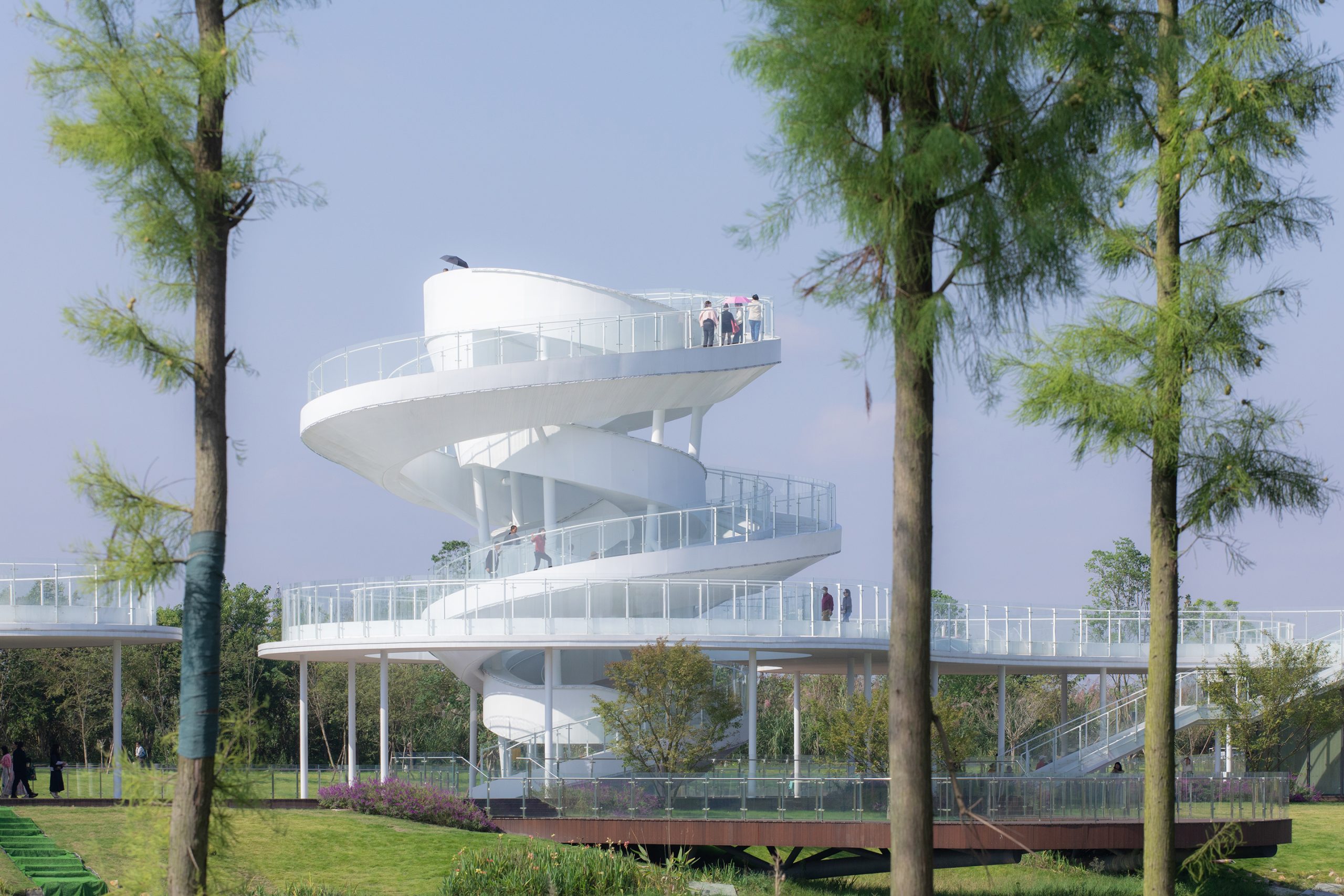
Lujiatan Wetland Park Commercial Service Center designed by MUDA-Architects, situated in Wenjiang District, Chengdu City. Wenjiang, the cradle of the ancient Shu – Yufu dynasty, boasts a rich historical legacy. Once known as “City of Willows,” with its advantageous geographical location and abundant natural resources, it has historically attracted the convergence of humanities and nature.
Project Name: Lujiatan Wetland Park Commercial Service Center
Studio Name: MUDA Architects
Location: Wenjiang, Chengdu, China
Project Time: 2022.02-2024.10
Building Area: 1440 sqm
Status: Built
Design Team: Lu Yun, Li Aidong, He Fan, Li Hao, Rong Dian, Fu Yao
Image Credits: ©Arch-Exist, ©DONG Image
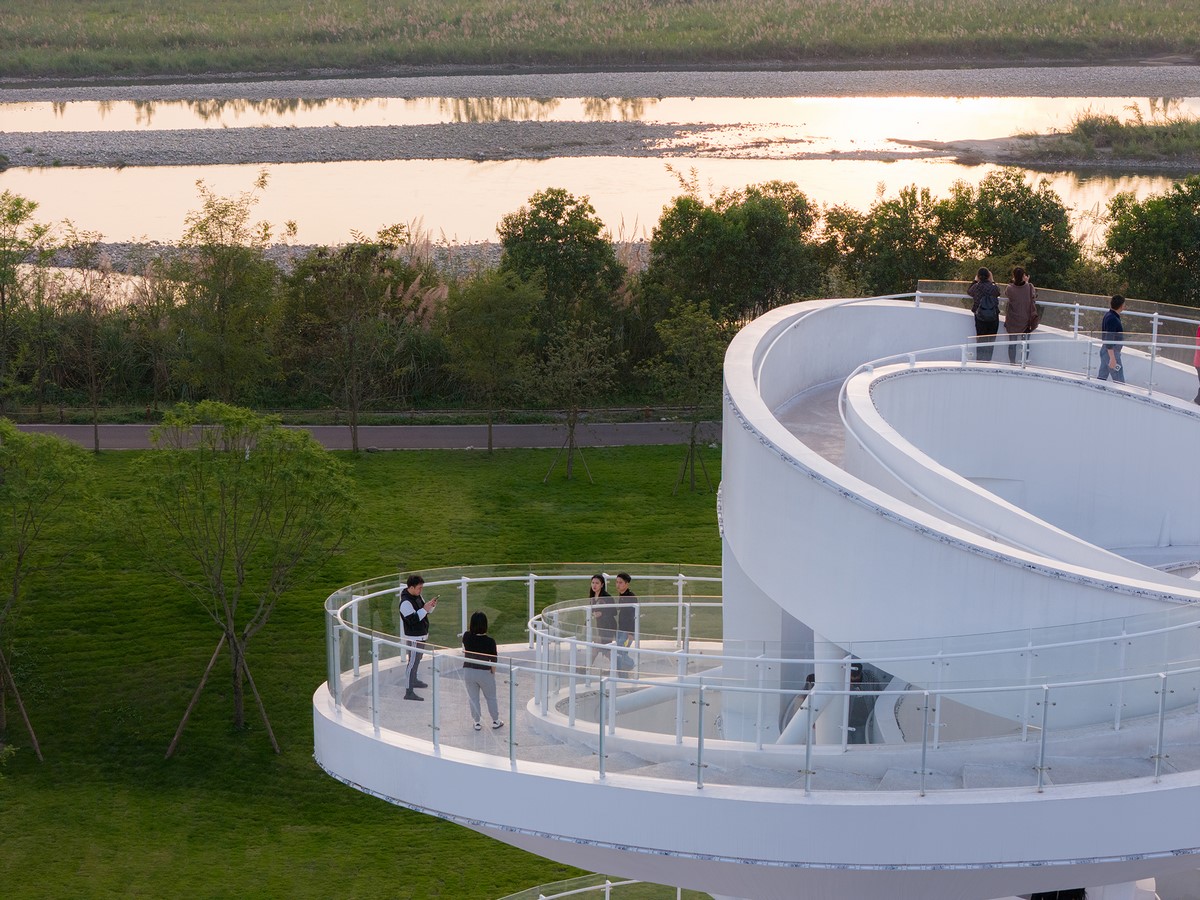
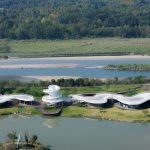
Nestled amidst the lush greenery and tranquil waters of Lujiatan Wetland Park, the site enjoys the embrace of the Jinma Rivers, interlaced by meandering greenways that carve a scenic ecological heartland. In recent years, the park’s unique natural charm and excellent transportation location has emerged it as a coveted destination for weekend escapades in Chengdu. This project seeks to harness the park’s natural gifts and Wenjiang’s cultural characteristics. By crafting a multifunctional space that integrates commerce, ecology, and leisure lifestyle to brings innovative vitality into the city while offering visitors an immersive experience of nature and modernity in harmony.
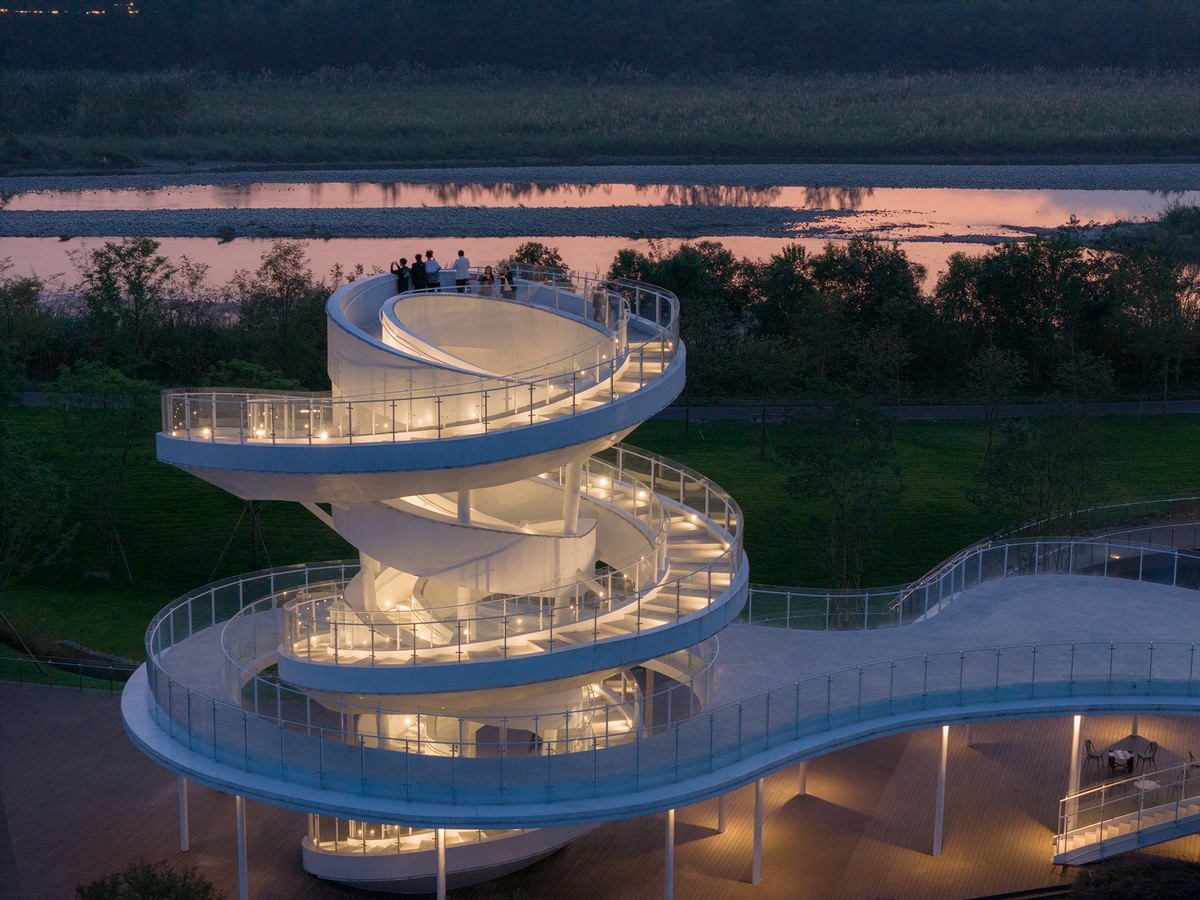
Rivers, the cradle of human civilization, capture the sediment of time and the evolution of nature. The Jinma River, a principal flood control channel of Dujiangyan city and a pivotal tributary of the Minjiang River, symbolizes the deep interconnection between humanity and nature. MUDA-Architects drew inspiration from the river’s geographical context, after the meticulous analysis, abstractly translating them into some rhythmic, flowing architectural forms. Within a contemporary design language, the architecture not only respects the ecological essence of the site but also accentuates the distinctive charm of Wenjiang’s local culture.
The project emphasizes a dialogue between nature and modern design techniques, avoiding simple symbolism or the replication of traditional architectural forms. Through the abstraction of natural motifs, the design reinterprets the site’s historical narrative in a contemporary context. Balancing lightness and ecological integrity, the building integrates seamlessly with the surrounding wetland landscape, establishing a contemporary architectural landmark for the region.
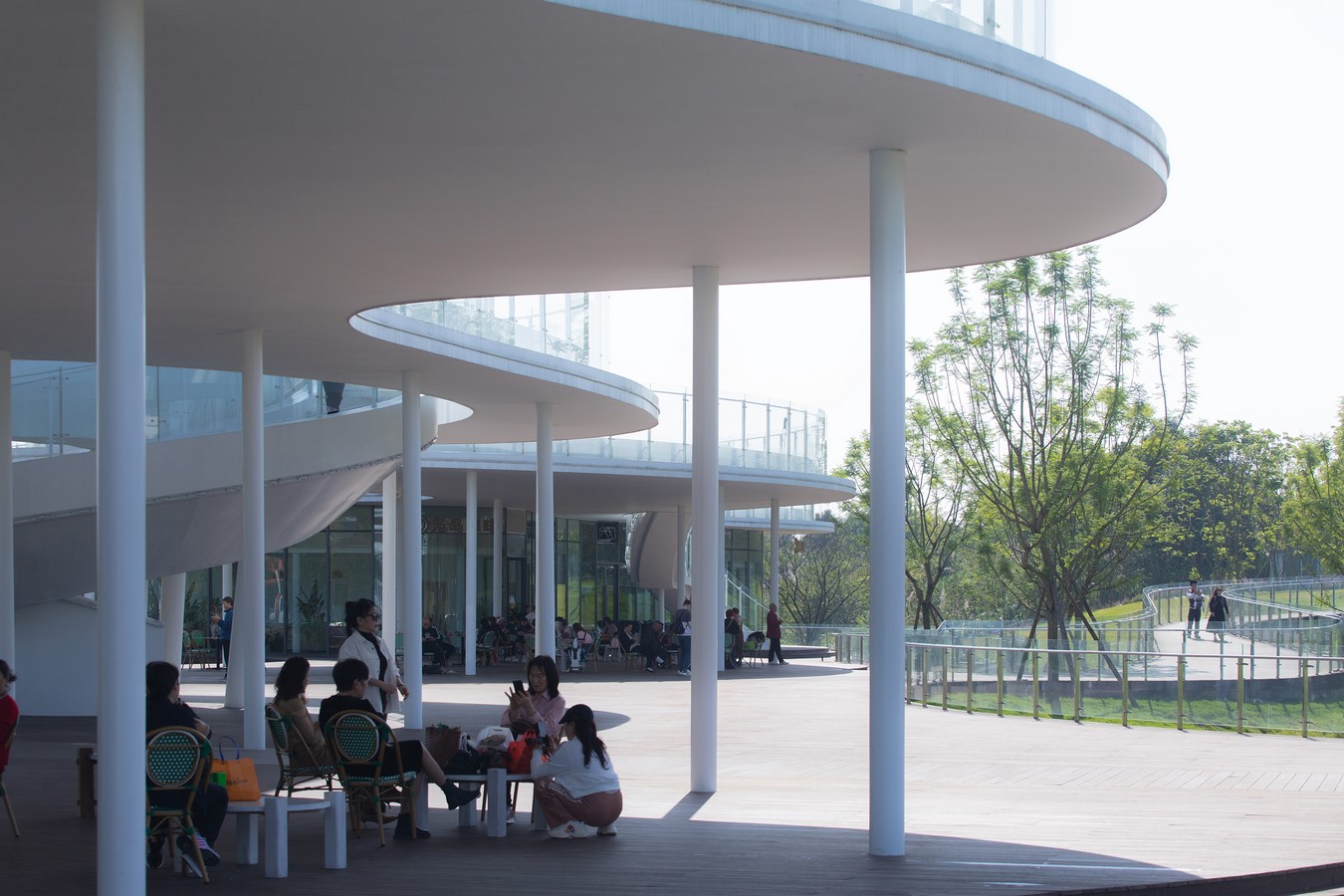
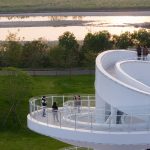
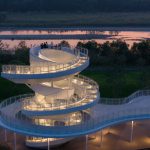
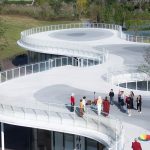
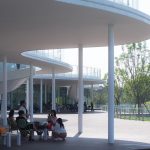
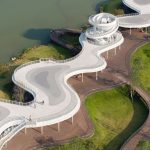
Drawing from the spatial archetype of the “pavilion” in traditional Chinese gardens, the design reimagines the relationship between “roof” and “column” through modern techniques, creating a lightweight and transparent architectural outline. Fluid curves inspired by riverside textures define the structure, while the horizontal roof, clad in white metallic panels, and transparent glass facades yield an impression of ‘floating on wate’ , blending effortlessly into the wetland’s natural surroundings.
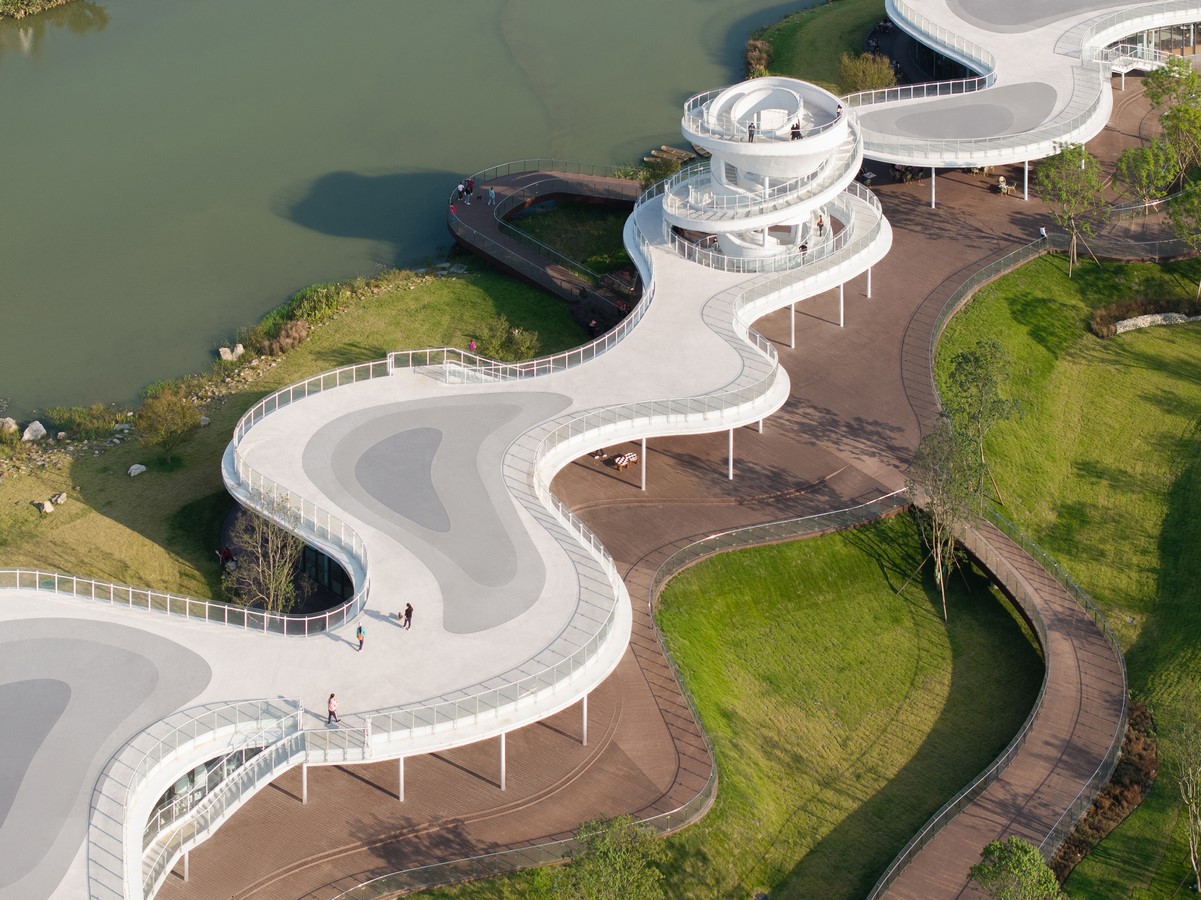
Breaking from conventional “roadside shop” layouts, the project adopts a modular approach, deconstructing and reorganizing spatial elements to transcend fixed boundaries. Streamlined design interconnects functional zones, inviting visitors to navigate the space with a sense of exploration. The fluid pathways enhancethe site’s accessibility and actively engage visitors to participate.