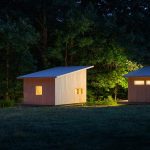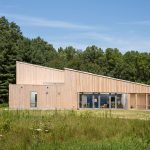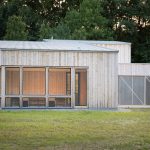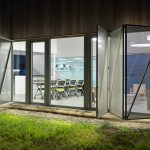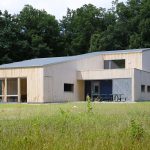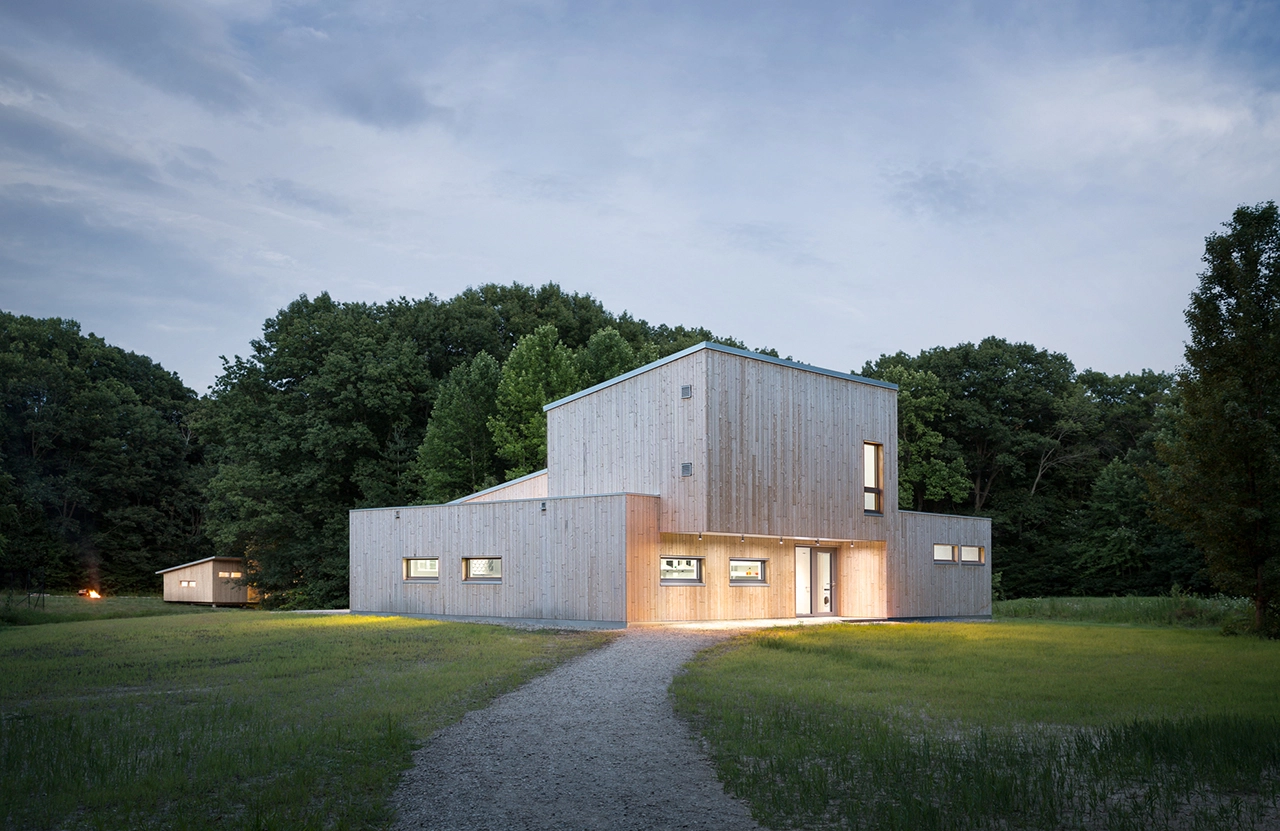
The Warren Woods Ecological Field Station, designed for the University of Chicago’s Department of Ecology and Evolution, is North America’s first and only Certified Passive House laboratory facility.
Project Name: Warren Woods Ecological Field Station
Studio Name: OPAL
Location: Three Oaks, Michigan
Photography: Trent Bell Photography
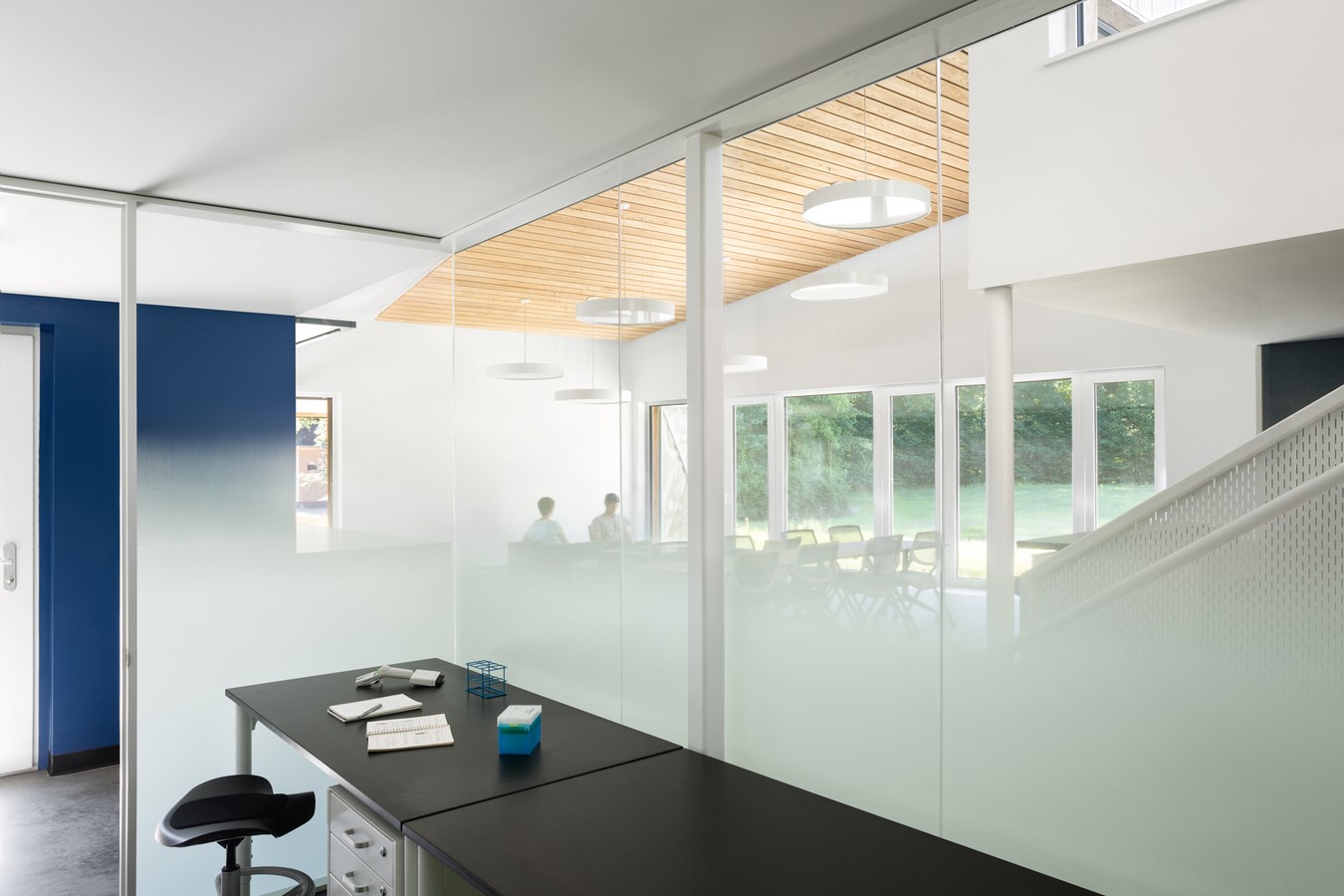
At 2,400 square feet, it demonstrates how research spaces can achieve the highest energy-performance standards while fostering scientific discovery, education, and community engagement. Set within a 42-acre site in southwest Michigan, the station offers an ideal environment for studying the complex challenges of ecology and human adaptation in the Anthropocene.
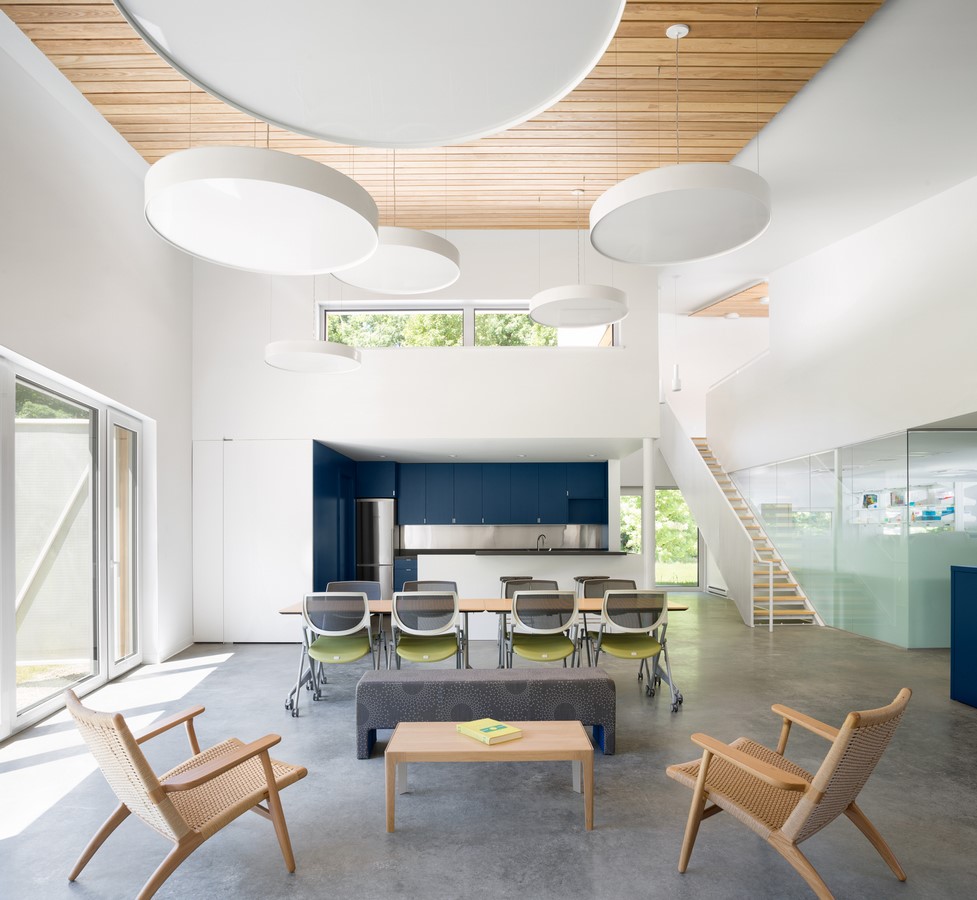
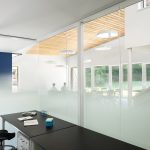
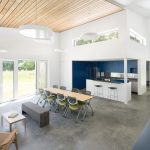
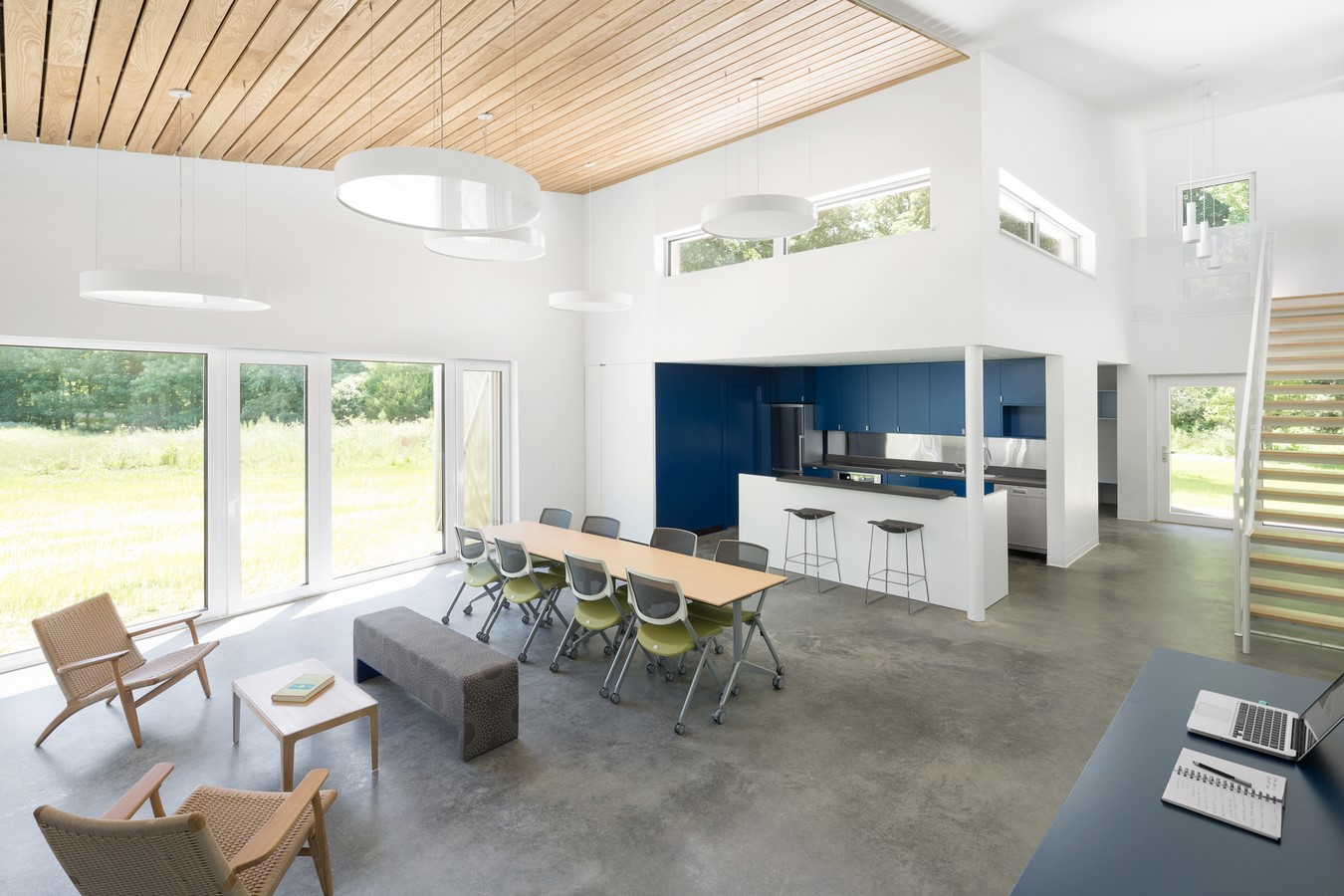
The facility includes a fully equipped laboratory, seminar room, bathrooms, and a small kitchen. A second-floor loft and roof deck provide flexible space for retreats and gatherings, supported by three nearby bunkhouses and a wash house for seasonal field programs. Daylit interiors are carefully calibrated to balance technical requirements and occupant comfort, accommodating advanced research equipment without compromising Passive House performance.
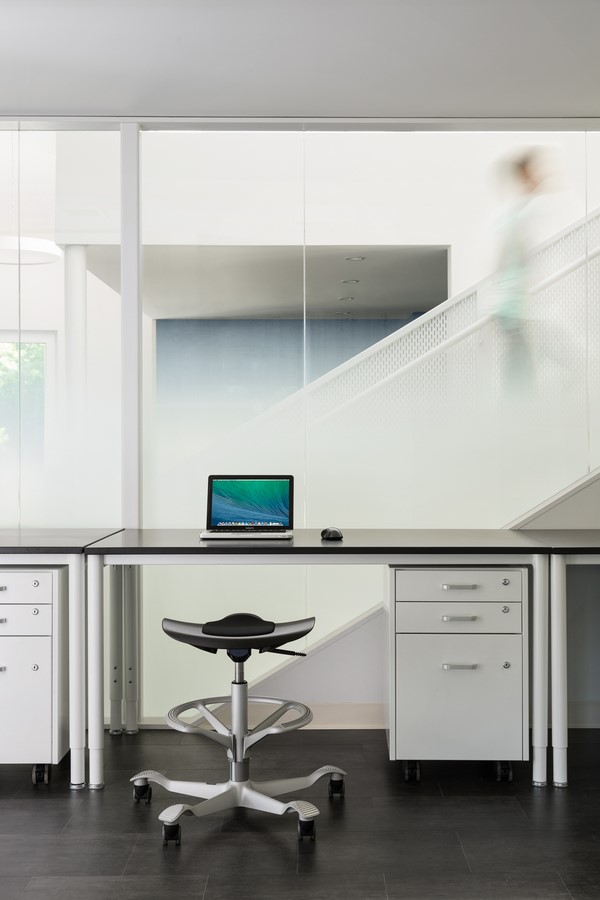
Energy efficiency and programmatic demands guided every design decision. Laboratories occupy the cooler northwest corner to help offset heat from plant-growth chambers, ultra-low-temperature freezers, and DNA extraction tools. A deep roof overhang shields west-facing glazing, and a whole-building ventilation system captures or exhausts waste heat as conditions require.
Architecturally, the field station pairs a long shed roof with expansive south-facing glass and operable perforated-metal screens that modulate seasonal solar gain. A super-insulated concrete slab maintains stable interior temperatures throughout the year. Distressed cedar siding wraps the building’s crisp geometric forms, anchoring it in the wooded landscape while expressing its scientific mission.
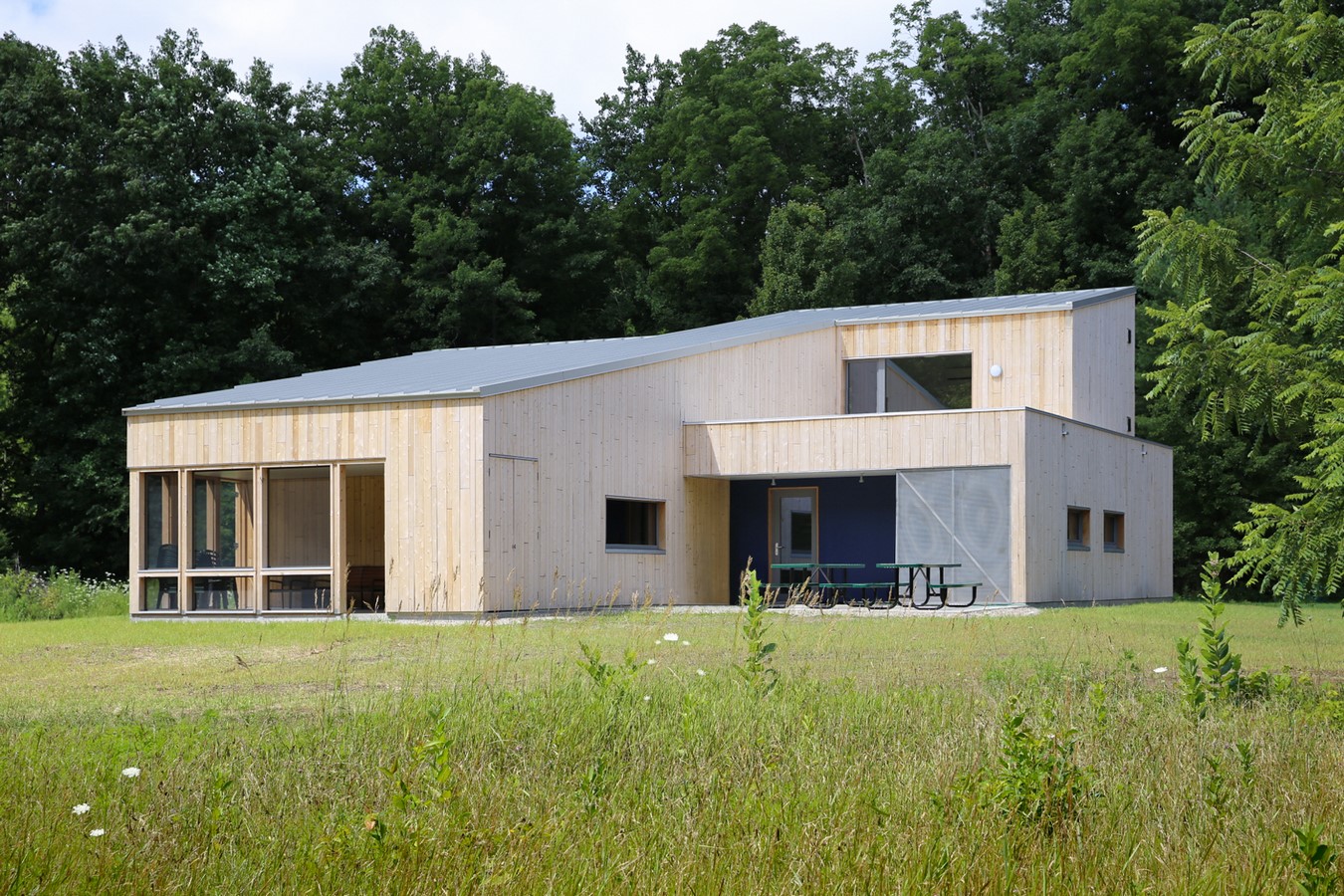
As both a research hub and a model for sustainable design, Warren Woods establishes a new benchmark for high-performance laboratory facilities in remote environments—architecture that unites technical rigor with ecological responsibility.