Modern architecture, often viewed as the reflection of a new age, has been shaped by changes in time, developing technology, societal perspectives, and the impact of wars. The Industrial Revolution, along with new construction techniques, materials, and changing ideas about how people should live and work, contributed to the emergence of modern architecture; over time, various moments continued to shape the architecture that stands today.
Numerous structures behind this evolution have played a part in inspiring and influencing architects all over the world. Yet most of these designs have slowly been forgotten or overlooked. As new structures and styles emerge, over time it becomes easy to gradually forget where it came from.
Modernism, but in India
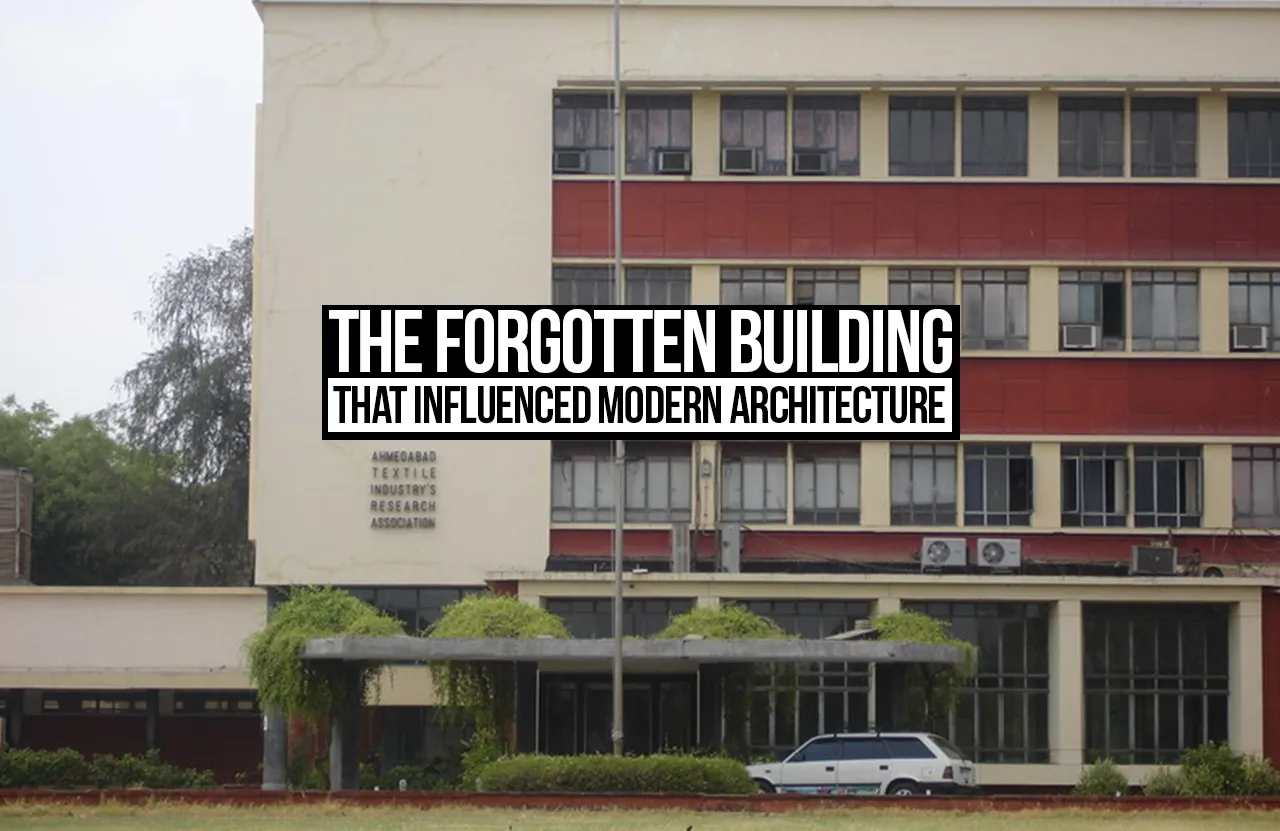
In India, modern architecture has been influenced by ideas taken from various parts of the world, combined with the existing knowledge of designing according to the local context, climate, materials, etc. Some of them became important examples that defined modern architecture in India, while some of them stand forgotten with time. One such example is the Ahmedabad Textile Industry’s Research Association, or ATIRA, designed by Achyut Kanvinde.
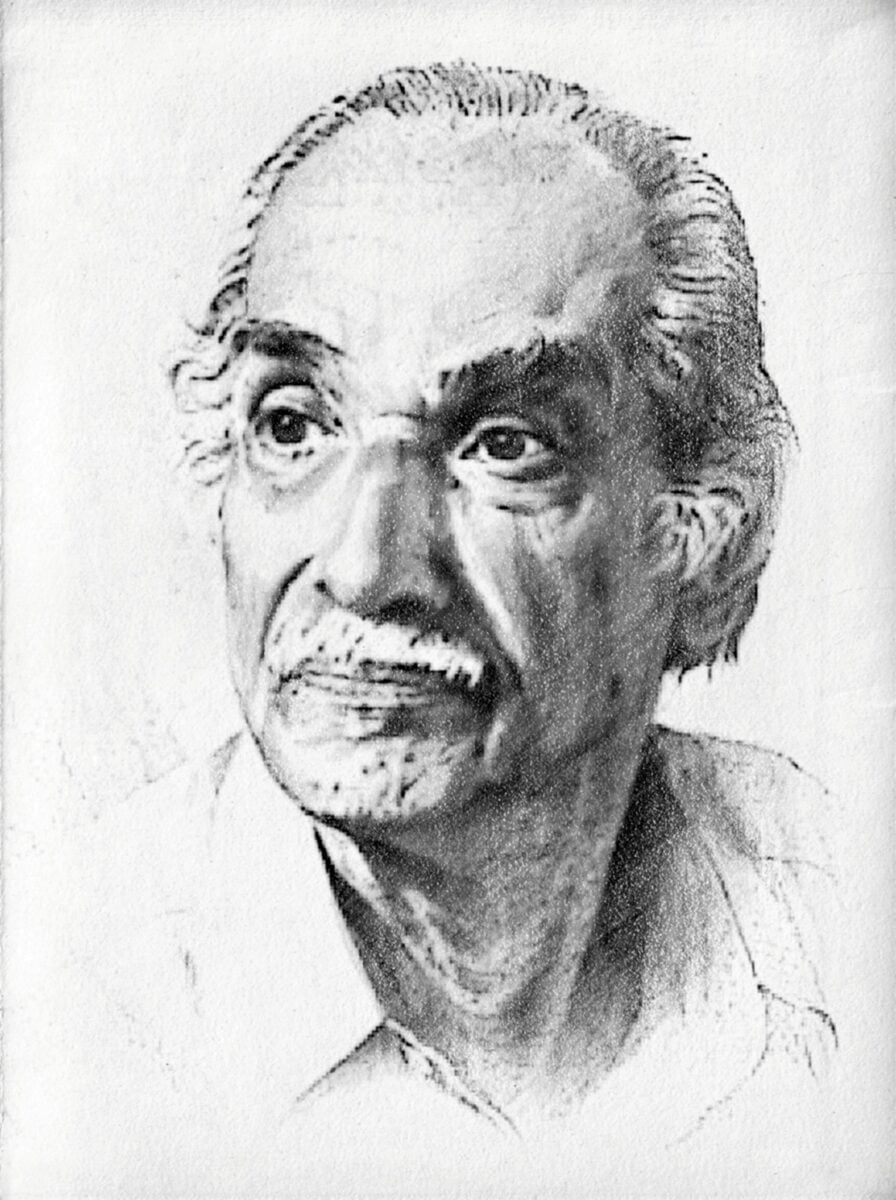
Kanvinde was a renowned architect of post-independence India and had studied under Walter Gropius at Harvard University and was exposed to ideas of modernism internationally and Bauhaus, which he explored and implemented into action after returning to India. He became one of the pioneer indian architect who helped introduce these ideas within the country. ATIRA is a creation like that; having been completed around the early 1950’s, it became one of the early examples of a Bauhaus-influenced structure interpreted in indian context.
The Bauhaus Influence
One of the various moments that shaped modern architecture includes the Bauhaus movement, founded by Walter Gropius in Germany during the early 20th century. It is defined by its departure from ornamentation, which had become an important part of architecture, to favour minimalist functional designs.

In India, the Bauhaus influence became more prominent during the time of independence when the country was on its way towards development away from the colonial past. Architects who studied abroad, alongside pioneers of modernism, brought the ideas back to India.
The Ahmedabad Textile Industry’s Research Association, or ATIRA, stands as one of the early examples of this Bauhaus influence being interpreted in India. Located in Ahmedabad, the building is often overshadowed or confused with the nearby Mill Owners’ Association Building, or ATMA House, designed by Le Corbusier. However, ATIRA has its own place in the history of Indian modern architecture, being one of the lesser-known examples of how ideas influenced from outside can be adapted to the conditions and needs according to the local context.
The Ahmedabad Textile Industry’s Research Association
Designed in the early 1950’s, during the time when Ahmedabad was being developed as an important industrial centre. ATIRA wasn’t designed just as an expression of a new architectural style adapted to the indian context. Its planning was closely connected to its purpose as a research institute; it was created around the work that happened in it. The functionality combined with the principles of Bauhaus became the signature of Kanvinde’s work.
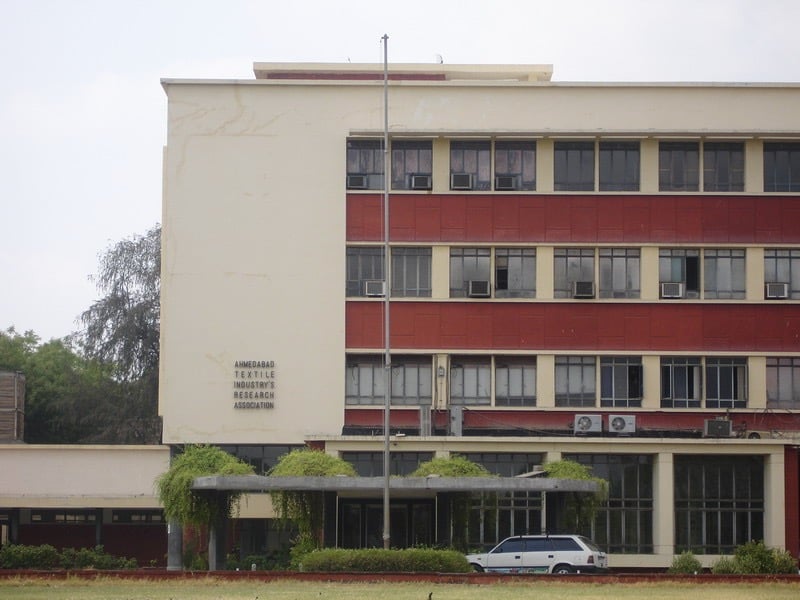
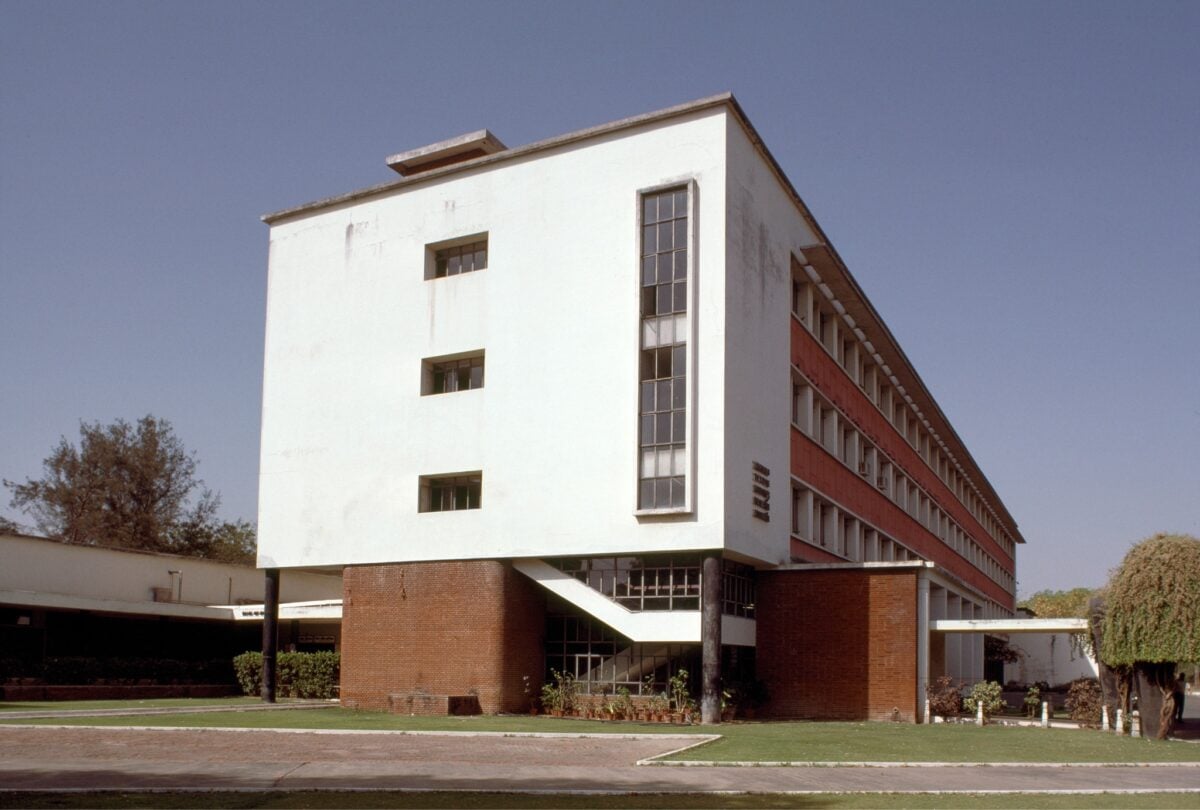
The building is a simple rectangular form with an open, flexible plan allowing different activities to take place. But the influence lies in the facade; instead of heavy ornamentation, the architecture expresses its structure with clean lines, exposed brickwork and fenestration.
But ATIRA was not simply a European-inspired modernist structure that reproduced Gropius’ architecture in Ahmedabad.
The most important aspect is the way the ideas are adapted to the local climatic context. Sunshades on the southern facade and fenestrations on the northern side are not simple decorative additions; they respond to the environmental conditions of the place to help regulate the sunlight entering the building.
Why ATIRA Matters
While ATIRA might not stand out as the most recognisable structure of modern architecture, as it does not have the monumental presence as some other well-known modernist buildings, its importance lies in what it represents.
Its importance does not lie in saying it influenced modern architecture that came after it, but in what it stands for – a representation of international architecture can be shaped by the local conditions to be blended into the context.
While architects such as Le Corbusier, Lous Khan, and B.V. Doshi dominate discussions regarding India’s modern architecture, architects like Achyut Kanvinde contributed to the less celebrated side of this transformation, bringing the movement into everyday functional spaces.
Remembering the forgotten
ATIRA is not a structure designed to be a monument; it is a building designed to work. And perhaps that is why buildings like this are overlooked and hence forgotten.
Modern architecture did not emerge from one movement, one architect or one famous building; it was developed through countless ideas, experiments and structures. While few became famous, the rest quietly disappeared into the background.
Buildings like this show that architecture does not just appear as what we see today, but it is built on what came before it. Including the quieter ones.
References:
Williamson, D. (2016). Modern architecture and capitalist patronage in Ahmedabad, India 1947-1969 – ProQuest. [online] ProQuest.com. Available at: https://www.proquest.com/openview/5ceca4c870c2f6262d3f6ba9efd59efe/1?pq-origsite=gscholar&cbl=18750&diss=y [Accessed 16 Oct. 2026].
Barton, K. (2022). [online] Homedit.com. Available at: https://www.homedit.com/house-styles/bauhaus-architecture/ [Accessed 17 Oct. 2026].
threes13 (2026). Ahmedabad Textile Industry’s Research Association (ATIRA). [online] Scribd. Available at: https://www.scribd.com/document/807665924/Ahmedabad-Textile-Industry-s-Research-Association-ATIRA [Accessed 18 Oct. 2026].
Image source
Figure 1: Achyut Kanvinde
Image: Wikipedia / Sarbjit Bahga
Figure 2. Walter Gropius & Bauhaus Dessau
Image: Homedit
Figure 3. Ahmedabad Textile Industry’s Research Association
Image: Wikipedia / Srikeit
Figure 4. Ahmedabad Textile Industry’s Research Association
Image: MIT Libraries