Paris’ Grand Palais captured by Paul Clemence
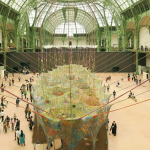
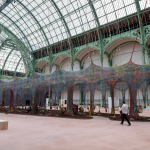
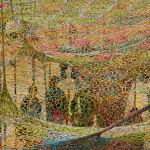
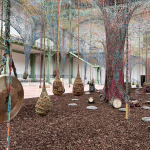
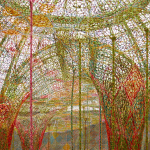
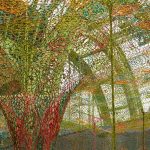
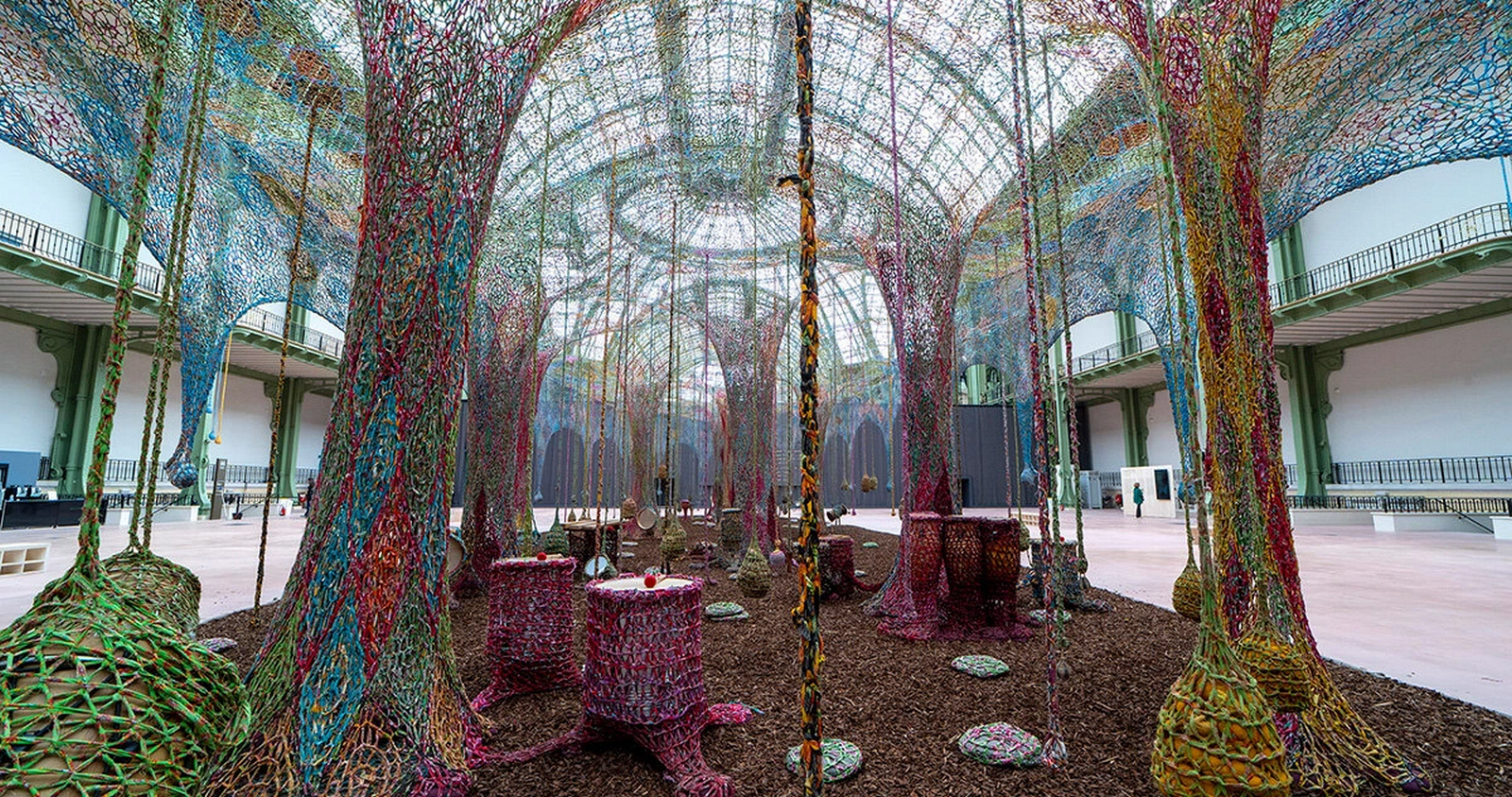
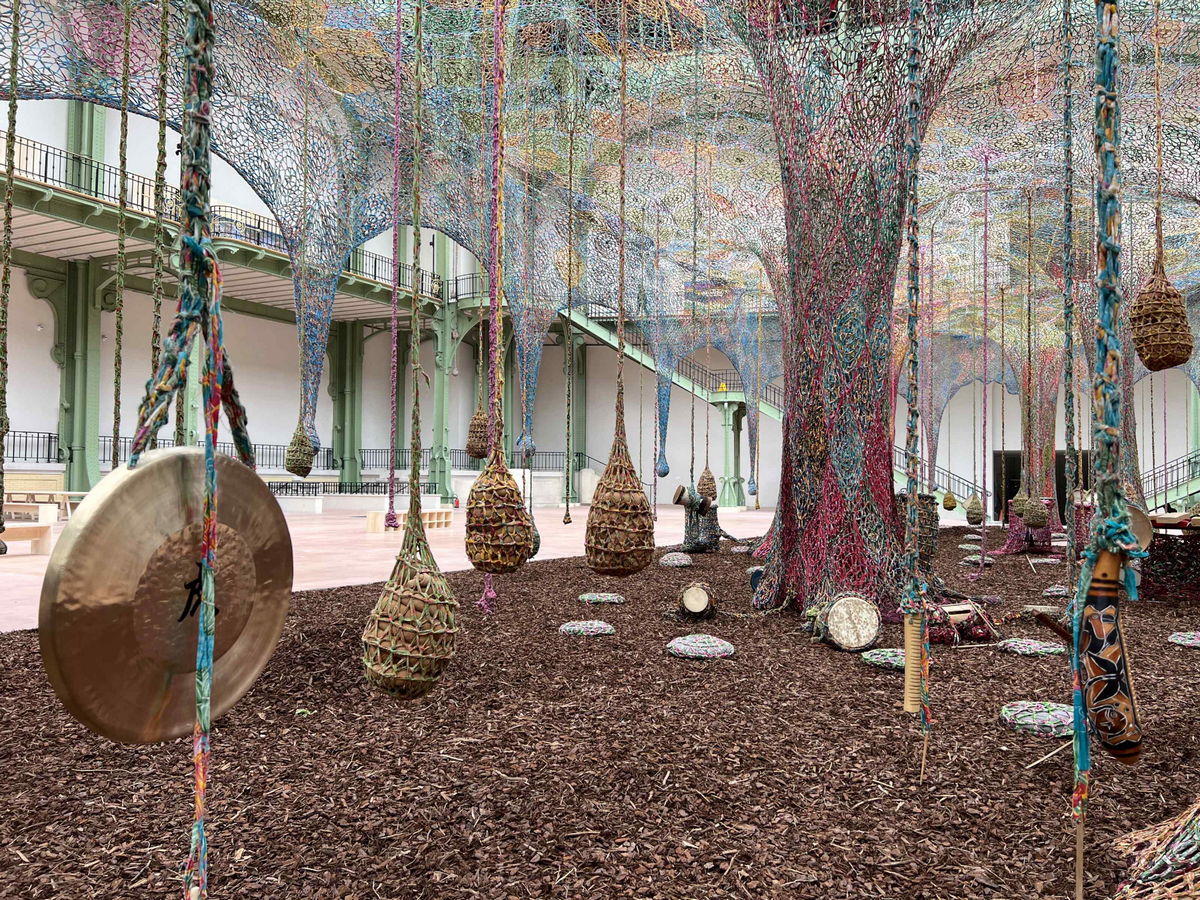
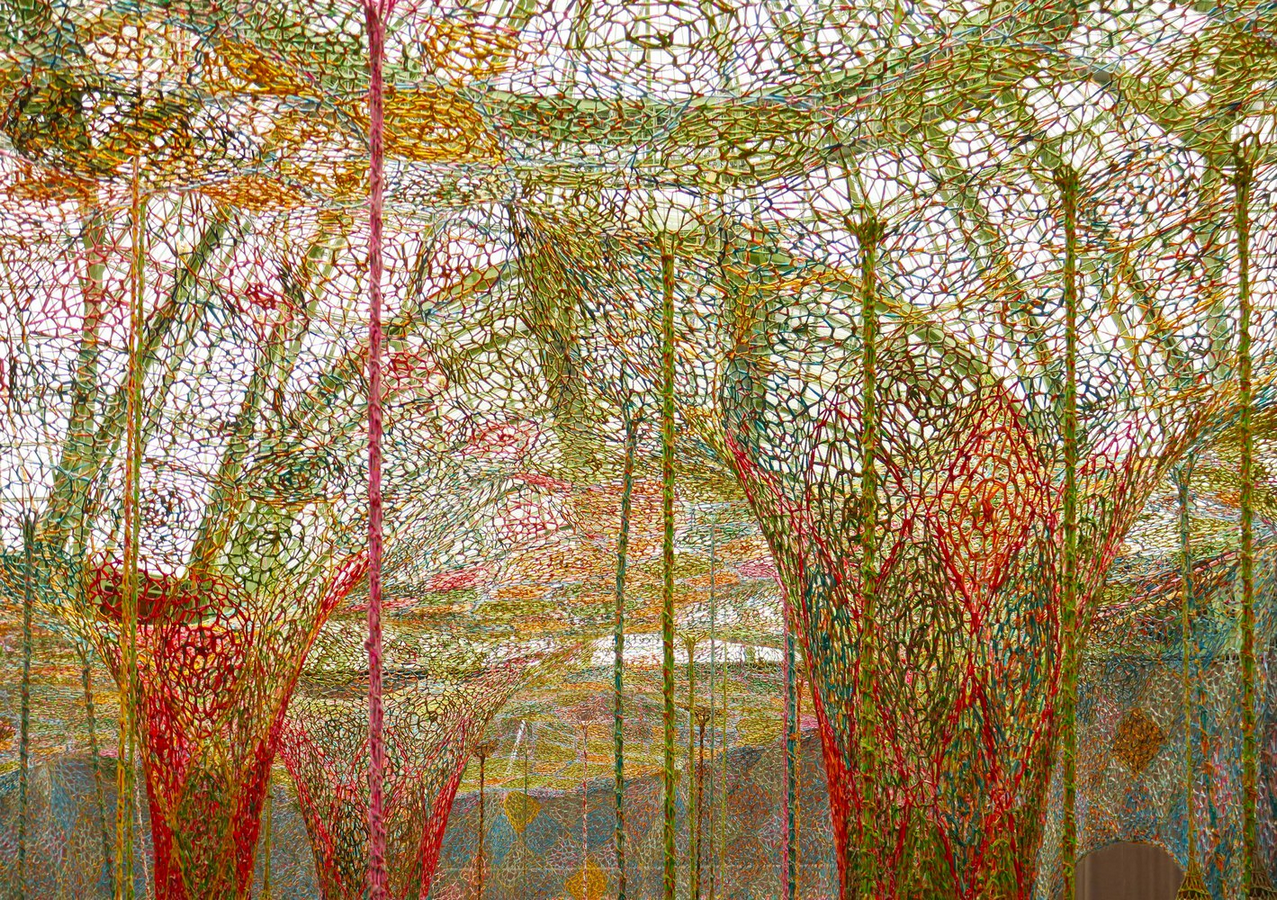
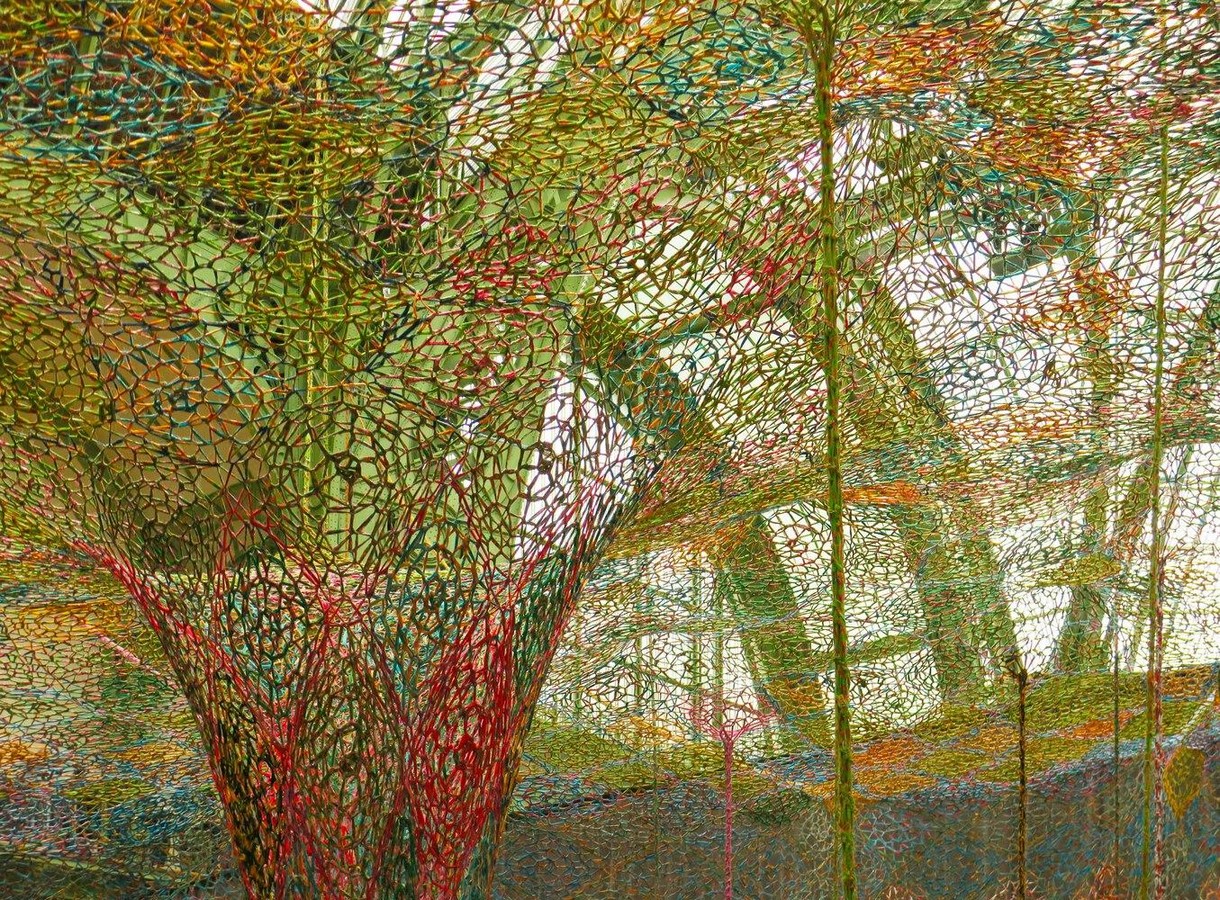
Visual art installations serve as a multidimensional interactive forum, capable of engaging users and activating the surrounding space. A compelling example is the Nosso Barco Tambor Terra, a herculean handwoven installation by the Brazilian artist Ernesto Neto, suspended beneath the glass-iron canopy of the Grand Palais, restored by Chatillon Architectes. Occupying the northern nave, the canopy gradually reorients the visitors and modulates how they move and engage within the space.
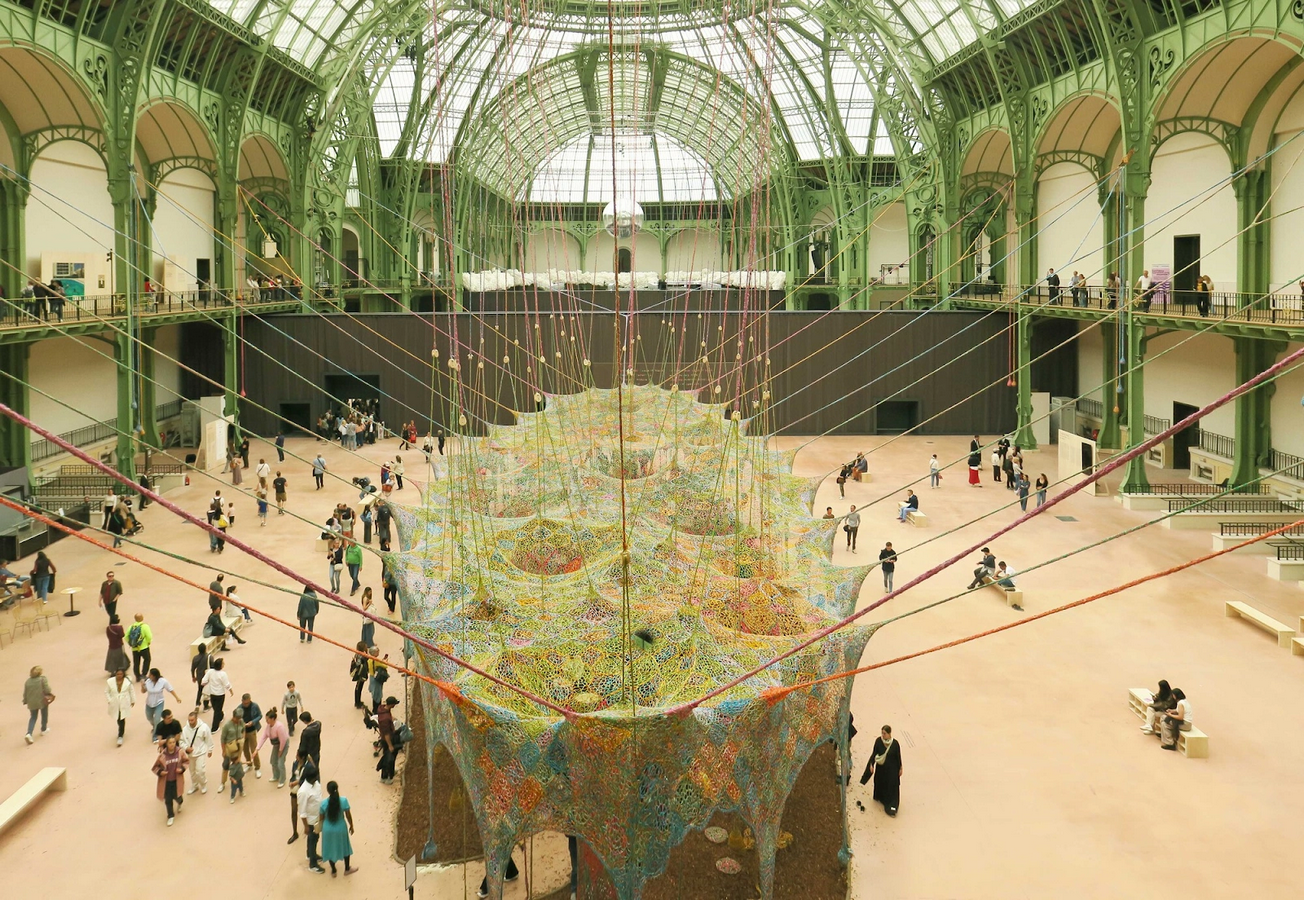
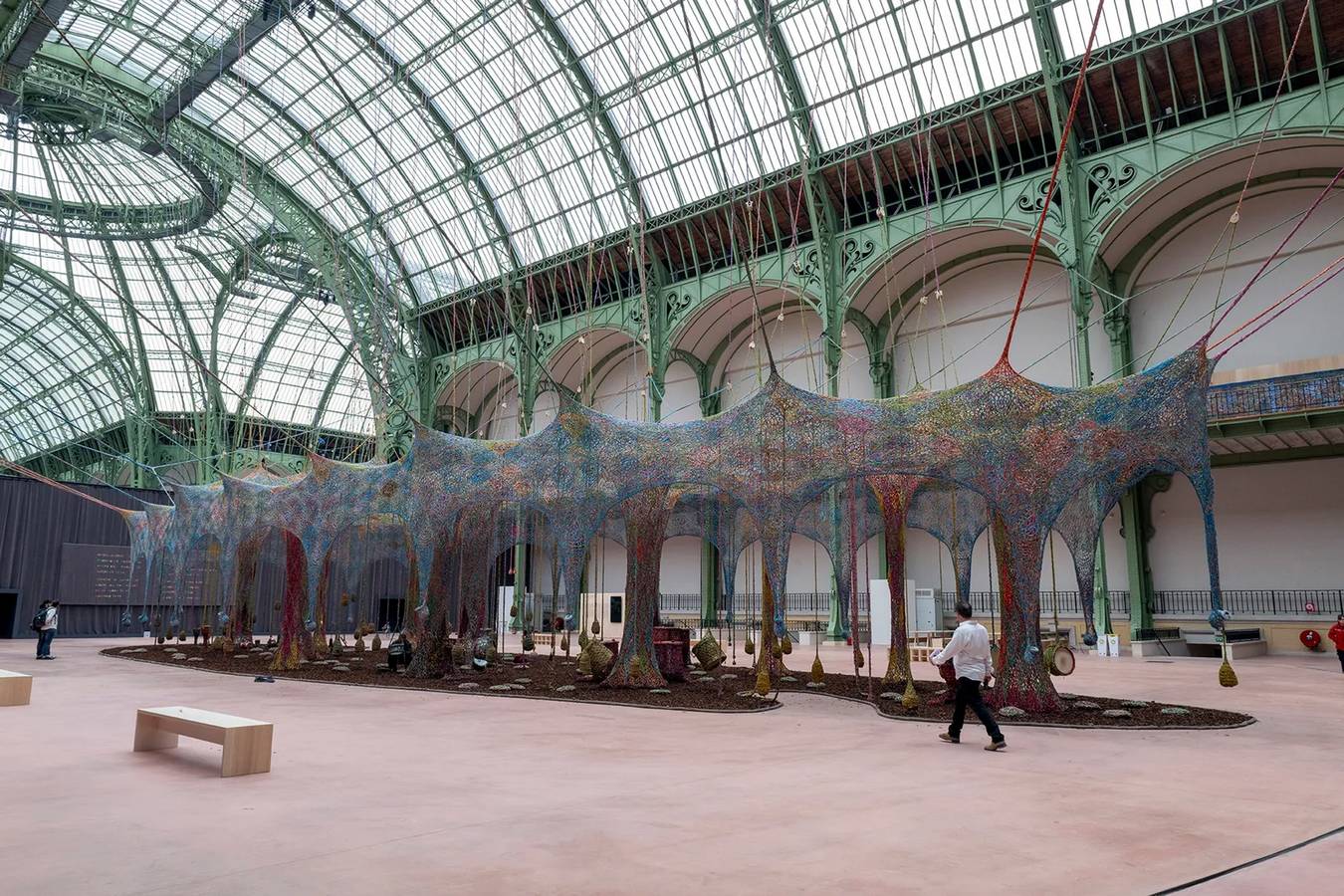
Envisioned as an immersive, navigable environment, the installation thrives as a multi-sensorial landscape that establishes a profound connection with nature and perception. It seeks to reflect the continuum of the connection between the human body and the earth through natural
materials and indigenous craft.
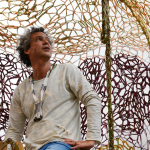
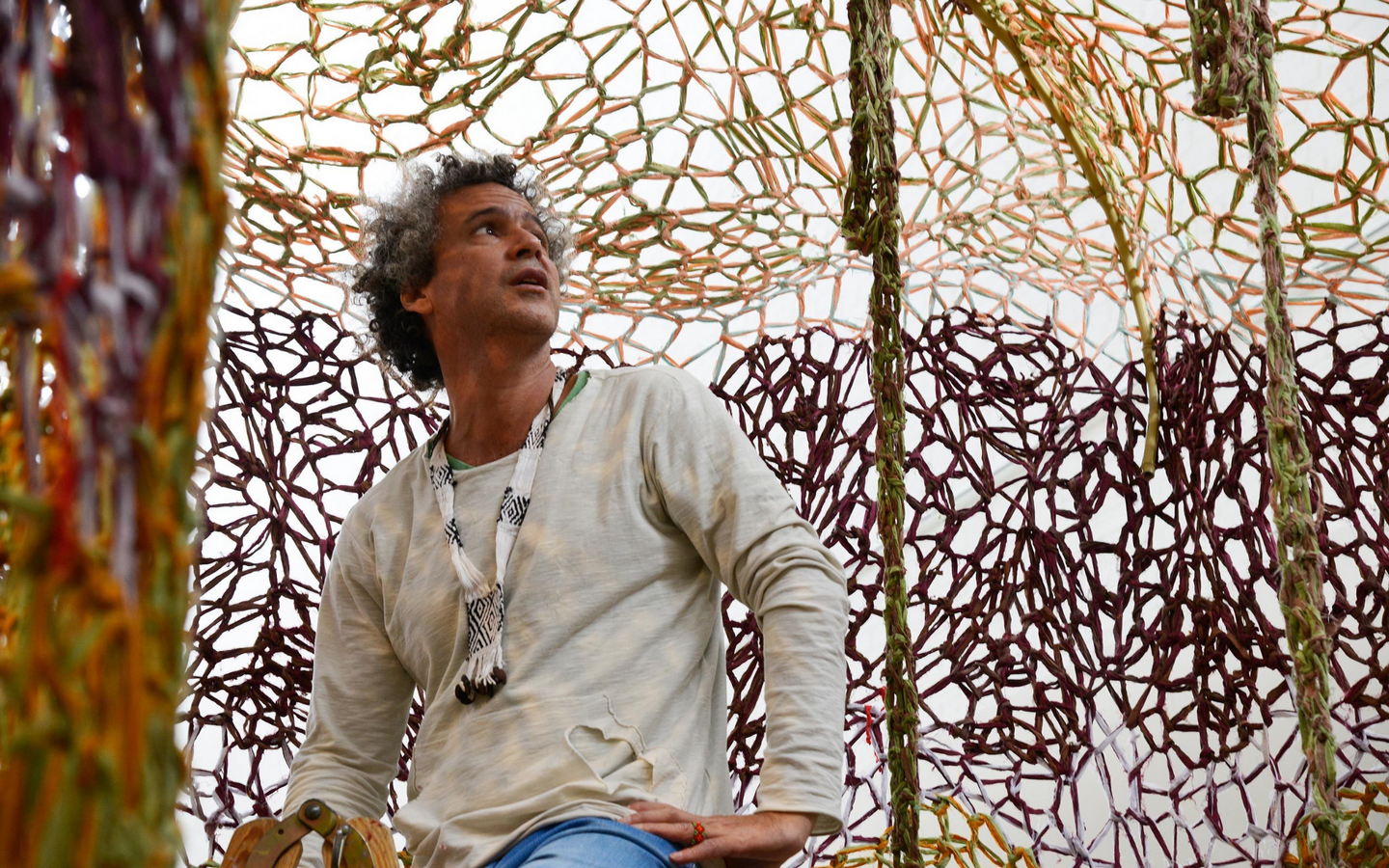
About the artist: Ernesto Neto
Inspired by the Brazilian Neoconcreatism and Arte Povera, Neto designed installations with a sensuous and receptive character, one that can breathe, interact, stimulate the senses, stir emotions and thrive as a living organism.
“I want visitors to feel the poetry of being alive”
………………………Ernesto Neto
Most of his creations involve the use of biomorphic forms and volumetric explorations that extend beyond the notions of abstract minimalism. Spirituality, humanism, and ecology constitute the basal instincts of his creation. Neto’s works seek to interpolate sculpture and ritual, encouraging a spiritual dialogue through tactile environments.
Neto’s Textile Art Installation – The Nosso Barco Tambor Terra
The installation draws its name from the historical consequences of maritime journeys that have reshaped relationships between people and territories.‘Nosso Barco Tambor Terra’ derives from Portuguese words meaning “boat,” “drum,” and “earth,” a triad alluding to journey, rhythm, and rootedness. The “boat” refers to the painful and transformational transatlantic crossings. The “drum” hints at the ancestral music traditions.“Earth” grounds the work, reemphasising soil as both the origin and destination. Drawing from the imagery and symbols embedded in these shared histories, Neto has fabricated an engaging and porous textile canopy at the Grand Palace.
Structure of the Canopy
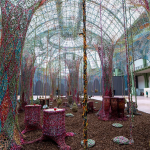
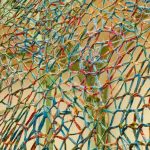
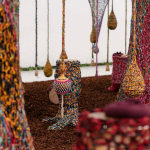
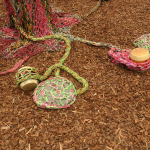
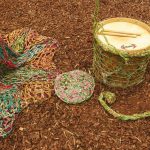
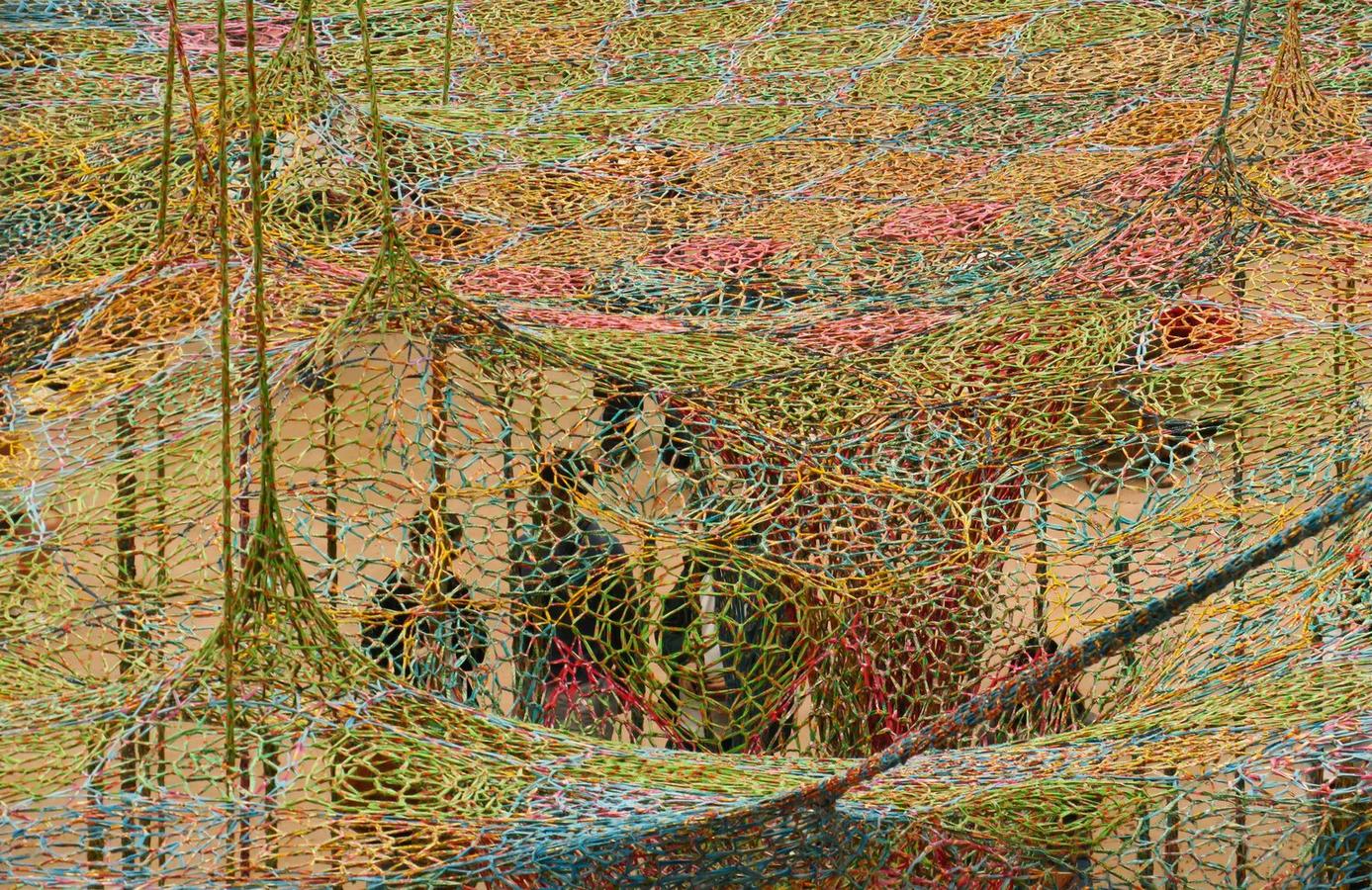
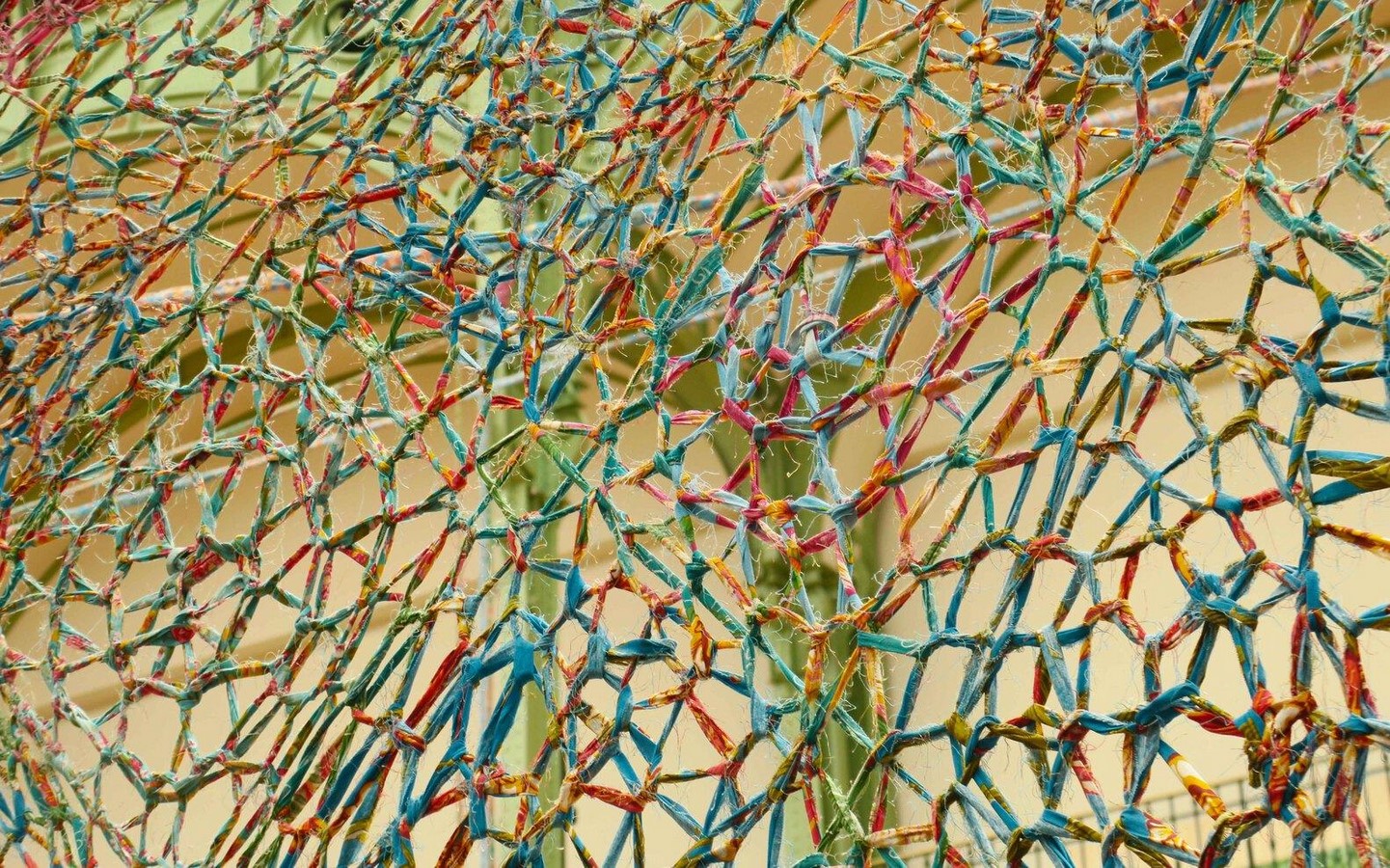
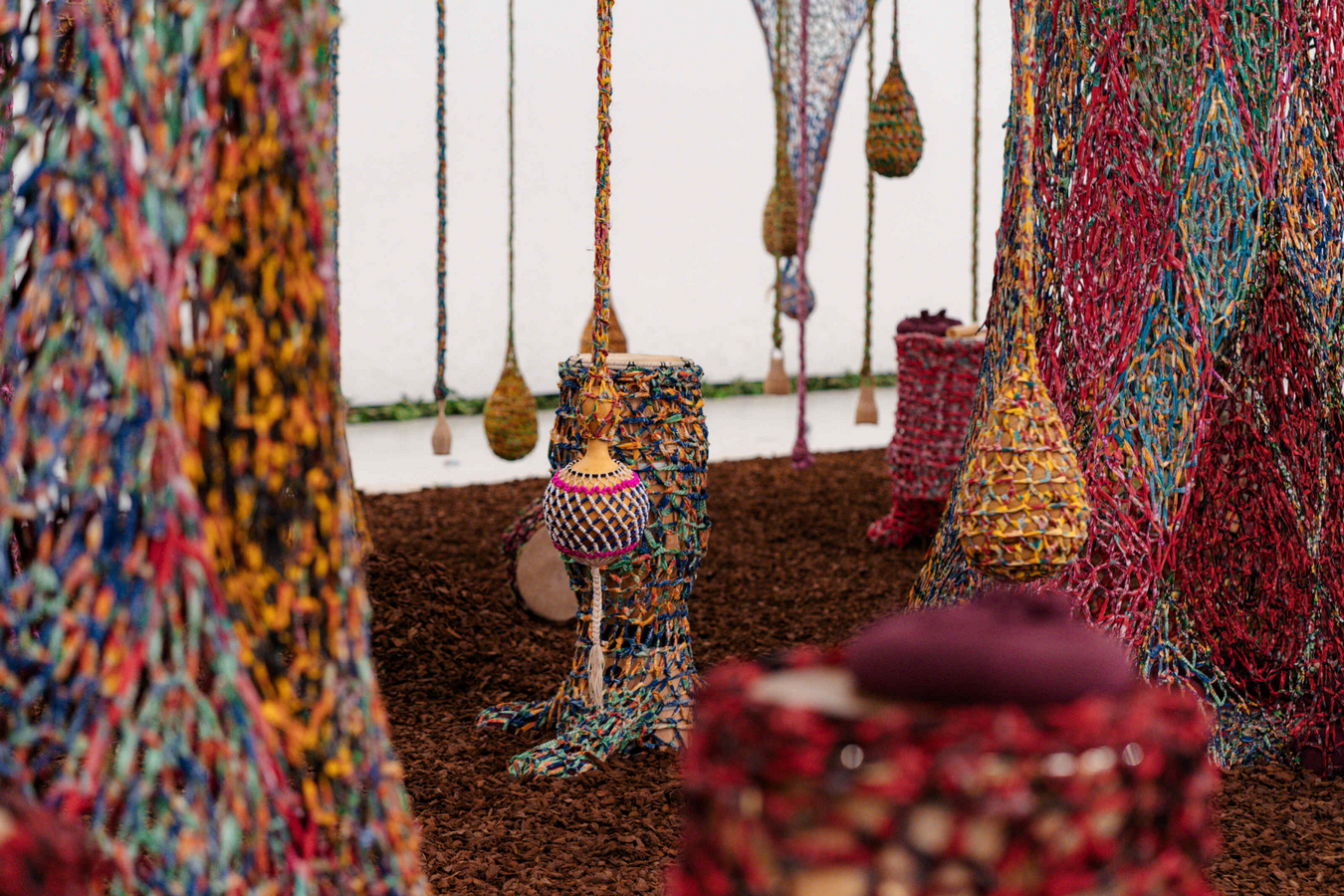
The installation takes the form of a cascading envelope of multi coloured crochet interwoven with bark, fibre, earth and spice, reinforcing its organic and tactile design intent. Its form suggests an underlying order within a seemingly chaotic profile resembling the undulating rhythms of a natural landscape. Handwoven using traditional Brazilian weaving techniques and crafted scrupulously over months, the envelope possesses a tactile softness contrasting the humongous solid geometry of the architectural host.
Sensorial Experience
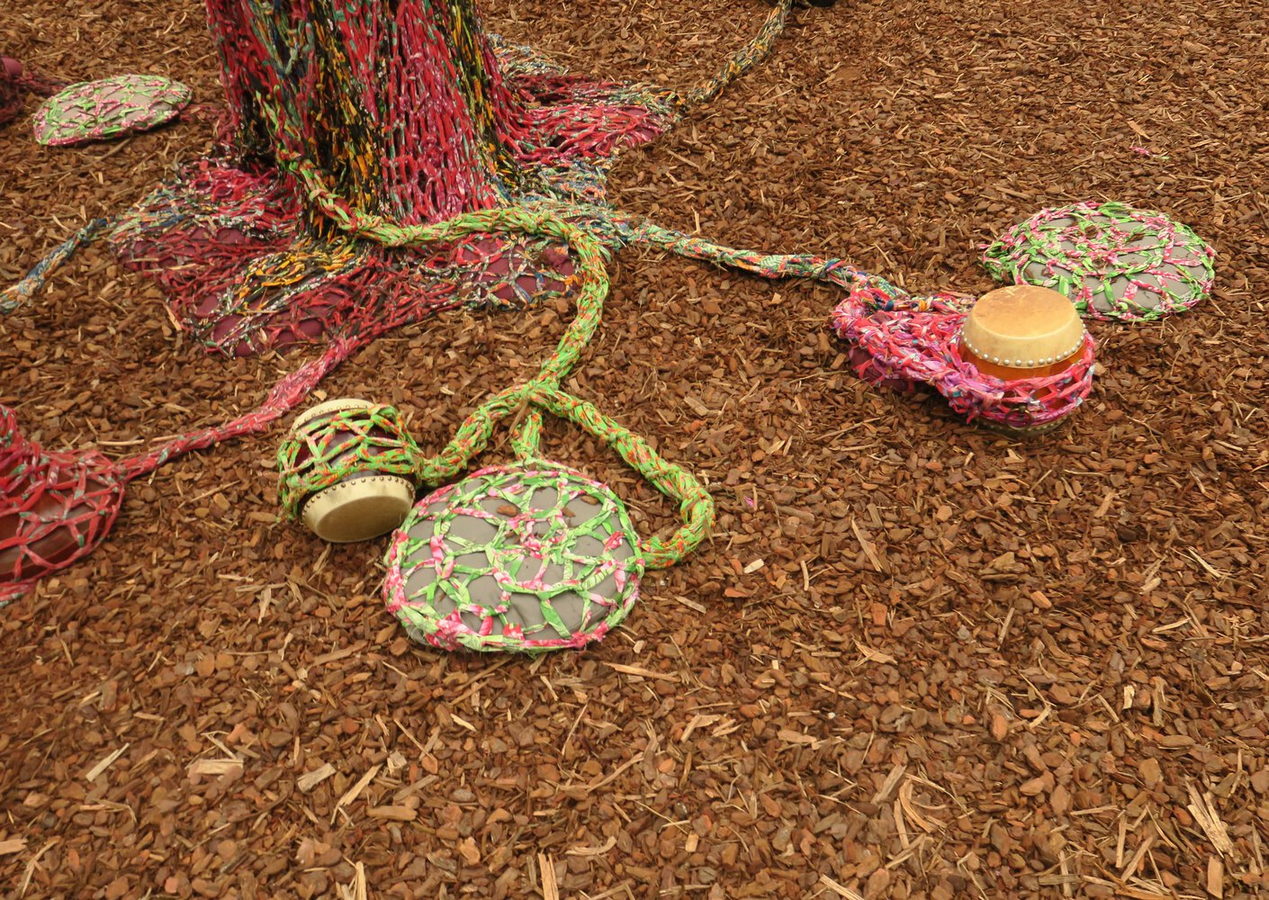
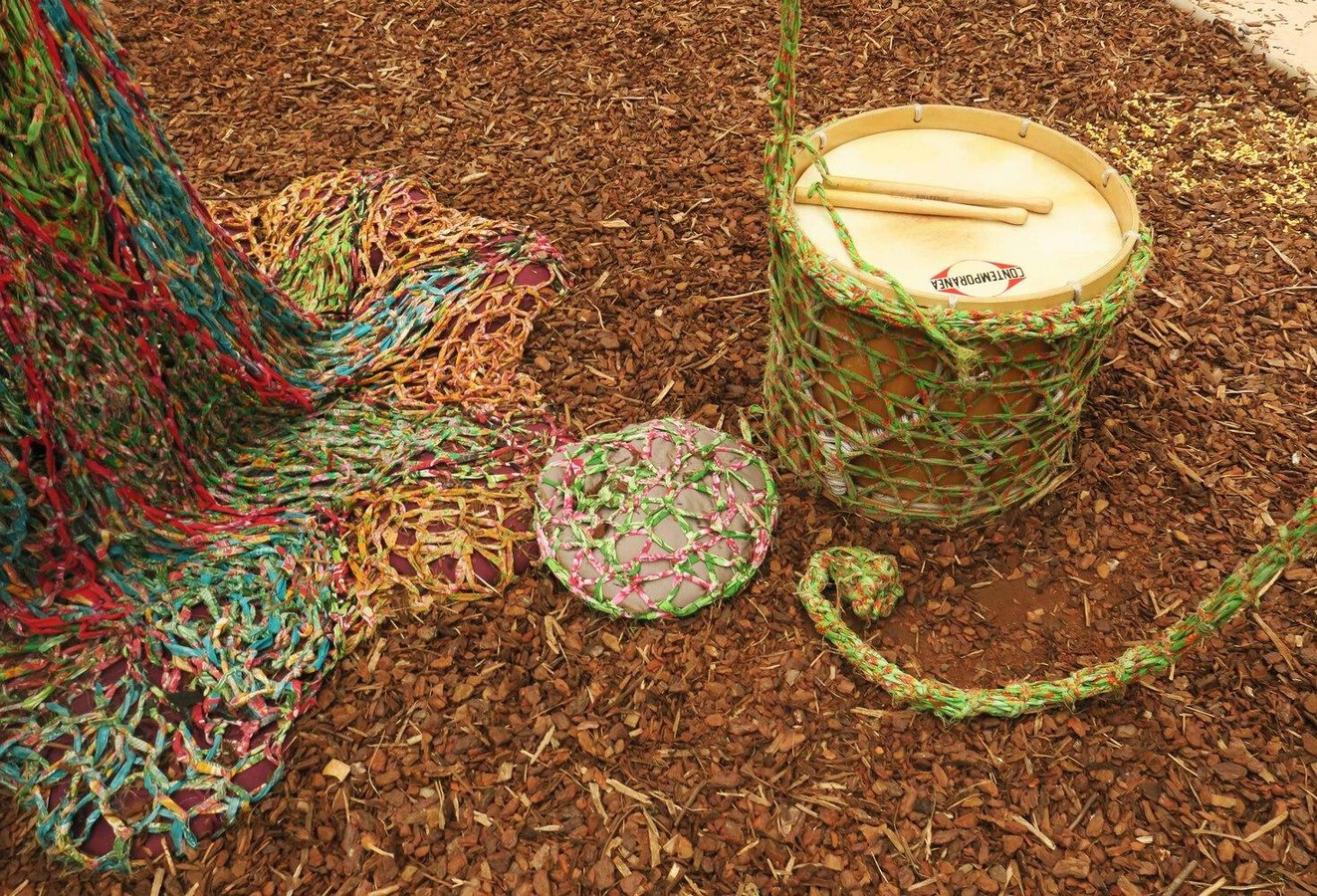
Sensorially, the installation is intensely engaging, offering subtle cues that activate all the senses. Scent from the various spices(Turmeric, cinnamon, black pepper, etc.) stitched into the fabric slowly suffuses the space, while the concealed drums and other instruments generate gentle vibrations as the users interact with it. Striding through the suspended fibres and walking barefoot across the woven soil further heightens the experience, elevating the work beyond a static art installation to a living sculpture and as a playable instrument.
Reflection
Photographer Paul Clemence suggests that this work serves as a means to persuade architects to “connect more with the whimsical and poetics of art.” He describes Ernesto Neto’s handmade forms as an “impressionistic filter” through his photographic lens. A filter that imbues the composition with renewed character and colour, provoking contemplation of the historic building.
The installation puts us in a new light where one can truly understand the relationship between the object and the subject. When the users are provided with varied stimuli & actively engaged, they transform from passive observers to active participants within the space. This heightened engagement increases receptivity, fostering deeper comprehension and appreciation of the surrounding environment through meaningful experience.
Reference:
Website
Ernesto Neto’s textile installation, a living sculpture at the Grand Palais. Available at: https://parametric-architecture.com/ernesto-netos-textile-installation-grand-palais/ (Accessed: 26 February 2026).
Ernesto Neto: Nosso Barco Tambor Terra (our boat drum earth) | June 5 – July 25, 2025 | Tanya Bonakdar gallery. Available at: https://www.tanyabonakdargallery.com/exhibitions/896-ernesto-neto-nosso-barco-tambor-terra-our-boat-grand-palais-paris/ (Accessed: 26 February 2026).
Piñeiro, A. (2025) Ernesto Neto’s textile art installation at Paris’ Grand Palais captured by Paul Clemence, ArchDaily. Available at: https://www.archdaily.com/1031097/ernesto-netos-textile-art-installation-at-paris-grand-palais-captured-by-paul-clemence (Accessed: 26 February 2026).
Stewart, J. (2025) Colorful crocheted ‘forest’ installation takes over Paris’ Grand Palais, My Modern Met. Available at: https://mymodernmet.com/ernesto-neto-grand-palais/ (Accessed: 26 February 2026).