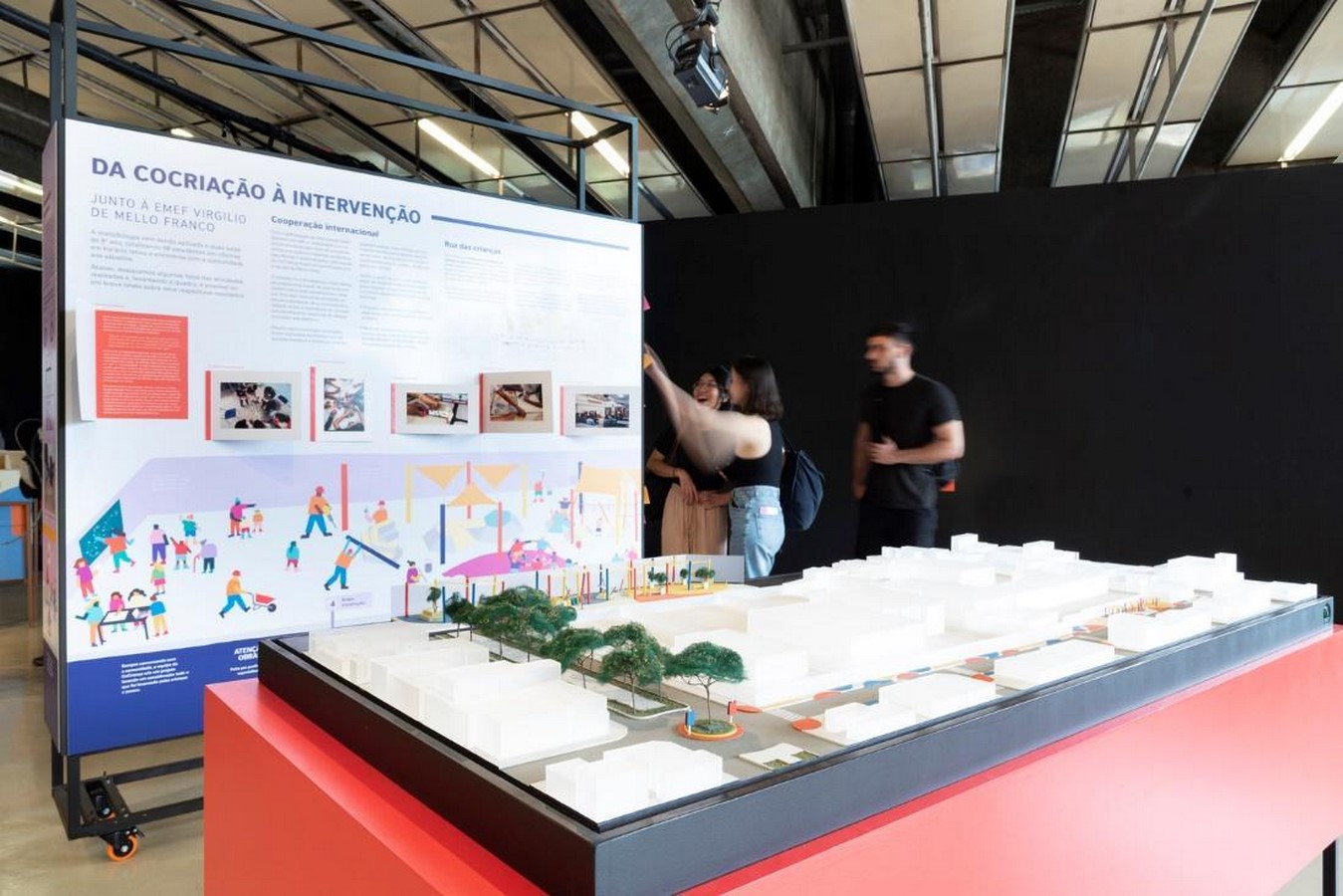
The 14th São Paulo Architecture Biennial returns to the iconic Oca Pavilion in Ibirapuera Park from September 18 to October 19, 2025. This year’s exhibition boldly confronts one of humanity’s most pressing challenges with its theme “Extremes: Architectures for an overheated planet,” acknowledging that we’ve reached a critical point in the climate crisis that demands urgent architectural responses.
A Call for Radical Solutions
Organized by the São Paulo Department of the Institute of Architects of Brazil (IABsp), the 2025 São Paulo Architecture Biennial positions architecture as a crucial discipline in addressing climate change. The curatorial text states, “We live in a world of extreme climatic events, and the limit for human life, the point of no return, looms on the horizon”. This stark assessment frames the exhibition’s purpose: to showcase bold architectural interventions that can help mitigate and adapt to our changing climate.
The curatorial team includes six architects with diverse perspectives: Renato Anelli, Karina de Souza, Marcos Cereto, Clevio Rabelo, Marcella Arruda, and Jerá Guarani. Their approach draws inspiration from the Intergovernmental Panel on Climate Change reports, particularly AR6. It aims to bridge scientific, technical, and popular knowledge, including insights from urban peripheries, Indigenous villages, and quilombola communities.
Exhibition Design and Structure
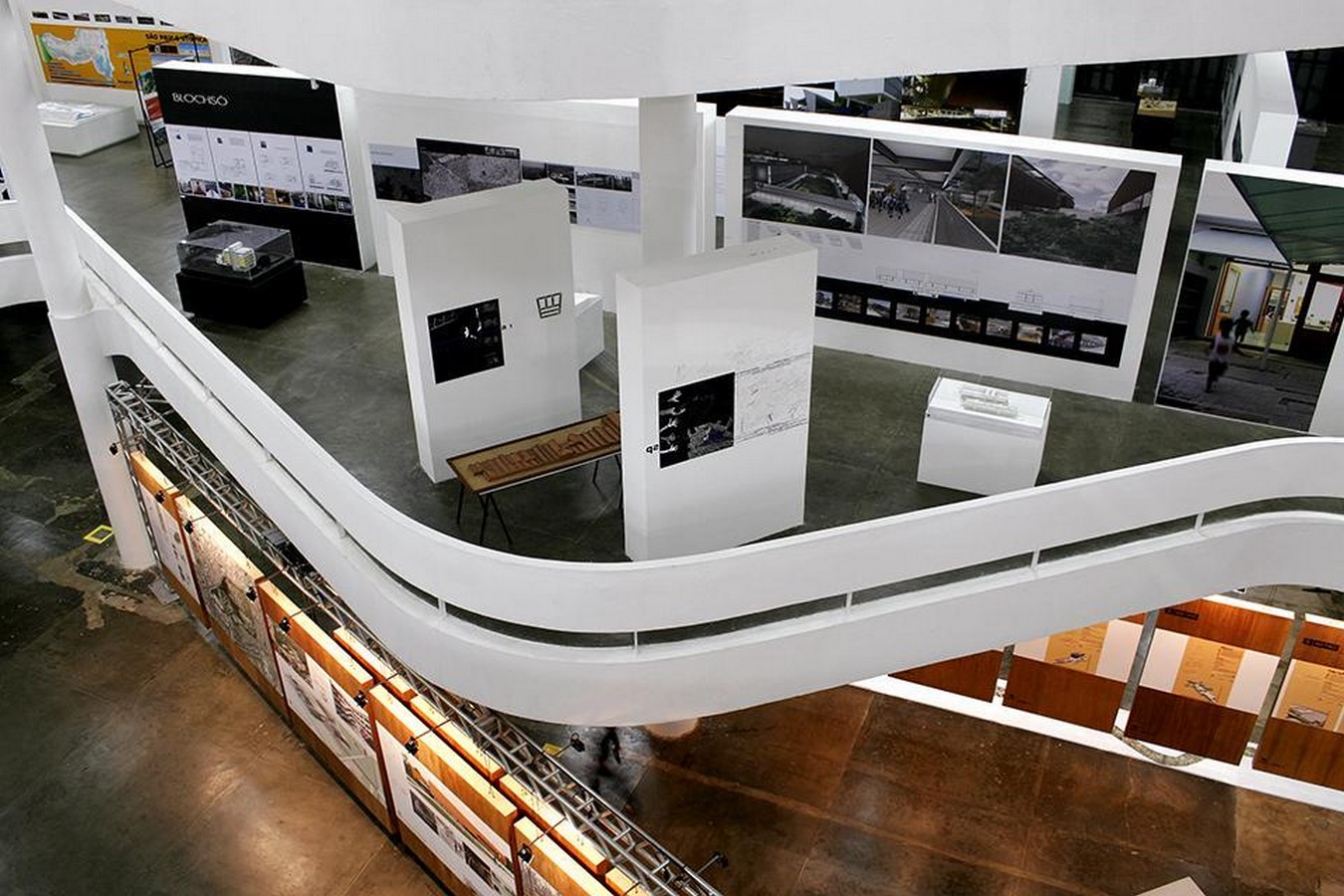
Architect Álvaro Razuk leads the exhibition design, employing a modular system of six-meter-long scaffolding structures that will showcase drawings, models, videos, and plans throughout the pavilion’s 10,000-square-meter space while respecting the building’s modernist architecture.
The São Paulo Architecture Biennial is organized around five thematic axes that guide the featured projects:
- Preserving Forests and Reforesting Cities – Incorporating vegetation to capture carbon and mitigate heatwaves
- Embracing Water – Featuring stream renaturalization and Nature-Based Solutions
- Refurbishing More and Building Green – Focusing on adaptive reuse and low-carbon construction
- Moving and Reaching Places Together with Renewable Energies – Exploring sustainable urban planning and transportation
- Ensuring Climate Justice and Social Housing – Addressing the disproportionate climate vulnerability of marginalized communities
Notable Participants
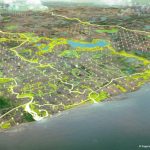
Among the confirmed participants is Yu Kongjian, the Chinese landscape architect renowned for pioneering “sponge cities” in China-urban areas designed to naturally absorb, clean, and use rainfall in an ecologically friendly way. The concept treats cities as sponges that can retain water during flooding and recharge water during drought, stemming from Kongjian’s work since 1997.
The Dutch architectural office Ooze will present their “City of 1000 Tanks” project, inspired by traditional Indian stepped water tanks. This initiative aims to develop a Water Balance Model across cities by collecting rainwater, treating wastewater and runoff pollution with decentralized Nature-Based Solutions, and recharging underground aquifers to prevent droughts while mitigating flood risks.

Biomaterials and Open Calls
The São Paulo Architecture Biennial will feature a special section on biomaterials, developed in partnership with institutions including IED – Istituto Europeo di Design, Bauhaus Earth (Germany), and Craterre (France).
Three open calls invite international participation: the International Open Call for Exhibitions and Activities, the International Competition for Architecture and Urbanism Schools (both extended until June 1), and the International Open Call for the Forum of Debates + SP Meeting (extended until May 15).
The 14th São Paulo Architecture Biennial represents a pivotal moment for the architectural community to demonstrate how design can address climate challenges through innovative, sustainable solutions that combine cutting-edge technology with traditional knowledge.
References:
Biennial Foundation. (2025). São Paulo Biennial (Brazil) – Biennial Foundation *. [online] Available at: https://biennialfoundation.org/biennials/sao-paolo-biennial/.
Team, A. (2025). 14th São Paulo Architecture Biennial Highlights Architectural Responses to the Climate Crisis. [online] ArchDaily. Available at: https://www.archdaily.com/1029434/14th-sao-paulo-architecture-biennial-highlights-architectural-responses-to-the-climate-crisis [Accessed 4 May 2025].
www.turenscape.com. (n.d.). Kongjian Yu ‘Sponge City’ Theory and Practice with His Team. [online] Available at: https://www.turenscape.com/topic/en/spongecity/index.html.
Projects.rvo.nl. (2024). City of 1,000 tanks | Project Database CMS. [online] Available at: https://projects.rvo.nl/projects/nl-kvk-27378529-wal18ca30 [Accessed 6 May 2025].
14a Bienal Internacional de Arquitetura de São Paulo. (2025). Extremos – 14a Bienal Internacional de Arquitetura de São Paulo. [online] Available at: https://bienaldearquitetura.org.br/en/ [Accessed 6 May 2025].