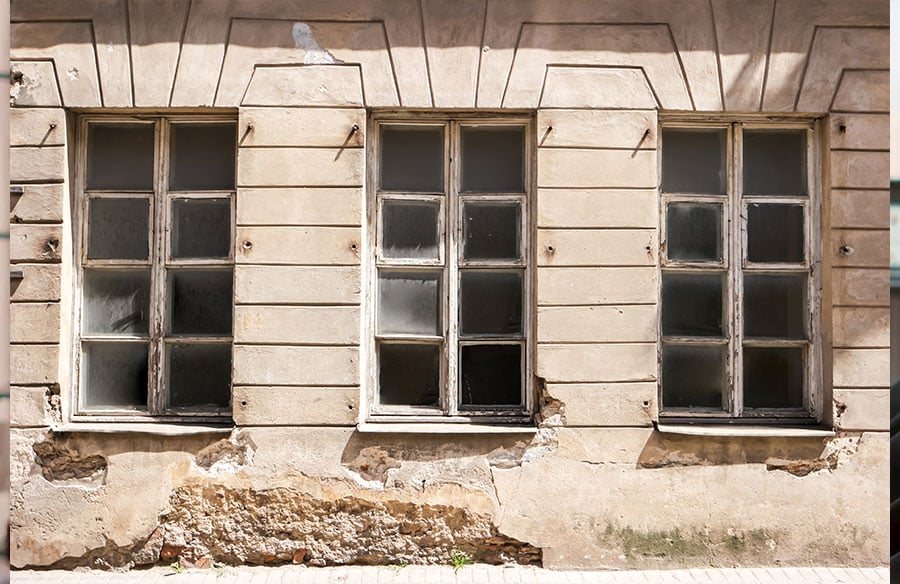
I once measured a window in a 1920s four-square that was 27 and five-eighths inches wide. Not 28. Not 27 and a half. Twenty-seven and five-eighths. Your neighborhood is probably full of the same surprises, and they cause real problems the moment you start pricing new glass.
Old houses were built before anyone standardized window sizes, so every opening is a small negotiation between what a manufacturer stocks and what your wall actually holds. The good news: understanding why those windows are odd makes the replacement decision far less scary. You stop assuming you need a miracle and start choosing between a couple of sane options.
If you are house hunting in St. Louis County or already own a place with sagging sashes, the local contractors who handle window installation in Chesterfield see these quirks every week in the older subdivisions out there. That familiarity matters more than a brochure.
Why did builders make windows so strangely sized?
Because there was no catalog to order from. Before the mid-twentieth century, most windows were assembled on site or by a local mill, and carpenters fitted each one to the rough opening they had. A single house could carry five different widths and nobody blinked. When national manufacturers started pushing standardized units after World War II, the older stock stayed exactly as it was.
That legacy leaves you with a set of familiar oddities. Sash weights hidden behind the jambs. Rope pulleys frozen solid. Sills that slope, walls that are three bricks thick in one room and plaster over frame in the next. Brick veneer homes from the postwar boom often have window openings sized to the brick course, not to any modern frame. So even a house from 1955 can throw you a window that no off-the-shelf unit matches.
Here is my honest take: the weirdness is usually a feature of good local construction, not a defect. The builder cared about the specific opening. The trouble only shows up when somebody insists on forcing a standard unit into it.
The three real options, ranked by what they cost you
You basically get three paths, and each one trades money against disruption and long-term performance. Knowing which one fits your house is most of the battle.
- Pocket replacement: a new sash and frame slip inside the existing jamb. Fastest, cheapest, least invasive. Best when the surrounding trim and rough opening are still sound.
- Full-frame replacement: out comes the whole unit, trim and all. Opens the door to correcting a bad sill, adding insulation, and squaring up a crooked opening, but it costs more and takes longer.
- Restoration or repair: new glazing, weatherstripping, and a repaint. Often the right call on a house with original wood worth keeping, and it can be shockingly effective at stopping drafts.
If the question is which one I would pick for an old house with sound trim, it is a full-frame job every time. Water intrusion starts at the jamb, and pocket units leave that interface untouched. That is an opinion, not a rule, but it comes from watching too many cheap replacements fail at the perimeter.
Watch for these four signs before you sign anything
Walk around your house with a notepad before a single estimate happens. You are looking for these. A window that will not close all the way signals a racked frame, and that usually means a full-frame job. Visible rot at the sill or jamb means the same. Fog between the panes tells you the seal is gone, but the frame might still be fine, which points toward replacement of the glazing unit alone. And a window painted shut from decades of landlord paint is a five-minute fix at best, a broken sash at worst.
According to the Department of Energy, windows account for a significant share of a typical home’s heating and cooling load, which is why the U.S. market keeps pushing better glass on old housing stock. That does not mean every old window needs replacing, but it does mean your decision has a real energy tail on it, not just a cosmetic one.
Preservation rules you need to know about
If your home sits in a historic district or is listed as a contributing structure, the rules change completely. The National Park Service publishes the standards that most local historic commissions lean on, and they generally favor repairing and retaining original window fabric over swapping it for vinyl.
I’ve watched homeowners spend months arguing with a commission they never checked with first. It goes badly, because tearing out original sashes in a district is treated as a loss no matter how nice the replacement is. Ask before you sign. That one conversation saves you more pain than any upgrade.
A simple walk-through for planning the job
Start by photographing every window that is bothering you, inside and out, with a tape measure in frame. Write the measurements down next to a sample of the trim profile. Then stand outside and note the wall construction: brick veneer, clapboard, stucco, something else. Each one has its own headache, and contractors price based on what they’ll have to remove.
Next, list the problems in writing. Leaky, drafty, painted shut, broken sash, cracked glass, or purely cosmetic? Any window that fails on water or structure moves to the top of the list, and cosmetic ones can wait. In my experience, the home with the budget for five windows almost never has only five problem windows, so prioritize ruthlessly.
Then ask each contractor what happens to the trim around the opening. That question alone separates the person who installs windows from the person who protects the house. And if you live in a district, bring the preservation paperwork to the estimate. A good installer will know what you’re dealing with and adjust the quote accordingly.
The part that spooks most people: the mess
Full-frame work is loud, dust happens, and your house is open to the sky for a few hours per opening. That is the cost of getting a window that fits and seals right. A pocket job is cleaner but leaves the jamb alone. Neither option is painless. Knowing that up front beats being surprised by a drywall patch on the wrong day.
One version of this mistake
The worst example I’ve seen involved a 1940s bungalow where the owner let a salesman talk her into pocket replacements on all nine windows because they were cheaper. Two winters later, the south-facing window show water stains in the corner of the living room, and the jamb had to come out anyway. The money wasn’t saved. It was delayed.
The pattern repeats because pocket replacements are easy to sell and hard to dislike, right up until the first heavy rain. When someone quotes you a price without looking at what’s under the sill, they’re quoting the easy part and leaving you the problem.
Answers before you call anybody
What makes a window “weird” in an older house is almost always a custom rough opening, a wall of unusual thickness, or decades of paint and settling. None of that is fatal. It just narrows your options to the three paths above, and it makes the measurement and inspection steps matter far more than the brand on the sticker.
Your house wants the opening fixed properly, not just covered with a shiny piece of glass. That’s the line between a project that lasts and one that comes back to complain. If you’re handy, start with the photos and measurements. If not, hire someone who will. Are you going to be the one holding the tape measure this weekend, or the one signing a quote you haven’t measured against?