Introduction
Walk into any newly renovated home and you’ll notice something: the lighting looks different than it did ten years ago. Warm, glowing wall fixtures have replaced the harsh overhead bulbs that used to dominate every room. That shift isn’t a coincidence — it’s LED wall lighting taking over, and for good reason.
Homeowners are moving away from traditional bulbs because LED wall lights use a fraction of the energy, last years longer, and give designers far more flexibility to shape how a room feels. Whether it’s a sconce beside the bed, a vanity light above the bathroom mirror, or an accent fixture in the hallway, LED technology has changed what’s possible with wall-mounted lighting.
This guide breaks down why LED wall lighting has become the default choice for modern homes, how to pick the right one for each room, and what mistakes to avoid along the way.
What Is LED Wall Lighting?
LED wall lighting refers to any fixture mounted directly to a wall that uses light-emitting diode technology instead of incandescent, halogen, or fluorescent bulbs. Unlike older bulbs that heat a filament to produce light, LEDs pass electrical current through a semiconductor, which gives off light with very little wasted heat.
That difference matters more than it sounds. Less wasted heat means lower energy bills, cooler-to-the-touch fixtures, and bulbs that don’t burn out after a few months. It’s also why LED wall lights, including modern wall sconces, come in so many more shapes and finishes than older lighting ever could — the compact size of an LED chip opens up design options that a bulky incandescent bulb never allowed.
How LED Technology Works
An LED produces light through electroluminescence — electricity moving through a semiconductor material that releases photons in the process. There’s no filament to burn out and almost no heat wasted in the process.
Compare that to a traditional incandescent bulb, which wastes roughly 90% of its energy as heat and only converts the rest into visible light. That’s the core reason LEDs use so much less power for the same brightness, and why they last so much longer before failing.
Types of LED Wall Lighting
LED wall lighting isn’t one fixture — it’s a whole category. The most common types include:
- Wall sconces – decorative fixtures that add ambient or accent light
- Vanity lights – bathroom fixtures designed for even, flattering illumination
- Picture lights – narrow, directional fixtures that highlight artwork
- Swing arm lights – adjustable fixtures often used as reading lights
- Outdoor wall lights – weather-rated fixtures for porches, entryways, and patios
Each type serves a different purpose, which is why picking the right one starts with knowing what the space actually needs.
Why Homeowners Prefer LED Wall Lighting
The appeal of LED wall lighting comes down to three things: lower running costs, a much longer lifespan, and better light quality per watt used. Together, these make LEDs the practical choice as much as stylish ones.
Outstanding Energy Efficiency
LED wall lights use up to 80% less energy than incandescent bulbs to produce the same amount of light. On a home’s electric bill, that adds up fast, especially in rooms where lights stay on for hours at a time, like living rooms and hallways.
That efficiency isn’t a marginal improvement — it’s the difference between a bulb that costs a few dollars a year to run and one that costs closer to twenty. Multiply that across every fixture in a home and the savings become obvious within the first year.
Longer Lifespan
A typical LED wall light lasts 25,000 to 50,000+ hours, compared to just 1,000 to 2,000 hours for an incandescent bulb. In practical terms, that’s the difference between replacing a bulb every year or two versus not touching it for over a decade.
Fewer replacements also mean less maintenance, no ladders for hard-to-reach fixtures, and no scrambling to find a matching bulb when one finally burns out.
Better Brightness with Less Power
LEDs are measured in lumens rather than watts, which trips people up at first but actually makes shopping easier once you understand it. Lumens measure actual brightness, while watts measure power consumed — and LEDs need far fewer watts to hit the same lumen output as older bulbs.
The result is consistent, even illumination that doesn’t dim or flicker with age the way older bulbs do near the end of their life.
LED Wall Lighting Enhances Every Room
Wall-mounted LED fixtures aren’t just an energy upgrade — they change how a room functions. Placed correctly, they layer light exactly where it’s needed instead of flooding a space from a single overhead source.
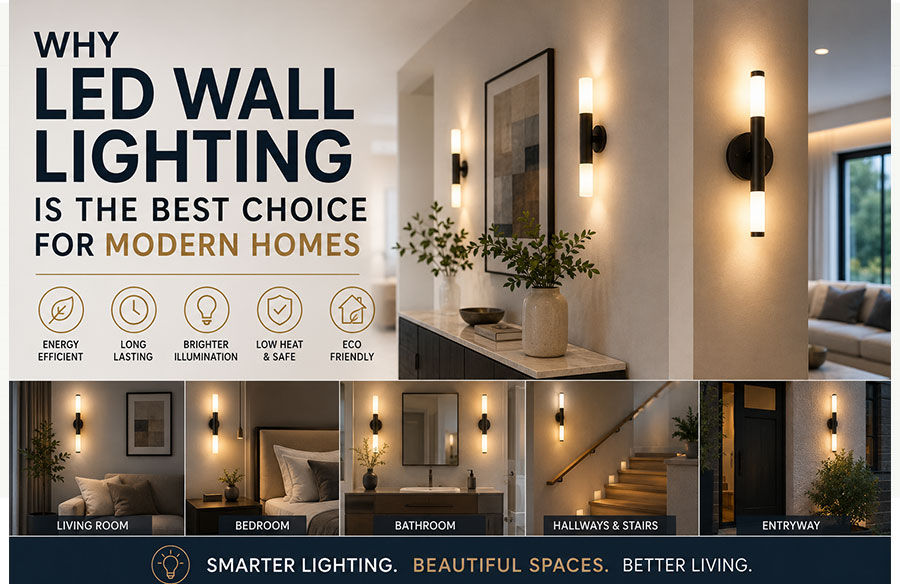
Living Room
In the living room, wall sconces work well as accent lighting that highlights artwork or architectural features without competing with the main light source. They’re also a natural fit for reading corners, where a swing arm LED fixture provides focused light without a floor lamp taking up space. Used sparingly, they add warmth to a room that overhead lighting alone can’t achieve.
Bedroom
Bedside LED sconces free up nightstand space that table lamps usually take up, which matters in smaller bedrooms. They also let each side of the bed control its own light independently. For a closer look at options, check out our Wall Sconces collection.
Bathroom
Vanity lighting is where LED technology makes the biggest visual difference. Fixtures mounted around or above the mirror provide even, shadow-free light for grooming, and damp-rated models handle the humidity that bathrooms produce without any risk. Browse our Bathroom Vanity Light Fixtures for options built specifically for this kind of use.
Hallways & Staircases
Hallways and staircases benefit from LED wall lighting mainly for safety. Low-mounted sconces along a staircase illuminate steps without the glare of overhead lighting, reducing trip hazards while still giving the space a finished look.
Entryways
An entryway sets the tone for the whole house, and wall-mounted LED fixtures next to the front door create a strong first impression. They also handle the practical job of lighting the path to the door after dark, which overhead porch lights alone often don’t cover well.
Design Styles That Pair Perfectly with LED Wall Lighting
One reason LED wall lighting works in so many homes is the range of styles now available. The technology fits naturally into:
- Modern
- Contemporary
- Scandinavian
- Minimalist
- Industrial
- Mid-century modern
- Transitional
Because LED chips are so compact, fixtures can be built in slim, sculptural shapes that older bulb technology never allowed — which is part of why LED wall lighting looks equally at home in a minimalist space or an industrial loft.
Choosing the Right LED Wall Light
Picking a fixture based on looks alone is the most common mistake homeowners make. Getting the details right — color temperature, brightness, color rendering, and finish — matters just as much as the design.
Color Temperature
Color temperature, measured in Kelvin, determines whether a light looks warm or cool. 2700K gives off a warm, cozy glow best suited to living rooms and bedrooms. 3000K is a slightly brighter warm white that works well in hallways and entryways. 4000K leans cooler and more neutral, which suits bathrooms and task-focused spaces like a home office.
Brightness (Lumens)
Lumens tell you how bright a fixture actually is, independent of wattage. A bedside sconce might only need 200-400 lumens for reading, while a vanity light above a mirror often calls for 800 lumens or more to properly light a face for grooming and makeup.
CRI (Color Rendering Index)
CRI measures how accurately a light source renders colors compared to natural daylight, on a scale up to 100. For spaces where color accuracy matters, like a vanity or closet, look for a CRI of 90 or higher. Anything below 80 can make skin tones and fabrics look slightly off.
Fixture Finish
Finish affects both style and durability. Common options include black, brass, chrome, nickel, and white, each pairing with different hardware and design styles throughout the home. Matching the finish to existing fixtures and hardware keeps a space feeling intentional rather than mismatched.
Smart Features Available in Modern LED Wall Lights
LED technology has also opened the door to smart lighting features that weren’t possible with older bulbs. Many modern wall fixtures now include:
- Smart home compatibility (Alexa, Google Home, Apple HomeKit)
- Motion sensors for hands-free operation
- Dimmable LEDs for adjustable ambiance
- Touch controls built into the fixture itself
- Adjustable brightness settings
- Color-changing LEDs for different moods
- Voice control through connected smart home systems
These features aren’t just novelties — motion-sensor sconces in a hallway or staircase, for example, add a real safety benefit by lighting the way automatically at night.
Common Mistakes to Avoid
Even with all the benefits, LED wall lighting is easy to get wrong if a few details get overlooked.
Buying Based Only on Appearance
A fixture that looks great in a product photo won’t necessarily light a room well. Always check the lumen output and color temperature before buying, not just the finish and shape.
Choosing the Wrong Brightness
Too dim and a fixture becomes purely decorative; too bright and it creates glare, especially in smaller rooms. Match the lumen output to the room’s size and purpose.
Ignoring Moisture Ratings
Bathroom and outdoor fixtures need a damp or wet rating to handle humidity and weather exposure safely. Installing a standard indoor fixture in these spots can lead to premature failure or safety issues.
Incorrect Mounting Height
Mounting height changes how a fixture functions. Vanity lights, for example, typically work best around eye level, while hallway sconces are often placed higher to spread light evenly without creating glare at eye level.
Mixing Different Color Temperatures
Combining 2700K and 4000K fixtures in the same room creates a mismatched, uneven look. Keeping color temperature consistent within a single space makes the lighting feel cohesive.
LED Wall Lighting vs Traditional Lighting
| Feature | LED Wall Lighting | Traditional Bulbs |
| Energy Efficiency | Excellent | Low |
| Lifespan | 25,000–50,000+ hrs | 1,000–2,000 hrs |
| Heat Output | Low | High |
| Maintenance | Minimal | Frequent |
| Brightness | High | Moderate |
| Eco-Friendly | Yes | Less efficient |
The comparison makes the case on its own — LED wall lighting outperforms traditional bulbs on nearly every measure that matters to a homeowner.
Frequently Asked Questions
Are LED wall lights worth it? Yes. The higher upfront cost is offset within a year or two through lower energy bills and far fewer replacements, making LED wall lights a better long-term value than traditional bulbs.
How long do LED wall lights last? Most LED wall lights last between 25,000 and 50,000 hours, which translates to well over a decade of typical daily use before a replacement is needed.
Can LED wall lights replace ceiling lights? In some rooms, yes — layered wall sconces can provide enough ambient light to reduce or eliminate the need for a central ceiling fixture, especially in bedrooms and living rooms.
What color temperature is best for a home? Warm white (2700K-3000K) works best for living rooms and bedrooms, while neutral white (3500K-4000K) suits bathrooms, kitchens, and home offices where task lighting matters more.
Are LED wall lights energy efficient? Yes. LED wall lights use up to 80% less energy than incandescent bulbs while producing the same or better brightness, making them one of the most efficient lighting options available.
Why Buy LED Wall Lighting from Modern Lights?
Modern Lights builds every fixture around premium craftsmanship and modern, timeless design — the kind that still looks current years after installation. Every finish is selected for durability as much as looks, so fixtures hold up in bathrooms, entryways, and outdoor spaces without losing their appearance over time.
The collection covers every room in the home, from the Wall Sconces built for living rooms and bedrooms to Bathroom Vanity Light designed specifically for grooming spaces, plus outdoor-rated options for porches and patios. Every fixture is energy-efficient by design, and the team behind Modern Lights is available to help homeowners pick the right option for their space, not just the most expensive one.
Conclusion
LED wall lighting checks every box a modern home needs: it uses a fraction of the energy older bulbs require, lasts years longer without replacement, and comes in styles that fit everything from a minimalist apartment to a traditional family home. Layered thoughtfully across a living room, bedroom, bathroom, or entryway, it does more than just light a space — it shapes how that space feels.
Getting the details right, from color temperature to brightness to moisture ratings, makes the difference between a fixture that just looks nice and one that actually works for daily life. For homeowners weighing an upgrade, LED wall lighting remains one of the smartest, most future-proof investments available for any room in the house.