An outdoor living room can transform a garden from a space you occasionally pass through into somewhere you genuinely want to spend time. Whether you have a generous lawn, a compact courtyard or a modest balcony, the right layout and furniture can create an inviting extension of your home.
Rattan furniture is particularly well suited to this purpose. It combines a relaxed, natural appearance with the comfort and structure needed for everyday use. However, creating a successful outdoor room involves more than placing a sofa on the patio. The best spaces balance comfort, practicality, proportion and atmosphere.
Start with the Space You Have
Before choosing furniture, assess how the area is likely to be used. Do you want somewhere for morning coffee, informal family meals, evening drinks or all three? Your answer will influence the layout, seating and accessories you need.
Measure the available space, including pathways and access points. Outdoor furniture often looks smaller in a showroom than it does at home, so allow enough room to move comfortably around sofas, chairs and tables. A useful rule is to leave approximately 60–75 centimetres around the main seating area where possible.
Think about the natural features of the garden, too. A mature tree may provide welcome shade, while a wall or fence can act as a backdrop. If the area is exposed to wind, position larger pieces so they create a more sheltered arrangement rather than leaving lightweight chairs vulnerable to movement.
Define the Purpose
An outdoor living room works best when it has a clear purpose. For a social space, arrange seating to encourage conversation, with chairs and sofas facing one another rather than all pointing towards the house. If dining is the priority, centre the layout around a table and ensure there is enough space to pull chairs out comfortably.
In smaller gardens, choose pieces that can serve more than one function. A compact coffee table with storage, an ottoman that doubles as extra seating or a modular sofa that can be rearranged will help the space remain adaptable.
Choose Rattan Furniture Carefully
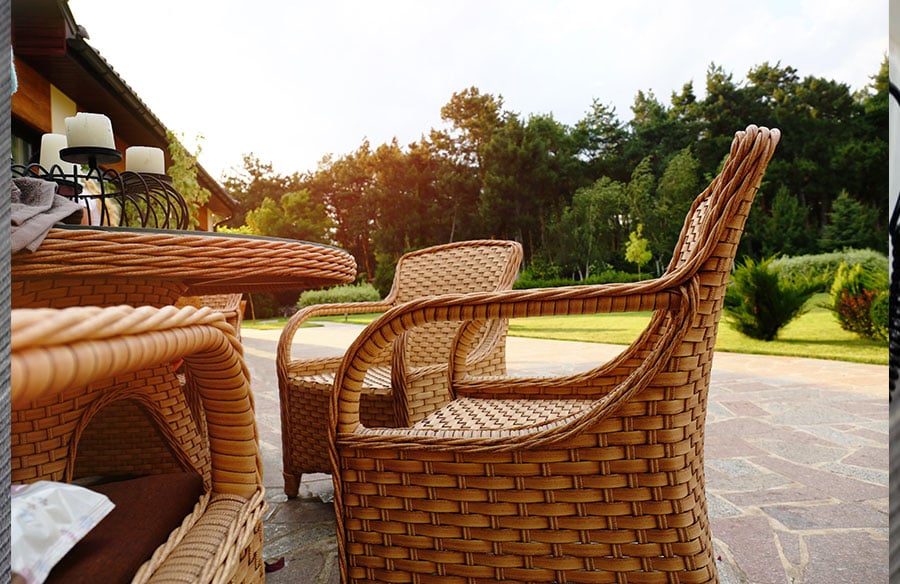
The term “rattan furniture” can refer to several different products, so it is worth understanding what you are buying. Natural rattan is made from a climbing palm and has a warm, organic appearance, but it is generally better suited to covered areas. Synthetic rattan, often made from weather-resistant polyethylene, is designed to withstand outdoor conditions and is commonly paired with powder-coated aluminium frames.
For a garden living room, look for furniture with:
- UV-resistant synthetic weave to reduce fading and brittleness
- Rust-resistant aluminium or treated steel frames
- Removable, washable cushion covers
- Raised feet or a design that allows rainwater to drain easily
- Clear care guidance from the manufacturer
Quality matters because outdoor furniture is exposed to moisture, temperature changes and sunlight throughout the year. Well-made rattan should feel firm rather than brittle, while the weave should be consistent and tightly finished around corners and joins.
If you are comparing styles, collections such as rattan furniture that can bring a sophisticated touch to your garden offer a useful starting point for considering different configurations, colours and shapes. The key is to select pieces that suit both your outdoor space and the way you plan to use it.
Build a Comfortable Seating Arrangement
Comfort is what turns an attractive patio into a genuine outdoor living room. Deep seating, supportive cushions and a practical table will encourage people to stay longer, but avoid filling every available space with furniture.
A three-seat sofa paired with two armchairs creates a classic conversational arrangement. In a narrower garden, an L-shaped corner sofa can make efficient use of the perimeter while leaving the centre open. For a small balcony or terrace, two lounge chairs and a compact table may create a better sense of proportion than a full sofa set.
Consider the height of the furniture in relation to its surroundings. Low-profile rattan seating can help a small garden feel open, while taller-backed chairs may provide greater comfort and a stronger sense of enclosure in a larger setting.
Add cushions in weather-resistant fabrics, but do not rely on them being permanently waterproof. Even outdoor-rated textiles benefit from being stored somewhere dry during prolonged rain. A lidded storage box can keep cushions close at hand without allowing them to become soaked or mouldy.
Create Zones with Texture and Colour
An outdoor room feels more cohesive when it has visual links to the interior of the house. If your home uses neutral tones, natural rattan, cream upholstery and muted green accessories can create a calm transition between indoor and outdoor spaces. For a more contemporary look, combine charcoal or grey furniture with terracotta, ochre or deep blue accents.
Outdoor rugs are particularly effective for defining a seating zone. Choose one made from a quick-drying, mould-resistant material and check that it is suitable for exterior use. A rug also helps furniture feel arranged rather than scattered, especially on large patios.
Plants can provide softness and privacy without requiring permanent structural changes. Use a mixture of heights: trees or tall planters behind the seating, medium-sized pots beside chairs and low planting around the edges. Evergreen varieties can maintain structure through winter, while herbs such as rosemary, thyme and lavender contribute fragrance during warmer months.
Plan for Shade, Light and Weather
A living room is only useful if it remains comfortable in changing conditions. Shade is essential during the brightest part of the day, particularly for south-facing gardens. A parasol is flexible and relatively simple to reposition, while a pergola or retractable awning offers a more permanent solution.
Lighting extends the use of the space after sunset. Layered lighting tends to feel more natural than a single bright fitting. Wall lights can provide general illumination, lanterns can mark pathways and low-level solar lights can highlight planting. Warm-toned bulbs usually create a more relaxed atmosphere than cool white light.
Weather protection should also be part of the original plan. Even weather-resistant rattan furniture will last longer if it is covered or moved under shelter during winter. Check cushions after wet weather and allow them to dry fully before storage. Clean the weave with a soft brush and mild soapy water, avoiding abrasive products that may damage the finish.
Finish with Thoughtful Details
The final touches should make the space feel personal rather than overly styled. Add a tray for drinks, a basket for throws and a few carefully chosen decorative objects. Avoid too many fragile accessories, particularly if the area is exposed to wind or used by children.
Most importantly, leave enough breathing room around the furniture. An outdoor living room should feel welcoming, not crowded. With a considered layout, durable rattan furniture and a few practical layers of shade, lighting and planting, even a modest garden can become a comfortable room in the open air—one that works from spring through early autumn and feels like a natural part of the home.