Clear design is timeless. Harshal Duddalwar, a New York-based designer and a senior designer at Astronaut Monastery, has seen the role of a brand designer in the tech world evolve from shaping visual identity alone to becoming a more strategic force in how technology companies define, communicate, and build trust around their ideas.
For many tech companies, the primary design hurdle is that their core product, often a sophisticated algorithm or an invisible layer of infrastructure, lacks an immediate or obvious visual form.
According to publications like Fast Company, Campaign and The Branx, design branding for tech companies in 2026 is all about a human-centric and neo-minimalist approach. This design style shies away from sterile, uniform types of minimalism (and maximalism, a previous design trend), and opts for something more stylized and approachable. This approach focuses on precision, taste, a strong, purposeful identity, and most importantly, functions as a warm introduction to the brand.
Duddalwar, who previously honed his craft under the mentorship of industry veterans Emily Oberman, Michael Rock, and Kelly Doe argues that the solution lies in translation (rather than simply decoration).
“My work is focused on building brand identities and systems for technology companies that are often still defining themselves,” Duddalwar explains in an interview. “It starts with language. I look for underlying structures—patterns in how the product works or how the team thinks. Those patterns can be translated into visual systems: geometry, grids, repetition, and pacing.”
Becoming a part of the process of ‘figuring out’ a brand identity is integral to a designer’s role in 2026. By focusing on structural elements, Duddalwar creates brands that capture the essence of a product without resorting to literal, often clunky, visual metaphors. “The goal is to create something that feels coherent, rather than explanatory,” he adds. “Over time, that coherence becomes the identity.”
It could even become iconic. With a background that includes tenures at The New York Times, Pentagram, and a Master of Fine Arts from the Rhode Island School of Design (RISD), Duddalwar has become a sought-after architect of brand identities for companies navigating their positioning amidst the complexities of AI, enterprise tools, and infrastructure. His work is characterized by a shift away from the hyper-expressive visual noise of the past decade toward a more grounded, editorial, and structured aesthetic.
As the tech industry continues to grow in 2026, Duddalwar observes a notable departure from the “maximalist” trends that once dominated the startup scene. Instead, he sees a move toward a more restrained, editorial sensibility. It’s almost as if we have arrived at the ‘quiet luxury’ era of design branding for tech companies, with simplicity and functionality at its core.
“Many tech brands are moving away from overly expressive visuals toward something more grounded,” he notes. “It’s about being clear, structured, and intentional.”
This approach is not merely a stylistic choice; it is a scalability methodology. By defining a clear core, be it typographical rules, grid systems, a consistent tone or color palette, Duddalwar builds frameworks that allow a brand to remain coherent as it expands across websites, product interfaces, and marketing collateral.
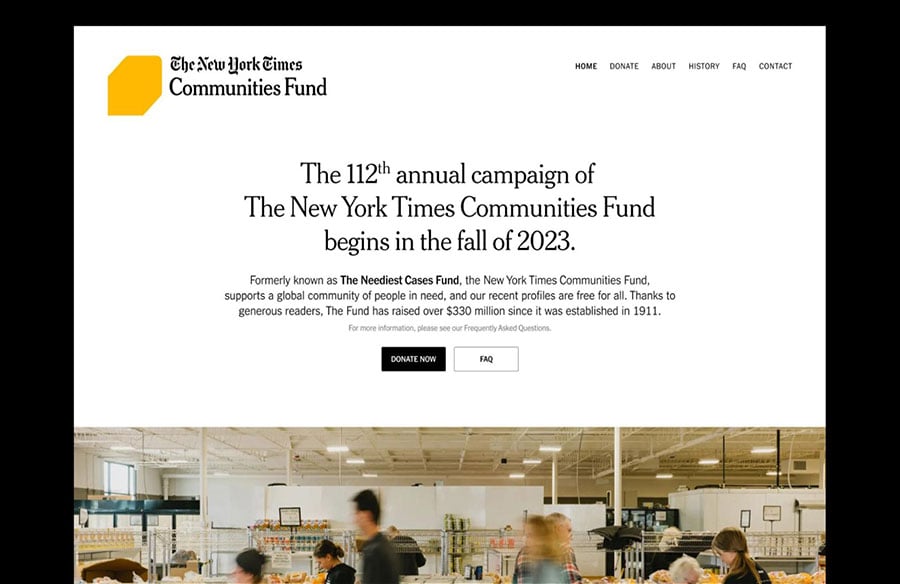
As part of Duddalwar’s portfolio, he created the branding, identity and website for The New York Times Communities Fund (previously called The Neediest Cases Fund), a 112-year-old charitable campaign run by The New York Times. The identity builds on the fund’s earlier symbol of hands coming together in an act of care, abstracting that gesture into a simpler yellow form. The shape suggests both hands reaching toward one another and a pedestal, positioning the fund as a platform of support for people and communities in need.
 More recently, Duddalwar worked on the brand identity for Syntracts, an AI-powered platform that helps users extract meaning from complex legal and contractual documents. Rather than presenting AI as a generic layer of automation, the identity positions Syntracts as a tool for clarity, judgment, and informed decision-making. The visual system balances precision with accessibility, creating a brand that feels intelligent, credible, and built for high-stakes work.
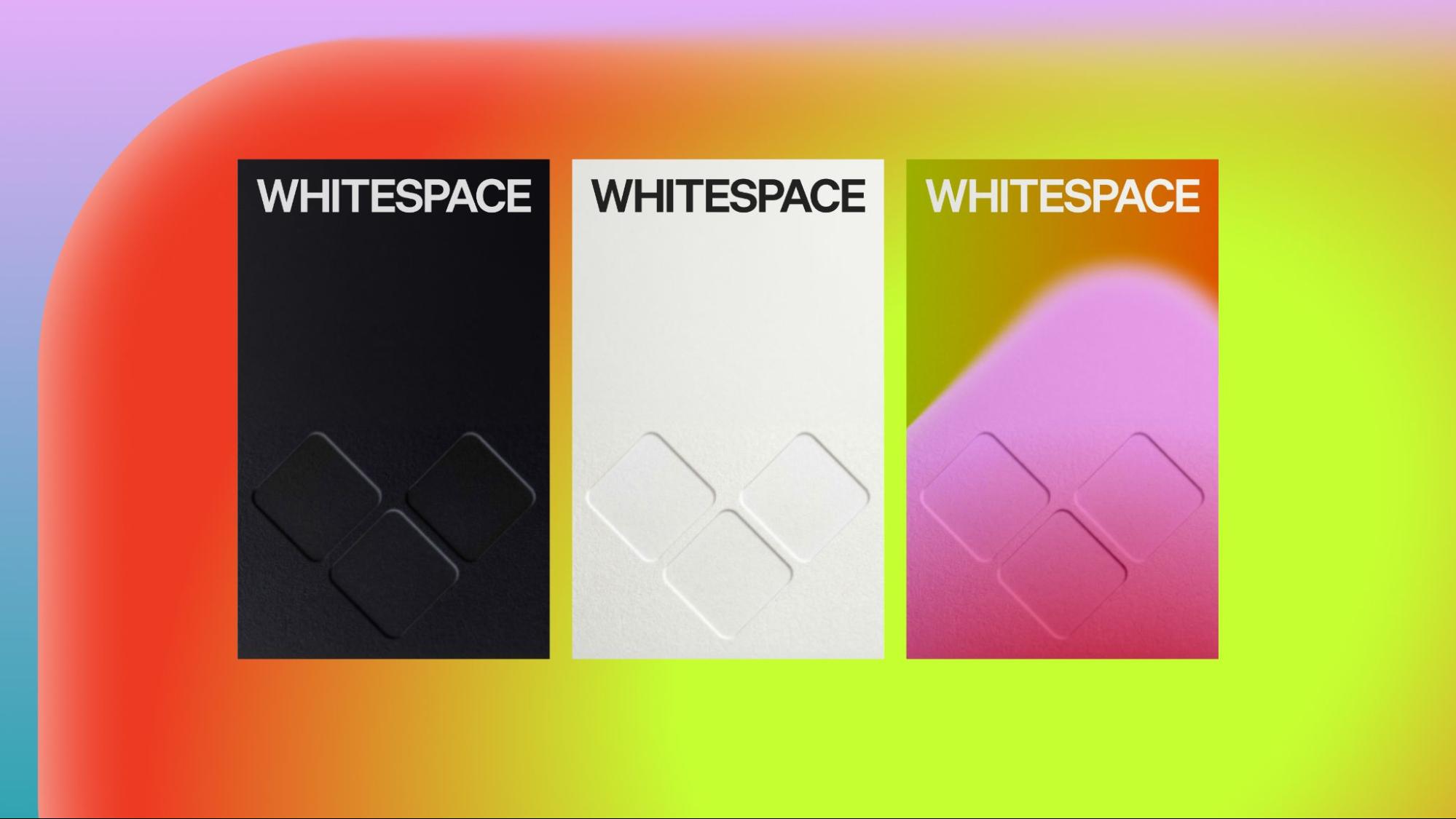
He also worked on the branding and identity system for Whitespace, a technology company developing tools for spatial intelligence, mapping, and real-world decision-making. The identity translates that complexity into a clear visual system built around a black-and-white foundation, atmospheric gradients, and distinct product shapes. The result is a brand that feels technical, intelligent, and future-facing without relying on the familiar clichés of AI branding.
Duddalwar’s approach for all of these projects, and more work he has done for Astronaut Monastery, focuses on clarity and elevated simplicity.
“It’s about defining a clear core; not just visually, but conceptually,” Duddalwar explains. “It should clearly frame what the company stands for and how it wants to be understood. From there, I build a system that separates what is fixed from what can adapt. Typography, grid, and tone tend to remain consistent. Color, imagery, and motion can be more flexible depending on the context.”
For founders and venture-backed teams, Duddalwar offers a critical piece of advice: involve design early. He cautions against treating design as a final layer applied to an already finished product.
 “Design helps clarify thinking,” he says. “It is not just about how something looks; it shapes how it is understood. I would suggest focusing on systems rather than one-off outputs.”
This approach is reflected in his own creative output. Whether leading projects at the creative firm Astronaut Monastery or exploring human-centric design through his personal projects, Duddalwar emphasizes that a robust brand identity is an asset that supports a company’s growth.
“The goal is not to control every output, but to create a framework that holds together as the company grows,” he says. “When done well, design becomes the foundation upon which the company is understood by the market.”
Duddalwar’s influence extends beyond his commercial work. As a part-time faculty member at Parsons School of Design and a former instructor at RISD, he is deeply invested in the pedagogy of visual storytelling.
His transition from the editorial rigor of The New York Times to the agile, high-stakes world of venture-backed technology demonstrates a rare ability to bridge the gap between conceptual nuance and commercial utility.
As he prepares to launch several new identity projects later this year, Duddalwar offers some wisdom in a sector where startups often struggle to articulate their “why.” For tech leaders, Duddalwar serves as more than just a designer; he is a strategic partner helping brands and companies translate complex, invisible ideas into precise, scalable, and lasting brand identities.
“Scalability comes from structure,” said Duddalwar. “A strong grid, clear hierarchy, and defined rules for how elements interact. This allows the system to extend across a website, product interfaces, marketing, and internal tools without losing coherence. I also think about edge cases early. How the system behaves under pressure. When it needs to stretch or simplify.”
“The goal is not to control every output,” he adds, “but to create a framework that holds together as the company grows.”
Written by Margaret Wright
Published May 6, 2026